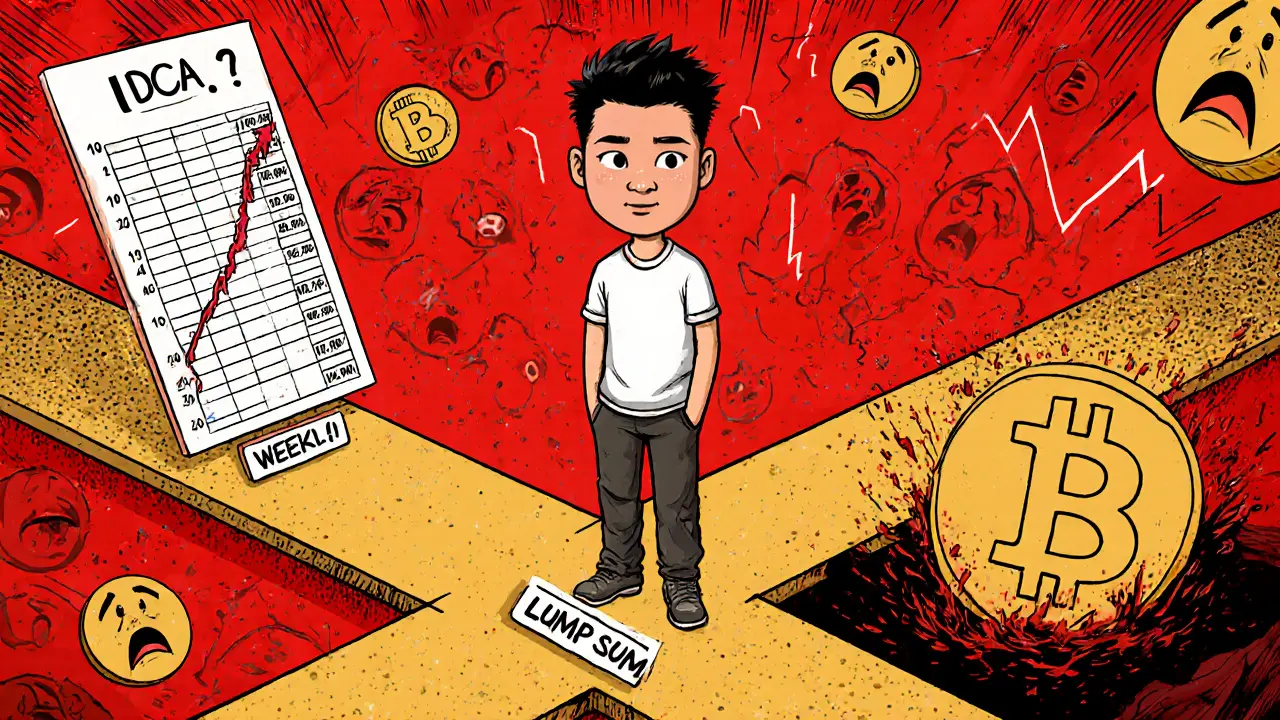
DCA Crypto: What It Is, How It Works, and Why It Matters
When you hear DCA crypto, a strategy where you buy fixed amounts of cryptocurrency at regular intervals, regardless of price. Also known as dollar-cost averaging, it’s one of the few crypto habits that actually works for regular people—not just traders with screens full of charts. You don’t need to predict if Bitcoin will hit $100K next month or if Ethereum will crash next week. You just show up, buy $50 worth, and move on. No stress. No guesswork.
This isn’t magic. It’s math. When prices drop, your fixed investment buys more coins. When prices rise, you buy fewer. Over time, your average cost per coin smooths out. That’s the whole point. You’re not trying to catch the bottom—you’re letting time and consistency do the heavy lifting. And in crypto, where prices swing 20% in a day, that’s a huge advantage. You avoid the trap of buying high out of FOMO and selling low out of panic. That’s why even seasoned investors use DCA. It’s not flashy, but it’s reliable.
Related to this are crypto investing, the broader practice of holding digital assets over time for growth, and crypto risk management, how you protect yourself from losing everything in a single bad bet. DCA fits right in. It’s your safety net. It’s how you stay in the game when memecoins like PENGY or FRED spike and crash. You don’t chase them. You stick to your plan. Even if you’re only buying $20 a week, you’re building a position without emotional spikes. And that’s more than most people can say.
You’ll also see how this connects to crypto strategy, a structured approach to entering, holding, and exiting positions. DCA isn’t the whole strategy—it’s the foundation. The rest—like when to sell, which coins to pick, or how to track taxes—comes after. But if you skip DCA, you’re gambling. And in crypto, gambling doesn’t last.
Look at the posts below. You’ll find guides on gas fees, exchange scams, airdrop traps, and memecoins with no future. Most of them are warnings. DCA crypto is the antidote. It doesn’t care if a coin is called HACHI or VORTEX or EDGE. It doesn’t care if it’s on Solana or Base. It just keeps buying. And that’s why it survives when everything else burns out.