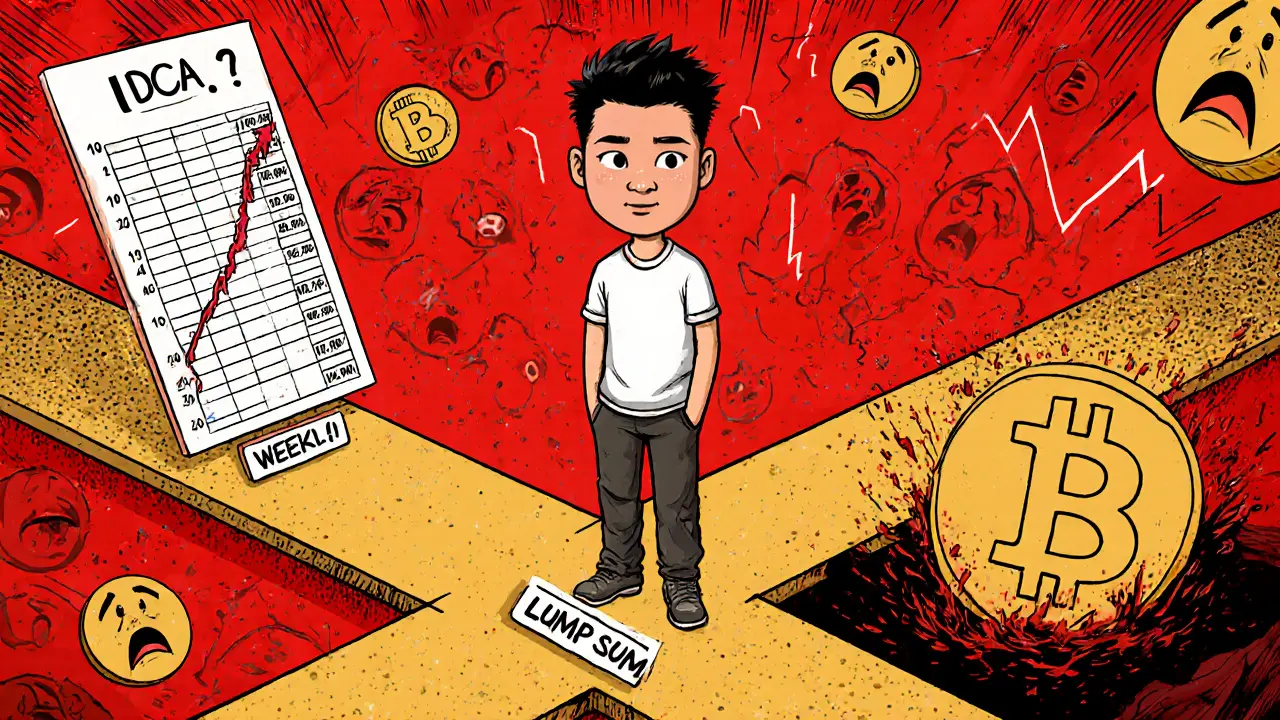
Dollar Cost Averaging Crypto: How to Invest Smarter Without Timing the Market
When you invest in dollar cost averaging crypto, a strategy where you buy a fixed amount of cryptocurrency at regular intervals regardless of price. Also known as DCA, it’s not about predicting the next big pump—it’s about removing emotion from buying. Most people lose money trying to time the market. They buy when everyone’s excited, then panic-sell when prices drop. DCA flips that script. You buy the same amount every week or month, whether Bitcoin is at $30K or $60K. Over time, you average out the cost—and avoid the stress of trying to be right on the exact moment to enter.
This method works because crypto markets are wildly unpredictable. Look at the posts here: coins like Pengycoin (PENGY), a meme coin built on Solana with no real utility, or FRED (FRED), a Solana memecoin with zero team or future, can swing 80% in days. Even "serious" tokens like Stader ETHx (ETHX), a liquid staking token for Ethereum, aren’t immune to wild swings. If you tried to buy ETHX only when it was cheap, you’d miss half the opportunities—or get burned buying high out of fear. DCA removes that guesswork. You don’t need to know if a coin will go up. You just show up, buy your fixed amount, and keep going.
It’s not magic, but it’s practical. People who use DCA don’t track hourly charts. They don’t chase airdrops like CELT, a token that never had a public distribution, or fall for fake listings like GDOGE, a dead meme token with worthless rewards. They set up recurring buys, ignore the noise, and let time do the work. Even if you only invest $20 a week, you’re building a position without needing a finance degree. And when you combine DCA with tracking your crypto cost basis, the total amount you’ve spent on a crypto asset for tax purposes—like in the post about calculating gas fees and tax basis—you’re not just investing. You’re building a smart, audit-ready portfolio.
You’ll find posts here that show you what happens when people skip DCA and chase hype: losing money on scams like Lucent crypto exchange, a fake platform designed to steal funds, or betting on dead projects like Materium (MTRM), a token for a game that may never launch. DCA doesn’t guarantee profits, but it keeps you from being the person who buys at the peak. It’s the quiet, boring strategy that wins in the long run. Below, you’ll see real examples of how people navigate crypto’s chaos—without losing their heads.