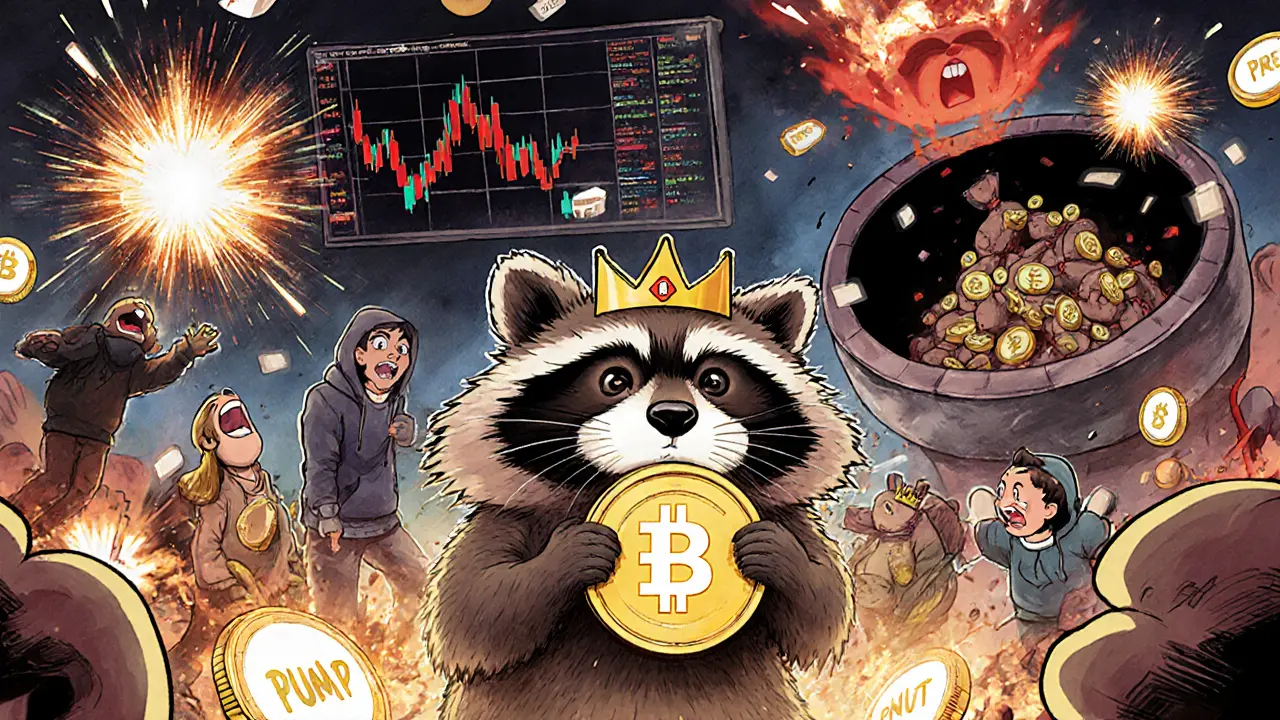
Memecoin: What It Is, Why It Matters, and How It Keeps Winning
When you hear memecoin, a cryptocurrency created as a joke, fueled by internet culture rather than technology or financial fundamentals. Also known as meme token, it doesn’t solve problems—it creates communities. That’s the whole point. Unlike Bitcoin or Ethereum, memecoins don’t need smart contracts, whitepapers, or teams. They just need a funny dog, a viral tweet, and a group of people who believe in something no one else takes seriously. And somehow, that’s enough to make them worth billions.
Take Dogecoin, the original memecoin started as a parody of Bitcoin in 2013, now valued at over $10 billion at its peak. Or Shiba Inu, a token built to be Dogecoin’s rival, with its own ecosystem of tokens, NFTs, and even a decentralized exchange. These aren’t investments in the traditional sense. They’re cultural phenomena. People buy them not because they expect returns, but because they feel part of something bigger—a shared joke, a rebellion against finance, or just pure fun. That’s why memecoins survive crashes, pump-and-dumps, and total lack of utility. Their value isn’t in code. It’s in belief.
But here’s the twist: memecoins aren’t just chaos. They’re a mirror. They show how money works when trust replaces logic. Look at Pengycoin, Hege, Hachiko, or Vortex—all Solana-based, all built on absurd stories, all with market caps under $100K. They’re not trying to be the next Bitcoin. They’re trying to be the next meme. And sometimes, that’s enough to get people to trade, hold, and even defend them. Meanwhile, projects like CELT or GDOGE fail because they pretend to be real investments while acting like memecoins. The line is thin. And the market doesn’t care about your intentions—it cares about your community.
What you’ll find in this collection isn’t a guide to getting rich off memecoins. It’s a look at how they actually work. You’ll see real cases where memecoins exploded, where they collapsed, and where people got scammed pretending they were something else. You’ll learn why some memecoins have more value than some actual tokens. You’ll see how a dog named Hachiko or a fictional couple named Hege and Hegena can move markets. And you’ll understand why, even when everything looks stupid, people still keep playing.