Lucent Crypto Exchange Review: Does This Exchange Even Exist?
Crypto Exchange Verification Tool
Verification Results
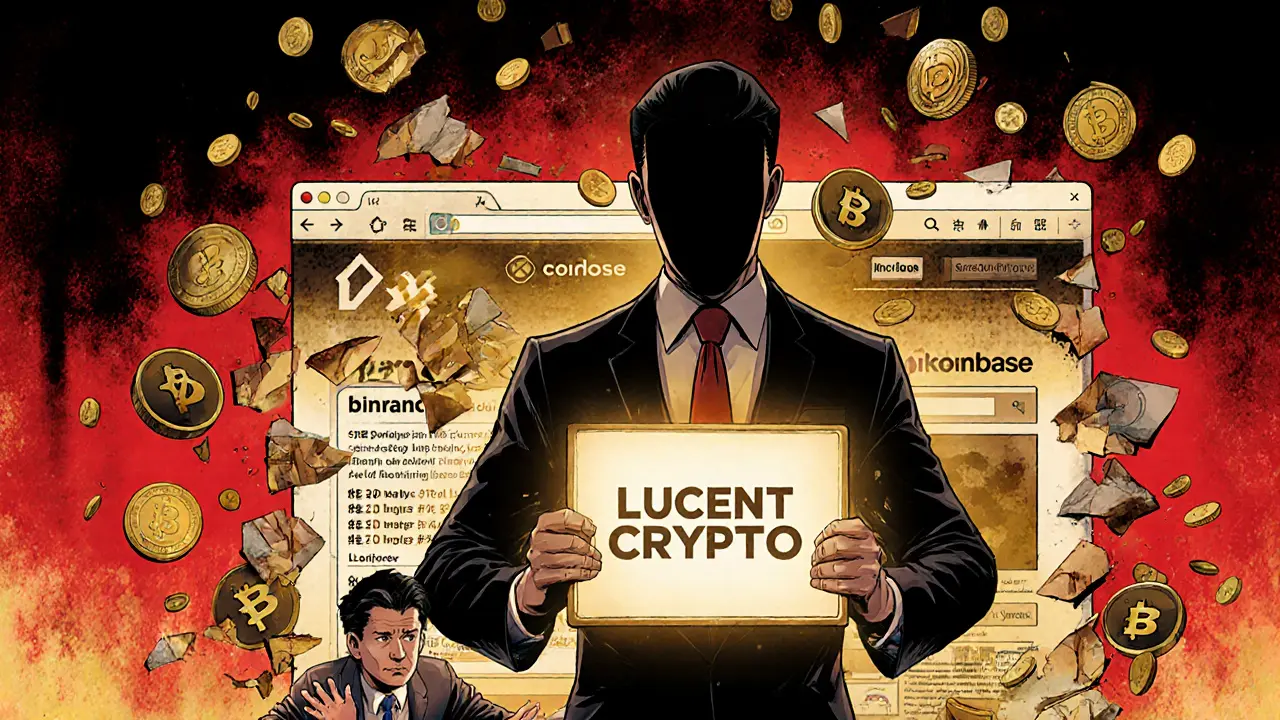
There is no such thing as a Lucent crypto exchange. Not now. Not ever. If you’ve seen ads, YouTube videos, or Telegram groups pushing ‘Lucent’ as the next big thing in crypto trading, you’re being targeted by a scam.
Search for ‘Lucent crypto exchange’ anywhere-Google, Reddit, CoinMarketCap, CoinGecko, even obscure forums-and you’ll hit a wall. No official website. No registered business license. No customer support email that works. No history of trades. No team members listed. No audits. No security certifications. Nothing.
Why does this matter? Because in 2025, fake crypto exchanges are one of the fastest-growing threats to everyday investors. In 2023 alone, over $2.38 billion was stolen from crypto users through phishing sites, fake apps, and entirely made-up platforms. Lucent isn’t just another name on a list-it’s a classic red flag wrapped in buzzwords.
How Scammers Build Fake Exchanges Like ‘Lucent’
These scams don’t come out of nowhere. They’re built like real businesses-just without the real stuff.
First, they steal branding. Look up Lucent Technologies. That was a real telecom giant from the 90s, bought out by Alcatel in 2006. Scammers saw the name, thought it sounded professional, and slapped it onto a fake crypto site. They use the same trick with names like ‘Binance Lite,’ ‘Coinbase Pro,’ or ‘Kraken Wallet.’
Then they build a slick website. High-res images of people in suits holding phones. Fake testimonials with names like ‘John M., Texas’ and ‘Sarah K., London.’ Video ads with stock footage of rising charts and people cheering. All designed to look like a legit platform you’d find on the App Store.
But here’s the catch: real exchanges don’t need to beg you to join. They don’t run TikTok ads promising 200% returns in 7 days. They don’t pressure you with countdown timers: ‘Only 3 spots left!’
What Real Crypto Exchanges Look Like
Compare Lucent to Binance, Coinbase, or Kraken. They all have:
- Publicly listed company registrations (Binance is registered in Seychelles and Malta; Coinbase is publicly traded on NASDAQ)
- Transparent security practices: cold storage, multi-sig wallets, regular third-party audits
- Clear customer support channels with response times
- History of regulatory compliance and legal disclosures
- Verified mobile apps on Google Play and Apple App Store
Lucent has none of these. No company registration. No audit reports. No app on any official store. No physical address. No LinkedIn profiles for its ‘founders.’
How the Lucent Scam Works
Here’s the step-by-step breakdown of what happens when you fall for it:
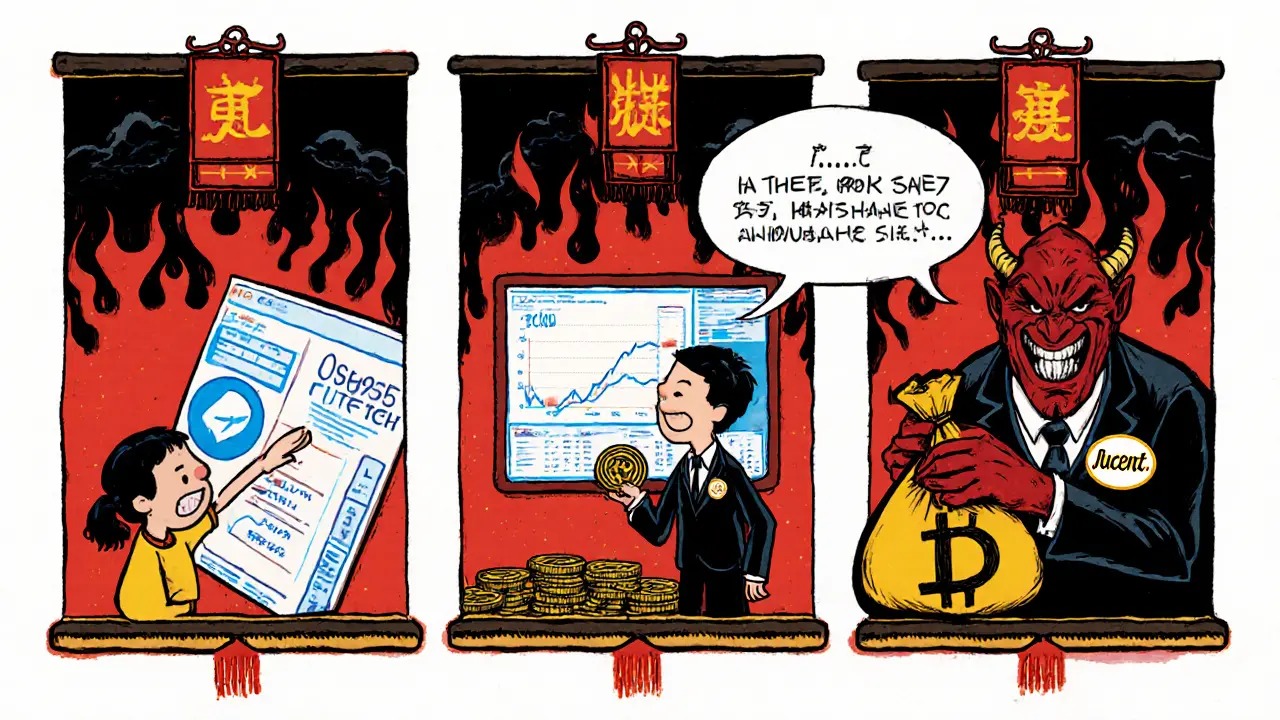
- You click an ad or get a DM on Telegram saying ‘Join Lucent Crypto-Earn 5% daily!’
- You sign up with your email and phone number. No KYC-because they don’t care who you are, only how much you deposit.
- You’re told to deposit crypto (usually BTC or USDT) to ‘activate your account’ or ‘unlock bonuses.’
- Once you send funds, you see your balance go up-on their fake dashboard. It looks real. $1,000 becomes $1,500. $5,000 becomes $12,000.
- You try to withdraw. The system says ‘Verification pending.’ Then ‘High volume, delay 24-48 hours.’ Then ‘You need to pay a 10% tax fee to release funds.’
- You pay the fee. The balance goes up again. But you still can’t withdraw.
- After a few more payments, the site goes dark. The Telegram group vanishes. The customer support email bounces.
This isn’t a glitch. It’s the plan. The whole thing is a Ponzi with a website.
Why People Fall for It
You’re not dumb for being tempted. The psychology is engineered.
Scammers use:
- Urgency: ‘Limited time offer’
- Social proof: Fake user counts, fake reviews, fake influencer endorsements
- FOMO: ‘Everyone’s making money-why aren’t you?’
- False authority: ‘Backed by top blockchain developers’ (they’re not)
And it works. Even smart people get caught. In 2024, a retired teacher in Ohio lost $87,000 to a fake exchange called ‘CryptoLume’-same script, different name. She thought it was legit because the site had a .com and a live chat.
How to Spot a Fake Crypto Exchange
If you’re ever unsure, ask these five questions:
- Is it listed on CoinMarketCap or CoinGecko? If not, it’s not real.
- Does it have a verifiable company registration? Check Companies House (UK), Delaware SOS (US), or equivalent. Lucent? No record.
- Are there real user reviews on Trustpilot or Reddit? Fake reviews say ‘Best exchange ever!’ Real ones say ‘Took 11 days to withdraw’ or ‘Support never replied.’
- Is the website’s SSL certificate valid? Click the padlock in your browser. If it says ‘Not Secure’ or the issuer is ‘Unknown,’ walk away.
- Do they ask you to send crypto to an unfamiliar wallet address? Real exchanges never ask you to send funds to a wallet you didn’t create.

What to Do If You’ve Already Sent Money to Lucent
If you’ve deposited crypto into Lucent:
- Stop sending more money. Ever.
- Take screenshots of everything: the website, your deposits, chat logs, emails.
- Report it to the FTC at reportfraud.ftc.gov (even if you’re outside the U.S.).
- File a report with your local financial crime unit.
- Warn others. Post on Reddit, Twitter, and crypto forums. Use #LucentScam.
Recovering funds from these scams is nearly impossible. Crypto transactions are irreversible. But reporting helps authorities track patterns and shut down future operations.
Trusted Alternatives to Lucent
If you’re looking for a real, safe exchange, stick with these:
- Coinbase - Best for beginners, U.S.-regulated, FDIC-insured fiat custody
- Binance - Largest global exchange, low fees, wide coin selection
- Kraken - Strong security, transparent audits, supports staking
- Bitstamp - One of the oldest, regulated in the EU
- Bybit - Popular for derivatives, strong track record
All of these have been around for years. All have public audits. All are listed on major tracking sites. None have names that sound like old telecom companies.
Final Warning
There is no Lucent crypto exchange. Not in 2025. Not in 2024. Not ever. The name is a decoy. The platform is a trap. The people behind it are criminals.
If someone tells you otherwise, they’re either lying-or they’ve already lost their money and are trying to get you to replace it.
Stick to the big names. Do your own research. Never trust a platform that asks you to hurry. And if something sounds too good to be true? It is.
Jay Davies
November 18, 2025 AT 00:36Lucent? That’s a recycled brand from the 90s telecom era. Scammers love dusting off dead corporate names because they sound legit to people who don’t Google deeper. The lack of any regulatory footprint is the dead giveaway-real exchanges don’t hide behind vague Telegram groups and stock footage.
Rebecca Amy
November 18, 2025 AT 02:00Same thing happened to my aunt last year with ‘CryptoLume’-she lost $87k. She thought the .com and the live chat meant it was real. 😔
Darren Jones
November 19, 2025 AT 18:16Always check CoinMarketCap first. Always. If it’s not listed there, it’s not a real exchange-period. No exceptions. No ‘but it looks so professional!’ Just… no. Also, verify the SSL certificate. If the issuer is ‘Unknown’ or the domain doesn’t match the company name, close the tab immediately. And never, ever deposit crypto to a wallet you didn’t create yourself. That’s rule one.
Kathleen Bauer
November 20, 2025 AT 18:25lol i saw a tiktok ad for lucent yesterday with some dude in a suit saying '5% daily no cap' 🤡 i almost clicked it cause the bg music was fire. glad i checked here first. thanks for the heads up!!
Carol Rice
November 21, 2025 AT 22:13STOP. RIGHT. NOW. If you’re even THINKING about sending crypto to ‘Lucent’-you’re already one click away from losing everything. These scams are engineered by psychopaths who study human psychology like it’s a video game. They don’t care if you’re retired, young, rich, or broke-they just want your keys. Don’t be the next headline. Block. Report. Warn. And if you’ve already lost money? Don’t blame yourself-blame the criminals. And tell EVERYONE.
Gaurang Kulkarni
November 23, 2025 AT 03:57Lucent is not even the worst one I’ve seen. Last month there was a platform called ‘BitVault Pro’ that used fake SEC press releases. They even had a fake Bloomberg article with a watermark that looked real. People sent millions. The domain was registered in the Seychelles through a shell company with a PO box in Dubai. No one will ever recover that money. The only thing that matters is that you don’t get caught next time. Do your own research or get out of crypto.
Peter Rossiter
November 24, 2025 AT 21:50Real exchanges don’t need countdown timers or ‘only 3 spots left’ nonsense. If it feels like a used car lot, it is one.
Henry Lu
November 25, 2025 AT 04:36Wow so you’re telling me that if a website looks nice and has a .com then it’s still a scam? I’m shocked. I mean I guess I should’ve known better than to trust a company that doesn’t have a 1000 page whitepaper written in 12pt Cambria. But hey maybe Lucent is just too advanced for the masses. Like Apple before the iPhone. Or Bitcoin before 2017. Or… oh wait no it’s not. It’s a scam. My bad.
Lori Holton
November 25, 2025 AT 22:56Let me guess: Lucent is funded by the same shadowy cabal that runs the ‘Bitcoin ETF’ hype, the ‘AI token’ pump-and-dumps, and the ‘quantum blockchain’ nonsense. All of it is orchestrated by the same group that owns the domain registrars, the ad networks, and the offshore banks. They’re not just stealing money-they’re eroding trust in the entire ecosystem. This isn’t capitalism. It’s a state-sponsored digital Ponzi. And we’re all just pawns in a game we didn’t even know we were playing.
Bruce Murray
November 27, 2025 AT 21:26Thanks for laying this out so clearly. I’ve seen people I care about get sucked into these scams. It breaks my heart. You’re doing important work by calling this out. Keep going.