AML Crypto: What It Is, Why It Matters, and How It Affects Your Trades
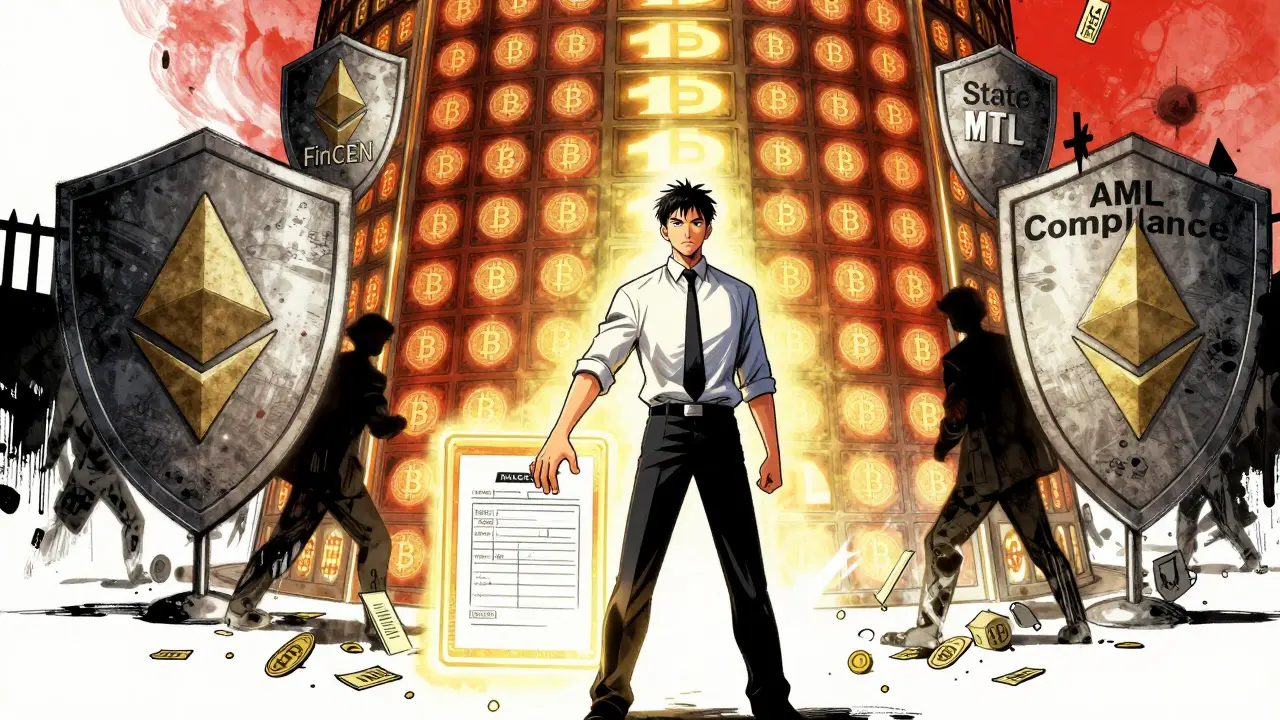
When you hear AML crypto, anti-money laundering rules applied to digital assets to prevent illegal funding and fraud. Also known as crypto compliance, it's the invisible force behind exchange KYC checks, wallet freezing, and why some coins get delisted overnight. This isn’t about government overreach—it’s about keeping the system from being used by criminals to wash dirty money through Bitcoin, meme coins, or DeFi protocols.
Every time you buy crypto on a regulated exchange like Crypto.com or Kraken, you’re stepping into an AML crypto system. These platforms are legally required to track where your funds come from and where they go. If you send $5,000 from an unverified wallet to a new token, that transaction might get flagged—even if you did nothing wrong. That’s because blockchain monitoring, tools that trace crypto flows across wallets and exchanges to detect suspicious patterns is now standard. Firms like Chainalysis and Elliptic build these systems, and regulators force exchanges to use them. Even if you’re just buying a memecoin like PENGY or HEGE, your wallet address could be scanned and logged if it interacts with a known risky address.
And it’s not just exchanges. Projects that want to list on CoinMarketCap or get listed on major platforms must prove they follow crypto regulations, legal frameworks that require transparency, user verification, and reporting of large transactions in digital asset markets. That’s why the CELT airdrop never happened—it wasn’t just a scam, it was a regulatory nightmare waiting to explode. Same with Lucent and IDAX: no compliance, no legitimacy, just a fast exit for the founders. If a project avoids KYC, refuses to answer questions about its team, or pushes users to use untraceable wallets, that’s a red flag—not because it’s necessarily illegal, but because it ignores the reality of how crypto is regulated today.
AML crypto doesn’t mean you can’t trade freely—it means you need to trade smart. If you’re using P2P platforms in Russia or Myanmar to buy Bitcoin with cash, you’re operating in a gray zone. You’re not breaking the law everywhere, but you’re outside the safety net. And if you ever want to cash out to fiat later, you’ll hit walls. That’s why smart traders keep records, avoid mixing services, and stick to platforms that are upfront about their compliance. It’s not about trust—it’s about protecting your own access to the market.
What you’ll find below are real stories of crypto projects that got crushed by AML crypto, exchanges that got shut down for ignoring it, and tokens that vanished because they couldn’t prove they weren’t being used for laundering. These aren’t abstract rules—they’re the reason some coins die overnight, why your deposits get frozen, and why you need to know where your money’s been before you buy it.