DAO Voting Models: How Decentralized Communities Make Decisions
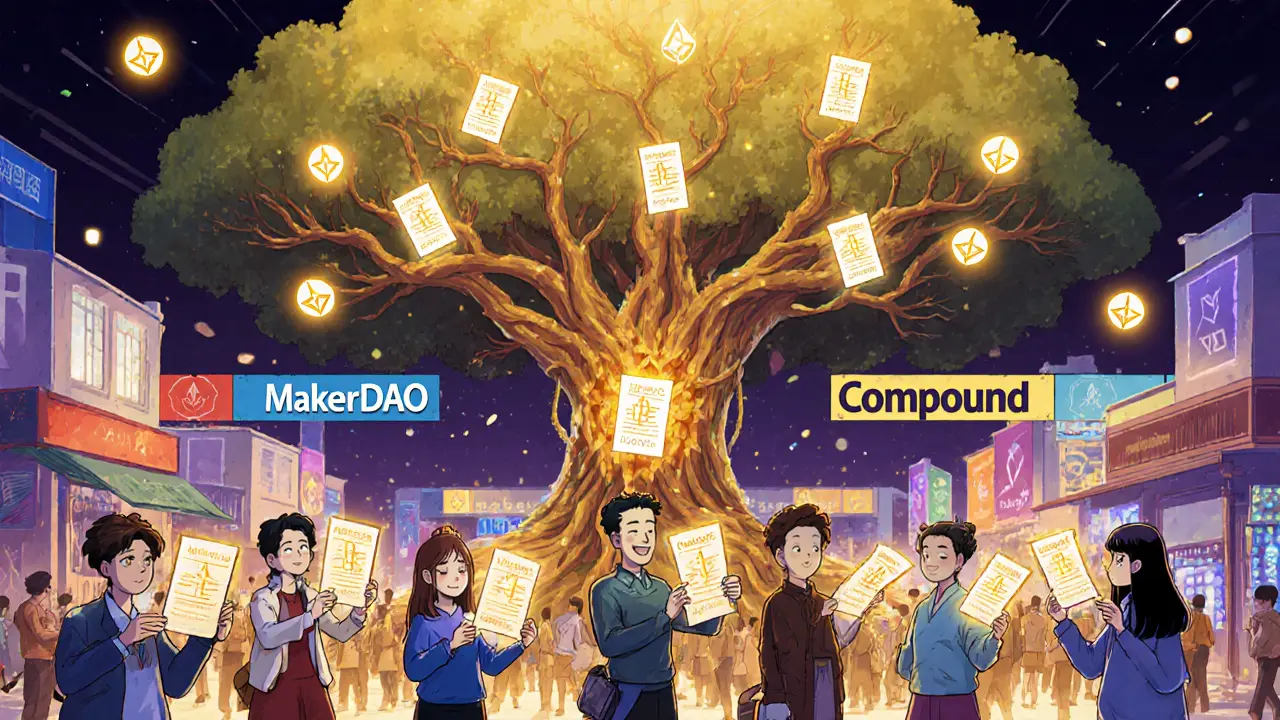
When you hear DAO voting models, the systems that let groups of people make decisions without a CEO or board. Also known as decentralized governance, it's how projects like Uniswap, Aave, and even small NFT collectives decide what to build, spend, or change next. Unlike traditional companies, there’s no single person calling the shots. Instead, votes are cast by people who hold the project’s governance tokens, digital assets that give holders the right to vote on proposals. If you own enough of these tokens, your vote carries more weight. That’s the core idea behind token-weighted voting, the most common system where voting power matches token holdings. But it’s not the only way.
Some DAOs use on-chain voting, votes recorded directly on the blockchain, transparent and impossible to alter. Others rely on off-chain tools like Snapshot, where votes happen on a website but are still tied to wallet addresses. Some even mix both. The big question is: does holding more tokens mean you should get more control? Critics say yes—it gives power to the rich. Supporters say it aligns incentives: those with more skin in the game should have more say. But then you get DAOs where a single wallet holds 40% of the tokens and can pass any proposal alone. That’s not decentralization—it’s plutocracy in disguise.
Real DAOs have learned this the hard way. Some projects switched from simple token-weighted votes to quadratic voting, where each additional vote costs more than the last, giving smaller holders a fairer shot. Others introduced vesting periods so you can’t just buy tokens right before a vote. Some even require proof of participation—like holding a token for 30 days or contributing code—to qualify. These tweaks aren’t just technical; they’re about fairness. And they matter. A DAO that feels rigged loses trust fast. Once trust is gone, the community leaves, and the project dies.
What you’ll find in these posts isn’t theory. It’s real examples of how DAOs actually vote—or fail to vote. You’ll see how some projects use voting to distribute funds, change rules, or even shut down. You’ll see scams disguised as governance. You’ll see how people game the system, and how others fight back. Whether you’re holding a governance token or just curious how these groups run without bosses, this collection shows you what works, what doesn’t, and why it all matters.