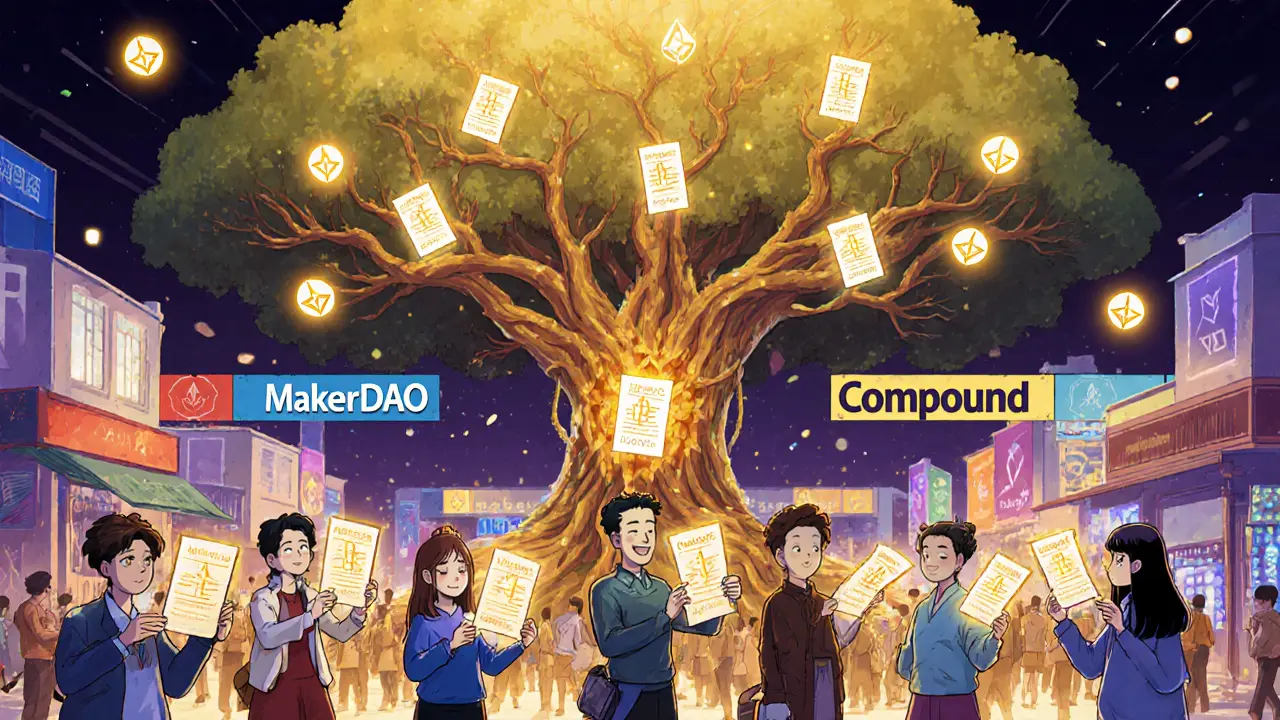
Governance Tokens: How Crypto Voting Shapes Decentralized Projects
When you hold a governance token, a digital asset that grants voting power in a decentralized organization. Also known as DAO tokens, it lets you vote on changes like fee structures, treasury spending, or even new features—without needing permission from a company or CEO. This isn’t theoretical. Projects like Uniswap, Aave, and Compound already run on this model. If you own their tokens, you can propose changes or decide whether to approve them. It’s democracy, but on blockchain.
Governance tokens are tied to DAOs, decentralized autonomous organizations that operate through rules encoded in smart contracts. These aren’t companies. They don’t have CEOs. Instead, they have proposals, votes, and quorums. The more tokens you hold, the more weight your vote carries. But here’s the catch: most people don’t vote. In many DAOs, less than 5% of token holders actually participate. That means a small group often controls the direction of multi-billion dollar protocols. That’s why some call governance tokens a double-edged sword—they give power, but only if you’re active.
These tokens also connect to voting rights crypto, the mechanism that lets token holders influence project decisions. Unlike stocks, where voting is mostly symbolic, crypto governance can directly change how a protocol works. Want to lower trading fees? Propose it. Want to shift treasury funds to a new development team? Vote on it. But it’s not magic. Bad proposals can slip through. Scammers sometimes buy up tokens just to push harmful changes. That’s why understanding the rules—quorum thresholds, voting periods, proposal formats—is as important as owning the token itself.
What you’ll find below isn’t a list of the top 10 governance tokens. It’s a real-world look at how they actually work—or fail. You’ll see how tokenized real estate projects use voting to manage property funds, how wrapped tokens introduce centralization risks that undermine governance, and why some meme coins pretend to have governance but have zero actual voting power. Some posts expose scams where fake governance tokens trick users into locking funds. Others show how smart contracts for property sales use token-based voting to automate ownership transfers. You’ll learn what happens when communities vote to kill a project, when they vote to fund a new feature, and when they vote to do nothing at all. This isn’t theory. It’s what’s happening right now.