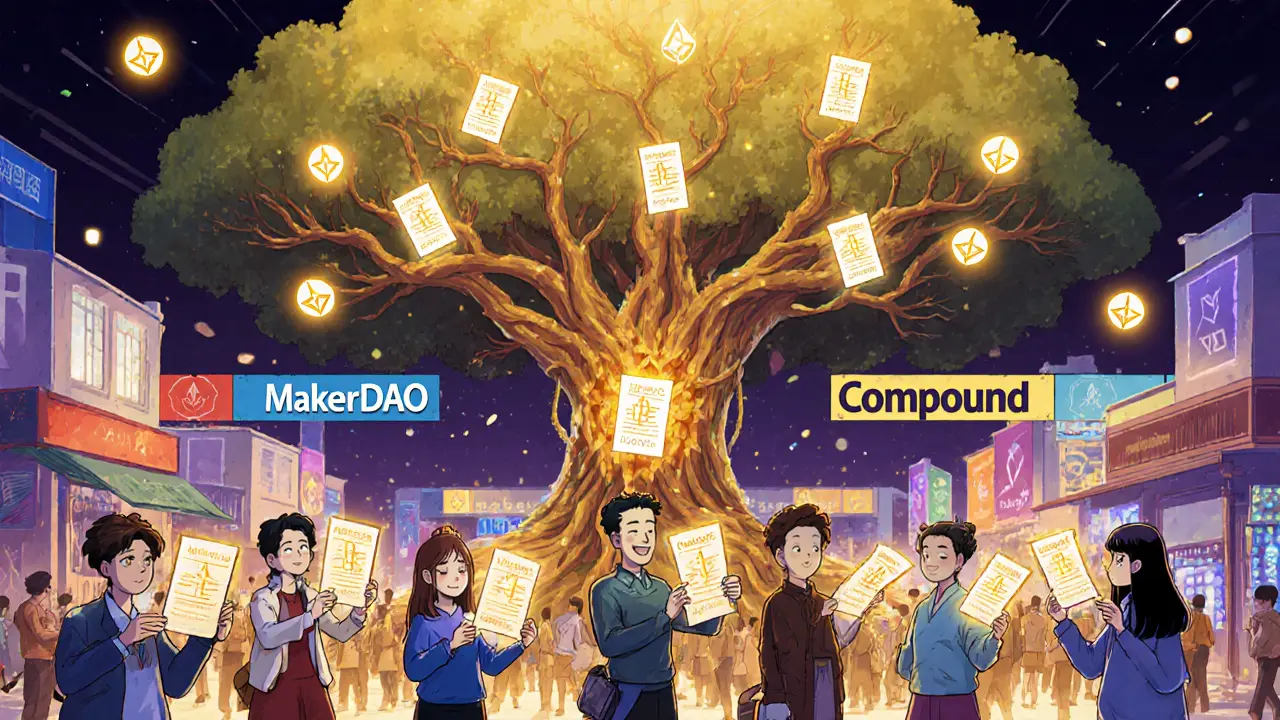
Token-Based Voting: How Blockchain Gives Power Back to Users
When you hold a token in a blockchain project, you’re not just owning a digital asset—you’re holding a token-based voting, a system where ownership of a token grants the right to vote on key decisions. Also known as crypto governance, it turns passive holders into active participants in how a project evolves. This isn’t theory—it’s happening right now in DeFi, NFT communities, and blockchain startups that want to ditch corporate hierarchies and let users decide what comes next.
Think of it like a shareholder meeting, but without the lawyers or boardrooms. If you own 100 tokens of a DAO, you get 100 votes on whether to fund a new feature, change the fee structure, or allocate treasury funds. The more tokens you hold, the more influence you have. That’s the core idea behind DAO voting, decentralized autonomous organizations that operate through community-driven rules encoded in smart contracts. It’s not perfect—big holders can still dominate—but it’s a radical shift from traditional companies where only CEOs and investors call the shots.
Real-world examples show how this works in practice. Projects like Uniswap, Aave, and Compound use blockchain governance, the process of making protocol-level decisions using token-weighted votes on-chain to upgrade code, adjust interest rates, or even change their own tokenomics. You don’t need permission. You don’t need to email support. You just need tokens and a wallet. And because everything is recorded on the blockchain, every vote is transparent, tamper-proof, and auditable by anyone.
But here’s the catch: most people still don’t vote. In many DAOs, less than 5% of token holders participate. That means a small group ends up controlling the direction of projects meant to be decentralized. That’s why some projects are experimenting with quadratic voting, delegation systems, and incentives to boost participation. It’s not just about having a vote—it’s about making sure that vote matters.
What you’ll find in this collection are real cases where token-based voting changed outcomes: from property investment platforms letting small investors vote on rental strategies, to gaming tokens letting users decide which new features get built. You’ll also see how wrapped tokens and custodial risks can break the chain of true ownership—and why that matters when voting power depends on who holds the keys. Some posts expose scams pretending to offer voting rights. Others show how communities used voting to save projects from collapse. And a few reveal how regulators are starting to question whether these votes even count under securities law.
This isn’t about speculation. It’s about control. Token-based voting is the closest thing we have to digital democracy—and it’s still being written by the people who use it. Whether you’re holding a few tokens or managing a treasury, your voice is part of the code now. The question is: will you use it?