B4U Wallet & Exchange Review: Is It Safe for Crypto Trading in 2026?

Have you ever stumbled upon a cryptocurrency platform that promises the moon but offers very little detail on how it gets there? That is exactly the situation with B4U Wallet & Exchange. In a market dominated by giants like Binance and Coinbase, smaller platforms often try to carve out a niche by offering simplicity or unique features. But when you look closely at B4U Wallet, a cloud of red flags obscures its value proposition. As of mid-2026, this platform sits in a dangerous gray area between an obscure exchange and a potential investment trap.
If you are considering depositing funds into B4U Wallet, you need to pause. This review isn't just about listing features; it's about protecting your capital. We will break down what B4U Wallet actually offers, why its associated investment products are alarming, and whether there is any legitimate reason to use it over established, regulated alternatives.
What Exactly Is B4U Wallet?
B4U Wallet is a centralized cryptocurrency exchange and digital wallet service designed to let users buy, sell, and store various cryptocurrencies. On paper, it sounds like every other exchange you’ve seen. It supports major assets including Bitcoin, Ethereum, Litecoin, Ripple, and even some older coins like Dash and ZCash. It also allows trading pairs against fiat currencies such as the US Dollar, Euro, Malaysian Ringgit, and Singapore Dollar.
The platform positions itself as user-friendly, claiming to simplify transactions for both beginners and experienced traders. However, "user-friendly" means nothing if the underlying infrastructure is insecure or unregulated. Unlike decentralized exchanges (DEXs) where you control your private keys, B4U Wallet operates as a centralized exchange (CEX). This means the company holds custody of your funds. If they go bankrupt, get hacked, or disappear, your money goes with them.
The Elephant in the Room: B4U Trades Investment
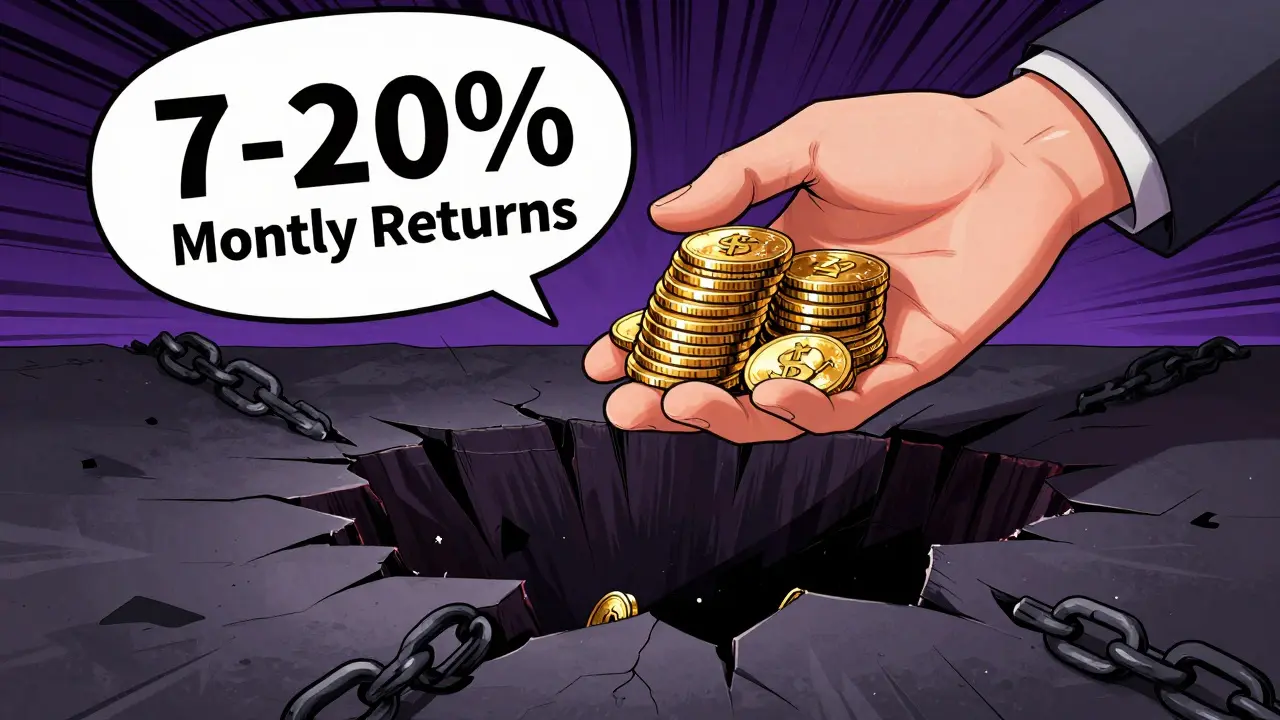
Here is where things get serious. While researching B4U Wallet, you cannot ignore its close association with B4U Trades Investment. This entity claims to generate monthly profits of 7% to 20% for investors. They allegedly achieve this by allocating 60% of deposits to crypto trading and 40% to other business sectors.
Let’s be clear: guaranteed returns of 7-20% per month are mathematically impossible in sustainable investing. Even the most successful hedge funds in history struggle to double their money annually, let alone monthly. These numbers are classic hallmarks of Ponzi schemes or high-yield investment programs (HYIPs). When an exchange is linked to an investment arm making these kinds of promises, the risk to your deposited funds skyrockets. You aren't just using a wallet; you might be funneling money into a fraudulent operation.
Security and Transparency: A Black Box
Security is the single most important factor when choosing a crypto exchange. For B4U Wallet, the transparency is virtually non-existent.
- No Public Audits: There is no record of third-party security audits from reputable firms. Major exchanges publish Proof of Reserves (PoR) regularly to show they actually hold user funds. B4U Wallet does not.
- Vague Security Claims: The platform mentions "multilayer security protocols" and "secure private keys," but provides zero technical details. Are they using cold storage? Multi-signature wallets? Two-factor authentication (2FA)? Without specifics, these are just marketing buzzwords.
- Contradictory Technical Data: Some sources list the API status as "Active," while others state clearly that B4U Wallet has no API. This inconsistency suggests poor documentation or a lack of professional development standards.
- No Regulatory Compliance: There is no evidence that B4U Wallet is registered with financial authorities in the US, EU, UK, or Asia. Operating without licenses means you have no legal recourse if something goes wrong.
Trading Experience and Fees
For those who decide to take the risk, what does the trading experience look like? Information is scarce. The platform supports a decent range of cryptocurrencies, which is a plus for diversification. However, the fee structure is completely unknown. Most exchanges charge between 0.1% and 0.5% per trade. Hidden fees, high spreads, or withdrawal charges can eat into your profits significantly.
Without a transparent fee schedule, you are flying blind. Additionally, the lack of an affiliate program or native token suggests the platform is not focused on building a long-term ecosystem. It appears to be a simple conduit for moving money, potentially toward those dubious investment products mentioned earlier.
B4U Wallet vs. Established Exchanges
To understand why B4U Wallet is risky, compare it to industry leaders. Here is how it stacks up against trusted platforms like Coinbase, Kraken, or Binance.
| Feature | B4U Wallet | Coinbase / Kraken / Binance |
|---|---|---|
| Regulatory Status | Unknown / Unlicensed | Licensed in multiple jurisdictions |
| Security Audits | None public | Regular third-party audits |
| Proof of Reserves | No | Yes, publicly verifiable |
| Fee Transparency | Hidden / Unknown | Clear, published schedules |
| Associated Risks | High (Ponzi links) | Low to Moderate |
| User Support | Limited / Unclear | 24/7 Dedicated Teams |
The difference is stark. Established exchanges spend millions on compliance, security, and customer support because they rely on trust to survive. B4U Wallet relies on obscurity.

Is B4U Wallet a Scam?
While we cannot definitively label the exchange interface itself as a scam without more evidence, the surrounding indicators are overwhelmingly negative. The association with B4U Trades Investment, which promises unrealistic returns, is a massive red flag. Many legitimate exchanges have been shut down or flagged after being linked to similar investment frauds.
Furthermore, the lack of online reviews, the absence of social media presence, and the contradictory technical information suggest a platform that is either poorly managed or intentionally hiding its operations. In the crypto world, silence is rarely a good sign. If a platform doesn't want you to know how it works, you shouldn't put your money in it.
Safer Alternatives for Crypto Trading in 2026
You don't need to risk your savings on obscure platforms. Here are three reliable alternatives that offer security, transparency, and ease of use:
- Coinbase: Best for beginners. Publicly traded company, highly regulated in the US, and easy to use. Great for buying Bitcoin and Ethereum with fiat currency.
- Kraken: Excellent for security-conscious traders. Known for rigorous security practices and competitive fees. Offers a wide range of altcoins.
- Binance: Best for advanced traders. Highest liquidity, lowest fees, and vast array of trading pairs. Note: Use Binance.com for international users, as Binance.US is separate.
All three platforms provide proof of reserves, have clear fee structures, and are subject to regulatory oversight. They may not promise 20% monthly returns, but they will likely still be here next year.
Final Verdict: Avoid B4U Wallet
After analyzing the available data, the recommendation is clear: stay away from B4U Wallet & Exchange. The combination of opaque security measures, unknown fee structures, and direct links to investment schemes promising impossible returns creates an unacceptable level of risk. In 2026, the crypto market is mature enough that you have plenty of safe, regulated options. There is no compelling reason to choose a platform that hides behind vague promises and lacks basic transparency.
Protect your capital. Choose exchanges that prioritize your security over flashy, unrealistic profit guarantees. Your peace of mind is worth more than the allure of quick, unverified gains.
Is B4U Wallet regulated by any financial authority?
There is no public evidence that B4U Wallet is registered or regulated by any major financial authority, such as the SEC in the US, FCA in the UK, or MAS in Singapore. Operating without regulation means users have no legal protection if funds are lost or stolen.
What is the connection between B4U Wallet and B4U Trades?
B4U Trades appears to be an investment product associated with the B4U brand. It promises high monthly returns (7-20%), which is a common characteristic of Ponzi schemes. This association severely damages the credibility of the B4U Wallet exchange platform.
Does B4U Wallet offer cold storage for cryptocurrencies?
The platform claims to have "multilayer security," but it does not explicitly confirm the use of cold storage (offline wallets) for the majority of user funds. Without this confirmation, your assets may be kept in hot wallets, which are vulnerable to hacking.
Are there any hidden fees on B4U Wallet?
The fee structure for B4U Wallet is not publicly disclosed. This lack of transparency suggests that fees could be higher than average or hidden within the trading spread. Always assume fees exist until proven otherwise.
Can I withdraw my money easily from B4U Wallet?
Withdrawal processes are not well-documented. Users of similar unregulated platforms often face delays, excessive verification requests, or outright refusal to process withdrawals once large sums are involved. Proceed with extreme caution.