Bolivia’s Early Crypto Ban: The First Country to Outlaw Bitcoin
Bolivia Crypto Savings Calculator
During Bolivia's cryptocurrency ban (2014-2024), many Bolivians used stablecoins like USDT to protect their savings from inflation. This calculator shows the difference between traditional savings and crypto savings based on historical data.
Key Facts:
- 2023 inflation rate: 5.3% (Bolivia's official figure)
- Traditional banking fees: 0.5-1.5% per transaction
- Crypto transaction fees: 8-12% (as reported in 2021)
- 1.2 million Bolivians used crypto informally by 2023
Calculate Your Savings Difference
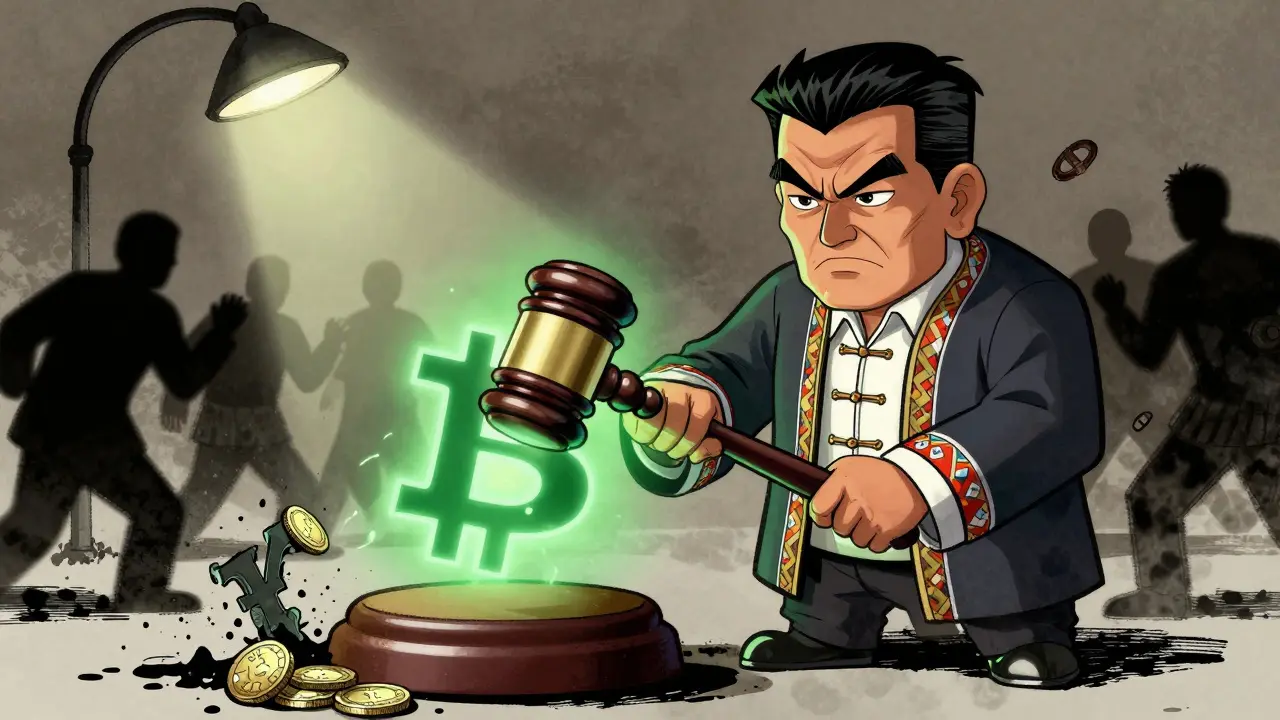
On May 6, 2014, Bolivia made history-not for adopting a new technology, but for being the first country in the world to outright ban Bitcoin. The Central Bank of Bolivia, known as Bolivia's Central Bank (El Banco Central de Bolivia), issued Resolution No. 24-14-001, declaring that any currency not issued or controlled by the government was illegal. That included Bitcoin, Namecoin, Peercoin, and over a dozen other digital coins. This wasn’t a warning or a temporary restriction. It was a full legal prohibition. No bank could process crypto transactions. No business could list prices in Bitcoin. No citizen could legally use it to pay for anything. And for the next decade, that rule stayed in place.
Why Bolivia Banned Bitcoin Before Anyone Else
At the time, most countries were still figuring out how to respond to cryptocurrency. China was debating restrictions. Russia was drafting laws that never passed. Thailand issued a cautionary notice. But Bolivia didn’t just hesitate-it acted decisively. The central bank’s reasoning was simple: protect the boliviano. The country had a history of economic instability, with inflation spikes and currency devaluations. Officials feared that if people started using Bitcoin as a store of value or medium of exchange, it could undermine confidence in the national currency. The resolution stated clearly: "It is illegal to use any kind of currency that is not issued and controlled by a government or an authorized entity."
What made Bolivia’s move extreme was its scope. While other nations targeted exchanges or mining, Bolivia banned all use. Even holding Bitcoin was technically a violation if it was used for transactions. This wasn’t about regulating a new financial tool-it was about eliminating it entirely. The central bank didn’t want people to think Bitcoin was an alternative to the boliviano. They wanted it to disappear.
How the Ban Was Enforced
Enforcement wasn’t just theoretical. Banks were ordered to block any transaction that even looked like it involved cryptocurrency. Financial institutions had to install monitoring systems to flag transfers linked to known crypto wallets or peer-to-peer platforms. The Financial System Supervisory Authority (ASFI) required daily reports on any transaction over 5,000 BOB (about $725 at the time) that seemed suspicious. Smaller banks struggled to keep up. Some took over six months just to update their software. False positives were common-legitimate international wire transfers got flagged because they looked like crypto payments.
Businesses faced penalties if they accepted Bitcoin. A shop owner who priced a phone in BTC could be fined. A freelancer who got paid in USDT could be investigated. The government didn’t go door-to-door arresting people, but the threat was real. People who worked in finance knew the rules. They didn’t risk their jobs.
The Underground Crypto Economy
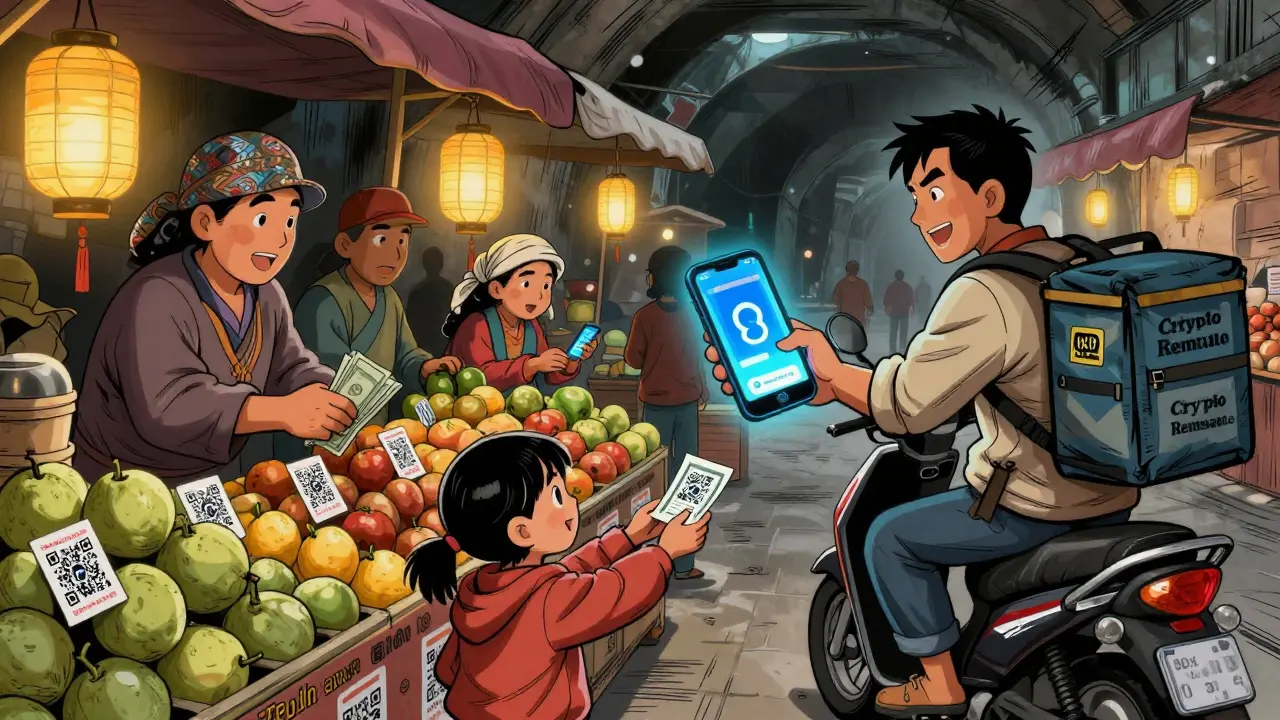
But here’s the twist: people didn’t stop using Bitcoin. They just went underground.
Reddit communities like r/CryptoBolivia grew quietly, with over 12,000 members by 2025. Users traded on LocalBitcoins and Paxful, often paying 8-12% in fees just to convert Bitcoin to bolivianos through cash meetups. A 2021 survey by the Bolivian Digital Rights Observatory found that 68% of crypto users operated entirely outside the banking system. Nearly half made at least one transaction per month. Many used stablecoins like USDT to protect savings from inflation, which had climbed to over 5% by 2023.
One Reddit user, u/CryptoLaPaz, summed it up in 2022: "I’ve been using USDT to protect my savings from boliviano depreciation since 2019. The ban doesn’t stop us, it just makes everything more expensive and risky."
Remittances became a major driver. Families abroad sent money home using crypto to avoid the 15-20% fees charged by Western Union and MoneyGram. Chainalysis estimated that by 2023, over 1.2 million Bolivians-about 10% of the population-were using crypto informally. The Central Bank’s own reports admitted that border regions, especially near Brazil and Peru, saw steady growth in crypto-based trade, even while the ban was active.
The Cost of the Ban
The ban didn’t stop crypto. It just made it dangerous.
Between 2018 and 2023, Bolivia’s Financial Intelligence Unit recorded 147 crypto-related fraud cases totaling $2.3 million. But experts believe that was only a fraction-many victims never reported scams because they were breaking the law themselves. Trustpilot reviews from Bolivian users on Binance showed a 3.8/5 rating, with complaints about withdrawal delays and blocked accounts. People trusted the platform, but not the system.
Economists were divided. Dr. Carlos Newland, a former advisor to the Central Bank, argued the ban protected monetary sovereignty. But Dr. Rebecca Liao from Stanford called it a "protectionist measure that failed to address underlying economic vulnerabilities." The IMF shifted its stance by 2020, warning that blanket bans "often prove ineffective and may drive activity underground, reducing regulatory oversight."
By 2023, Bolivia ranked as the most restrictive crypto jurisdiction in Latin America. Only Algeria and Egypt had similar outright bans. Meanwhile, El Salvador made Bitcoin legal tender. Mexico passed a fintech law. Bolivia was left behind.

The Ban Ends-And Everything Changes
On June 26, 2024, Bolivia reversed course. The Central Bank lifted the ban. It didn’t make Bitcoin legal tender. It didn’t let people pay for groceries with it. But it did allow trading, holding, and transferring crypto through licensed platforms.
The change was immediate. Transaction volumes jumped 630% in the first six months of 2025-from $46.5 million to $294 million. By May 2025, total crypto activity reached $430 million. Carlos Neira’s Meru wallet platform saw a 6,600% surge in users. Binance became the go-to platform, with 86% of transactions coming from individuals, mostly men, using USDT to hedge against inflation.
The new rules require all crypto exchanges to register with ASFI, follow strict anti-money laundering rules, and report daily transactions. Bolivia also signed a cooperation agreement with El Salvador to learn from their experience. But unlike El Salvador, Bolivia still refuses to let Bitcoin be used as payment. The boliviano remains the only legal tender for goods and services.
What This Means for Bolivia Today
The country is now at a crossroads. The ban failed to stop crypto. But the new rules might finally bring it into the light.
People aren’t just using crypto to send money anymore. They’re saving in it. Some small businesses are testing crypto invoicing. Fintech startups are emerging. The Ministry of Economy predicts crypto transaction volume will hit $1.2 billion by 2026. Adoption could reach 18% of the population by 2027.
The lesson from Bolivia’s decade-long experiment? You can ban a technology, but you can’t ban human behavior. When people need a better way to save, send, or protect their money, they’ll find it-even if the government says no. The real challenge now isn’t stopping crypto. It’s managing it safely, fairly, and without repeating the mistakes of the past.
Was Bolivia the first country to ban Bitcoin?
Yes. Bolivia’s Central Bank issued Resolution No. 24-14-001 on May 6, 2014, making it the first national government to formally ban Bitcoin and all other cryptocurrencies. Other countries like China and Russia considered restrictions, but none implemented a complete, nationwide ban before Bolivia.
What did Bolivia’s crypto ban actually prohibit?
The ban made it illegal to use any currency not issued by the government. This meant no Bitcoin transactions through banks, no pricing goods in crypto, and no financial institutions facilitating crypto trades. Holding Bitcoin wasn’t illegal per se, but using it for payments or exchanges was. The only legal tender was the boliviano (BOB).
Did people stop using Bitcoin in Bolivia after the ban?
No. Despite the ban, an underground crypto economy thrived. People used peer-to-peer platforms like LocalBitcoins and Paxful to trade Bitcoin for cash. A 2021 survey found 68% of crypto users operated informally, with 41% making at least one monthly transaction. Remittances and inflation protection were the main drivers.
Why did Bolivia lift the ban in 2024?
The ban proved ineffective. Crypto use kept growing underground, increasing fraud risks and cutting citizens off from global financial tools. With inflation rising and neighboring countries adopting crypto-friendly policies, Bolivia realized regulation was better than prohibition. The 2024 shift allowed trading under strict oversight while still protecting the boliviano as legal tender.
Can you use Bitcoin to pay for things in Bolivia today?
No. While trading and holding crypto is now legal, Bolivia still prohibits using Bitcoin or other cryptocurrencies to pay for goods or services. The boliviano remains the only legal tender for transactions. The government allows crypto as a speculative or savings asset, not as a payment tool.
How has crypto usage changed since the ban was lifted?
Crypto activity exploded. From January to June 2025, transaction volume jumped from $46.5 million to $294 million, reaching $430 million by May 2025. Over 10,000 transactions were recorded, with 86% from individuals using Binance and USDT. Wallet platforms like Meru saw user growth of over 6,600% after the ban ended.
What’s Bolivia’s future plan for cryptocurrency?
Bolivia is moving toward regulated adoption. All crypto exchanges must now register with ASFI and follow AML/CFT rules. The government is learning from El Salvador’s experience but rejecting Bitcoin as legal tender. The goal is to allow trading for savings and remittances while minimizing risks to the boliviano. Projections suggest 18% of the population could be using crypto by 2027.
Neal Schechter
December 5, 2025 AT 10:49Now that it’s legal again, the numbers are insane. 6,600% growth? That’s not adoption-that’s a pent-up tsunami.
Madison Agado
December 7, 2025 AT 08:39And now? They’re trying to tame it. Like you’d put a leash on a wild dog that outsmarted you.
Tisha Berg
December 8, 2025 AT 14:12It’s not about Bitcoin. It’s about dignity. People deserve to protect their earnings without fear.
Billye Nipper
December 10, 2025 AT 06:55People were using USDT to fight inflation?!?! That’s genius. And now the government is like, ‘oh wait, we’re sorry, here’s a license form’?!!
They lost a decade. And for what?!?!
Chris Mitchell
December 10, 2025 AT 23:15Martin Hansen
December 11, 2025 AT 01:29Sandra Lee Beagan
December 11, 2025 AT 03:44It’s not about tech-it’s about survival. And now, at least, they can do it without fear. 🙏
Isha Kaur
December 11, 2025 AT 23:37Glenn Jones
December 12, 2025 AT 23:52People were using crypto to send remittances because Western Union was stealing 20%?? and the government was like ‘nope, you can’t do that’??
AND THEN THEY HAD THE GALL TO SAY ‘WE’RE PROTECTING THE ECONOMY’??
NO. YOU WERE PROTECTING YOUR OWN INCOMPETENCE. NOW THE WHOLE COUNTRY IS SCRAMBLING TO CATCH UP. 6,600% GROWTH?? THAT’S NOT A SURGE. THAT’S A REVENGE PLOT.
AND STILL THEY WON’T LET PEOPLE PAY FOR CROISSANTS WITH BTC??
WHY ARE YOU STILL SO AFRAID??
Nelson Issangya
December 14, 2025 AT 21:06But here’s the good news: they’re finally waking up. The numbers speak for themselves. This isn’t a trend-it’s a tide. And it’s not going back.
nicholas forbes
December 16, 2025 AT 02:10Regina Jestrow
December 17, 2025 AT 12:54