Coinchase Crypto Exchange Review: Is It a Scam or Safe?
You found a platform called Coinchase, and it’s probably promising you something too good to be true. Maybe high returns, easy trading, or exclusive access. But here is the hard truth: there is no legitimate cryptocurrency exchange named Coinchase.
If you are looking at this name in your search results or on an advertisement, stop right now. This is not a minor oversight or a new startup trying to find its footing. The complete absence of verifiable information about Coinchase from authoritative sources, regulatory bodies, and established review platforms is a massive red flag. In the world of finance, silence is usually a scream.
The Red Flags: Why Coinchase Doesn't Exist
Legitimate financial institutions do not operate in the shadows. When you look for a real exchange like Coinbase, Kraken, or Binance, you find years of news coverage, regulatory filings, user reviews on trusted sites, and clear documentation about who owns the company. With Coinchase, you find nothing. Or worse, you find a website that looks professional but lacks any substance behind it.
This pattern is classic for what regulators call "fake investment platforms." These scams often use names that sound similar to well-known brands to confuse users. Coinchase sounds enough like Coinbase to trick someone who isn’t paying close attention. This is known as typosquatting or brand impersonation, and it is one of the most common tactics used by cybercriminals to steal digital assets.
Government authorities are actively tracking these types of fraud. For example, the Massachusetts Attorney General's Office maintains a comprehensive cryptocurrency scam tracker. Similarly, California's Department of Financial Protection and Innovation (DFPI) documents deceptive operations. While Coinchase might not be listed by name today because these scams change domains frequently, the characteristics match perfectly with hundreds of other fraudulent sites that have been shut down or reported.
- No Regulatory License: Real exchanges register with financial authorities like the SEC, CFTC, or local equivalents. Coinchase has no such registration.
- No Online Presence: There are no credible news articles, technical audits, or community discussions about Coinchase on platforms like Reddit or Trustpilot.
- Pressure Tactics: If you were contacted by someone promoting Coinchase, they likely pressured you to act quickly. Legitimate businesses give you time to research.
How Crypto Exchange Scams Work
Understanding how these scams operate can help you protect yourself and others. The process usually follows a predictable script. First, you encounter the platform through social media ads, influencer promotions, or unsolicited messages. The site looks sleek and modern, often copying the design of reputable exchanges. You sign up, deposit money-usually via bank transfer or cryptocurrency-and see your balance grow. Everything seems perfect.
Then comes the trap. When you try to withdraw your funds, problems appear. You might be told you need to pay a "withdrawal fee," a "tax," or undergo "identity verification" that requires more money. No matter how much you pay, the withdrawal never goes through. Eventually, the website disappears, or customer support stops responding. Your money is gone.
The California DFPI has documented cases where victims were promised returns of up to 70% or even 60% per day. These numbers are mathematically impossible in legitimate markets. If an investment could guarantee such returns, everyone would be rich. The fact that only you seem to know about it is the biggest clue that it is a scam.
Is Coinchase a legitimate crypto exchange?
No, Coinchase is not a legitimate crypto exchange. There is no verifiable evidence of its existence as a regulated financial institution. It shares characteristics with known fraudulent platforms, including lack of regulatory compliance, absence of credible online presence, and potential brand impersonation of legitimate services like Coinbase.
What should I do if I already deposited money into Coinchase?
If you have deposited funds, stop sending any more money immediately. Do not pay any additional fees for withdrawals, as these are part of the scam. Contact your bank or credit card provider to report the transaction as fraudulent. File a report with your local consumer protection agency and consider reporting it to the FBI's Internet Crime Complaint Center (IC3) if you are in the US.
How can I tell if a crypto exchange is a scam?
Look for these warning signs: promises of unusually high guaranteed returns, pressure to invest quickly, lack of regulatory licenses, poor or non-existent customer service, and inability to withdraw funds. Always check if the exchange is registered with financial authorities in your jurisdiction and look for independent reviews on trusted platforms.
What are some safe alternatives to Coinchase?
Safe alternatives include established, regulated exchanges like Coinbase, Kraken, Binance, and Coinbase International. These platforms are publicly traded or heavily regulated, offer transparent fee structures, provide robust security features, and have millions of verified users. They also comply with anti-money laundering (AML) and know-your-customer (KYC) regulations.
Why does Coinchase sound so similar to Coinbase?
Scammers often use names that resemble well-known brands to create a false sense of trust. This tactic, known as brand impersonation or typosquatting, aims to confuse users who may not notice the slight difference in spelling. Coinbase is a legitimate, publicly traded company, while Coinchase has no verifiable business existence.

Real Alternatives: Where to Trade Safely
Avoiding scams doesn't mean you have to avoid cryptocurrency trading entirely. There are many secure, regulated platforms designed for both beginners and advanced traders. Choosing a reputable exchange ensures your funds are protected and that you are operating within legal frameworks.
Coinbase is the world's most trusted cryptocurrency exchange and the only publicly traded crypto exchange in the U.S., listed on the S&P 500. It supports major cryptocurrencies including Bitcoin (BTC), Ethereum (ETH), XRP, USD Coin (USDC), Cardano (ADA), Polygon (MATIC), Polkadot (DOT), and Solana (SOL). Coinbase offers advanced trading tools, including in-depth technical analysis and charting powered by TradingView. For serious traders, Coinbase Exchange provides institutional-grade liquidity and high-throughput APIs.
Another solid option is Kraken, which has been operating since 2011 and is known for its strong security record and wide range of supported coins. Kraken is particularly popular among experienced traders due to its low fees and advanced order types. It is regulated in multiple jurisdictions and undergoes regular third-party security audits.
For users in India, CoinSwitch is described as India's largest crypto trading app, offering trading in over 350 cryptocurrencies with compliance and security measures tailored for the Indian market. It pools liquidity from leading global exchanges to ensure competitive rates.
| Exchange | Regulation Status | Key Features | Best For |
|---|---|---|---|
| Coinbase | Publicly Traded (NASDAQ) | User-friendly interface, S&P 500 listed, extensive coin support | Beginners and US investors |
| Kraken | Regulated in EU, UK, Japan | Low fees, advanced trading tools, strong security | Experienced traders |
| CoinSwitch | Compliant with Indian regulations | Aggregated liquidity, 350+ coins, local support | Indian users |
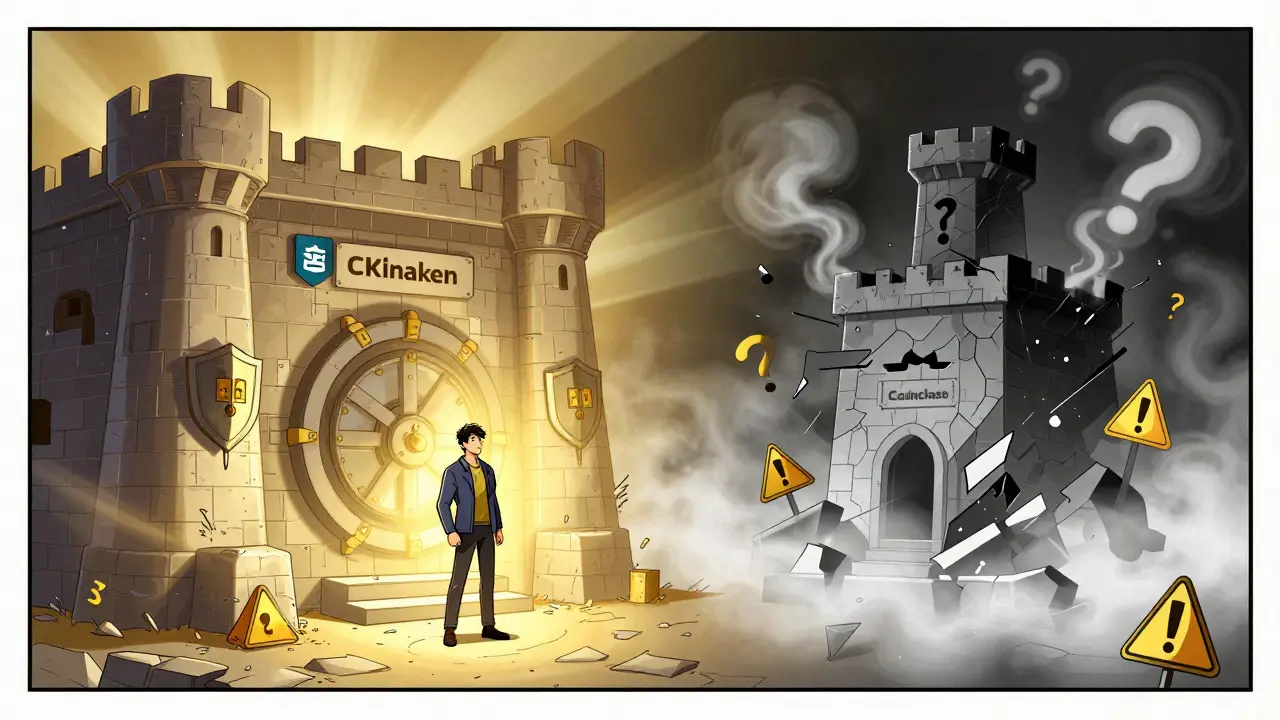
Protecting Yourself in the Crypto Space
The cryptocurrency market is decentralized and innovative, but it also attracts bad actors. Protecting yourself requires vigilance and education. Always verify the legitimacy of any platform before connecting your wallet or depositing funds. Check for regulatory licenses, read independent reviews, and never trust promises of guaranteed high returns.
Use hardware wallets for storing significant amounts of cryptocurrency. Platforms like Ledger and Trezor keep your private keys offline, making them immune to online hacks. Enable two-factor authentication (2FA) on all your accounts, preferably using an authenticator app rather than SMS. And remember, if it sounds too good to be true, it almost certainly is.
By sticking to well-established, regulated exchanges and avoiding unknown platforms like Coinchase, you can participate in the crypto economy safely and confidently. Your financial security is worth the extra minute of research.