Cryptocurrency Legal Status in Colombia: What You Need to Know in 2025

Colombia doesn’t ban cryptocurrency. But it also doesn’t protect you if something goes wrong. That’s the reality for over 1.2 million Colombians using crypto in 2025. You can buy Bitcoin on Binance with your Nequi account, trade Ethereum on LocalBitcoins, or even pay for services with USDT - but if a platform vanishes with your money, the government won’t step in. There’s no law saying crypto is legal. There’s no law saying it’s illegal. It’s in a gray zone - and that’s both the opportunity and the danger.
What the Law Actually Says
The Central Bank of Colombia made it clear back in 2018: cryptocurrencies are not legal tender. That means no business has to accept Bitcoin, Ethereum, or any other crypto as payment. If you pay your landlord in USDC, they can legally refuse it. If you try to pay taxes with Bitcoin, the tax office (DIAN) will tell you to send Colombian pesos instead. Crypto isn’t classified as foreign currency, either. That’s important. Foreign currencies like the U.S. dollar have rules around exchange rates, reporting, and conversion. Crypto doesn’t get any of that. It’s treated like digital property - something you own, like a painting or a collectible. But unlike those assets, there’s no official registry, no clear way to prove ownership in court, and no authority responsible for enforcing rights. The Financial Superintendency of Colombia (SFC) has also ruled that crypto isn’t a security. That means companies can’t legally offer crypto investment products, and banks can’t hold crypto in their portfolios. If a Colombian bank offered you a Bitcoin savings account, it would be breaking the rules. Same goes for investment funds, pension plans, or insurance products tied to crypto. So what’s left? A legal vacuum. No specific law governs crypto. No agency is in charge. No clear rules for exchanges, wallets, or users. This isn’t a loophole - it’s a blind spot.Who’s Running the Market?
Despite the lack of regulation, Colombia’s crypto market is thriving. Nine major exchanges operate here, including Binance, Kraken, Bitso, and CryptoMarket. Binance alone handles 68% of all local trading volume, according to Kaiko Research. Monthly volume hit $120 million in mid-2025, up from $90 million in 2023. Why? Because Colombians need it. Remittances make up 63% of crypto use in the country. People send money to family in other Latin American countries using USDT or Bitcoin because it’s faster and cheaper than Western Union. Inflation is another driver - with the peso losing value, many turn to crypto to preserve savings. And for younger users, especially those under 35, crypto is just another app - like Uber or Rappi. Local payment integrations are key. Most users connect their crypto wallets to Nequi, Daviplata, or Bancolombia. Depositing pesos is instant. Withdrawals take minutes. That’s why global exchanges like Binance and Bybit dominate. They support local payment rails. Local-only platforms? They struggle with liquidity and trust.The Dark Side: Fraud and Losses
No regulation means no safety net. The most famous case is Me Coin, which collapsed in August 2018. The founders promised 50% monthly returns. Over 20,000 people invested. Then they disappeared with $60 million. No one was arrested. No one was held accountable. No government agency investigated. The victims had no legal recourse. That’s not an outlier. Trustpilot reviews from Colombian crypto users show 63% mention “no regulatory protection” as their biggest concern. Reddit threads are full of stories like this: “Sent 2.5 BTC to a LocalBitcoins seller. Paid via bank transfer. Seller vanished. No chargeback. No help.” Exchanges don’t offer insurance. Wallets aren’t FDIC-backed. If your private key is stolen, your money is gone. If an exchange gets hacked - and some have - you lose everything. There’s no government fund to reimburse you. No consumer protection law applies.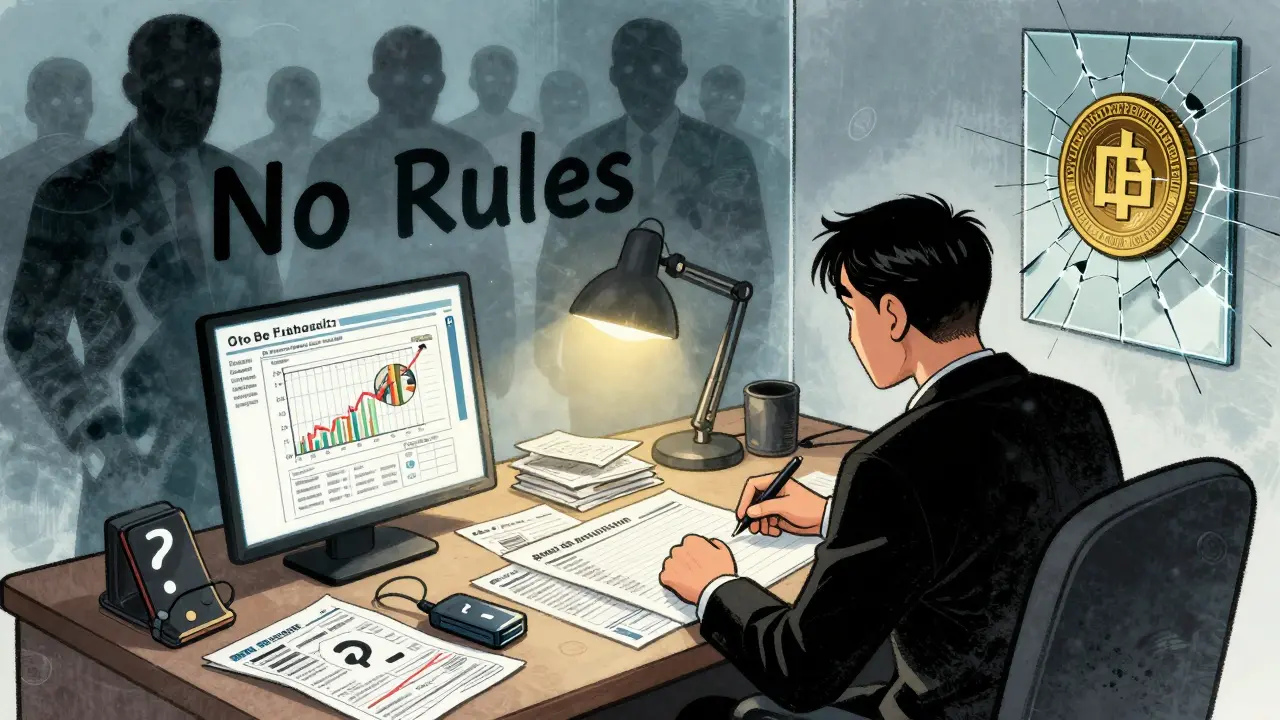
Taxes: The Unanswered Question
The DIAN - Colombia’s tax authority - has never issued official guidance on crypto taxes. But that doesn’t mean crypto gains are tax-free. In practice, the DIAN treats crypto profits as income. If you buy Bitcoin at $30,000 and sell it at $50,000, the $20,000 gain is taxable. If you trade Bitcoin for Ethereum and then sell it, that’s two taxable events. The tax rate? Up to 39%, depending on your total income. But here’s the problem: no one knows how to report it. There’s no form. No software. No clear rules. Most users don’t report. DIAN estimates $120 million in unreported crypto gains in 2024. That’s a red flag. If the government ever starts auditing, thousands could face penalties. Some users try to self-report using spreadsheets. Others use third-party tools like Koinly or CoinTracker. But without official guidance, you’re guessing. And guessing can get you in trouble.How It Compares to Neighboring Countries
Colombia’s approach is different from its neighbors. Brazil passed a “Bitcoin Law” in 2022 and is rolling out a phased regulatory framework. Exchanges there must register with the central bank, follow AML rules, and keep user records. Consumer protection is still weak, but at least there’s a system. Argentina has strict capital controls. People use crypto to bypass them, but the government cracks down on large transfers. Mexico’s crypto use is slowing as users shift to stablecoins for remittances. Venezuela? The state created its own crypto - the Petro - and forces people to use it. Colombia isn’t doing any of that. It’s letting the market decide. That’s why Colombia’s adoption rate is growing faster than most of Latin America. It’s not because the government supports it. It’s because they didn’t stop it.
What’s Next? Regulation on the Horizon?
There’s a bill in Congress - Bill 325 of 2024 - that proposes a formal crypto framework. It would require exchanges to register, implement KYC, and report suspicious activity. Sounds reasonable, right? But industry groups are pushing back. Fintech Colombia Association argues that regulation would kill the organic growth that’s made Colombia a regional leader. They point to Brazil’s slow rollout and say: “We don’t need red tape. We need space.” Experts are split. 82% of analysts surveyed by Kaiko in April 2025 predict Colombia will adopt partial regulation by 2027 - similar to Thailand or the Philippines. That means AML rules for exchanges, but no consumer protections for users. Crypto remains property. No legal tender. No banking access. The Central Bank says it’s “monitoring global developments.” That’s diplomatic language for “we’re watching, but we’re not acting yet.”What Should You Do?
If you’re using crypto in Colombia, here’s what works:- Use global exchanges with Colombian peso support: Binance, Kraken, Bybit
- Never keep large amounts on an exchange - move to a hardware wallet
- Keep records of every trade, date, amount, and value in COP
- Don’t trust platforms promising guaranteed returns - they’re almost always scams
- Use local payment apps like Nequi and Daviplata - they’re reliable and fast
- Don’t assume you’re protected. If something goes wrong, you’re on your own
Frequently Asked Questions
Is cryptocurrency legal in Colombia?
Yes, but not officially. Colombia doesn’t ban cryptocurrency, but it also doesn’t regulate it. Crypto is treated as digital property, not money. You can buy, sell, and hold it without breaking any laws. But there’s no legal protection if you get scammed, hacked, or cheated.
Can I pay for goods and services with crypto in Colombia?
You can, but no one has to accept it. Businesses can choose to take Bitcoin or USDT, but they’re not required to. The Colombian peso is the only legal tender. If you pay with crypto and the seller refuses to deliver, you have no legal recourse.
Do I have to pay taxes on crypto in Colombia?
Yes, technically. The tax authority (DIAN) treats crypto profits as income. If you sell crypto for more than you paid, you owe taxes - up to 39%. But there are no official forms or guidelines. Most people don’t report, but that’s risky. If the government starts auditing, you could face penalties.
Are crypto exchanges regulated in Colombia?
No. There are no licensing requirements, no oversight, and no consumer protections. Exchanges like Binance and LocalBitcoins operate without government approval. They’re not required to insure your funds or refund losses. If an exchange shuts down or gets hacked, you lose everything.
What’s the biggest risk of using crypto in Colombia?
The biggest risk is losing your money with no way to get it back. Whether it’s a scam like Me Coin, a rogue seller on LocalBitcoins, or a hacked wallet - there’s no government agency to call. No police unit. No bank insurance. No legal process. You’re entirely on your own.
Will Colombia regulate crypto soon?
Probably, but not soon. A bill in Congress (Bill 325 of 2024) could lead to rules for exchanges - like KYC and AML checks. But full consumer protection? Unlikely. Experts predict Colombia will follow Thailand’s model: regulate exchanges, but leave users unprotected. Don’t expect legal tender status or banking access anytime soon.
Daniel Verreault
December 28, 2025 AT 12:25Alex Strachan
December 29, 2025 AT 03:22Jacky Baltes
December 31, 2025 AT 00:42Phil McGinnis
December 31, 2025 AT 11:21Ian Koerich Maciel
December 31, 2025 AT 22:22Andy Reynolds
January 1, 2026 AT 12:43Brandon Woodard
January 2, 2026 AT 00:37Antonio Snoddy
January 3, 2026 AT 21:59Ryan Husain
January 5, 2026 AT 12:30Rajappa Manohar
January 5, 2026 AT 23:54nayan keshari
January 7, 2026 AT 19:11Johnny Delirious
January 9, 2026 AT 00:06Bianca Martins
January 9, 2026 AT 10:23alvin mislang
January 10, 2026 AT 12:26Monty Burn
January 11, 2026 AT 09:16Kenneth Mclaren
January 12, 2026 AT 01:22Alexandra Wright
January 13, 2026 AT 18:08