Diversifying Across Blockchain Sectors: A Strategic Guide for 2026

The days when blockchain meant only Bitcoin are long gone. If you’re looking at the landscape in 2026, the technology has exploded into a massive ecosystem touching everything from hospital records to energy grids. The global blockchain market is projected to hit $393 billion by the end of this forecast period, with some analysts eyeing a trillion-dollar valuation by 2032. That kind of growth doesn’t happen in a single lane. It happens across dozens of industries simultaneously.
Putting all your eggs in one basket-whether that’s just holding Bitcoin or betting solely on decentralized finance-is risky. Smart investors and businesses are now spreading their exposure across multiple blockchain sectors. This isn’t just about buying different coins; it’s about understanding how distinct industries use distributed ledger technology (DLT) to solve real-world problems. By diversifying, you capture growth in high-speed areas like IoT while maintaining stability in mature sectors like banking.
Why Sector Diversification Matters Now
Blockchain adoption has moved past the hype cycle. In 2024, the market was valued at $20.16 billion, but the trajectory is steep. The reason? Utility. Companies aren’t adopting blockchain because it’s cool; they’re doing it because it saves money, increases security, or enables new business models that were previously impossible.
When you diversify across sectors, you mitigate specific risks. The financial sector might face heavy regulation, slowing down innovation temporarily. Meanwhile, the healthcare sector could be surging due to post-pandemic digitalization demands. If your portfolio or business strategy relies entirely on finance, you’re vulnerable to regulatory shocks. By including healthcare, supply chain, or energy, you balance volatility with steady institutional adoption.
Consider the data: 81% of top public companies are currently exploring blockchain applications across multiple sectors. They know that relying on a single vertical limits their potential. For individual investors, this means looking beyond price charts to understand which industries are actually building infrastructure.
The Heavyweight: Banking, Financial Services, and Insurance (BFSI)
You can’t talk about blockchain without starting here. The BFSI sector captured the largest market share in 2024 and held 24% of the market in 2025. Financial services contribute roughly 40% to global blockchain revenue. Why? Because banks love efficiency.
Traditional cross-border payments are slow and expensive. Blockchain fixes this. Users report that international transfers using blockchain are faster, cheaper, and more secure than traditional SWIFT networks. But it’s not just about sending money. Banks are using blockchain to streamline real estate record monitoring and collateral management. This creates a transparent network where transactions are simpler and safer for everyone involved.
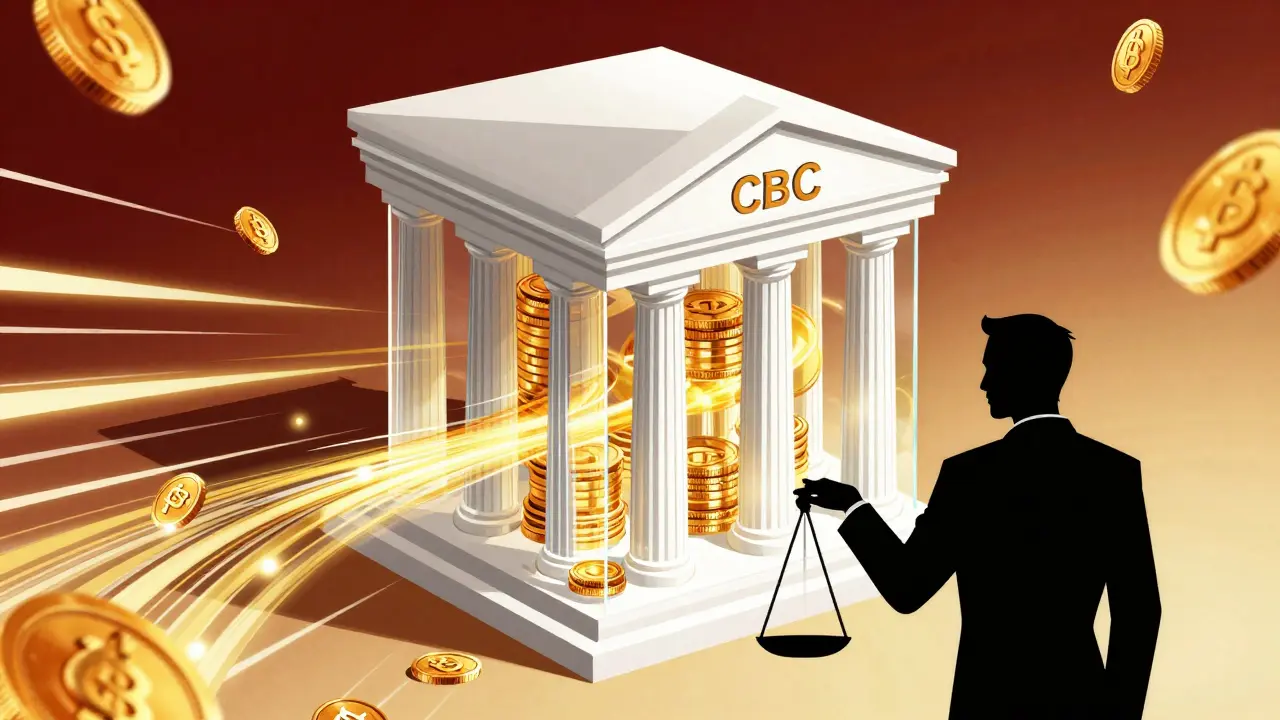
Look at the rise of Central Bank Digital Currencies (CBDCs). With projects like China’s Digital Yuan and the EU’s Digital Euro pilot gaining momentum, monetary policy experts predict that 15 central banks could issue their own digital currencies by 2030. This brings massive institutional capital into the space. If you’re diversifying, you need exposure to the platforms and protocols that support these large-scale financial infrastructures.
- Growth Driver: Regulatory clarity and institutional adoption.
- Key Use Case: Cross-border payments and trade finance.
- Risk Factor: High regulatory scrutiny.
The Fast Grower: Internet of Things (IoT)
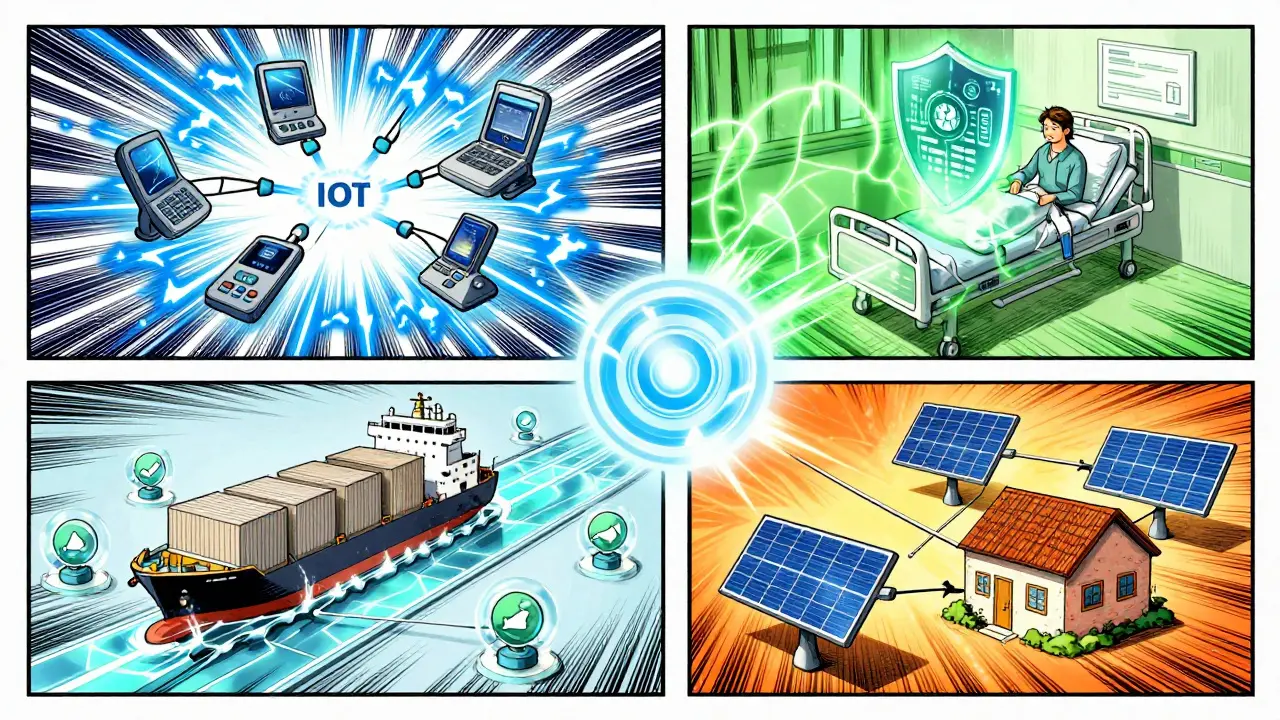
If BFSI is the stable anchor, IoT is the rocket ship. The IoT sector is anticipated to grow at a prominent CAGR of 46.56%. This might sound niche, but think about how many devices you interact with daily. Your smart thermostat, your car, your factory sensors-they all generate data.
Blockchain enables these devices to make automatic micro-transactions. Imagine your electric vehicle paying for bandwidth usage or electricity automatically when it plugs into a charging station. No human intervention needed. Tokens facilitate these tiny, instant exchanges securely. This is where the "machine economy" comes alive.
For investors, this means looking at platforms that handle high-frequency, low-value transactions efficiently. Layer-2 solutions and specialized sidechains often lead this charge. As the number of connected devices explodes, the demand for secure, automated transaction layers will follow.
Healthcare: Security Meets Privacy
Healthcare is expected to grow at the fastest rate through 2030. The drivers here are clear: global data protection laws like GDPR and the urgent need for digital health records post-COVID. Hospitals have historically struggled with siloed data. Patient records are scattered across different providers, making care coordination difficult.
Blockchain solves this by creating a decentralized yet permissioned system. Patients maintain control over their data, granting access to authorized doctors while keeping private information secure. There’s no central server to hack. MIT uses blockchain to issue tamper-proof diplomas, and similar principles apply to medical histories. The University of Nicosia issues academic certificates on blockchain, allowing employers to verify qualifications instantly.
This sector requires deep knowledge of HIPAA compliance and patient privacy regulations. It’s not a quick flip. It’s a long-term play on data integrity and interoperability. Companies building interoperable health data standards are key players to watch.
Supply Chain and Retail: Tracking the Real World
The global blockchain in retail market reached 5.4 million in 2024 and is expected to grow at a CAGR of 41.3% from 2025 to 2033. Supply chain management is another giant. Consumers want to know if their coffee is fair-trade or if their electronics contain conflict minerals.
Blockchain provides an immutable ledger of every step in the journey. From raw material extraction to final delivery, every handoff is recorded. This transparency reduces fraud and improves inventory management. Companies like Newegg have implemented Bitcoin payments in 73 additional country-specific stores, showing practical adoption in retail payments. But behind the scenes, supply chain logistics are being optimized using smart contracts that release payment only when goods are verified as delivered.
This sector benefits from the convergence of blockchain with AI and big data analytics. The ability to track physical assets digitally creates a powerful moat for companies that get it right early.
Energy and Real Estate: Tokenizing Assets
Two sectors that seem unrelated are converging through tokenization. In energy, platforms like Powerledger allow users to trade excess renewable energy with neighbors. Peer-to-peer energy trading increases efficiency and reduces costs. You don’t need a utility company as the middleman.
In real estate, tokenization enables fractional ownership. Platforms like Atlant allow investors to buy fractions of property. This increases liquidity and accessibility. Previously, real estate was illiquid and required huge capital outlays. Now, it’s becoming tradable like stocks. Governments in Georgia and Sweden are already using blockchain to manage land registries, ensuring transparent ownership and reducing fraud.
These sectors offer exposure to tangible assets backed by blockchain technology. They provide a hedge against pure digital speculation.
| Sector | Market Share (2025) | Growth Potential | Primary Benefit |
|---|---|---|---|
| BFSI | 24% | High (Institutional) | Efficiency & Transparency |
| Payments | 26% | Very High | Speed & Low Cost |
| IoT | Emerging | Highest (46.56% CAGR) | Automated Micro-transactions |
| Healthcare | Growing | Fastest through 2030 | Data Security & Privacy |
| Retail | Expanding | High (41.3% CAGR) | Supply Chain Visibility |
How to Build a Diversified Strategy
Diversifying isn’t just about buying tokens in every category. It requires understanding the underlying value proposition of each sector. Here’s a practical approach:
- Identify Core Infrastructure: Start with platforms that support multiple sectors. Ethereum, for example, hosts DeFi apps, NFTs, and enterprise solutions. These are your foundational holdings.
- Add Sector-Specific Plays: Allocate a portion to projects focused on specific industries. Look for healthcare data platforms, energy trading protocols, or supply chain tracking solutions.
- Monitor Regulatory Trends: Regulations impact sectors differently. Finance faces strict rules, while IoT may have looser frameworks initially. Stay informed on legislative changes in key markets like the US, EU, and Asia.
- Evaluate Team and Partnerships: Does the project have partnerships with established companies in its target sector? A blockchain health project partnering with major hospitals is more credible than one operating in isolation.
- Rebalance Regularly: As sectors grow at different rates, your allocation will shift. Rebalance annually to maintain your desired risk profile.
Remember, the learning curve varies. Financial services require understanding risk management and compliance. Healthcare demands knowledge of privacy laws. Supply chain needs logistics expertise. Don’t try to become an expert in all fields overnight. Focus on the ones that align with your interests and risk tolerance.
Future Outlook: Beyond 2026
The blockchain-as-a-service (BaaS) market is expanding rapidly. More companies want to implement blockchain without building internal expertise. This lowers the barrier to entry for enterprises across all sectors. We’re also seeing decentralized AI platforms emerge, challenging big tech control and offering new ways for businesses to harness AI-powered solutions.
Stablecoins like USDC continue to gain traction for remittances and online commerce, providing fast, transparent, and low-cost payments. As CBDCs roll out globally, the distinction between traditional finance and blockchain will blur further. This convergence creates opportunities for hybrid solutions that leverage both systems.
Long-term viability assessments suggest that diversified blockchain sector exposure provides the most robust approach. Whether you’re an investor seeking returns or a business leader seeking efficiency, spreading your bets across the ecosystem ensures you capture the upside while managing the downside.
What is the best way to start diversifying in blockchain?
Start by identifying core infrastructure platforms that support multiple sectors, such as Ethereum or Solana. Then, allocate a smaller portion of your portfolio to sector-specific projects in areas like healthcare, supply chain, or energy. Research teams, partnerships, and regulatory environments before investing.
Which blockchain sector has the highest growth potential?
The Internet of Things (IoT) sector is anticipated to grow at a CAGR of 46.56%, driven by the need for automated micro-transactions between devices. Healthcare is also expected to grow at the fastest rate through 2030 due to digitalization and data privacy needs.
Is blockchain still relevant outside of cryptocurrency?
Absolutely. While payments hold 26% of the market share, blockchain is increasingly used in supply chain, healthcare, energy, and real estate. 81% of top public companies are exploring blockchain applications across various sectors for efficiency and security.
How does diversification reduce risk in blockchain investments?
Different sectors face unique regulatory and market risks. By spreading exposure across finance, healthcare, IoT, and other areas, you mitigate the impact of negative events in any single industry. For example, if financial regulations tighten, growth in IoT or energy sectors can offset losses.
What role do Central Bank Digital Currencies (CBDCs) play in diversification?
CBDCs bring massive institutional capital into the blockchain space. With 15 central banks potentially issuing digital currencies by 2030, platforms supporting these infrastructures will see increased adoption. Including CBDC-related technologies in your strategy offers exposure to government-backed blockchain initiatives.