Future of AI Sentiment Analysis: How Emotion AI Is Changing Business in 2026

Imagine a customer service chatbot that doesn’t just read your words but feels your frustration. It notices the pause before your reply, the shift in your tone, even the way your face tightens in a video call. That’s not science fiction anymore. By 2026, AI sentiment analysis has moved past simple keyword checks and is now reading human emotion like never before - and it’s reshaping how companies listen, respond, and even predict what customers will do next.
From Text to Emotion: How Sentiment Analysis Evolved
Ten years ago, sentiment analysis was basic. It scanned tweets or reviews for words like "love," "hate," or "disappointed" and slapped on a positive, negative, or neutral label. Today, it’s far more sophisticated. Modern systems use large language models - like GPT-4 and Claude 3 - trained not just on grammar, but on emotional patterns. These models now understand sarcasm, cultural context, and even subtle shifts in phrasing. A phrase like "Oh wow, this is amazing..." with three dots and a delayed reply? That’s not excitement. It’s passive aggression. And AI can spot it now. The real leap came with multimodal analysis. It’s no longer just about text. Systems now combine voice tone, facial micro-expressions, typing speed, and even biometric signals from wearables. A customer saying "I’m fine" while their voice drops in pitch and their eyes blink rapidly? That’s not fine. That’s anger. AI tools like Crescendo.ai and others are already processing these signals in real time during live support calls, flagging high-risk interactions before they escalate.Why Businesses Are Betting Big
In 2025, nearly 65% of companies were either using or exploring AI for data insights. Sentiment analysis is at the heart of that rush. Why? Because traditional surveys are broken. Only 5% of customers fill out post-service forms. The rest? They leave. Silent. Unheard. AI changes that. It listens to every chat, every call, every email, every social comment - 100% of interactions. It calculates real-time Customer Satisfaction (CSAT) scores by analyzing tone, response time, repetition of complaints, and even how long a customer waits before replying. One global retailer saw a 34% drop in churn after implementing real-time sentiment routing. When a customer showed signs of frustration during a chat, the system instantly bumped them to a senior agent with a history of high CSAT scores. Result? That customer didn’t just stay - they became a repeat buyer. Agentic AI systems - autonomous agents that learn from every interaction - are now handling 29% of customer service cases. That number will hit 70% by 2028. These aren’t chatbots that repeat scripts. They’re systems that remember your past complaints, your tone, your preferred language, and even your mood patterns. They adjust their approach dynamically. If you’ve been angry before, they start calm. If you’re usually cheerful, they match your energy.Where It’s Working - And Where It’s Failing
The wins are real. Brands like Airbnb and Spotify use sentiment analysis to personalize content. If you’ve been searching for "stress relief music," and your last three playlists were upbeat, the system detects a mood shift and suggests calming tracks. Amazon uses it to prioritize support tickets - not by ticket age, but by emotional urgency. A customer saying "I’m losing my job because of this delay" gets a callback within 10 minutes. But the tech isn’t perfect. Sarcasm still trips it up. A tweet like "Oh great, another update that broke my phone" might be flagged as positive. Cultural differences are another blind spot. In Japan, a polite "I’m sorry for the inconvenience" might signal deep dissatisfaction - but Western-trained models often miss that. Training data bias is a bigger problem. Most models are trained on English-language data from North America and Europe. That means a Nigerian customer using Pidgin English or a Mexican user mixing Spanish and English might get misclassified as "neutral" - even if they’re furious. And then there’s the privacy question. If your smart TV’s camera is analyzing your facial expressions while you watch ads, who owns that data? Who decides if you’re "happy enough" to get a discount? Regulations are catching up, but slowly. In 2025, the EU passed rules requiring explicit consent for emotion detection in public-facing systems. The U.S. still has no federal law. That gap is a ticking time bomb.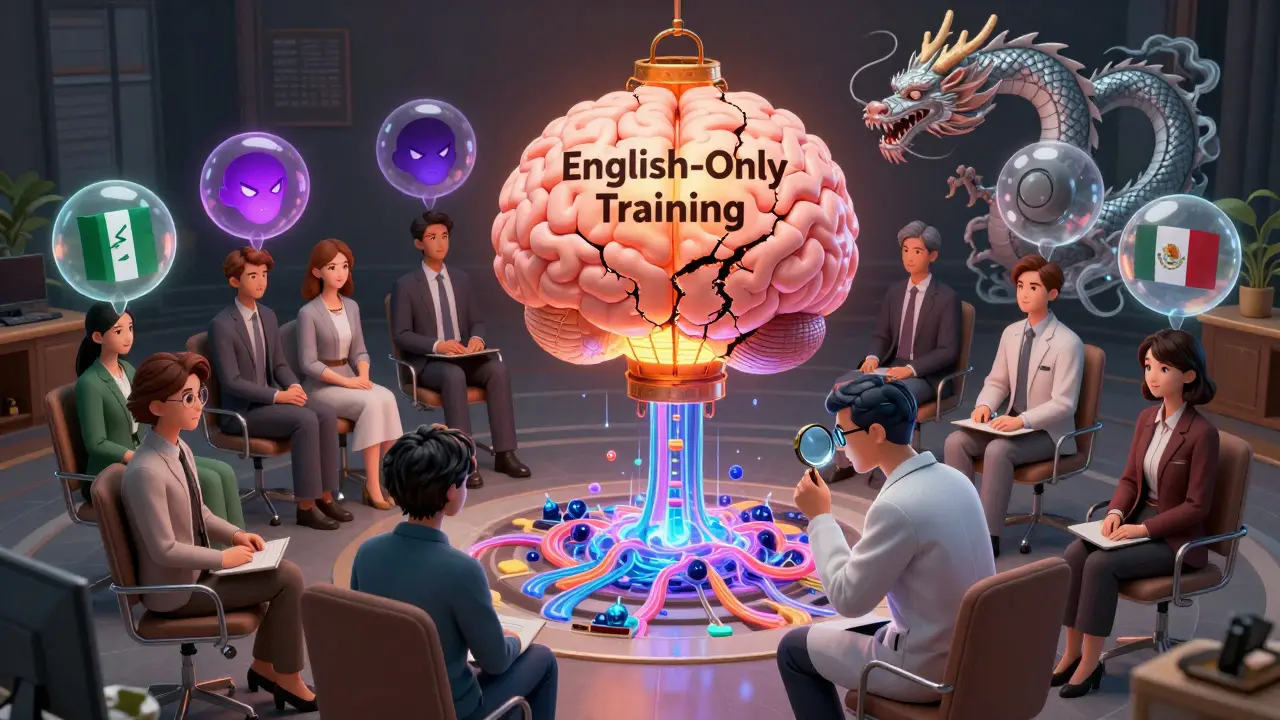
The Next Wave: Edge AI and Real-Time Decisions
The future isn’t just about better models - it’s about speed. Edge computing is bringing sentiment analysis closer to the source. Instead of sending your voice clip to a cloud server for analysis, your phone or smart speaker does it locally - in under 200 milliseconds. That’s critical for live interactions. Imagine a self-checkout kiosk that notices you’re hesitating, then automatically offers help in your native language. Or a car that detects your stress level from your voice and adjusts the cabin temperature and music. These systems are already live in industrial settings. Factory workers wear smart headsets that monitor vocal stress during shifts. If an operator’s tone spikes for more than 30 seconds, the system alerts a supervisor - not because they’re late, but because they might be on the verge of burnout. That’s not customer service. That’s human preservation.What’s Next by 2030
By 2030, sentiment analysis won’t be a tool - it’ll be infrastructure. Like electricity. Every digital interaction will have an emotional layer attached to it. Here’s what’s coming:- Emotion-aware advertising: Ads that change in real time based on your mood. A tired parent scrolling at midnight gets soothing visuals. A teenager in a good mood sees bold, energetic content.
- Personalized healthcare: Mental health apps that track daily emotional patterns and alert therapists before a crisis. Early trials in 2025 showed a 40% reduction in depressive episode severity.
- Policy and governance: Governments using sentiment analysis on public forums to detect rising anger around housing, taxes, or education - before protests erupt.
- AI-human collaboration: Agents that don’t replace humans, but empower them. A call center rep gets a real-time overlay: "Customer is overwhelmed. Offer pause. Suggest 10% discount."

Should You Use It?
If you’re a small business? Start simple. Use a cloud API like Google Cloud Natural Language or Amazon Comprehend. It costs under $50/month. Analyze your customer emails. See where sentiment drops after certain responses. Fix those points. If you’re a mid-sized company? Build a multimodal system. Integrate voice and text analysis into your support platform. Train it on your own data - not generic datasets. Your customers speak differently than the average American. Your tone matters. If you’re a large enterprise? Don’t just buy tools. Build an emotion data team. Hire NLP engineers, ethicists, and cultural linguists. Your AI will make mistakes. You need people to catch them.Final Thought
AI sentiment analysis isn’t about reading minds. It’s about reading humans - better than we’ve ever been able to before. The companies that win won’t be the ones with the fanciest algorithms. They’ll be the ones that use emotion data ethically, transparently, and with real humility. Because at the end of the day, sentiment analysis doesn’t care about your brand. It cares about your people. And if you ignore what they’re truly feeling, even the smartest AI won’t save you.Can AI sentiment analysis really understand sarcasm?
Yes - but only if it’s trained on it. Modern models like GPT-4 and Claude 3 can detect sarcasm in context, especially when combined with voice tone and response patterns. However, they still fail often with cultural sarcasm or ambiguous phrasing. A phrase like "Nice job, genius" might be flagged as positive if the system hasn’t seen enough examples of sarcastic usage in your industry. Training on real customer data improves accuracy dramatically.
Is sentiment analysis biased?
Absolutely. Most models are trained on data from North America and Europe, using standard English. They struggle with dialects, non-English phrases, and cultural expressions. A customer saying "I’m cool" in Nigerian Pidgin might be labeled as "neutral," while the same phrase in American English is often flagged as "positive." Bias also creeps in when training data reflects existing inequalities - like associating certain accents with negative sentiment. The fix? Use diverse datasets and audit your system regularly.
How much does it cost to implement?
Basic text-only analysis via API costs $20-$100/month. Mid-tier systems that include voice tone analysis run $5,000-$20,000/year. Enterprise multimodal systems - with facial recognition, biometrics, and real-time dashboards - can cost $500,000 to $5 million, depending on scale. Most companies start small and scale as they prove value. The biggest cost isn’t tech - it’s training your team to trust and interpret the data.
What industries benefit the most?
Customer service, retail, healthcare, and finance lead the way. Airlines use it to predict passenger frustration before delays turn into complaints. Hospitals track patient tone during virtual check-ins to flag mental health risks. Banks analyze loan application calls to detect stress signals that might indicate fraud risk or need for financial counseling. Even manufacturing uses it - monitoring worker voice stress to prevent burnout and accidents.
Can AI replace human customer service reps?
Not completely - and shouldn’t. AI handles routine issues: password resets, tracking updates, simple complaints. But when emotions run deep - grief, anger, confusion - humans are still essential. The best systems use AI to route tough cases to the right human, with full context. One study showed that when AI flagged a case as "high emotional intensity," human agents resolved it 67% faster than without the context. AI doesn’t replace humans - it makes them better.
Heather James
March 13, 2026 AT 18:04Sarah Hammon
March 13, 2026 AT 18:35iam jacob
March 14, 2026 AT 04:13Jesse Pals
March 14, 2026 AT 20:54Diane Overwise
March 16, 2026 AT 14:59Shreya Baid
March 17, 2026 AT 20:11Christopher Hoar
March 18, 2026 AT 06:00Robert Kunze
March 19, 2026 AT 23:22Sarah Zakareckis
March 20, 2026 AT 23:07Marie Vernon
March 21, 2026 AT 22:19Elizabeth Kurtz
March 23, 2026 AT 00:12john peter
March 23, 2026 AT 02:59Marc Morgan
March 23, 2026 AT 19:16Anastasia Thyroff
March 25, 2026 AT 01:50Kira Dreamland
March 25, 2026 AT 20:58shreya gupta
March 26, 2026 AT 14:29Derek Lynch
March 28, 2026 AT 11:22Ann Liu
March 30, 2026 AT 08:46