Future of Rollup Technology: ZK vs Optimistic Scaling in 2026
Imagine sending money across the globe instantly, paying a fraction of a cent instead of dollars. For years, this was the promise of blockchain, but network congestion and high fees kept it out of reach for most people. That changed with the rise of rollup technology, which is a Layer-2 scaling solution that batches multiple transactions into a single proof to reduce costs and increase speed on main blockchains. As we move through 2026, rollups are no longer just an experimental fix; they are the backbone of modern decentralized finance and digital ownership.
The core problem these systems solve is simple: main blockchains like Ethereum or Bitcoin can only process so many transactions per second. When too many users try to transact at once, fees spike, and networks slow down. Rollups handle the heavy lifting off-chain and then submit a compressed summary back to the main network. This keeps the security of the main chain while drastically cutting the cost and time required for each interaction.
How Rollups Actually Work
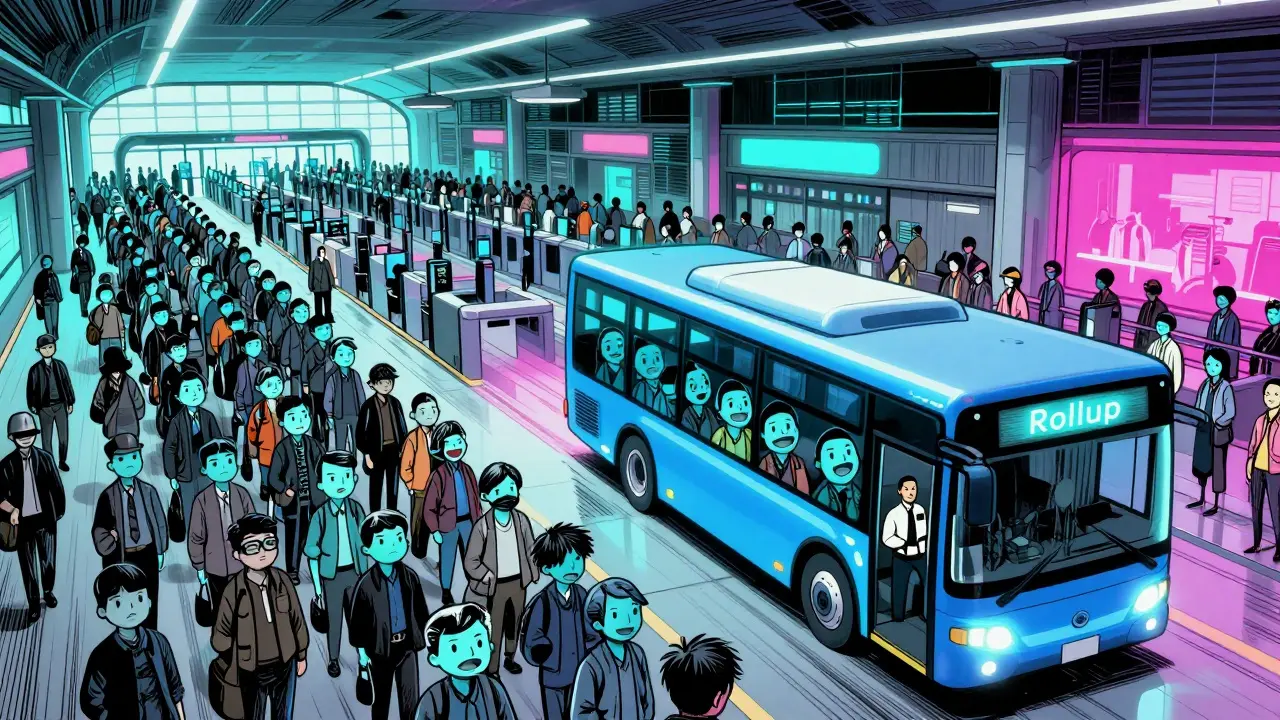
To understand where the technology is heading, you first need to grasp how it operates today. Think of a main blockchain as a busy airport terminal. Every transaction is a passenger trying to go through security individually. It’s slow, expensive, and chaotic during peak hours. A rollup acts like a private charter flight. Instead of every passenger going through security one by one, they all board a bus together. The bus driver (the rollup operator) verifies everyone’s tickets off-site and then presents a single manifest to the airport authorities.
This process involves two critical steps:
- Off-Chain Execution: Transactions are collected and processed on a secondary layer. This happens quickly because it doesn’t compete with the main network’s limited resources.
- On-Chain Verification: The result of those thousands of transactions is condensed into a small piece of data-a cryptographic proof-and submitted to the main blockchain. The main chain simply checks if the math adds up.
This separation of execution and verification is what allows networks to scale. By moving computation off the main chain, rollups can handle tens of thousands of transactions per second, compared to the dozens that native chains often struggle with.
ZK-Rollups vs. Optimistic Rollups: The Current Battle
Not all rollups are created equal. In 2026, the landscape is dominated by two distinct approaches, each with its own trade-offs. Understanding the difference between them is crucial for developers choosing a platform and investors evaluating potential.
| Feature | ZK-Rollups | Optimistic Rollups |
|---|---|---|
| Verification Method | Cryptographic Zero-Knowledge Proofs | Fraud Proofs (Challenge Period) |
| Finality Speed | Near-instant (seconds to minutes) | Slow (days for dispute window) |
| Cost | Higher upfront compute cost | Lower upfront cost |
| Security Model | Mathematical guarantee of validity | Economic incentive for honesty |
| Best For | Payments, high-frequency trading | Complex smart contracts, gaming |
Zero-Knowledge Rollups use advanced cryptography to prove that a set of transactions is valid without revealing the underlying data. This provides immediate finality and strong privacy. However, generating these proofs requires significant computational power, which can be expensive for complex applications.
Optimistic Rollups, on the other hand, assume transactions are valid unless someone proves otherwise. They post the full transaction data to the main chain and open a challenge period (usually seven days). If no one disputes the batch, it becomes final. This approach is cheaper and easier to implement for complex code but suffers from slower withdrawal times.

The Future Trajectory: What Comes Next?
The future of rollup technology isn't about choosing one winner over the other. Instead, we are seeing a convergence and specialization. Here are the key trends shaping the next decade of scaling.
1. The Rise of Modular Blockchains
We are moving away from monolithic blockchains that try to do everything-consensus, execution, and data availability-on one layer. The future is modular. Rollups will increasingly rely on specialized Data Availability (DA) layers. Projects like EigenDA or Celestia are emerging as neutral grounds where rollups can post their data cheaply and securely, without clogging the main Ethereum or Bitcoin chains. This separation allows rollups to become even more efficient and scalable.
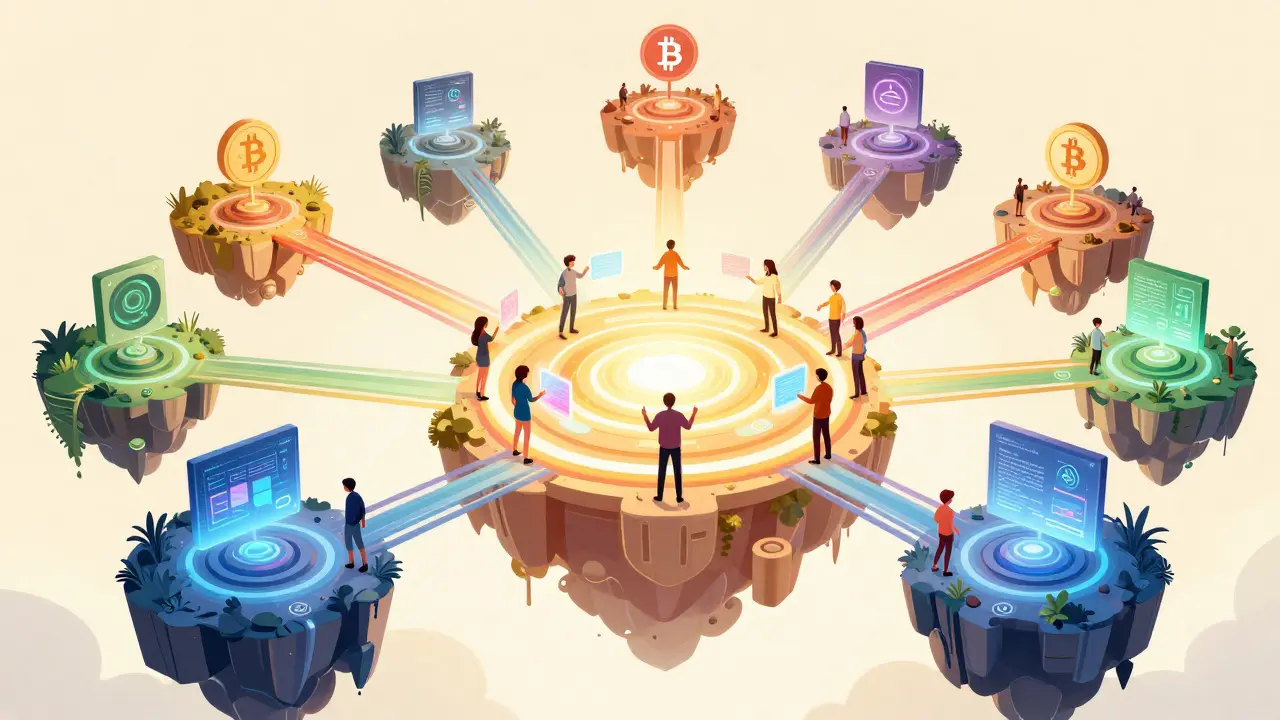
2. Universal Bridging and Interoperability
One of the biggest frustrations for users today is being stuck on one specific rollup. Moving assets between Arbitrum, Optimism, zkSync, and StarkNet often feels risky and clunky. The future lies in universal bridging protocols. Imagine a system where your wallet automatically routes your transaction to the cheapest and fastest rollup available, regardless of which one you started on. Standards like ERC-7683 are paving the way for this seamless cross-rollup experience, making the underlying infrastructure invisible to the end-user.
3. Bitcoin Rollups Gain Traction
While Ethereum has been the primary home for rollups, 2026 sees a surge in activity on Bitcoin. With the introduction of smart contract capabilities via Ordinals and Runes, developers are building rollups specifically for Bitcoin. These solutions aim to bring DeFi and NFTs to the world’s largest cryptocurrency without compromising its security model. Lightning Network remains popular for payments, but new rollup architectures are enabling more complex programmable money on Bitcoin.
4. Privacy-Preserving Computation
As regulations tighten globally, privacy is becoming a feature, not just a bug. ZK-rollups are uniquely positioned to lead here. Future iterations will allow users to prove they meet certain criteria (like being over 18 or having sufficient funds) without revealing their identity or balance. This "selective disclosure" will unlock enterprise adoption in sectors like healthcare and supply chain management, where data sensitivity is paramount.
Challenges That Remain
Despite the progress, hurdles remain. Centralization is still a concern. Many rollup sequencers (the entities that order transactions) are controlled by single companies. While this improves speed, it reintroduces trust assumptions that blockchain aims to eliminate. The industry is working toward decentralized sequencer networks, but this is technically difficult to achieve without sacrificing performance.
Another issue is user experience. Managing keys, bridging assets, and understanding gas fees across different layers is still too complex for the average person. Abstract accounts and sponsored transactions are helping, but true mass adoption requires a level of simplicity where users don't know-or care-which layer their transaction is happening on.
Why This Matters for You
If you are a developer, now is the time to learn Solidity for EVM-compatible rollups or Cairo/Stylus for non-EVM environments. The demand for builders who understand Layer-2 architecture is skyrocketing. If you are an investor, look beyond token price and examine the total value locked (TVL) and daily active users of various rollup ecosystems. Those with sustainable fee models and diverse use cases will outlast the hype cycles.
For everyday users, the future means lower barriers to entry. Micropayments for content creation, instant cross-border remittances, and frictionless gaming economies are all becoming viable thanks to rollups. The technology is quietly transforming blockchain from a speculative asset class into a functional global computing platform.
What is the main difference between ZK-rollups and Optimistic rollups?
The main difference lies in how they verify transactions. ZK-rollups use mathematical proofs to verify validity instantly, offering faster finality but higher computational costs. Optimistic rollups assume transactions are valid and only verify them if challenged, resulting in lower costs but slower finality due to a dispute period.
Are rollups safe to use?
Yes, rollups inherit the security of the main blockchain they are built on. Since the final state and proofs are posted to the mainnet, compromising a rollup would require compromising the underlying L1 network, which is extremely difficult. However, users should be aware of bridge risks and centralization concerns associated with specific sequencers.
Will rollups replace the main blockchain?
No, rollups are designed to complement, not replace, the main blockchain. They rely on the mainnet for security and data availability. The main blockchain acts as the settlement layer, while rollups act as the execution layer, handling the bulk of user activity.
What is the role of Data Availability in rollups?
Data Availability ensures that the transaction data used by rollups is publicly accessible so anyone can reconstruct the state if needed. As rollups grow, posting this data directly to Ethereum becomes expensive. Specialized DA layers offer cheaper alternatives, allowing rollups to scale further without congesting the main chain.
How do rollups reduce transaction fees?
Rollups reduce fees by batching thousands of transactions into a single proof or data blob. Instead of paying for each transaction individually on the expensive mainnet, users share the cost of the single on-chain submission. This economies-of-scale effect can reduce fees by 10x to 100x compared to mainnet transactions.