How Nepalis Use Cryptocurrency Despite a Complete Ban: The Underground Reality

Imagine sending money to your family back home. You want it to be fast, cheap, and instant. But the banks charge you a fortune in fees, and the transfer takes days. Now imagine that the government says the fastest way to do this is illegal. This is the daily reality for many people in Nepal, a country where cryptocurrency trading, mining, and payments are completely banned under strict national laws.
As of August 2026, Nepal remains one of the few countries in Asia with an absolute prohibition on digital assets. The Nepal Rastra Bank (NRB) has maintained a hardline stance since September 2021. Yet, despite the threat of prison time and heavy fines, thousands of Nepalis still use crypto. How? They go underground. They use peer-to-peer networks, international exchanges, and decentralized tools to bypass the state’s financial firewall. This isn’t just about speculation; it’s about survival and efficiency in a broken remittance system.
The Iron Fist: Why Nepal Banned Crypto Completely
To understand how people break the rules, you first have to understand why the rules exist. The ban in Nepal isn’t accidental. It stems from deep-seated fears within the government and the central bank. The primary concern is capital flight. Nepal relies heavily on remittances-money sent home by millions of Nepalis working abroad. These funds fuel the economy. If people can easily move their wealth into Bitcoin or Ethereum and out of the country, the NRB loses control over foreign exchange reserves.
Then there is the fear of fraud. In the early days of crypto adoption globally, scams were rampant. The Nepali government worried that unregulated digital assets would become a playground for Ponzi schemes and money laundering. Under the Foreign Exchange Regulation Act (2019), any transaction involving virtual currency is treated as a violation of foreign exchange controls. Add to this the Electronic Transaction Act (ETA) of 2063, which allows authorities to pursue cybercrime charges against those using unauthorized digital payment systems.
The penalties are severe. If caught, individuals face up to three years in prison. Fines can reach three times the value of the transaction involved. The government can also confiscate assets, including digital wallets and physical property linked to the trade. High-profile arrests in Kathmandu serve as a warning. Police actively monitor social media and banking records for signs of crypto activity. Yet, the pressure to use these tools remains high.
The Remittance Trap: Why People Break the Law
So, why risk jail time? The answer lies in the cost of doing things the "right" way. Traditional remittance services in Nepal are expensive. When a worker in Dubai or Qatar sends money home via Western Union or traditional banks, they lose a significant percentage to fees and unfavorable exchange rates. For low-margin jobs, every percent counts.
Cryptocurrency offers a different path. Sending USDT (Tether) or Bitcoin across borders costs fractions of a cent and takes minutes. For a tech-savvy youth in Kathmandu receiving support from an elder brother in Australia, crypto is not a gamble-it’s a utility. It’s faster, cheaper, and often more reliable than the local banking infrastructure, which can be slow and bureaucratic.
This creates a massive contradiction. The government bans crypto to protect the banking sector, but the banking sector fails to provide efficient cross-border services. As a result, citizens turn to the very thing the state forbids. The demand is driven by necessity, not greed. This underground economy thrives because the legal alternative is too painful to bear.

How Nepalis Actually Move Crypto: The Methods
Since no official exchange operates in Nepal, users rely on informal and decentralized methods. Here is how the underground pipeline works:
- Peer-to-Peer (P2P) Platforms: Many Nepalis use global P2P markets like those found on Binance or Bybit. They connect directly with buyers and sellers outside Nepal. Payments are made via local bank transfers or mobile wallets (like eSewa or Khalti), while the crypto moves digitally behind the scenes. To avoid detection, users often keep transaction sizes small and spread them across multiple accounts.
- International Exchanges: Users create accounts on offshore exchanges using passports or IDs from other countries if possible. They deposit funds via credit cards issued by international banks or through third-party intermediaries who hold fiat currency abroad.
- Decentralized Finance (DeFi): Tech-savvy users bypass centralized exchanges entirely. They use non-custodial wallets like MetaMask or Trust Wallet. They swap stablecoins for crypto directly on-chain. Since DeFi doesn’t require Know Your Customer (KYC) verification, it leaves fewer paper trails for the NRB to follow.
- Crypto ATMs and Offline Swaps: In major hubs like Kathmandu and Pokhara, informal networks exist where cash changes hands for crypto. These transactions happen in person, often facilitated by trusted community members or local tech groups. There are no bank records, only trust.
These methods are risky. Without regulatory protection, if a P2P seller runs away with your cash, you have no recourse. But for many, the risk is worth the savings.
The Government’s Countermove: The CBDC Plan
The NRB knows people are leaving the system. Their response isn’t to lift the ban, but to replace crypto with something they control. The government is developing a Central Bank Digital Currency (CBDC), a digital version of the Nepalese Rupee backed by the state.
The goal is clear: offer the speed and convenience of digital payments without the volatility or anonymity of Bitcoin. A CBDC would allow the NRB to track every transaction in real-time. It would eliminate the need for private cryptocurrencies while modernizing the financial infrastructure. Plans suggest a rollout within two years, aiming to integrate with existing mobile banking apps.
However, a CBDC solves only part of the problem. It helps with domestic payments but doesn’t necessarily solve the cross-border remittance issue unless it’s interoperable with other currencies. Until then, the black market for foreign crypto will likely persist.
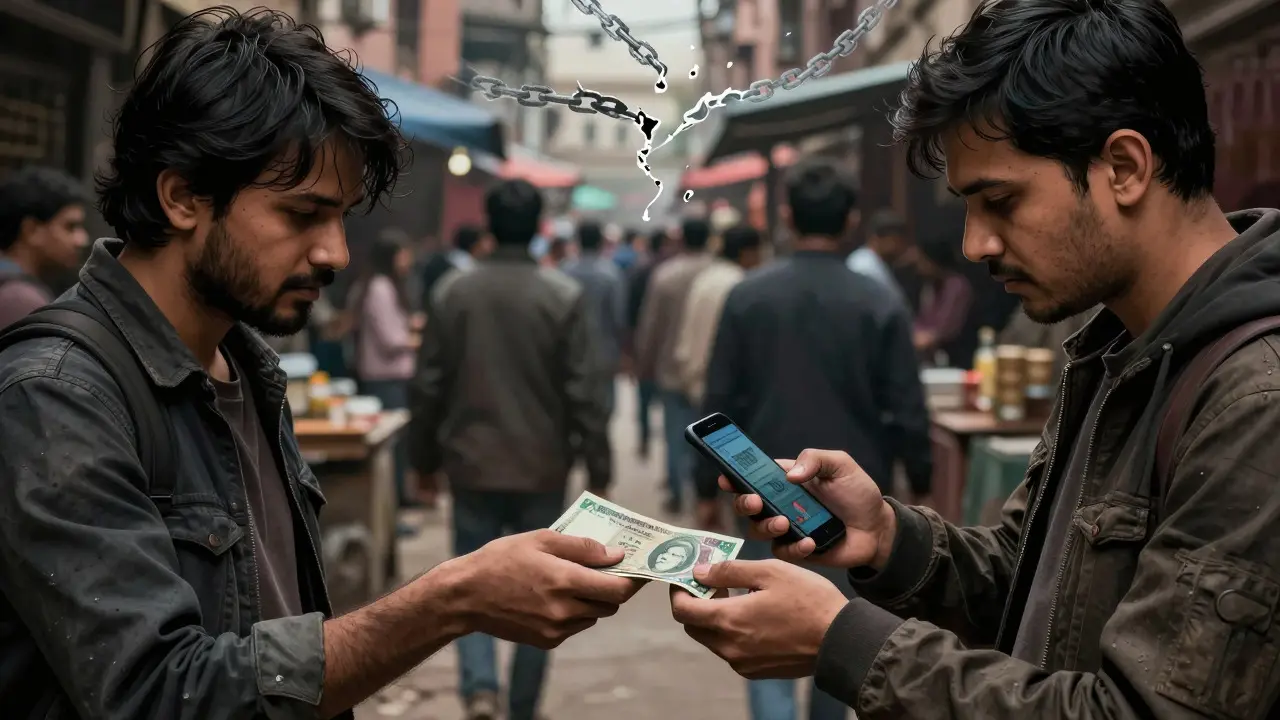
Risks and Realities for the User
Using crypto in Nepal is a tightrope walk. Here are the specific dangers users face:
- Legal Prosecution: The NRB shares data with tax authorities and police. Large, unusual bank transfers can trigger investigations. Being labeled a "crypto trader" can ruin your reputation and lead to asset seizure.
- Scams and Fraud: Without regulation, the underground market is full of bad actors. Fake P2P merchants, phishing sites, and wallet drainers target inexperienced users. If you get scammed, the police may arrest you for holding illegal assets before helping you recover losses.
- Technical Complexity: Managing private keys, seed phrases, and gas fees requires knowledge. Many beginners lose funds due to simple errors, like sending Bitcoin to an Ethereum address.
- Bank Account Freezing: Banks often freeze accounts if they suspect crypto-related activity. Even if you’re innocent, proving your innocence can take months, during which you have no access to your livelihood.
The Future: Will the Ban Hold?
The tension between the state and its citizens is growing. The youth of Nepal are digital natives. They see blockchain technology as the future of finance, not a threat. The current ban stifles innovation, pushing talent and capital abroad. Brain drain is already a major issue in Nepal; adding financial repression makes it worse.
Global trends are shifting. Neighboring India has moved toward regulation rather than outright bans. Countries like El Salvador and parts of Africa have embraced crypto. Nepal’s isolation looks increasingly outdated. However, political change is slow. The NRB prioritizes stability over innovation.
For now, the underground economy continues. As long as remittances remain costly and the banking system remains inefficient, Nepalis will find ways to use crypto. The question isn’t whether they will stop, but how long the state can enforce a ban that contradicts economic reality.
Is cryptocurrency completely illegal in Nepal in 2026?
Yes. As of 2026, all forms of cryptocurrency activity-including buying, selling, mining, and using crypto for payments-are banned by the Nepal Rastra Bank. Violators face imprisonment, fines, and asset confiscation under the Foreign Exchange Regulation Act and the Electronic Transaction Act.
Why do Nepalis use crypto if it is banned?
The primary driver is remittances. Traditional banking channels charge high fees and take days to process international transfers. Crypto offers a faster, cheaper alternative for families receiving money from relatives working abroad, making the legal risk worthwhile for many.
What are the penalties for using crypto in Nepal?
Penalties include up to three years in prison, fines equivalent to three times the transaction amount, and confiscation of assets. Authorities may also pursue cybercrime charges under the Electronic Transaction Act (ETA) 2063.
How do people buy crypto in Nepal without being caught?
Users typically use Peer-to-Peer (P2P) platforms on international exchanges, decentralized finance (DeFi) protocols, or offline cash swaps. They often use small transaction amounts, multiple bank accounts, and non-KYC wallets to minimize their digital footprint.
Will Nepal ever legalize cryptocurrency?
Currently, there are no plans to legalize private cryptocurrencies. Instead, the Nepal Rastra Bank is focusing on launching a Central Bank Digital Currency (CBDC) to provide digital payment options while maintaining state control over the financial system.
Are there any safe ways to invest in crypto from Nepal?
There are no legally safe ways. Any involvement carries legal risk. However, users mitigate technical risks by using reputable non-custodial wallets, verifying P2P traders thoroughly, and avoiding large, traceable bank transfers linked directly to crypto exchanges.