How People in Sanctioned Countries Access Crypto Exchanges
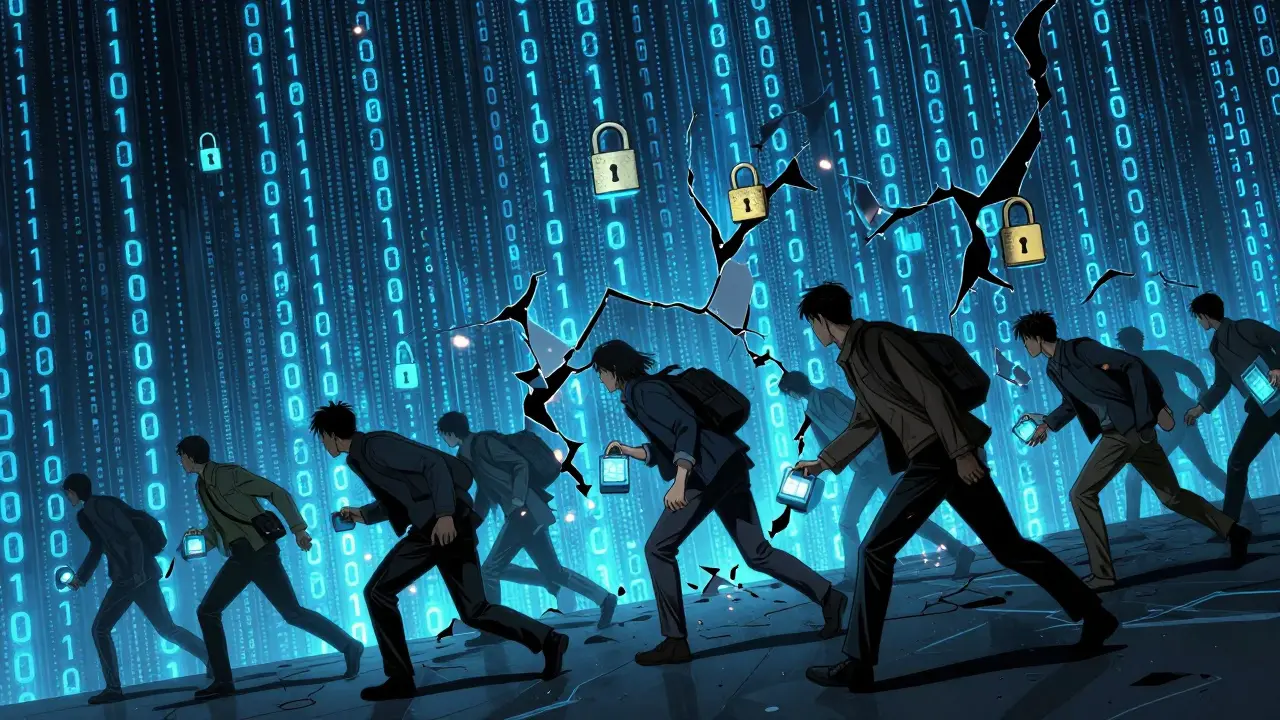
Imagine waking up to find your digital wallet frozen and your access to the global financial system cut off by a government thousands of miles away. For millions of people living under international sanctions, this isn't a hypothetical scenario-it's daily life. While regulators try to build digital walls, the nature of blockchain makes those walls incredibly porous. The real question isn't whether people in sanctioned zones can access crypto, but how they keep doing it as the rules get tighter.
| Method | Primary Tool | Risk Level |
|---|---|---|
| Asset Migration | Polygon / DAI | Moderate |
| Successor Platforms | Offshore Exchanges | High |
| Decentralized Finance | DeFi Protocols | Low to Moderate |
| P2P Networks | Telegram-based bots | Moderate |
The Cat-and-Mouse Game with Regulators
At the heart of this struggle is the Office of Foreign Assets Control, or OFAC, the U.S. agency responsible for enforcing economic sanctions. They've ramped up their game significantly. By 2025, OFAC had already sanctioned dozens of individuals and entities specifically for crypto-related crimes. They aren't just targeting people; they are targeting the code. For instance, the SDN List (Specially Designated Nationals) now tracks over 1,200 specific crypto wallet addresses. If your funds touch one of these, they're essentially radioactive.
Despite this, the sheer volume of activity is staggering. We're talking about billions of dollars moving through these networks. A huge portion of this traffic flows through Bitcoin, which handles about 65% of identified sanctioned transactions, followed by Ethereum and various stablecoins. The problem for regulators is that every time they plug one hole, users find a new way around it.
The Shift to "Successor" Exchanges
When a major exchange gets hammered by sanctions, it doesn't usually just vanish. Instead, it evolves. Take the case of Garantex. This Russian exchange was a massive hub for processing illicit funds until the U.S. and European authorities seized its domain and froze millions in assets in early 2025. Did the users just stop trading? Hardly. The customer base and funds quickly migrated to a successor platform called Grinex.
This "phoenix's rise" strategy is common. These platforms often morph into decentralized money laundering systems. They might use cross-border payment processors like Exved to move dual-use goods or operate through Telegram-based exchanges like MKAN Coin in Dubai. By operating out of jurisdictions with loose oversight, they can offer the same services as the original exchange while staying one step ahead of the law.
Adapting to Stablecoin Freezes
For a long time, USDT (Tether) was the gold standard for people in sanctioned countries because it's a stable peg to the dollar. But that changed in July 2025, when Tether executed a massive freeze of Iranian-linked funds, hitting 42 addresses tied to the exchange Nobitex. This sent a shockwave through the community.
The reaction was almost instantaneous. Rather than panicking and selling, users-steered by local influencers and government-aligned channels-rapidly swapped their holdings into DAI via the Polygon network. Why? Because DAI is a decentralized stablecoin. There is no central company like Tether that can simply flip a switch and freeze your assets. This migration shows that retail users in these regions are often more tech-savvy and agile than the regulators realize.

The Role of DeFi and Mixers
As centralized exchanges (CEXs) implement stricter KYC (Know Your Customer) rules, users are flocking to DeFi (Decentralized Finance). These protocols allow people to swap assets or lend and borrow without ever providing a passport or proof of address. In January 2025, OFAC made history by sanctioning a DeFi protocol for the first time, freezing $150 million. It was a loud signal that no part of the ecosystem is truly "off-limits."
To further hide their tracks, many use "mixers"-services that scramble the trail of cryptocurrency transactions to make them untraceable. Tornado Cash is the most famous example. Even though these services face constant enforcement actions and legal battles, the demand remains high because anonymity is the only real security for someone in a high-risk jurisdiction.
The Compliance Gap in Global Exchanges
It's not just about users sneaking in; sometimes the exchanges leave the door wide open. The case of ShapeShift proves this. In 2025, the defunct Swiss exchange had to pay $750,000 to OFAC because it simply didn't have a sanctions compliance program. This allowed users from Cuba, Iran, Sudan, and Syria to trade freely. For a while, these "compliance gaps" were the primary way users accessed the global market.
However, those gaps are closing. OFAC now works closely with INTERPOL and Europol. In 2024 alone, crypto businesses paid a staggering $430 million in penalties for sanctions violations. Exchanges are now terrified of these fines, leading to the "over-blocking" of entire regions based on IP addresses, which in turn pushes users toward VPNs and more complex evasion tools.
Safe Havens and Regulatory Arbitrage
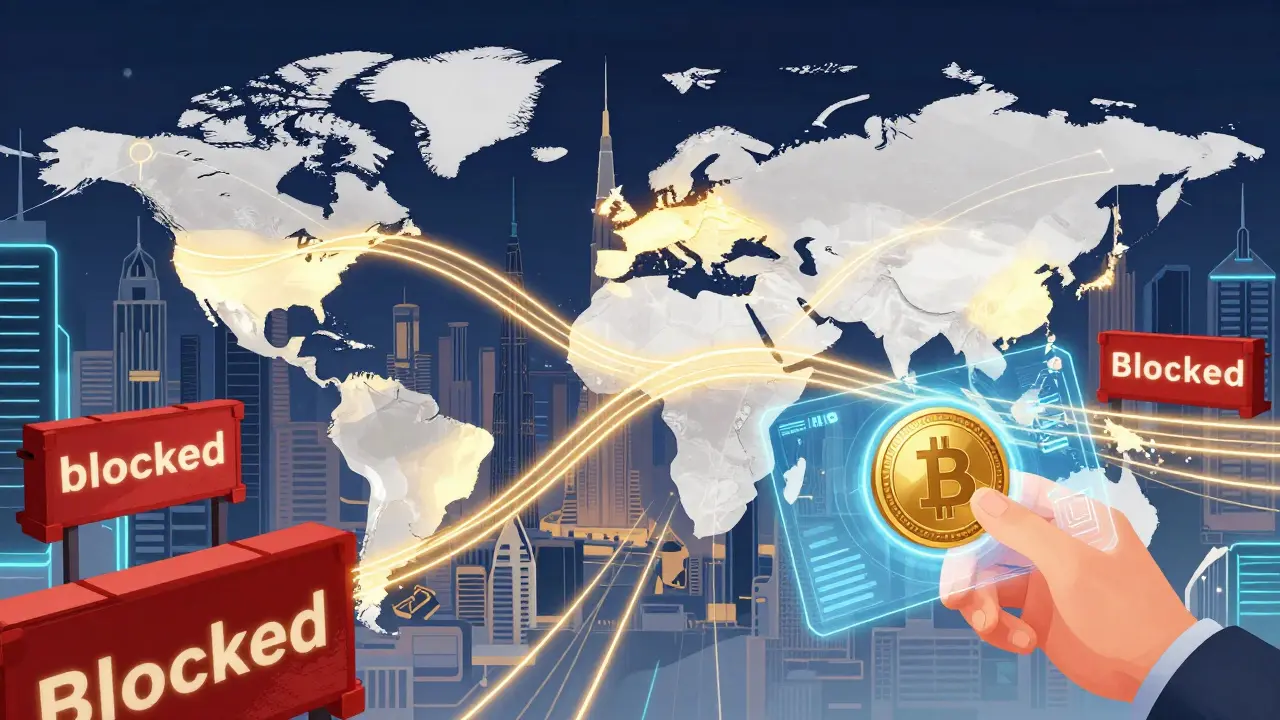
While some countries are strictly sanctioned, others have created "crypto paradises" that indirectly help these users. Sophisticated actors often route their funds through jurisdictions like the United Arab Emirates, specifically Dubai. Under the VARA (Virtual Assets Regulatory Authority), Dubai has become a massive hub for crypto firms, offering a tax-free environment that attracts thousands of international traders.
Similarly, countries like El Salvador, which made Bitcoin legal tender, or Singapore, which has very strong AML (Anti-Money Laundering) but friendly tax laws, provide the infrastructure that sanctioned entities use to launder or legitimize their funds. By moving assets through a sequence of friendly jurisdictions, the original source of the funds becomes nearly impossible to trace.
Can OFAC actually freeze crypto in a private wallet?
Not directly. OFAC cannot "reach into" a private wallet and take coins. However, they can sanction the wallet address. This means that any centralized service (like an exchange or a payment processor) that interacts with that address is breaking the law. Effectively, the funds become trapped because the user cannot move them to a legal exchange to cash out.
Why is DAI preferred over USDT in sanctioned countries?
USDT is issued by a central company (Tether) that can freeze funds upon request from authorities. DAI is decentralized and governed by a community and smart contracts. This means there is no single entity with the power to freeze an individual's account, making it much safer for users in high-risk zones.
Do VPNs actually work for accessing blocked exchanges?
They help bypass simple IP-based geo-blocking, but they aren't a complete solution. Most modern exchanges require KYC (Identity Verification). If you use a VPN but upload a passport from a sanctioned country, you will be blocked immediately. Users often bypass this by using "rented" accounts or P2P trading.
What is a "successor exchange"?
A successor exchange is a new platform that emerges after a primary exchange has been shut down or sanctioned. It typically inherits the user base, funds, and operational model of the previous entity, often operating under a different name and from a different offshore jurisdiction to avoid immediate detection.
How do P2P exchanges help people avoid sanctions?
Peer-to-Peer (P2P) trading removes the middleman. Instead of depositing money into an exchange, a user sends local currency directly to another person's bank account, and that person releases the crypto to them. Since the exchange only acts as an escrow service and doesn't touch the fiat money, it's much harder for regulators to track the actual flow of wealth.
What's Next for the Sanctions Arms Race?
Looking ahead, we are seeing a total escalation. Enforcement is moving beyond just "bad actors" and targeting the very protocols that enable anonymity. But as the data shows-with an 18% annual growth in sanctions-the demand for these services only grows. As long as there is a financial need to bypass restrictions, people will continue to migrate to newer, more decentralized networks.
For those trying to navigate this, the lesson is clear: centralization is a liability. The move from USDT to DAI and from CEXs to DeFi isn't just a trend; it's a survival strategy. Whether it's through the use of Telegram bots or routing funds through Dubai, the goal is always the same-staying liquid in a world where your nationality might be your biggest financial hurdle.
Kim Smith
April 15, 2026 AT 00:14it is just wild how we think we can actually control money with lines of code when human desire for freedom is like... way stronger than any government agency's reach and honestly its kind of poetic that the very thing meant to be a hedge against inflation is now the only way for people to survive in places where the dollar is basically a ghost and i just feel like we are watching the birth of a whole new kind of global shadow economy that'll eventually just make traditional banks look like relics from the stone age lol
Adedamola Oyebo
April 16, 2026 AT 09:26P2P is the way!!! No KYC... No middlemen!!! Just pure trade!!!
Joshua Salwen
April 16, 2026 AT 17:16Omg please!! Everyone is acting like this is some secret magic trick when its basically just basic obfuscation!! You think OFAC is just sleeping while people use a VPN?? They're literally tracking the on-ramps and off-ramps with surgical precision and most people are just begging to get their funds frozen by being so obvious about it!! Absolutely tragic!!
Abhinav Chaubey
April 17, 2026 AT 10:53You clearly lack an understanding of how regional hubs operate. India has seen the rise of these patterns long before the West decided to get scared of a few wallet addresses. The sheer volume of capital moving through these channels makes the U.S. sanctions look like a child trying to stop a flood with a plastic bucket.
Yuhan Mo
April 19, 2026 AT 10:42The transition from CEXs to DeFi protocols is essentially a shift from custodial risk to smart contract risk. While the liquidity is there, the slippage on some of these decentralized swaps can be brutal for retail users trying to move significant volume without a professional market maker.
Saurav Bhattarai
April 21, 2026 AT 08:54Oh, look at the Americans pretending they are the world's financial police. How cute. Your 'sanctions' are just a suggestion for anyone with a brain and a basic understanding of a mixer. Keep pretending you're in control while the real money flows through Dubai and Singapore right under your nose.
Tracy Sperandio
April 22, 2026 AT 08:01This is a total game-changer for financial autonomy! It's absolutely electrifying to see how people are pivoting to DAI to keep their assets safe from the clutches of centralized freezes. We are witnessing a digital revolution that is smashing the old-school barriers to entry and giving power back to the actual users!
siddharth narula
April 22, 2026 AT 16:16It is truly a lamentable state of affairs when the pursuit of financial stability requires such clandestine maneuvers. One must wonder if the ethical implications of circumventing international law are being properly weighed against the necessity of survival. 😔
Kaitlyn Wu
April 24, 2026 AT 06:18We need to be clear that while financial access is a human right, promoting the use of illicit mixers can lead people into very dangerous legal territory. Let's keep the conversation focused on the tools for survival rather than encouraging high-risk criminal activity.
Mike Kempenich
April 25, 2026 AT 02:59I think it's actually pretty inspiring how the community finds these workarounds. The shift to decentralized stablecoins just proves that the technology is working exactly as intended. Things will likely stabilize as more people get comfortable with non-custodial wallets.
Karen Mogollon Gutierrez
April 26, 2026 AT 03:46The audacity of some of these exchanges to charge such exorbitant fees while offering zero compliance is simply appalling! It is an absolute travesty that the burden of risk falls entirely on the individual users while these offshore platforms profit from the chaos!
nathan jones
April 26, 2026 AT 13:54it's just how it is. a VPN and a burner phone go a long way.
Gillian Kent
April 28, 2026 AT 04:39i realy think the most importnt thing is that people dont lose there life savngs trying these risky platforms. some of these sucessor sites look like total scams honestly and its easy to get tricked when your desparate for access