Iran's Crypto Strategy for International Trade: How Sanctions Shaped a Digital Workaround
Sanctions Evasion Calculator: Iran's Crypto Strategy
How Much Can Iran Earn?
Estimate revenue from Bitcoin mining while accounting for Iran's energy constraints and sanctions risks
Note: Based on 2025 Iran's mining conditions (70% efficiency, $50k energy cost)
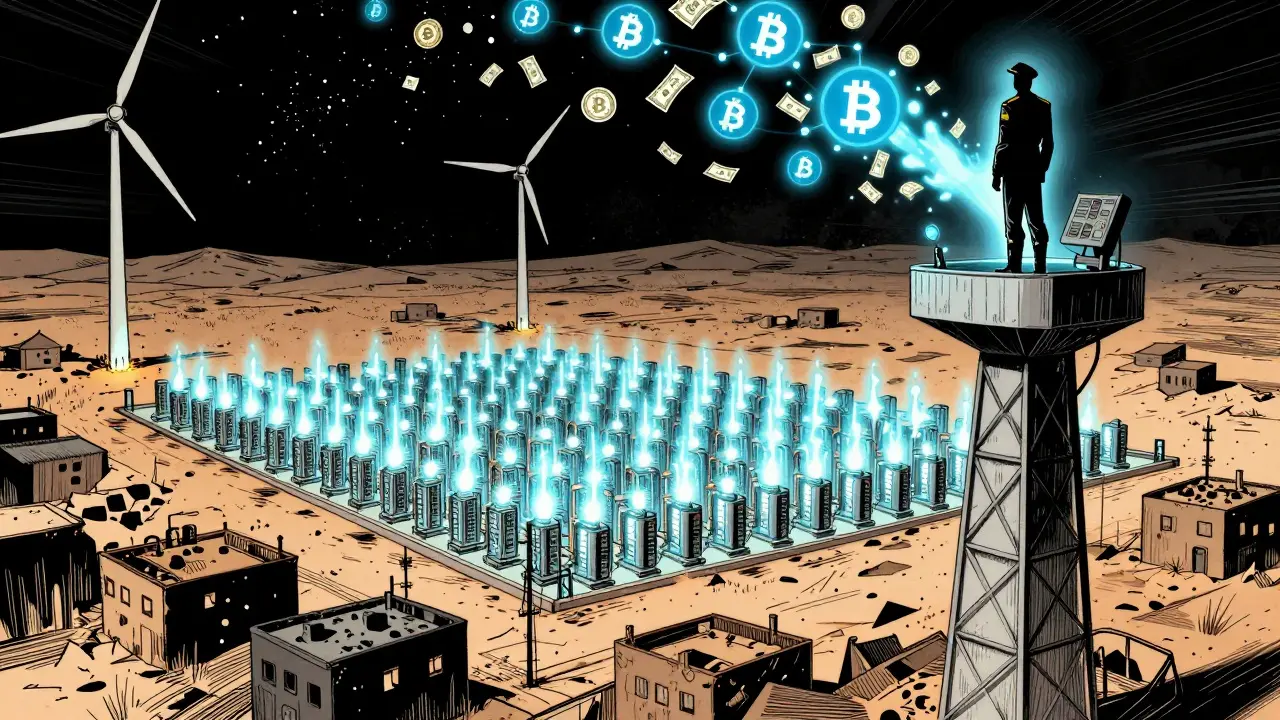
When international sanctions cut Iran off from the global banking system, the country didn’t just sit still. It built its own financial underground - and cryptocurrency became the backbone of that system. By 2025, Iran had turned Bitcoin mining into a state-backed lifeline for trade, using digital assets to buy goods, move money, and bypass Western financial controls. But this strategy didn’t come without massive risks, internal chaos, and a shocking betrayal from within its own crypto infrastructure.
How Sanctions Forced Iran Into Crypto
After years of U.S. and EU sanctions freezing Iranian banks out of SWIFT and blocking access to dollar transactions, businesses in Iran couldn’t pay for imports or receive payments for oil exports. Traditional banking channels shut down. The rial collapsed. Inflation hit 50% in 2023. People started hoarding dollars, gold, even foreign smartphones - anything with real value. But physical cash was hard to move across borders. That’s when crypto stepped in. Unlike banks, Bitcoin doesn’t need permission. No central authority can block a transaction. Iran’s government saw an opportunity: if citizens and businesses could use crypto to trade, they could bypass sanctions. So, instead of fighting it, they leaned in. By 2022, Iran had licensed over 10,000 Bitcoin mining farms and approved nearly 90 cryptocurrency exchanges. The goal? Turn cheap electricity and natural gas into digital currency - then sell that currency abroad for hard cash. This wasn’t just about survival. It was about rewriting the rules. Iran was mining nearly 5% of the world’s new Bitcoin. That’s more than some small countries. And while the U.S. and Europe watched, Iran quietly built a parallel financial system - one that ran on blockchain, not bank wires.The Nobitex Empire and Its Downfall
At the center of this system was Nobitex - Iran’s biggest crypto exchange, with over 11 million users. It wasn’t just a trading platform. It was the bridge between Iranian households and global markets. People sold their Bitcoin on Nobitex, got rials in return, and used those rials to buy medicine, food, and spare parts for factories. Importers used Nobitex to pay for machinery from Turkey or China. The exchange became so essential that it was practically a public utility. But Nobitex wasn’t just a tool for civilians. Evidence from blockchain analysts at Elliptic showed deep ties between Nobitex wallets and financial networks linked to the Islamic Revolutionary Guard Corps (IRGC). Some transactions traced back to oil sales funneled through front companies in the UAE and Malaysia. The IRGC-Quds Force used crypto to move hundreds of millions in illicit funds - and Nobitex was one of the main pipelines. That made it a target. On June 18, 2025, hackers exploited a vulnerability in Nobitex’s hot wallet system and stole over $90 million in Bitcoin, Ethereum, and Tron. The loss wasn’t just financial - it was existential. For the first time, Iran’s crypto-based sanctions evasion strategy had a massive, public failure. Users lost savings. Importers couldn’t pay suppliers. The government scrambled to reassure the public, but trust was broken.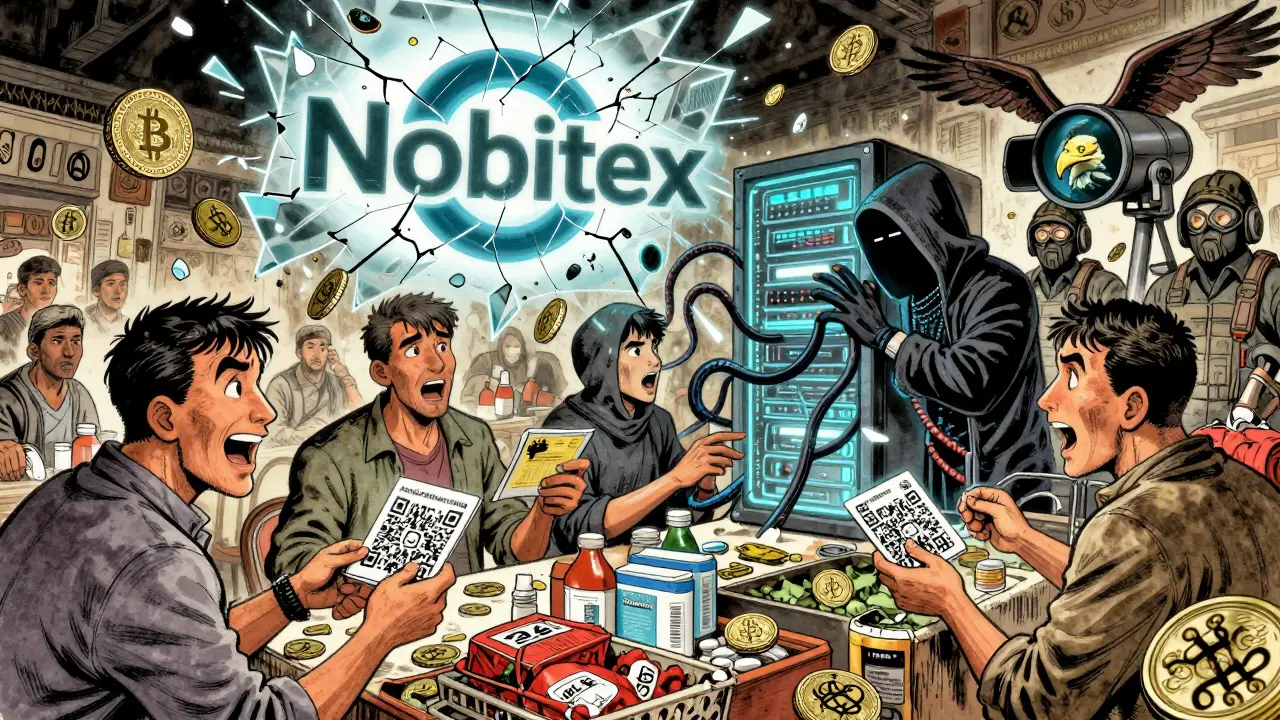
State Control vs. Crypto Freedom
Iran’s government never wanted true decentralization. It wanted control. So while crypto was allowed for trade, it was tightly regulated. The Central Bank of Iran banned crypto payments for domestic purchases - you couldn’t use Bitcoin to buy bread in Tehran. But you could use it to pay for a German medical device. That distinction was intentional: crypto was legal only when it served the state’s foreign trade goals. In early 2025, the government cracked down hard. It shut down rial-based payment gateways for exchanges, forcing all transactions to go through licensed intermediaries. Mining operations had to register, pay taxes, and use government-approved power contracts. The goal? Stop citizens from smuggling wealth out of the country - while still letting the regime move money abroad. It was a contradiction. The same system that let Iran import goods also let wealthy elites move billions out. The government couldn’t stop one without breaking the other. And as mining farms consumed more electricity, blackouts spread across cities. In Tehran, hospitals ran on backup generators while Bitcoin miners kept their rigs running - legally, with government permission.The $600 Million Shadow Network
By September 2025, the U.S. Treasury’s Office of Foreign Assets Control (OFAC) exposed the full scale of Iran’s crypto-based sanctions evasion. A shadow banking network, operating through front companies in Dubai, India, and Turkey, had moved over $100 million in crypto tied directly to Iranian oil sales between 2023 and 2025. The network used Ethereum and Tron wallets to disguise the origin of funds, then converted them into cash through unregulated exchanges. One key figure, Arash Estaki Alivand, was publicly named by OFAC. His wallets, linked to multiple Iranian oil exporters, received payments from buyers in Southeast Asia. He then routed those funds through crypto mixers and decentralized exchanges to avoid detection. The network was worth an estimated $600 million - and it was just one piece of a much larger puzzle. What made this system so hard to stop? Blockchain’s transparency. Every transaction is recorded publicly. But without knowing who controls which wallet, it’s like finding a needle in a haystack. That’s where blockchain intelligence firms like Chainalysis and Elliptic came in. They combined on-chain data with real-world intelligence - shipping records, company registrations, phone numbers - to connect wallets to people. And they found Iran’s fingerprints everywhere.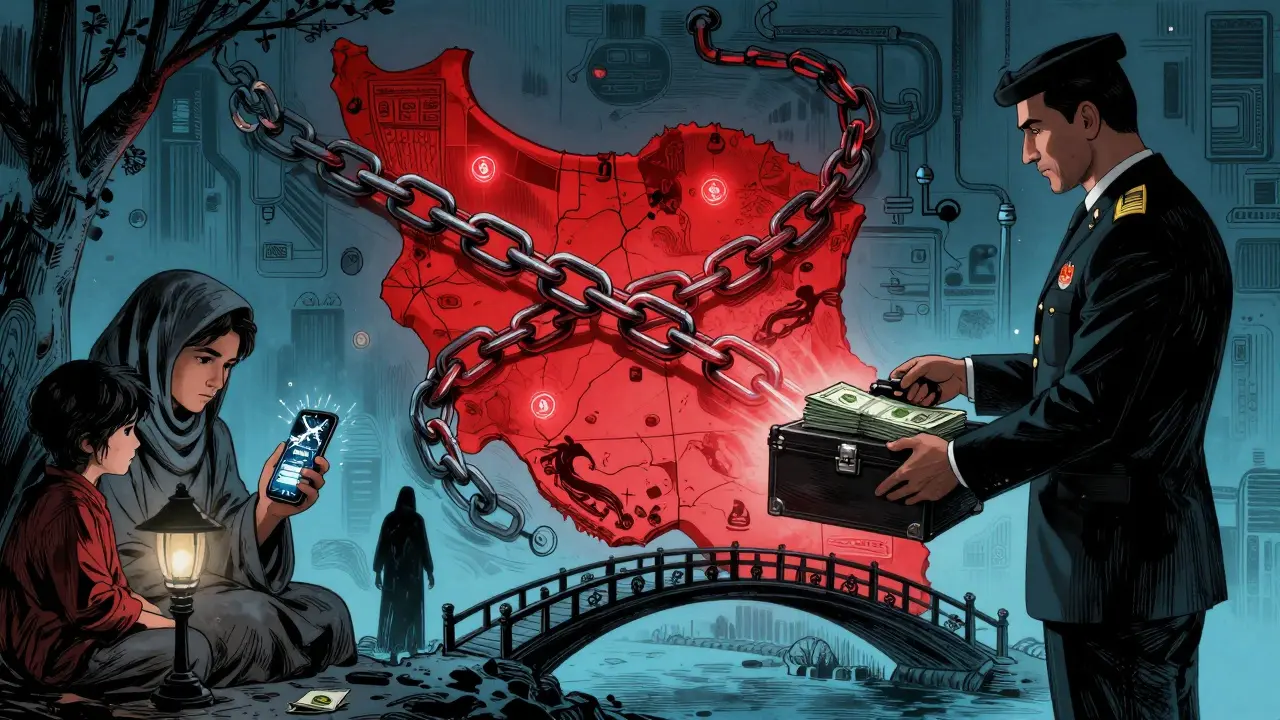
Sharmishtha Sohoni
December 5, 2025 AT 05:53So Iran turned crypto into a lifeline... but the state still controls every move? That’s like giving someone a car but only letting them drive on one road.
Kinda brilliant, kinda tragic.
Althea Gwen
December 6, 2025 AT 05:26So... crypto is the new oil? 😅
Also why does every sanctions story end with someone losing their life savings? 🤦♀️
Durgesh Mehta
December 7, 2025 AT 07:44Hard to believe a government can both rely on crypto and fear it at the same time
People just want to eat and keep the lights on
They didn’t ask for this
Sarah Roberge
December 8, 2025 AT 08:46Okay but let’s be real - blockchain is just a glorified google sheet with a cult following
And Iran’s whole ‘crypto revolution’ is just a fancy way of saying they stole electricity from grandma’s fridge to mine coins
Also why is everyone so shocked? This was inevitable
And yes I said it - the IRGC was always behind it
And yes I’m not surprised Nobitex got hacked
It was like leaving your wallet in a dumpster behind a gas station
And now people are crying because their life savings vanished?
They should’ve used paper bags and buried it
Also the fact that miners got power priority while hospitals blacked out? That’s not capitalism
That’s just pure evil with a blockchain logo
Also also - I’m not even mad
I’m just disappointed
And also - someone please tell me why we’re still talking about this
It’s like watching a train wreck in slow motion and everyone’s live-streaming it
Also I’m going to bed now
Jess Bothun-Berg
December 9, 2025 AT 00:22Let me get this straight: Iran built a parallel financial system… using a technology designed to eliminate intermediaries… while simultaneously installing state-controlled gatekeepers? That’s not innovation - that’s hypocrisy with a mining rig.
And they wonder why trust collapsed?
They didn’t just betray their people - they misunderstood crypto entirely.
Bitcoin isn’t a tool for sanctions evasion - it’s a protest against control.
And now they’ve turned it into a state-run Ponzi scheme?
Pathetic.
And the energy waste? Criminal.
And the fact that they’re still mining while hospitals fail?
That’s not just bad policy - that’s moral bankruptcy.
Also - who authorized this?
Someone needs to be fired.
And then prosecuted.
And then buried.
Steve Savage
December 9, 2025 AT 06:49Look - this whole thing is a perfect example of how systems designed for freedom get twisted by power.
People in Iran weren’t trying to overthrow the government - they were trying to buy insulin.
And crypto gave them a way.
But then the state saw it as a tool - not a right.
And that’s the tragedy.
It’s not that crypto failed.
It’s that the people who needed it most got crushed by the very system that pretended to protect them.
There’s no villain here - just a broken system that tried to be everything at once.
And now? It’s all falling apart.
But I still believe in the tech.
Just not the people using it to control.
Maybe next time - they’ll let the people win.
Joe B.
December 10, 2025 AT 01:37Let’s break this down statistically because nobody else is.
Iran mined 5% of global Bitcoin? That’s insane - that’s more than Norway, more than Canada, more than most NATO allies combined.
But here’s the kicker: 90% of that mining was subsidized by state-owned electricity - which was already under strain.
So you’re telling me a country with 80 million people, 50% inflation, and collapsing infrastructure, dedicated enough power to run ASIC rigs to mine digital assets worth $600M - while hospitals ran on generators?
That’s not economic strategy - that’s a deranged priority matrix.
And then they get hacked - $90M gone - and the government says ‘oops’?
Meanwhile, the IRGC used Nobitex as a laundering pipeline - and the blockchain ledger literally shows it.
Chainalysis flagged 147 wallets tied to oil exports - and OFAC named Arash Estaki Alivand - who? A guy who moved $600M in crypto through mixers and DEXes - and nobody in Iran did anything?
And now the public is angry?
Of course they are.
They were told crypto was their salvation - and it turned out to be a Trojan horse for the Revolutionary Guard.
And the energy cost? 12% of Iran’s total grid load - and still growing.
So the answer isn’t to ban crypto.
The answer is to stop letting the state weaponize it.
Because when you turn a decentralized tool into a centralized weapon - you don’t break the system.
You break the people.
And now? They’re stuck with a $600M ghost ledger and a population that trusts nothing.
Well done, Iran.
Real smart.
Rod Filoteo
December 11, 2025 AT 03:39Okay so let me get this straight - the same regime that tortures dissidents is now using Bitcoin to buy medicine?
And you think that’s a win?
That’s like saying a serial killer who donates to orphanages is a hero.
And the hack? Wasn’t a hack - it was a purge.
They let the IRGC take the money - then blamed ‘hackers’ so they could tighten control.
You think the government didn’t know about the vulnerabilities?
Of course they did.
They *wanted* the exchange to be weak - so they could control who got paid.
And the blackouts?
They were planned.
They needed an excuse to blame ‘foreign saboteurs’ - and now they can say ‘see? This is why we need more state control’.
And the $600M shadow network?
That’s not smuggling - that’s state-sponsored laundering.
They didn’t bypass sanctions.
They weaponized them.
And now the world is scared to trade with them?
Good.
Let them rot.
But don’t pretend this was about the people.
It was always about power.
And the people? They were just collateral.
And if you believe otherwise - you’re part of the problem.
And I’m not even mad.
I’m just done.
And I’m deleting my crypto wallet.
And I’m never trusting a ‘revolution’ again.
Katherine Alva
December 11, 2025 AT 15:31It’s heartbreaking how something meant to empower - like crypto - gets twisted into a tool of control.
People just wanted to feed their families.
They didn’t ask to be pawns in a geopolitical game.
And now? They’re stuck with broken systems and no safety net.
But I still believe in the tech.
Just not the humans who use it to hoard power.
Maybe one day, we’ll build something better.
And maybe it won’t be owned by anyone.
Just… free.
Shari Heglin
December 12, 2025 AT 14:22It is inaccurate to characterize Iran’s actions as an ‘innovation’ in financial strategy. Rather, it represents a reactive adaptation to external economic pressure, which, while tactically expedient, fundamentally contradicts the decentralized ethos of blockchain technology. The state’s imposition of regulatory oversight negates the core principle of permissionless transactionality. Consequently, the system is neither sustainable nor ethically defensible. The Nobitex breach was not a failure of security alone, but a logical consequence of conflating public utility with state apparatus. This is not a case of crypto failing; it is a case of crypto being corrupted.
Murray Dejarnette
December 12, 2025 AT 18:08Oh my god I’m so angry right now
They let miners run 24/7 while kids in Tehran freeze in the dark?
And then they say ‘we’re helping our people’?
NO.
They’re helping themselves.
And the fact that you’re all sitting here like ‘oh how clever’?
Wake up.
This isn’t tech.
This is tyranny with a blockchain logo.
And if you think this is ‘brilliant’ - you’re part of the problem.
And I’m not even mad.
I’m just done.
And I’m never trusting crypto again.
Until it’s truly free.
And it’s not.
Not ever.
Sarah Locke
December 12, 2025 AT 23:27Look - I know this sounds dark.
But here’s the truth: when people are desperate, they’ll use any tool they can find.
Iranians didn’t choose crypto because it was cool.
They chose it because the world shut the door on them.
And yes - the government twisted it.
And yes - people got hurt.
But don’t forget - millions of families ate because of it.
Medicine got through.
Parts got fixed.
That matters.
So don’t just call it a failure.
Call it a miracle - that got corrupted.
And now? We owe them better.
Not just sanctions.
Not just pressure.
But real solutions.
Because no one should have to mine Bitcoin just to buy insulin.
And if we can’t fix that?
Then we’re all part of the problem too.
Tatiana Rodriguez
December 14, 2025 AT 20:29It’s wild how a single technology can be both a lifeline and a weapon.
On one hand, you’ve got a mother in Shiraz using Bitcoin to pay for her daughter’s cancer treatment.
On the other, you’ve got IRGC officers laundering money through the same wallets.
And the worst part? The system doesn’t care.
Blockchain doesn’t know who’s good or evil.
It just records.
So who do we blame?
The tech?
The people?
The regime?
Or the world that left them no choice?
I don’t know.
But I know this: if we keep treating people like pawns - we’ll keep getting stories like this.
And the blockchain? It’ll keep recording.
And someday - someone will look back and ask - why didn’t we do more?
And we’ll have no answer.
Philip Mirchin
December 16, 2025 AT 19:56As someone who’s worked with tech in conflict zones - I’ve seen this before.
People don’t adopt crypto because they love Bitcoin.
They adopt it because the bank won’t let them pay their rent.
Iran didn’t invent this - they just did it faster than anyone else.
And yeah - the state messed it up.
But don’t forget - the real heroes here are the shopkeepers, the doctors, the mechanics - who used it to survive.
They didn’t ask for a revolution.
They just asked to eat.
And the world watched.
And did nothing.
So maybe the real failure isn’t Iran’s crypto.
It’s ours.
Maggie Harrison
December 17, 2025 AT 17:22It’s like watching someone build a boat out of trash to escape a sinking ship.
They did it with their bare hands.
And then the coast guard came - and said ‘you can’t use that’.
So they took the boat - and turned it into a weapon.
And now the people who built it? They’re drowning again.
But the boat? It still floats.
And one day - someone will build a better one.
And this time - they’ll let everyone on board.
Lawal Ayomide
December 19, 2025 AT 09:47Why is everyone surprised? Africa has been doing this for years.
Bitcoin in Nigeria? Used to pay for fuel.
Uganda? To send money home.
Iran? Just late to the party.
Sanctions don’t stop people.
They just make them smarter.
And if you think this is bad?
Wait till the next country figures it out.
justin allen
December 20, 2025 AT 23:13So let me get this straight - the U.S. sanctions Iran - so Iran uses crypto to fight back?
And now YOU’RE acting like Iran is the villain?
Wow.
Real patriotic.
Meanwhile, the U.S. sanctions 100+ countries - and no one calls it ‘crypto terrorism’?
And you think Iran’s miners are the problem?
Try looking at the banks that froze Iranian accounts.
Try looking at the U.S. Congress that voted to keep sanctions even when kids couldn’t get medicine.
And now you’re mad because Iran found a way to survive?
Pathetic.
And if you think crypto is dangerous?
Try telling that to a Syrian mom who paid for her child’s insulin with Monero.
But no - keep calling it ‘evil’.
It’s easier than facing your own government’s crimes.
ashi chopra
December 22, 2025 AT 08:49I think about the women in Iran who had to learn crypto just to buy their kids’ medicine.
They didn’t care about decentralization.
They just wanted their children to live.
And now? They lost everything.
And no one apologized.
And I just…
I don’t know what to say.
My heart hurts.
Darlene Johnson
December 23, 2025 AT 12:12This whole thing was a psyop.
Everyone knows the U.S. and Israel were behind the Nobitex hack.
They wanted to destabilize Iran’s crypto economy - so they could justify more sanctions.
And now they’re pretending to be shocked?
Like they didn’t know the IRGC was using it?
They’ve been tracking every wallet for years.
They let it grow - so they could destroy it.
And now the world believes Iran is the problem?
Classic.
They didn’t break Iran’s crypto.
They broke the narrative.
And we all fell for it.
And now? The real truth is buried under layers of blockchain data - and we’re too scared to dig.
Steve Savage
December 23, 2025 AT 19:52What’s wild is how the same tech that gave people hope - became the thing that took it away.
It’s not the blockchain’s fault.
It’s ours.
We built a system that rewards control.
And then we’re surprised when power grabs it.
Maybe next time - we design it differently.
For the people.
Not the state.
Sarah Locke
December 24, 2025 AT 20:52You’re right.
It’s not the tech.
It’s how we let power use it.
But I still believe in the dream.
That one day - a kid in Tehran won’t need to mine Bitcoin to buy insulin.
And we’ll have built a world where that’s not even a question.
Until then?
We keep talking.
We keep listening.
And we never look away.