Is Cryptocurrency Legal Around the World? 2025 Global Guide
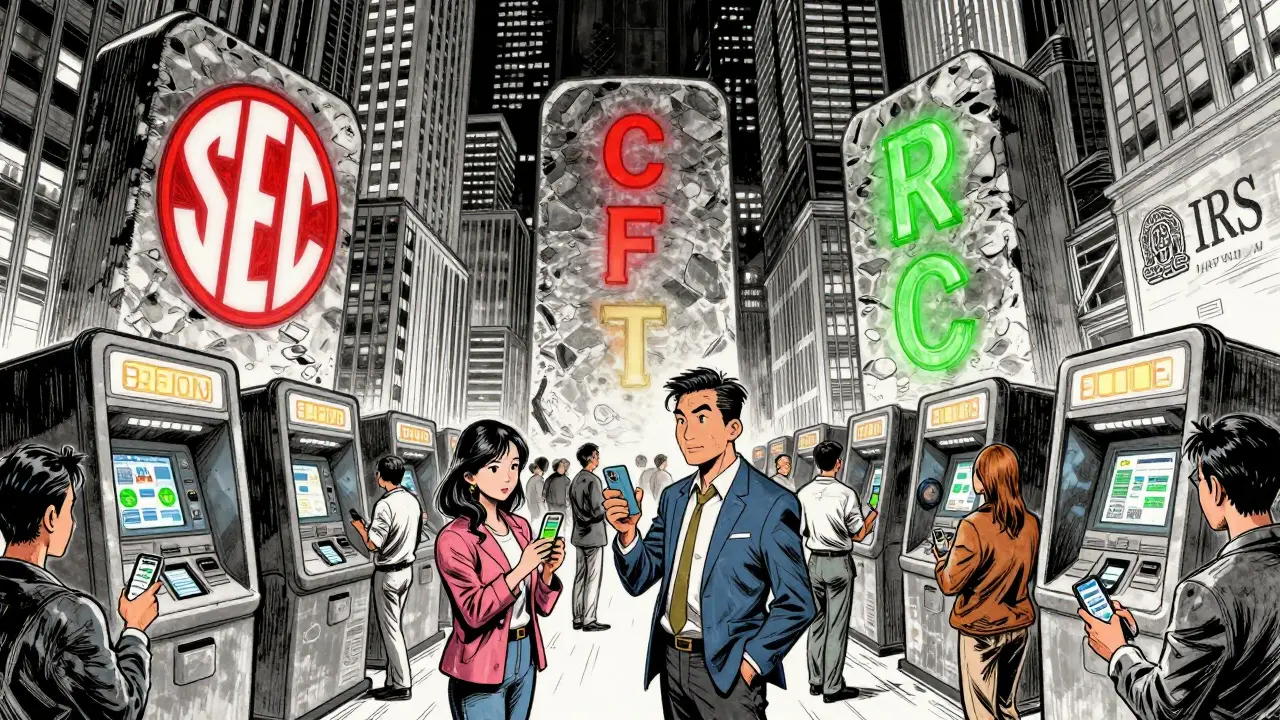
Is cryptocurrency legal? It depends where you are. In one country, you can buy Bitcoin at a ATM with your ID. In another, using it could land you in jail. There’s no global rulebook-just a messy patchwork of laws that change every few months. As of 2025, cryptocurrency legality isn’t about right or wrong. It’s about who’s watching, who’s taxing, and who’s scared.
Three Ways Countries Handle Crypto
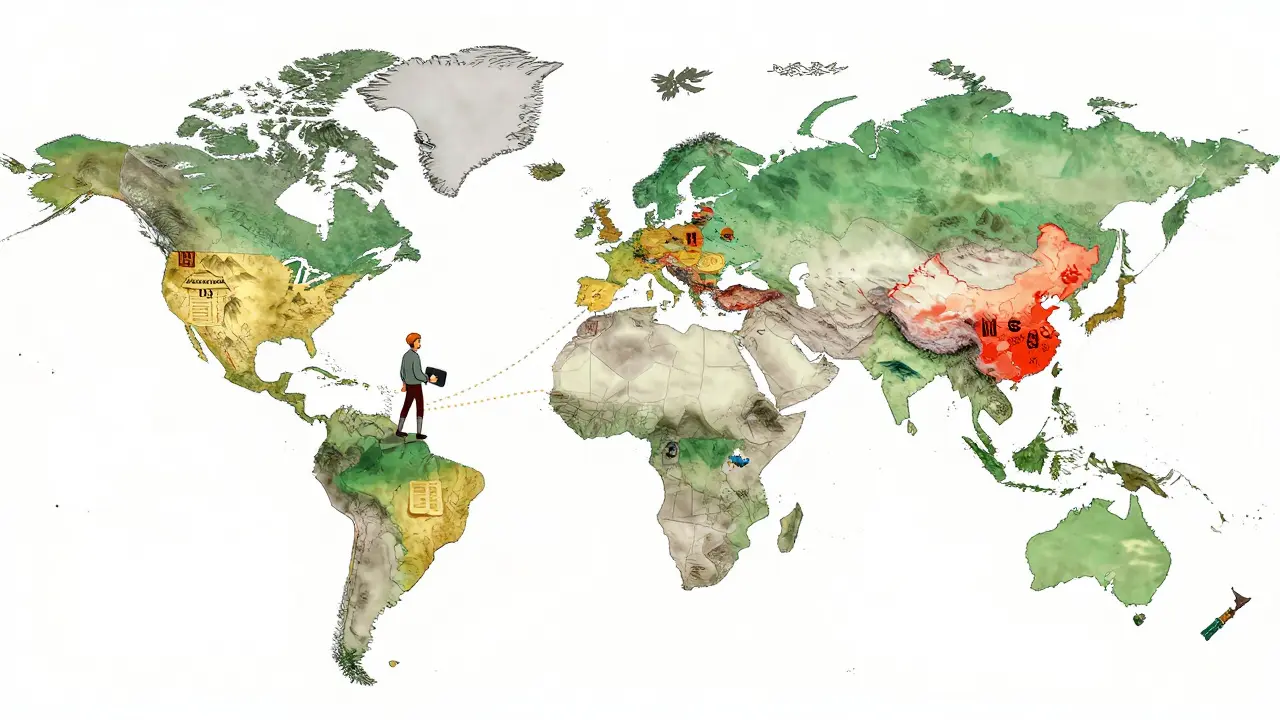
Most nations fall into one of three buckets. The first group-42% of countries-has full rules. The EU, Japan, Singapore, and Switzerland are in this camp. They don’t ban crypto. They regulate it like banks. You need licenses. You must report transactions. You have to prove your reserves. The EU’s MiCAR law, which kicked in December 2024, is the gold standard. It forces stablecoins to be backed 1:1 by cash or short-term bonds. No magic algorithms. No fake reserves. If you issue a stablecoin in the EU, you’re subject to audits, capital rules, and consumer protections.
The second group-31% of countries-is in the middle. They don’t ban crypto, but they don’t fully embrace it either. The United States is the prime example. The SEC says some tokens are securities. The CFTC says others are commodities. The IRS taxes them as property. The GENIUS Act, passed in July 2025, finally gave payment stablecoins clear rules: 1:1 backing, monthly audits, public reports. But outside of stablecoins, it’s still a free-for-all. If you run a crypto exchange in New York, you need a BitLicense. In Texas, you just need to register as a money transmitter. That kind of confusion costs businesses 38% more to operate than traditional finance, according to PwC.
The third group-27%-bans or ignores crypto. Namibia has a banking ban since 2017. You can’t open a bank account for a crypto business. You can’t cash out. Zimbabwe’s central bank tried to ban it, but the courts overturned it. Now it’s stuck in legal limbo. Angola? Legal, but the government warns you not to use it. No penalties, no protection. Just silence.
Where It’s Legal (And Why)
Switzerland’s Zug, known as Crypto Valley, isn’t just a nickname. It’s a business hub because the government made it easy. You can get a license in 3-6 months. Taxes are low. Banks work with crypto firms. Why? Because they saw the future and didn’t want to be left behind. Japan was one of the first to regulate Bitcoin in 2017. Today, over 20 exchanges are licensed. They treat crypto like a financial instrument-not a threat.
Canada and Australia have similar frameworks. You need to register with financial authorities, do KYC, and report suspicious activity. But you’re not banned. In fact, adoption is high. Australia’s tax office treats crypto like shares. You pay capital gains when you sell. Simple. Predictable.
Even in places with shaky laws, people use crypto. Kenya’s central bank didn’t regulate it until March 2024. But 54% of adults use crypto, according to Chainalysis. Why? Because it’s faster and cheaper than traditional remittances. In Nigeria, where the naira is unstable, crypto is a lifeline. People buy Bitcoin to protect savings. They use USDT to pay for imports. The government hates it-but can’t stop it.
Where It’s Banned (And Why)
Namibia’s ban isn’t about ideology. It’s about fear. The central bank worried crypto would undermine the banking system. No oversight. No control. So they cut off access. If you try to use crypto, your bank will freeze your account. You can’t pay for goods. You can’t send money abroad. The result? People use informal networks. They pay higher fees. They lose money.
China’s ban is the most extreme. Since 2021, mining is illegal. Trading is banned. Exchanges can’t operate. But people still trade-over dark networks, peer-to-peer apps, and offshore platforms. The government doesn’t want its citizens bypassing capital controls. They don’t want private money competing with the digital yuan.
Some African nations, like Egypt and Algeria, ban crypto because of religious rulings. They say it’s gambling. Others, like Bolivia and Ecuador, ban it because they think it threatens their currency. But in most cases, it’s not about ethics. It’s about power. If people can move money without banks, who controls the system?

Stablecoins: The New Battleground
Not all crypto is the same. Bitcoin is speculative. Ethereum is a platform. But stablecoins-like USDT, USDC, and DAI-are designed to hold value. That’s why they’re the focus of regulation.
68% of regulated countries now require stablecoins to be fully backed. The U.S. GENIUS Act and EU MiCAR both say: no reserves, no issuance. You can’t create $1 billion in USDT unless you have $1 billion in cash or Treasury bonds sitting in a bank. And you have to prove it every month.
That’s why Tether (USDT) and Circle (USDC) are racing to comply. They’re spending millions on audits, legal teams, and banking relationships. But algorithmic stablecoins-like the failed TerraUSD-are banned outright in most places. Why? Because they’re not backed. They rely on math and trust. And when trust breaks, so does the system.
What This Means for You
If you’re an individual: Know your tax rules. Portugal eliminated crypto capital gains after one year. Germany taxes short-term trades at up to 42%. The U.S. treats every trade as a taxable event-even swapping Bitcoin for Ethereum. Keep records. Use software. Don’t guess.
If you’re a business: Location matters. Setting up in Singapore? Expect 6-9 months to get licensed, $1 million in capital, and $240,000 a year in compliance costs. In the U.S., you might need licenses in every state you operate. In Switzerland, you can get a license faster and pay less. But you can’t operate in Namibia. Or Nigeria. Or Egypt. Not legally.
If you’re investing: Don’t assume safety. Just because a coin is listed on Coinbase doesn’t mean it’s legal everywhere. A token approved in the EU might be illegal in India. A stablecoin backed in the U.S. might be frozen in Brazil. Always check local laws before sending funds.
What’s Changing in 2026
The U.S. is pushing two big bills: the Stablecoin Trust Act and the FIT Act. The first would make federal licensing mandatory for stablecoin issuers. The second would split crypto oversight: SEC for securities, CFTC for commodities. That could finally bring clarity.
The EU’s MiCAR phase two, launching in June 2026, will target DeFi. If a decentralized protocol has over 1 million users, it must comply with KYC, transparency, and reporting rules. That’s huge. It means even unregulated platforms will be forced to play by the rules-or get blocked.
The G20 is pushing for global Travel Rule compliance by 2027. That means every crypto transfer over $1,000 must include sender and receiver info-just like a bank wire. It’s a win for regulators. A headache for privacy advocates.
Bottom Line
Cryptocurrency isn’t illegal everywhere. But it’s not legal everywhere either. The world is split between those who see it as the future and those who see it as a threat. The countries winning are the ones that made rules-clear, fair, enforceable rules. The ones losing are the ones that banned it and pushed users underground.
Legality isn’t about technology. It’s about trust. If you can’t cash out, if you can’t get help, if your bank won’t touch you-then crypto isn’t legal for you, no matter what the headlines say.
Is cryptocurrency legal in the United States?
Yes, but it’s complicated. The U.S. doesn’t have one federal law for crypto. The SEC treats some tokens as securities. The CFTC treats others as commodities. The IRS taxes crypto as property. The GENIUS Act of 2025 created clear rules for payment stablecoins-requiring 1:1 backing and monthly audits. But for everything else, you’re dealing with a patchwork of state and federal rules. You can legally buy, sell, and hold crypto. But operating a business? That’s where the real hurdles begin.
Which countries have banned cryptocurrency?
As of 2025, countries with outright bans or strict prohibitions include Namibia (banking ban since 2017), China (mining and exchanges banned), Egypt (religious ban), Algeria (illegal under financial law), Bolivia (no legal tender status), and Ecuador (no private digital currencies allowed). Some nations like Nigeria and Kenya have no formal ban but restrict banking access, making crypto use difficult. Even in banned countries, people still use crypto through peer-to-peer platforms and offshore exchanges.
Is Bitcoin mining legal?
Bitcoin mining is legal in most countries, but not all. It’s banned in China, Algeria, and Egypt. In the U.S., it’s legal in every state, but some-like New York-have imposed moratoriums on proof-of-work mining due to energy concerns. Iceland and Canada are popular for mining because of cheap renewable energy. In Kazakhstan, mining boomed after Russia cracked down, but new taxes and power restrictions are now slowing growth. Always check local energy and environmental laws before setting up a mining operation.
Can I use crypto to pay for goods and services?
It depends. In Japan, Switzerland, and the U.S., many businesses accept crypto directly. In the EU, MiCAR allows it as long as the merchant complies with anti-money laundering rules. In Namibia, it’s illegal because banks won’t process crypto payments. In Nigeria, people use crypto to pay for imports, but it’s not officially recognized. Even where it’s legal, merchants often convert crypto to local currency immediately to avoid volatility. So while you can pay with crypto in some places, you can’t rely on it like cash.
Do I have to pay taxes on cryptocurrency?
Yes, in nearly every country that recognizes crypto as legal. The U.S., Canada, Australia, Germany, and the UK all tax crypto as property or income. Selling, trading, or spending crypto usually triggers a taxable event. Portugal eliminated capital gains tax after one year of holding, making it attractive for investors. Some countries like Singapore don’t tax capital gains at all. But if you earn crypto as income-like from mining or staking-it’s almost always taxable. Always report crypto transactions to your tax authority. Failing to do so can result in fines or criminal charges.
What’s the difference between legal and regulated?
Legal means you’re not breaking the law by owning or using crypto. Regulated means the government has set rules for how it’s issued, traded, taxed, and reported. You can have legal but unregulated crypto-like in South Africa, where it’s treated as an intangible asset but has no specific laws. You can have regulated but not fully legal-like in China, where individuals can hold crypto privately but exchanges are banned. Regulation adds protection and accountability. Without it, you’re on your own if something goes wrong.
Why do some countries ban crypto while others embrace it?
It comes down to control. Countries that ban crypto fear losing monetary sovereignty-like China, which wants to push its digital yuan. Others, like Namibia, worry about capital flight and banking instability. Countries that embrace crypto see economic opportunity: attracting tech investment, creating jobs, improving remittances, and modernizing finance. Switzerland and Singapore didn’t ban crypto because they saw it as the next financial infrastructure. They didn’t want to be left behind. The difference isn’t about technology-it’s about political will and economic vision.
Is crypto safe if it’s legal in my country?
Legal doesn’t mean safe. Just because your country allows crypto doesn’t mean your money is protected. Most places don’t have investor compensation funds for crypto losses-unlike bank deposits insured by the FDIC. If an exchange gets hacked or shuts down, you’re out of luck. Even regulated exchanges can fail. The EU’s MiCAR offers better protections, but only for licensed platforms. Always use reputable services. Never keep large amounts on exchanges. Use hardware wallets. Assume you’re responsible for your own security.
Aaron Heaps
December 21, 2025 AT 10:19Tristan Bertles
December 22, 2025 AT 12:41Megan O'Brien
December 22, 2025 AT 18:49Tyler Porter
December 24, 2025 AT 10:49Brian Martitsch
December 25, 2025 AT 11:00Rebecca F
December 26, 2025 AT 21:29vaibhav pushilkar
December 27, 2025 AT 20:28SHEFFIN ANTONY
December 28, 2025 AT 05:40Vyas Koduvayur
December 28, 2025 AT 08:56Lloyd Yang
December 29, 2025 AT 09:16Jacob Lawrenson
December 31, 2025 AT 06:53Zavier McGuire
January 2, 2026 AT 01:17Luke Steven
January 3, 2026 AT 20:22Ellen Sales
January 5, 2026 AT 15:07Janet Combs
January 7, 2026 AT 09:14Dan Dellechiaie
January 8, 2026 AT 13:49Radha Reddy
January 9, 2026 AT 06:41