Legal Risks for Tunisian Crypto Users and Traders: The 2026 Reality
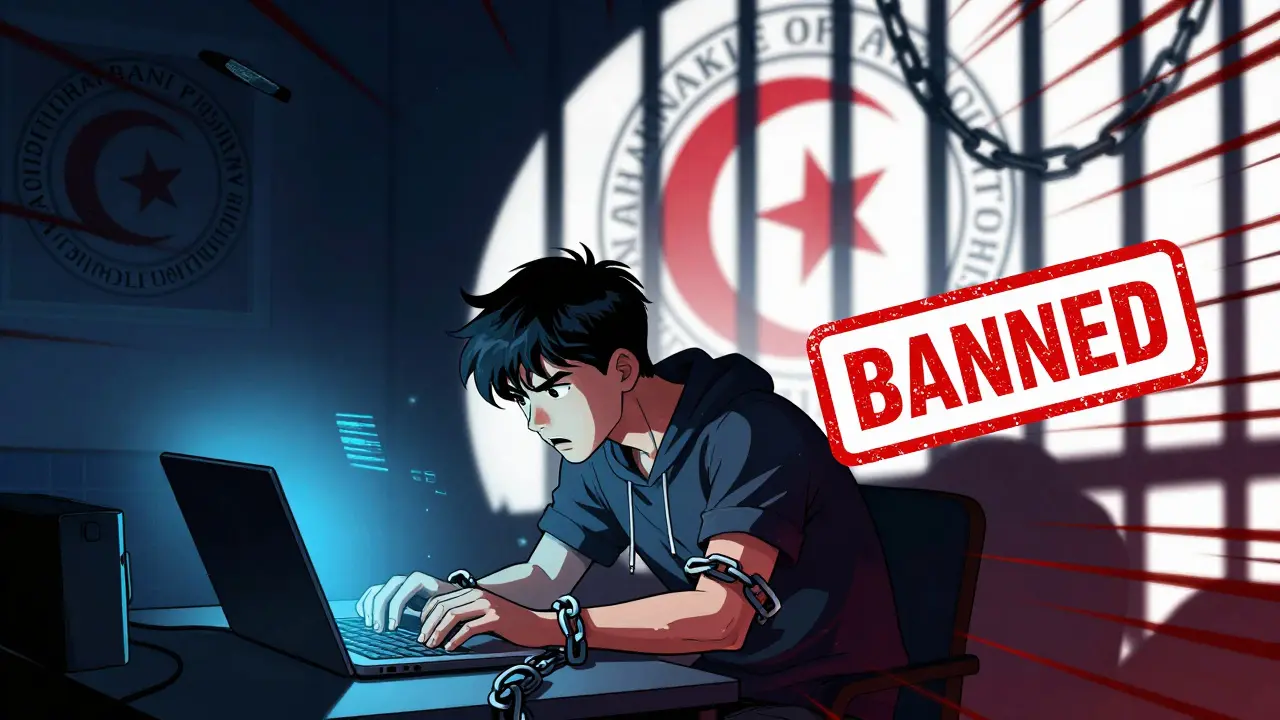
You hold Bitcoin in a wallet. You mine Ethereum on a laptop. Or maybe you just want to send money to a friend abroad using USDT. If you are in Tunisia, these actions carry serious legal weight. In fact, they are not just risky; they are explicitly criminalized under current law.
As of mid-2026, Tunisia remains one of the most restrictive jurisdictions for digital assets in the world. The government does not tolerate cryptocurrency trading, mining, or payments. For anyone living in or doing business within the country, understanding the specific legal boundaries is not optional-it is essential for avoiding fines, asset seizure, and potentially prison time.
The Legal Foundation: The 2018 Ban
To understand why the risks are so high, you have to look at the root cause. The prohibition stems from a directive issued by the Central Bank of Tunisia (BCT), which serves as the primary authority for monetary policy and financial regulation in the nation. This directive, established in 2018, explicitly bans all transactions involving virtual currencies.
This is not a gray area. The BCT has stated clearly that cryptocurrencies are not recognized as legal tender. They are not considered property with tax implications because their very existence in commerce is illegal. This means there is no legal framework to protect your investments. If you buy Bitcoin, you have no recourse if you are scammed, hacked, or if an exchange collapses. More importantly, the act of buying it violates the code of currency control.
The ban covers every aspect of the crypto ecosystem:
- Trading: Buying or selling cryptocurrencies on exchanges, even offshore ones accessible via VPN, is prohibited.
- Mining: Operating mining hardware is banned. Importing Application-Specific Integrated Circuit (ASIC) miners through customs is a direct violation.
- Payments: Merchants cannot accept crypto for goods or services. Individuals cannot use it to pay for utilities or rent.
- Exchanges: No company can operate a cryptocurrency exchange within Tunisia. Licenses are never issued for this activity.
Penalties: Fines, Seizure, and Prison
What happens if you get caught? The consequences are severe and structured under Tunisia’s strict currency-control regulations. The legal system treats unauthorized virtual-money transactions as a threat to national economic stability.
Violations can result in:
- Financial Penalties: Significant fines are imposed on individuals and entities found engaging in crypto activities. These fines can wipe out any profits made from trading or mining.
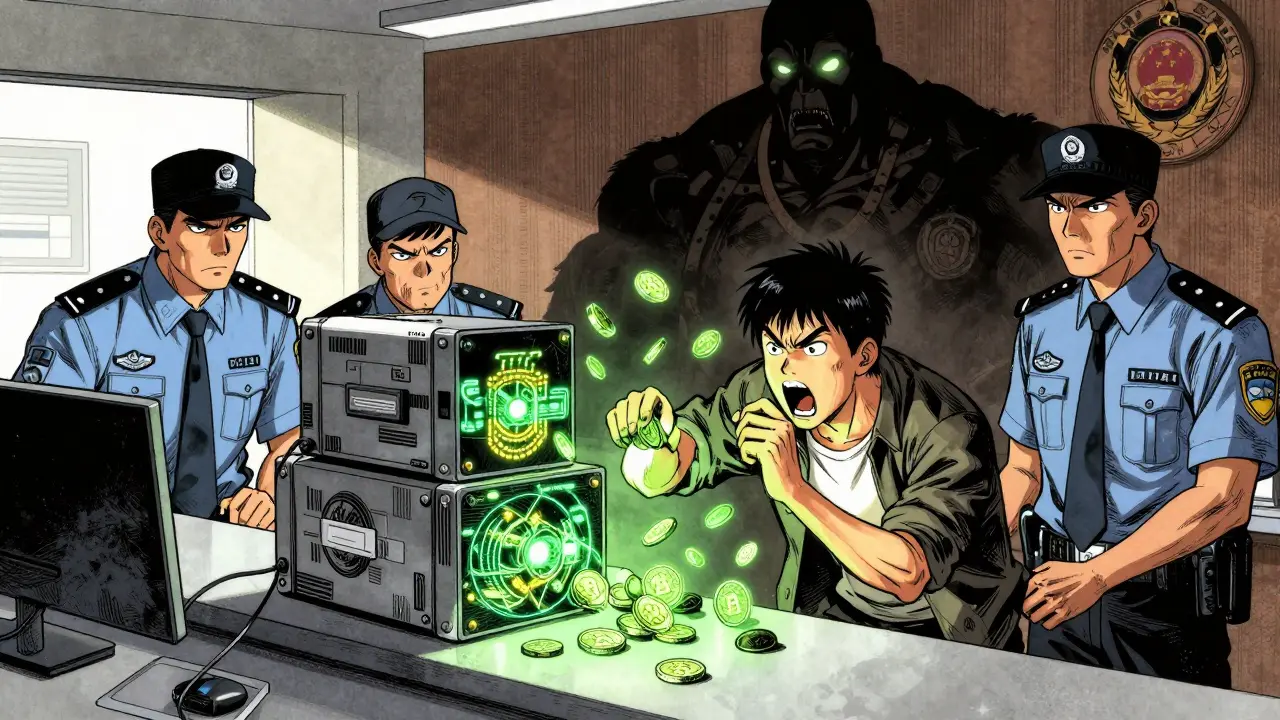
- Asset Seizure: Any equipment used for illegal activities-such as mining rigs-is subject to immediate confiscation by customs or police authorities. Profits derived from crypto sales are also seized as illegal gains.
- Imprisonment: The most serious risk is jail time. Under the code of currency control, violations can lead to imprisonment for up to five years. This applies whether you are running a large-scale mining operation or simply holding tokens in a personal wallet.
For businesses, the risks are even higher. Companies are legally prohibited from recording crypto assets on their local accounting books. Attempting to do so opens the door to audits, heavy fines, and potential shutdowns. Operating an unlicensed exchange or marketing tokens carries the same maximum penalty of five years in prison.
The Banking Blockade
One of the biggest hurdles for Tunisian users is the complete barrier created by the banking sector. Banks operating within Tunisia are legally required to deny all transfers related to cryptocurrency. This creates a practical impossibility for most users who want to enter or exit the market legally.
If you try to wire funds to a known crypto exchange, your bank will likely block the transaction. If they suspect the transfer is related to crypto activity, they are mandated to report it to the National Anti-Money-Laundering Commission (CTAF). The CTAF monitors anti-money-laundering requirements across all financial establishments. Once flagged, your accounts could be frozen pending investigation.
This blockade extends to international money transfers. Many Tunisians use crypto to bypass capital controls and send remittances abroad. However, banks actively monitor for patterns associated with crypto cash-outs. Several documented cases exist where accounts were frozen due to suspicious activity linked to peer-to-peer (P2P) crypto trades.
Mining: A High-Risk Activity
Cryptocurrency mining faces particularly harsh treatment in Tunisia. The energy costs and environmental impact are cited as reasons for the ban, but the legal reality is straightforward: it is illegal.
Customs authorities possess the legal authority to seize mining equipment upon discovery. If you attempt to import ASIC rigs, they will be confiscated at the border. Furthermore, exchanging mined coins into the Tunisian dinar constitutes a direct violation of the 2018 directive. Even if you mine using spare computing power on a home computer, converting those rewards into fiat currency triggers legal exposure.
Some enthusiasts try to hide their operations, but the electrical footprint of serious mining is hard to conceal. Utility companies may flag unusual consumption patterns, leading to inspections. Given the five-year prison sentence attached to violations, the risk-reward ratio for mining in Tunisia is extremely unfavorable compared to jurisdictions like Canada or Switzerland, where mining is regulated and protected.
The Regulatory Sandbox: Limited Exceptions
Is there any room for innovation? Yes, but it is tightly controlled. The BCT operates a fintech regulatory sandbox program. This allows select startups to test blockchain technologies under strict supervision.
Startups like VFunder (creative crowdfunding), Hydro E-Blocks (carbon tracking), and No Phobos (AI-generated NFTs) have operated under sandbox exemptions. However, these programs come with major caveats:
- Duration: Individual cohorts operate for only six to twelve months.
- Limits: There are strict user and volume limits.
- Infrastructure: Most participants host their infrastructure outside Tunisia to maintain compliance with global standards while testing locally.
- Scope: The focus is on blockchain technology for transparency in supply chains and record-keeping, not on speculative token trading.
ICO (Initial Coin Offering) public launches are not permitted. Security tokens would fall under the jurisdiction of the Financial Market Council (CMF), the capital-markets watchdog, but no prospectus requirements have been approved for such offerings yet. Utility tokens can only be released after rigorous testing in the sandbox and are limited to closed-loop pilots.

Underground Markets and P2P Risks
Despite the ban, demand for cryptocurrency continues to grow. This has led to the rise of informal peer-to-peer networks. Since 2018, communities have formed on encrypted messaging platforms and forums to facilitate trades.
These underground markets operate entirely outside the law. Participants often use VPNs to access offshore exchanges and conduct in-person cash transactions to avoid banking surveillance. While this might seem like a workaround, it exposes users to significant risks:
- Scams: Without legal protection, P2P traders are vulnerable to fraud. There is no chargeback mechanism or consumer protection agency to help you if a counterparty disappears with your funds.
- Surveillance: Authorities are aware of these networks. Increased monitoring of international transfers and social media discussions has led to crackdowns.
- Legal Liability: Engaging in P2P trading is still a crime. Being part of a network does not provide immunity. If law enforcement identifies key nodes in these networks, participants face the same penalties as formal operators.
User reports indicate that many Tunisian entrepreneurs and tech enthusiasts are migrating their operations to more crypto-friendly jurisdictions. This brain drain deprives the local economy of high-tech contributions but highlights the severity of the domestic restrictions.
Future Outlook: Will the Ban Lift?
As of 2026, there is no imminent timeline for a full liberalization of cryptocurrency laws in Tunisia. However, the landscape is slowly shifting due to global pressures.
Legislative discussions in parliament have proposed classifying cryptocurrency as "virtual assets" subject to FATF (Financial Action Task Force) travel-rule licensing requirements. This suggests a potential move toward regulation rather than outright prohibition in the future. The BCT has also developed an in-house E-Dinar proof-of-concept as part of the Digital Tunisia 2025 project, indicating an interest in central bank digital currencies (CBDCs).
However, until official laws change, the status quo remains. Blockchain technology receives limited acceptance for enterprise use cases like supply chain transparency, but only on permissioned ledgers under government control. For individual users, the message is clear: stay away.
Is it legal to own Bitcoin in Tunisia?
No. Owning, trading, or using Bitcoin is illegal under the 2018 directive from the Central Bank of Tunisia. While possession itself might not always trigger immediate arrest, any transaction involving Bitcoin is a criminal offense punishable by fines and up to five years in prison.
Can I mine cryptocurrency in Tunisia?
Mining is strictly prohibited. Importing mining equipment like ASIC rigs is illegal and subject to seizure by customs. Converting mined coins into Tunisian dinar is also a violation of currency control laws. The risks include equipment confiscation and imprisonment.
Are there any exceptions for blockchain startups?
Yes, through the BCT's regulatory sandbox. Startups can apply to test blockchain solutions for supply chain or record-keeping purposes. However, these are limited-time trials with strict user caps, and they do not allow for public token sales or speculative trading.
Will my bank account be frozen if I trade crypto?
It is highly possible. Banks are required to block crypto-related transfers and report suspicious activity to the National Anti-Money-Laundering Commission (CTAF). If your account shows patterns linked to crypto exchanges or P2P trades, it may be frozen for investigation.
Is it safe to use P2P crypto networks in Tunisia?
No. P2P trading is illegal and carries significant risks. You have no legal protection against scams, and participating in these networks makes you liable for criminal charges. Authorities actively monitor these channels, and participants face the same penalties as formal operators.