Legal status of cryptocurrencies in Russia: Restrictions and Rights Explained
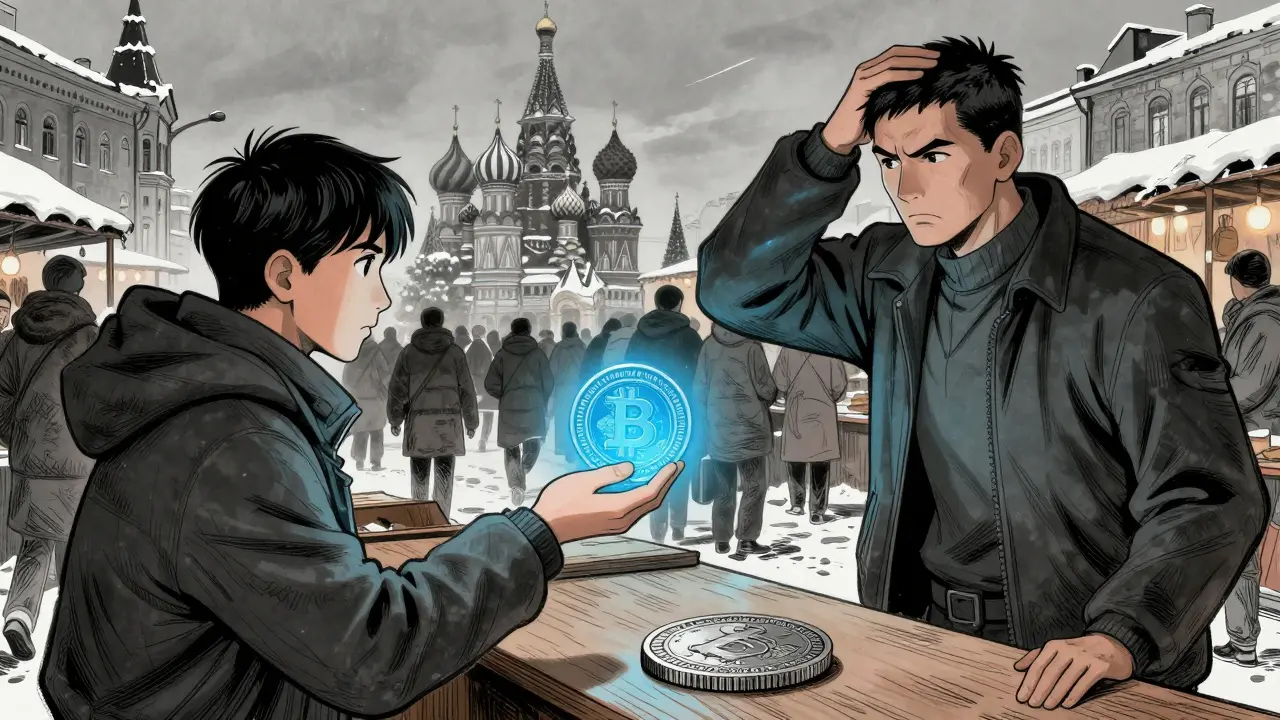
You might think you can just buy Bitcoin and spend it anywhere in Moscow, but here's the hard truth: you can own it, yet spending it locally is almost entirely off-limits for regular people. It sounds contradictory, doesn't it? That's because the legal status of cryptocurrencies in Russia is a complex mix of strict controls, experimental zones, and heavy restrictions designed to protect the national currency. As of early 2026, the situation hasn't flipped to full freedom overnight; instead, we're operating under a sophisticated two-tier system that separates ordinary citizens from highly wealthy investors.
If you've been following the news since late 2025, you know things shifted significantly. The government finally approved an "experimental legal regime" intended to test cryptocurrency usage. However, this isn't a free-for-all. The goal remains keeping the Russian ruble as the sole legal tender for daily life while allowing the economy to use digital assets for international survival. So, before you plan your crypto lifestyle in Moscow, let's break down exactly what is allowed, what is banned, and where the money is actually going.
The Core Rules: Ownership Versus Circulation
Here is the most common confusion point. Russian law explicitly allows individuals to buy and store cryptocurrencies. There is no ban on possession itself. If you hold Bitcoin on a hardware wallet, you aren't automatically a criminal. The crackdown comes when you try to use those coins as payment within Russia. Using crypto to pay for rent, groceries, or services inside the country is currently prohibited for general residents.
This restriction stems directly from the stance of the Bank of Russia. Central planners there have long argued that private crypto tokens threaten monetary sovereignty. They view decentralized coins as "money surrogates" that could destabilize the economy. Consequently, legislation passed in 2021 clarified that only the Ruble (and soon its digital version) functions as legal tender.
To put it simply:
- Buying/holding: Legal.
- Using for domestic payments: Illegal (with rare exceptions).
- Mining: Legal, but subject to specific industrial regulations.
- Taxing: Required; capital gains tax applies.
Think of your crypto like gold bars. You can keep them in a safe, but nobody can force a supermarket to accept them as cash. Banks are strictly forbidden from facilitating these transactions, meaning standard credit cards cannot purchase Bitcoin through domestic platforms without moving through specific licensed intermediaries.
The Experimental Legal Regime (2025 Update)
In October 2025, a major shift occurred. The government launched a three-year experimental framework. Why? Because sanctions cut off traditional banking channels. To trade with partners outside Western financial systems, businesses needed a workaround. That workaround is the "experimental legal regime." It creates a controlled environment where certain high-value actors can legally use crypto.
Who qualifies? Not everyone. Access is restricted to what they call "especially qualified investors." The bar is set incredibly high. To join this club, an individual must prove they manage securities and deposits totaling over ₽100 million and earn an annual income exceeding ₽50 million. For companies, the standards align with existing corporate investor thresholds.
If you meet these criteria, you unlock something new. You can trade digital assets and derivatives specifically linked to crypto values. Crucially, this regime facilitates international settlements. Companies operating under this umbrella can use Bitcoin or other stablecoins to pay for imports or exports, bypassing SWIFT blockades. In 2025 alone, this channel facilitated approximately 1 trillion rubles in trade. That's not a hobbyist market; it's a lifeline for the national economy.
The Digital Ruble: The State's Answer
While the crypto community debates Bitcoin, the government is building its own digital weapon: the Digital Ruble. This is a Central Bank Digital Currency (CBDC) designed by the Central Bank of Russia. Unlike private cryptocurrencies, this token is fully centralized, traceable, and backed by the state.
Implementation timelines have accelerated. Trials began after legislation in July 2025. By our current date in March 2026, public testing is nearing completion, with full implementation scheduled for September 2026. The logic is straightforward. Instead of letting chaotic private coins fragment the system, why not give every citizen a super-efficient, instant digital Ruble wallet?
| Feature | Private Crypto (Bitcoin/Ethereum) | Digital Ruble (CBDC) |
|---|---|---|
| Legal Tender Status | No (cannot pay bills legally) | Yes (official money) |
| Owning Allowed? | Yes | N/A (Already owned by bank) |
| Volatility | High | Stable (pegged 1:1 to Fiat) |
| Centralized Control | None (Decentralized) | Full (Government/Central Bank) |
| Privacy | Pseudonymous | Transparent to Central Bank |
This move signals the government's priority. They want the efficiency of blockchain tech without the threat to the currency. Once the Digital Ruble goes live, you'll likely see push for everyone to switch to it, potentially crowding out any underground preference for private crypto.

Derivatives Market and Financial Firms
It isn't just about holding assets. In May 2025, regulators authorized financial firms to offer cryptocurrency derivatives to qualified investors. This means options, futures, and swaps related to crypto prices are becoming institutional products in Russia.
The Treasury has even suggested easing these requirements slightly. Deputy head Ivan Chebeskov argues for a comprehensive national digital asset strategy. His team believes strict access limits stifle economic growth. Meanwhile, the Finance Ministry is discussing regulations for stablecoins pegged to fiat currencies. These discussions are happening right now in 2026, suggesting the "gray area" might slowly become a clearer path for serious business, though casual traders remain locked out.
The Underground Reality
Let's be honest about the average citizen. Despite the heavy regulations, demand hasn't vanished. Reports from the Russian Association of Cryptoeconomics show that crypto adoption among users grew 15% annually starting in 2021. Experts estimate Russians collectively hold over $40 billion in cryptocurrencies.
How is this possible? Through peer-to-peer (P2P) markets and non-custodial wallets. Since banks won't touch the money, many citizens exchange Rubles for Tether or Bitcoin using offline transfers or gray-market intermediaries. This activity exists in a technical legal gray zone. The law punishes commercial brokers providing this service, but prosecuting millions of individuals buying Bitcoin for their personal savings is practically impossible. The authorities seem to tolerate personal accumulation as long as it doesn't turn into mass settlement networks.
Taxation and Reporting Requirements
If you profit from your crypto holdings, you owe the state. Russia treats cryptocurrency as property, not currency. When you sell crypto for cash (even via P2P exchanges later converted to Rubles), that gain is taxable income.
- Standard Rate: 13% for residents earning up to 5 million rubles/year on gains.
- Higher Rate: 15% for earnings exceeding that threshold.
- Declaration: Must be reported via Form 3-NDFL annually.
Avoiding taxes is risky. Authorities are increasingly monitoring large transaction flows. While they don't track every Bitcoin transfer, significant movements that cross into the banking system trigger audits. The "Tax Amnesty" discussions occasionally surface, but currently, strict adherence to reporting is your safest bet.
Future Outlook and Risks
Where is this heading? Expect continued selective liberalization. The state is pragmatic. They need crypto to survive sanctions, so the "experimental regime" will stay open for trade. But for daily life? The door remains shut to private tokens. The Digital Ruble will become the primary tool for payments.
If you are an average user, don't expect overnight legalization. Stick to the ownership rules. Don't try to run a shop paying staff in Bitcoin domestically-that invites fines. If you are a corporation involved in import/export, look into the qualified investor pathway immediately. It might be the difference between being able to pay your supplier or being stuck.
We are living through a transition era in 2026. The lines are blurring between total prohibition and total embrace. Understanding where your activities fall on this spectrum is your best defense against legal trouble.
Is it illegal to own Bitcoin in Russia?
No, owning Bitcoin is perfectly legal for individuals in Russia. You can hold, store, and trade it, but you cannot use it to buy goods or services within the country as a form of legal tender.
What is the "qualified investor" status for crypto?
This is a special classification allowing access to an experimental legal regime. Individuals must have over ₽100 million in assets and ₽50 million in annual income to qualify for legal institutional crypto trading rights.
Can I use crypto to pay for things in Moscow?
Generally, no. Using crypto for domestic payments is prohibited. The Russian ruble is the only accepted legal tender. Businesses accepting crypto risk severe penalties from the Central Bank.
When does the Digital Ruble launch?
The full public implementation is scheduled for September 2026, following extensive trials. It will serve as a state-backed digital alternative to private cryptocurrencies.
Do I have to pay taxes on my crypto profits?
Yes, capital gains from selling crypto are taxed at 13% (or 15% if over 5 million rubles). You must declare this income to the tax office, usually via Form 3-NDFL.
Katrina Tate
March 28, 2026 AT 12:07The narrative here is dangerously optimistic about government benevolence when dealing with private assets. You cannot simply trust state promises regarding ownership when the precedent shows consistent erosion of liberties. Economic controls are always pretexts for deeper surveillance of citizen behavior. Most people reading this will ignore the nuance and just panic sell eventually. That reaction is exactly what centralized banks want to manipulate market sentiment.
Chris R
March 28, 2026 AT 20:42I appreciate the detailed breakdown of the two-tier system for investors versus regular citizens. It highlights how different countries approach digital integration during crisis periods globally. Stability is key for trade partners even if it means stricter internal rules for locals. Hopefully this experimental regime helps bridge the gap between sanctioned banking channels. Understanding the distinction prevents unnecessary legal trouble for residents living there.
Markus Church
March 29, 2026 AT 11:54One must consider the long term implications of such stringent restrictions on domestic liquidity. It appears the prioritization of the national currency supersedes individual convenience significantly. The classification of investors suggests a clear preference for institutional participation over retail engagement. Such policies inevitably lead to a bifurcated market structure within the economy itself. Compliance costs will likely deter any casual interest in holding digital assets domestically.
Leah Lara
March 29, 2026 AT 15:31Ugh this is just too complicated to care about honestly.
Justin Smith
March 30, 2026 AT 18:11Facts indicate the threshold for qualified investor status remains prohibitive for the vast majority of households. Tax obligations remain clearly defined at thirteen percent for gains under five million rubles annually. Banks are explicitly barred from facilitating direct purchases of cryptocurrencies without intermediaries. The timeline for the Digital Ruble points to full rollout by September of this year. Regulatory clarity exists only for those willing to navigate complex reporting requirements.
Justin Garcia
April 1, 2026 AT 16:38You are all completely missing the point of why these controls exist in the first place. Trusting these systems leads to immediate devaluation of your personal holdings regardless of local laws. They want total transparency so they can track every satoshi movement easily. Calling this experimental is just marketing spin to soften the blow of authoritarian control. Your savings are already compromised by the nature of the banking infrastructure itself.
joshua kutcher
April 2, 2026 AT 10:00It really helps to understand the difference between holding and spending legally here. Many folks worry unnecessarily about just keeping coins on a cold wallet device safely. Peer to peer exchanges still function despite official bank restrictions on commercial activity. Keeping records of transactions is vital for the upcoming tax season declaration forms. Remember that knowledge gives you power when navigating these gray areas locally.
Alex Kuzmenko
April 2, 2026 AT 13:41I agree totally wiyth the point about tracking everything throug hthe CBDC. It feels risky buut necessary sometimes to keep options open. Just hope they dont fine peple for having stuff offline. Thanks for the info tho!
Ashley Stump
April 3, 2026 AT 20:31They are definitely hiding something with the digital ruble initiative everyone. It smells like a massive trap for all unsuspecting citizens trying to stay free. Why allow trading only for rich people who pay bribes anyway?
Disha Patil
April 4, 2026 AT 06:11I just feel so overwhelmed by how much changes every single month now. My friend lost access to funds last week because of these weird new rules. Sometimes I wish we could just go back to cash instead of this mess. It is scary knowing the bank can see everything instantly anytime. Please someone tell me there is still a way to keep things private. It affects my daily life choices in ways I never imagined happening.
Zackary Hogeboom
April 5, 2026 AT 06:07This shift towards institutional focus makes sense given the external pressures currently facing the region. International trade requires reliable rails that standard banking cannot guarantee anymore. Seeing the trillion ruble volume through the experimental channel proves utility beyond theory. Regular users might find workarounds but the main flow benefits from regulation. Adaptation to these norms will define success in the near future.
Tiffany Selchow
April 6, 2026 AT 12:54Russians know better than to let foreigners dictate their economic strategy anyway. Global elites hate seeing sovereign states take control of their own financial destiny fully. Anyone complaining about these measures clearly lacks patriotism or security awareness. Protecting the ruble is essential for national survival regardless of complaints. Foreign narratives try to confuse you but the local reality stays strong.
Cara Boyer
April 8, 2026 AT 12:14The elite always get special treatment while the little guy suffers alone sadly 😠. This so called experiment is just a loophole for the corrupt to move money freely. Real patriots would never accept such a blatant disparity in treatment 👎. History repeats itself with tyranny wearing new digital masks unfortunately. Stay woke about your data trail everywhere! 🙄
Addy Stearns
April 8, 2026 AT 14:17The fundamental tension between state control and individual liberty is visible here. It is fascinating how governments struggle to maintain monetary sovereignty in the digital age. When you consider the history of currency you see patterns repeating themselves constantly. Centralization offers stability but sacrifices privacy and freedom from oversight. People often forget that inflation is just another form of tax imposed silently. The Digital Ruble project represents the ultimate culmination of surveillance capitalism in financial terms. It creates a system where every transaction is traceable back to the source instantly. While proponents argue for efficiency the reality is a panopticon of economic behavior. Citizens lose the ability to transact anonymously which is a basic human right in many philosophical frameworks. The experimental regime for wealthy investors creates a two tiered society based on capital thresholds. This exacerbates existing wealth inequality while claiming to support national economic survival. Sanctions pressure forces nations down paths that restrict their own citizens rights significantly. We are watching a transition era where old norms die slowly under regulatory weight. The distinction between owning and spending is crucial for understanding modern asset law. Ultimately the state wins because individuals rarely fight against bureaucratic momentum effectively.
Raymond K
April 9, 2026 AT 11:19I think there is room for optimism if we look at the opportunities for growth. You have to becahve smart and plan ahead for the chnages coming soon. The future looks bright if you adapt quickly to teh new systems. Keep believing in yourself and stay positive about the tech. You got this and can navigate it with the right mindset today! :)
Jamie Riddell
April 9, 2026 AT 18:33we should focus on the practical side rather than getting caught up in drama too much. its okay to feel worried but action helps more than fear alone. take your time to read the official docs carefully. we all learn at our own pace in this changing world.
Wade Berlin
April 10, 2026 AT 11:12So basically the government owns the wallet and you own the problem if you slip up. Classic move for any regime wanting total visibility on private funds. Enjoy your golden handcuffs I guess until the next update drops.