Litecoin Cash (LCC) Explained: What Is It, How It Works & Current Status
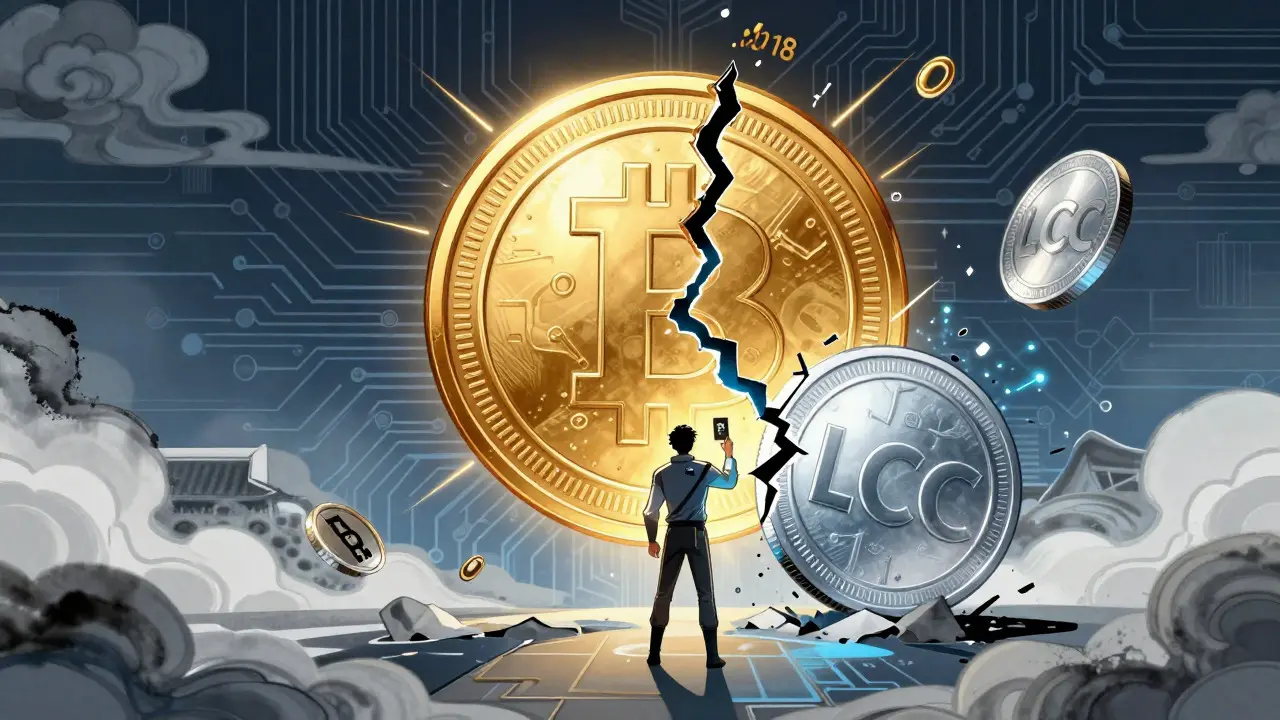
Imagine holding a coin that was supposed to be the 'fast Bitcoin' but ended up trading for fractions of a cent. That is the reality of Litecoin Cash, often abbreviated as LCC. It is a cryptocurrency created via a hard fork of the Litecoin blockchain in February 2018, designed to use SHA-256 mining and offer a faster transaction experience than its parent chain.
If you are searching for this name today, you might be an old holder wondering if your wallet still has value, or a new miner looking for low-competition networks. The short answer? LCC is a functioning but extremely niche asset. It sits deep in the rankings, with a market cap under $2 million and daily trading volumes that barely cover the cost of a coffee. But it isn't dead; it just lives in a quiet corner of the crypto world.
Key Takeaways
- Origin: Forked from Litecoin at block 1,371,111 on Feb 18, 2018, with a 1:10 distribution ratio (1 LTC = 10 LCC).
- Tech Stack: Uses SHA-256 proof-of-work (like Bitcoin) instead of Scrypt (like Litecoin), allowing legacy ASIC miners to participate.
- Current Status (2026): Ranked around #5300 globally, with a price near $0.002 and a max supply of 840 million coins.
- Risk Profile: High volatility, low liquidity, and significant skepticism from the original Litecoin community.
The Origin Story: Why Did It Fork?
To understand LCC, you have to look back at early 2018. The crypto space was buzzing with forks-Bitcoin Cash had just split from Bitcoin, and everyone was experimenting with how to make transactions cheaper and faster. Litecoin, created by Charlie Lee in 2011, was already popular for its speed compared to Bitcoin. But some developers felt it could be even better.
The team behind Litecoin Cash wanted to solve two specific problems. First, they wanted to tap into the massive pool of unused Bitcoin mining hardware. By switching the algorithm from Scrypt to SHA-256, they made it so that any miner with old Bitcoin ASICs could mine LCC without buying new equipment. Second, they promised faster block times, aiming for a more responsive network than standard Litecoin.
The fork happened on February 18, 2018. Every address that held Litecoin at that exact moment became eligible to claim 10 units of LCC. It was a classic airdrop strategy: give people free tokens to seed the new network with users and hash power. However, unlike modern token launches, claiming these coins wasn't as simple as clicking a button on an exchange. You had to control the private keys of your LTC wallet, making it a task reserved for technically savvy users.
Technical Breakdown: SHA-256 vs. Scrypt
The biggest technical differentiator for LCC is its consensus mechanism. While Litecoin uses the Scrypt algorithm, which is memory-hard and designed to resist ASIC dominance, LCC switched to SHA-256. This is the same algorithm used by Bitcoin.
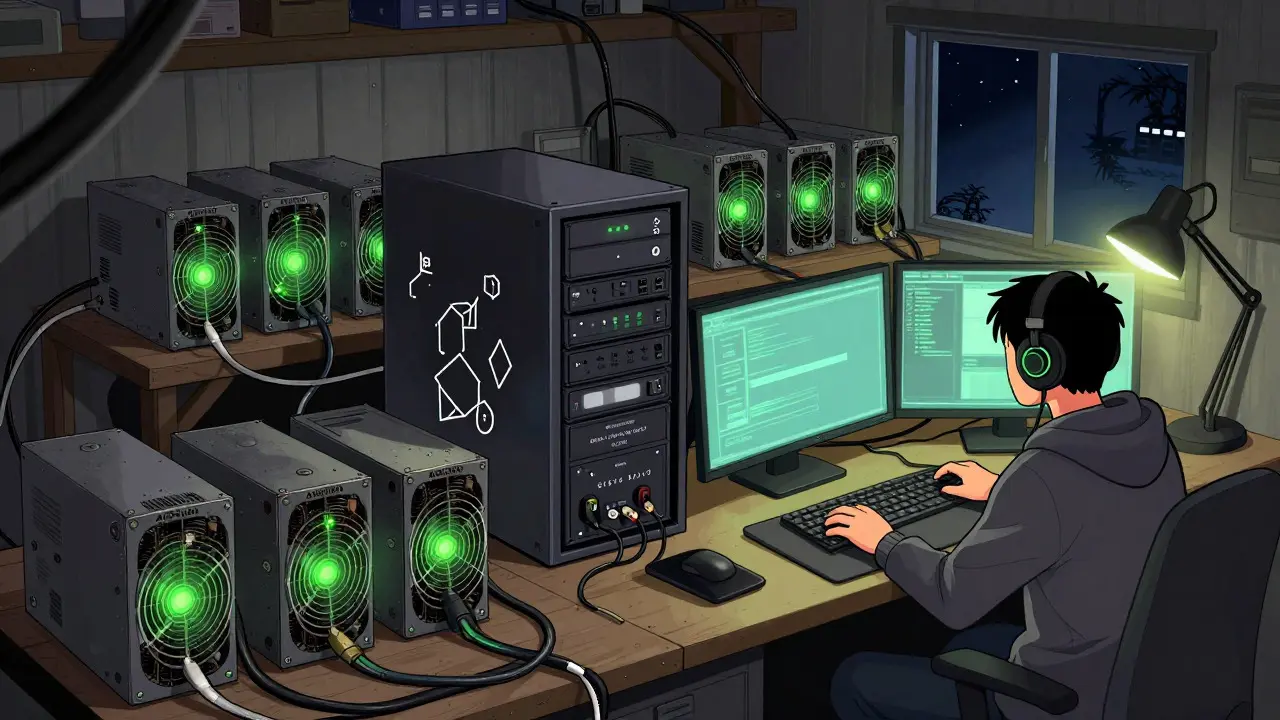
Why does this matter? SHA-256 is computationally intensive but less memory-dependent. This means that specialized Application-Specific Integrated Circuit (ASIC) miners can process blocks very efficiently. For LCC, this was a feature, not a bug. It allowed the network to inherit security from the existing Bitcoin mining ecosystem. If you had a dusty Antminer sitting in a garage, you could point it at an LCC pool and start earning rewards.
However, there is a catch. Because LCC shares its algorithm with Bitcoin, it competes for the same hardware resources. But since LCC's total network hash rate is tiny compared to Bitcoin's, the competition is much lower. As of mid-2026, the LCC network hash rate hovers around 283 TH/s. To put that in perspective, Bitcoin operates at hundreds of EH/s (exahashes per second). This makes LCC much easier to attack theoretically, but also much cheaper to mine for small-scale operators.
LCC also introduced a concept called "Hive Mining." While details are sparse, this generally refers to a hybrid mechanism where staking or special node participation influences block creation alongside pure proof-of-work. It adds a layer of complexity that most other PoW chains don't have, though its practical impact on decentralization remains debated among experts.
Supply, Price, and Market Reality in 2026
Let’s talk numbers, because they tell the real story of LCC’s journey. The maximum supply is capped at 840 million coins. As of August 2026, approximately 823 million coins are circulating. This means the inflation schedule is nearly complete, and no significant new coins will be minted soon.
Price-wise, LCC has taken a long fall. Its all-time high was roughly $7.75, reached shortly after launch when hype was peaking. Today, it trades between $0.002 and $0.003. That is a drop of over 99%. Does that mean it's worthless? Not necessarily. In crypto, small caps can rebound violently. But it does mean that unless you hold thousands of coins, your portfolio impact is minimal.
| Metric | Value | Context |
|---|---|---|
| Price | $0.0020 - $0.0033 | Low single-digit cents range |
| Market Cap | ~$1.8 Million | Micro-cap classification |
| Circulating Supply | 823.35 Million | Near max supply of 840M |
| Daily Volume | ~$1,000 - $5,000 | Very thin liquidity |
| Network Rank | #5317 | Deep tail of global rankings |
The liquidity situation is the biggest hurdle for traders. With daily volumes often under $5,000, trying to sell a large position can crash the price due to slippage. If you want to buy or sell more than a few hundred dollars' worth, you need to use limit orders carefully. Most major exchanges like Coinbase or Binance list LCC for tracking purposes, but active spot markets are limited to smaller platforms or peer-to-peer venues.
Community Sentiment: Friend or Foe?
You might have noticed that the Litecoin community doesn't exactly love LCC. When the fork was announced, Charlie Lee, the creator of Litecoin, publicly stated that any fork from Litecoin should be considered a scam. He didn't endorse the project, and many loyal LTC holders viewed LCC as an unnecessary distraction.
This reputational damage stuck. On Reddit threads from 2018, comments were harsh, with users calling it a "private key harvesting scheme" or a "scam." While LCC hasn't been proven to be malicious, the fear of exposing private keys during the claiming process kept many casual users away. Today, the sentiment has shifted from anger to indifference. There isn't much noise about LCC anymore, which is typical for projects that fail to gain mainstream traction.
Who is actually using LCC now? Mostly hobbyist miners who enjoy the challenge of running full nodes and experimenting with older hardware. There are also speculators who believe in the "lottery ticket" potential of micro-caps. But you won't find banks, payment processors, or large tech companies integrating LCC into their stacks.
How to Get Started (If You Must)
If you are curious enough to try LCC, here is what you need to know. Unlike Bitcoin or Ethereum, you can't just download a mobile app and swap USDT for LCC instantly. The ecosystem is still rooted in desktop software.
- Download the Wallet: The official software is called Litecoin Cash Core. It’s available for Windows, macOS, and Linux. You’ll need to sync the blockchain, which takes time and disk space.
- Generate an Address: Once synced, create a new LCC address. This is where you’ll store your coins.
- Acquire LCC: Since exchange options are limited, you may need to buy from secondary markets or trade directly with other users. Always verify the counterparty’s reputation.
- Claiming Old Coins: If you held LTC in Feb 2018, you can still claim your 10:1 allocation. But be careful! Move your current LTC to a new address first, then export the old private key to import into the LCC wallet. Never expose a key that holds valuable assets on another chain.
Mining is another route. If you have SHA-256 capable hardware, join a pool that supports LCC. Just remember, the rewards are small, and electricity costs can eat up your profits if you aren’t efficient.
Is Litecoin Cash Worth Investing In?
That depends entirely on your risk tolerance. LCC is not a safe harbor. It lacks the institutional backing, developer activity, and user base of top-tier coins. The development repository shows updates as late as 2025, so the code isn't abandoned, but major protocol upgrades are rare.
Consider this: you are betting on a coin with a $2 million market cap. If one large holder sells off 1% of their stack, the price could swing wildly. There is no DeFi ecosystem, no NFT integration, and no major partnerships. Its value proposition rests solely on its historical connection to Litecoin and its compatibility with legacy mining hardware.
For most investors, LCC is a curiosity rather than a core holding. If you do allocate funds, treat it as a speculative satellite position-something you can afford to lose entirely. Diversification is key, and putting too much into a single micro-cap is a recipe for regret.
Frequently Asked Questions
What is the difference between Litecoin and Litecoin Cash?
Litecoin (LTC) uses the Scrypt algorithm and is a top-20 cryptocurrency with strong adoption. Litecoin Cash (LCC) is a fork that uses SHA-256 (like Bitcoin) and has a much smaller market cap. LCC was created to allow Bitcoin miners to earn rewards on a faster chain, but it never achieved widespread adoption.
Can I still claim my Litecoin Cash from 2018?
Yes, technically. If you controlled the private keys to your Litecoin addresses at block 1,371,111 (Feb 18, 2018), you can still claim the 1:10 ratio. However, you must ensure those private keys are not currently securing valuable assets elsewhere before importing them into an LCC wallet.
Is Litecoin Cash a scam?
It is not a confirmed scam, but it is highly speculative. The original Litecoin creator criticized it, and liquidity is very low. The main risk is not fraud, but financial loss due to poor demand and high volatility. Always do your own research and only invest what you can afford to lose.
Which algorithm does Litecoin Cash use for mining?
Litecoin Cash uses SHA-256, the same proof-of-work algorithm as Bitcoin. This allows miners to use legacy Bitcoin ASIC hardware. It also incorporates a "Hive Mining" mechanism, though details on this hybrid approach are limited in public documentation.
Where can I buy Litecoin Cash in 2026?
Options are limited. Major exchanges like Coinbase and Binance track the price, but active trading pairs are scarce. You may need to use smaller exchanges, decentralized swaps, or peer-to-peer trades. Be cautious of wide spreads and low liquidity when executing orders.
nic c
August 26, 2026 AT 02:24So we are here, in the year of our Lord 2026, dissecting a corpse that has been rotting since 2018. It is truly a testament to human stubbornness that we still find it necessary to write explanatory articles about coins that trade for less than a grain of sand. The narrative of 'fast Bitcoin' was always a hollow promise, a siren song for the uninitiated who thought they could outsmart the market with a simple algorithm swap. Now we sit in the wreckage, staring at a market cap that wouldn't cover a decent dinner in Manhattan, and we call it 'functioning.'
The real tragedy isn't the loss of value; it's the loss of dignity. We have turned speculative finance into a graveyard of forgotten names, each one a monument to our collective inability to let go. This isn't just a coin; it's a mirror reflecting our own greed and short-sightedness. Who among us hasn't held onto a bag like this, waiting for a miracle that never came? The silence around LCC is deafening because everyone knows the truth: it was a mistake from day one, a fork without a vision, a shipwreck without a lighthouse.
J Shepherd
August 26, 2026 AT 12:07Nic, you're overthinking it again. Look at the hash rate. 283 TH/s is actually pretty solid for a niche PoW chain if you've got some older S9s or S17s gathering dust in your garage. The electricity costs are low enough that you can break even if you're running on off-peak rates. It's not about making millions; it's about keeping the hardware utilized. I've been mining a few smaller chains like this for years, and the key is efficiency and patience. Don't expect moonshots, just steady block rewards. :)
Martha Packard
August 28, 2026 AT 07:07You all are so wrong. You look at the price and see failure, but I see opportunity. The masses are too blind to see the potential of a micro-cap with near-complete supply distribution. When the next bull run hits, these forgotten gems will explode upwards. Why? Because there is no overhead. No VC lockups, no massive team holdings to dump on retail. Just pure, unadulterated speculation. Be contrarian, be early, or don't bother playing the game at all.
Ashwini Chaskar
August 28, 2026 AT 09:57oh my god you people really need to stop pretending this is a serious investment vehicle
it's literally a tech toy for guys who like old computers
i mean sure it works but does anyone actually use it for payments? i doubt it
the liquidity is so bad it makes me nervous just looking at the order book
and don't get me started on the community sentiment which is basically non-existent
we should be focusing on projects that actually have adoption and user bases
this is just a ghost town with a blockchain
anyone who thinks this is going to save their portfolio is deluding themselves badly
but hey good luck with your dusty asics i guess
Jarnail Singh
August 28, 2026 AT 15:31Well, it is quite fascinating how the Western world creates these elaborate financial instruments only to abandon them when the initial novelty wears off, isn't it? In India, we have a deep respect for legacy systems and long-term stability, yet here we are discussing a coin that is essentially a digital artifact of a bygone era. The shift from Scrypt to SHA-256 was a bold technical move, certainly, but one must ask if the cultural context of the users supported such a radical departure from the parent chain's identity. It seems to me that the project suffered not from technical failure, but from a lack of philosophical alignment with its target demographic, who were perhaps more interested in speed than in the heritage of mining hardware.
Moreover, the notion of 'Hive Mining' sounds intriguingly complex, almost reminiscent of the intricate social structures we observe in nature, yet it appears to have failed to gain traction. Perhaps the issue lies in the communication of value proposition; in emerging markets, clarity and utility often trump abstract technical innovations. If one were to approach LCC from a global perspective, it serves as a cautionary tale about the importance of aligning technological advancements with local economic realities and user expectations. It is a small coin, yes, but a big lesson in cross-cultural financial engineering. :)
Ian Munro
August 30, 2026 AT 08:17Hash rate is irrelevant if the exit liquidity doesn't exist. 283 TH/s means nothing if you can't sell more than $500 without moving the price against yourself. Good observation on the hardware utilization, but the math doesn't work for most people outside of hobbyists.
Trista Dennis
August 31, 2026 AT 01:44Ah, the classic 'micro-cap lottery ticket' argument. How refreshing to see someone embrace the sheer absurdity of holding an asset with a market cap smaller than a mid-sized car dealership. But let's not pretend this is strategy; it's gambling dressed up in a tuxedo. The fact that the supply is nearly maxed out is a double-edged sword; it means no new dilution, but also no new demand drivers. Unless you plan to hold until heat death, you're just sitting on a very expensive paperweight. Bravo, Martha, for finding joy in the chaos.
Sam Ariafar
August 31, 2026 AT 09:46We need to talk about the ethics of claiming these old coins. For many, the private key export process felt like a violation of trust. Charlie Lee called it a scam, and while that might be harsh, the fear of key exposure was real for casual users. We often forget that behind every wallet address is a person who trusted the system to be safe. When forks happen without clear, secure mechanisms for claiming, it erodes that trust. It’s a small point, but it matters for the long-term health of the crypto space. We shouldn’t normalize risky key management practices just because the tokens are free.
Jane yuan
August 31, 2026 AT 11:40The concept of 'value' is a social construct. LCC proves that even when the construct collapses, the underlying mechanism persists. It is a quiet rebellion against the noise of the mainstream. In America, we celebrate the underdog, but we rarely support the ones who lose. This coin is the ultimate American story: born in a moment of hype, stripped of its glamour, and left to fend for itself in the wilderness. There is a certain beauty in that resilience, however fragile it may be.
Rebecca Springer
August 31, 2026 AT 11:57I think it's important to acknowledge the different perspectives here. Some see a dead end, others see a niche tool. For those in developing economies where access to traditional banking is limited, even micro-caps can serve as a learning ground for blockchain technology. It's not about the profit, but about the experience. We should be respectful of those who choose to experiment with lesser-known assets, as long as they understand the risks. It's a diverse ecosystem, after all.
Kevin Payette
September 1, 2026 AT 06:23You're all missing the point. The point is that LCC is a zombie. A walking corpse powered by inertia. The 'Hive Mining' feature is a red herring, a distraction from the fact that the network is effectively orphaned. Why do we keep analyzing the autopsy report of a project that died six years ago? It's like studying the flight path of a bird that crashed into a wall. The lesson isn't in the crash; it's in why we didn't see the wall coming. Cut your losses, or admit you're addicted to the pain. Either way, stop pretending there's a silver lining in this cloud of dust.