Most Significant Blockchain Forks in History: Bitcoin Cash, Ethereum Classic & The Merge
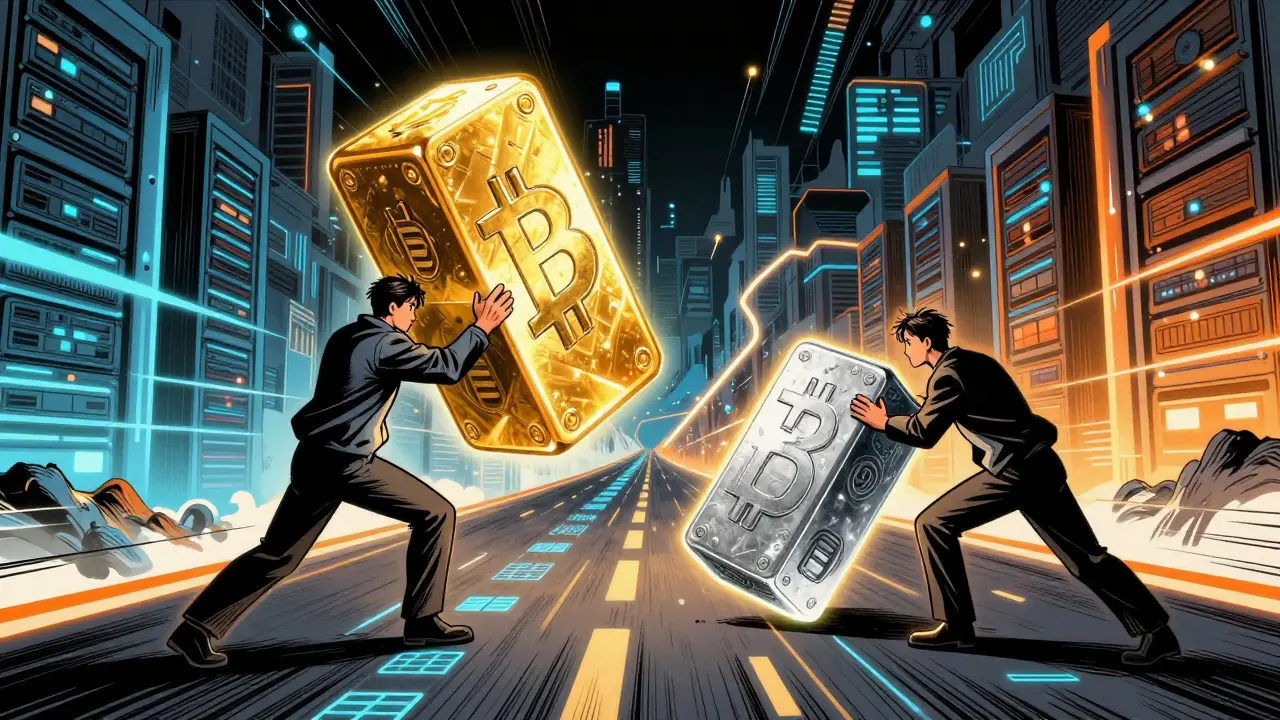
Imagine you are walking down a road, and suddenly it splits into two. You have to choose which path to take. In the world of blockchain is a decentralized digital ledger that records transactions across many computers so that the record cannot be altered retroactively without altering subsequent blocks., this split is called a fork is a change in the protocol rules of a blockchain network, resulting in a divergence of the chain.. It happens when developers or miners disagree on how the network should evolve. This disagreement can lead to a permanent split, creating two separate cryptocurrencies from one.
Forks are not just technical glitches; they are critical evolutionary moments. They reveal the philosophy behind each network-whether it values stability over innovation, or decentralization over user protection. From the controversial birth of Bitcoin Cash to the massive energy-saving transition of Ethereum, these events have shaped the crypto landscape we see today. Understanding them helps you grasp why some coins survive while others vanish overnight.
What Is a Blockchain Fork?
To understand the history, you first need to know the mechanics. A fork occurs when the software running the blockchain nodes changes. There are two main types: soft fork is a backward-compatible update to the blockchain protocol that tightens the consensus rules. and hard fork is a non-backward-compatible change to the blockchain protocol that creates a permanent divergence from the previous chain..
- Soft Fork: Think of this as a rule update that everyone must follow, but old nodes can still validate the new blocks if they ignore the new features. It is like changing the speed limit on a highway. Cars (nodes) that don't know about the new limit can still drive, but they might not use the new express lane. These forks do not create new coins.
- Hard Fork: This is a complete break. New nodes follow new rules, and old nodes reject the new blocks. If the community splits, with some groups supporting the new rules and others sticking to the old ones, the chain splits into two independent networks. Each network gets its own cryptocurrency.
The difference matters because hard forks carry higher risk. They require coordination among miners, developers, and exchanges. If the hash power (computing strength) splits unevenly, one chain may become vulnerable to attacks. Soft forks are safer but often slower to implement because they require near-universal adoption to work effectively.
The Bitcoin Wars: SegWit and Bitcoin Cash
The most famous fork saga began with Bitcoin. By 2016, Bitcoin was struggling with scalability. Transaction fees were high, and confirmations were slow. The debate centered on block size. Should the 1MB block limit stay, or should it increase to handle more transactions?
In August 2017, the network implemented Segregated Witness (SegWit) is a soft fork upgrade to Bitcoin that separates signature data from transaction data to increase effective block capacity.. Proposed by Pieter Wuille, SegWit didn't change the 1MB limit technically but moved signature data outside the main block structure. This increased effective capacity by 1.7x. It was a soft fork, meaning it was backward compatible. However, it angered those who wanted a larger block size immediately.
This tension led to the creation of Bitcoin Cash (BCH) is a cryptocurrency created via a hard fork of Bitcoin in August 2017, focusing on larger block sizes for faster transactions.. On August 1, 2017, at block 478,558, Bitcoin Cash launched. It increased the block size to 8MB (later 32MB). Roger Ver and Jihan Wu were key figures in this push. Immediately after the fork, BCH became the fourth-largest cryptocurrency by market cap. But did it last? Market forces decided otherwise. While Bitcoin survived the volatility, Bitcoin Cash saw its dominance drop significantly. As of 2023, it holds a fraction of Bitcoin's value, proving that brand recognition and network effects are powerful.
Other Bitcoin forks followed, including Bitcoin Gold (BTG), which changed the mining algorithm to Equihash to allow GPU mining, and Bitcoin SV (BSV), which split from BCH in 2018. Most of these forks failed to gain long-term traction. According to studies, 68% of Bitcoin hard forks disappear within 18 months. Only Bitcoin Cash, Bitcoin SV, and Bitcoin Gold remained in the top 100 five years later, though their relevance has waned.
Ethereum's Philosophical Split: The DAO Hack
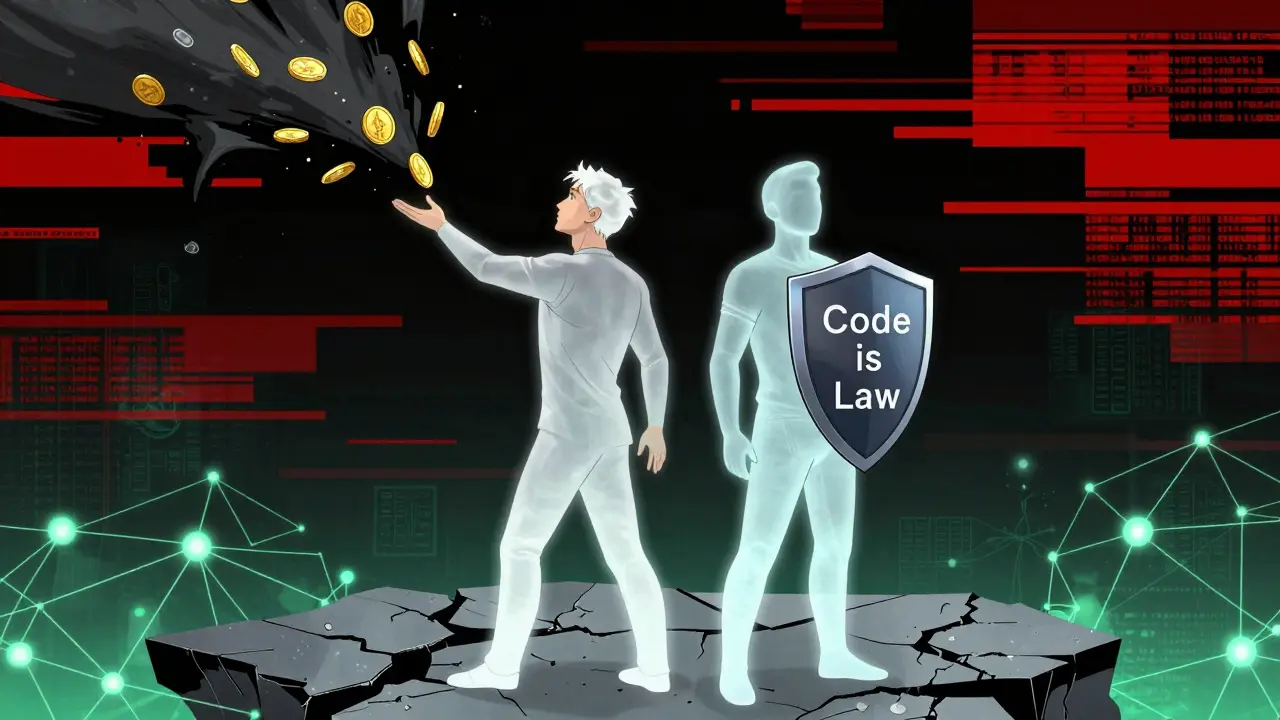
If Bitcoin's fork was about scaling, Ethereum's biggest fork was about morality. In June 2016, a project called The DAO raised $150 million. Then, hackers exploited a vulnerability in its code and drained 3.6 million ETH (about $50 million at the time).
The community faced a tough choice. Do we let the hack stand, upholding the principle of "code is law" and immutability? Or do we reverse the transaction to save the investors' money? Vitalik Buterin, Ethereum's co-founder, argued for reversing the funds. He believed protecting users was paramount. Others disagreed, arguing that tampering with the ledger set a dangerous precedent.
On July 20, 2016, at block 1,920,000, the DAO Fork is a hard fork of Ethereum implemented to reverse the effects of The DAO hack, creating Ethereum Classic as the original chain. occurred. About 90% of the network's hash power supported the fork, creating the new Ethereum (ETH) chain where funds were returned. The remaining 10% continued on the original chain, which became known as Ethereum Classic (ETC) is the original Ethereum blockchain that continues to operate after the DAO fork, maintaining the unaltered transaction history..
This event defined Ethereum's identity. It showed that the community prioritized pragmatism over pure ideology. Ethereum Classic survives today with a market cap around $1.2 billion, serving as a niche alternative for those who believe in strict immutability. Meanwhile, Ethereum continued to evolve, leading to further upgrades like Tangerine Whistle and Spurious Dragon, which fixed security issues and gas costs.
The Merge: Ethereum's Green Revolution
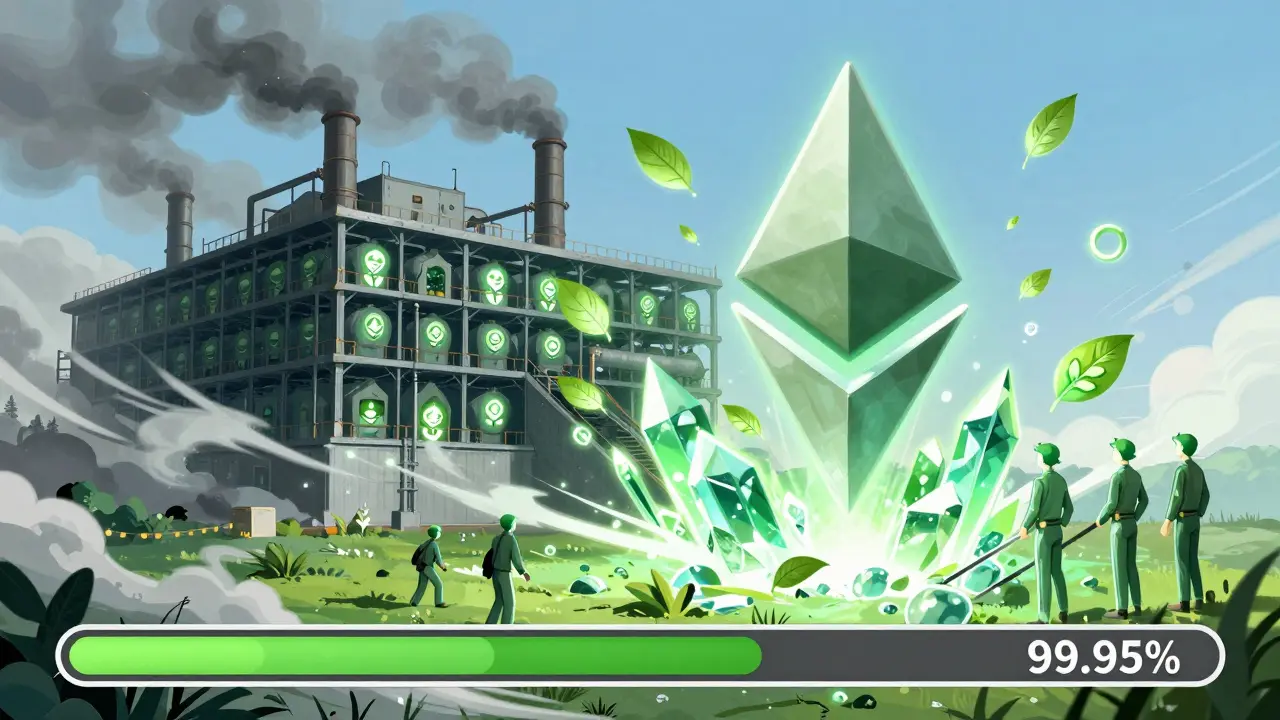
While the DAO fork was contentious, the next major Ethereum fork was collaborative. For years, Ethereum used Proof-of-Work (PoW), requiring massive amounts of electricity. In September 2022, at block 15,537,393, Ethereum executed The Merge is the upgrade that transitioned Ethereum from proof-of-work to proof-of-stake, reducing energy consumption by 99.95%..
This was not a split that created two chains. Instead, it was a coordinated hard fork that upgraded the entire network to Proof-of-Stake (PoS) is a consensus mechanism where validators stake cryptocurrency to secure the network instead of using computational power.. Miners were replaced by validators. The result? Energy consumption dropped by 99.95%. This was a monumental achievement in blockchain engineering. It required simultaneous updates to execution clients like Geth and consensus clients like Prysm. With 99.98% successful execution, The Merge proved that large-scale, complex upgrades could happen without breaking the network.
Comparison of Major Blockchain Forks
| Fork Name | Date | Type | Primary Reason | Outcome |
|---|---|---|---|---|
| SegWit | Aug 2017 | Soft Fork | Scalability | Increased capacity, no new coin |
| Bitcoin Cash | Aug 2017 | Hard Fork | Block size dispute | New coin (BCH), lower market share |
| DAO Fork | Jul 2016 | Hard Fork | Hack reversal | New coin (ETC), philosophical split |
| The Merge | Sep 2022 | Hard Fork | Consensus change | PoS adoption, energy reduction |
| Taproot | Nov 2021 | Soft Fork | Privacy/Efficiency | Schnorr signatures, no new coin |
Why Do Some Forks Fail?
You might wonder why Bitcoin Cash didn't replace Bitcoin, or why most forks die out. The answer lies in network effects and utility. A fork creates a new asset, but it doesn't automatically create demand. Users and developers tend to stick with the chain that has the most liquidity, security, and application support.
For example, after the Bitcoin Cash fork, many exchanges listed both BTC and BCH. However, developers continued building on Bitcoin due to its established ecosystem. Bitcoin Cash struggled to attract unique applications. Similarly, Ethereum Classic remains a small fraction of Ethereum's value because most smart contract activity stayed on the main Ethereum chain.
Volatility is another factor. Research shows that cryptocurrencies experience 15.3% higher volatility in the 30 days following a hard fork. This uncertainty scares away institutional investors. Unless the fork offers a clear, superior technological advantage, the market usually consolidates around the original chain.
Future of Blockchain Forks
The nature of forks is changing. Early forks were often ideological battles. Today, they are more likely to be planned upgrades. Ethereum's Shanghai upgrade in April 2023, which allowed staked ETH withdrawals, was a smooth hard fork with 99.7% consensus. Bitcoin's Taproot upgrade in 2021 improved privacy without splitting the chain.
Industry analysts predict that future forks will focus on interoperability. As blockchains grow, they need to talk to each other. Cross-chain communication protocols may require new fork mechanisms to ensure compatibility. The goal is no longer to split the community but to enhance connectivity. Risks remain, as seen in the delayed Shanghai attempt, but the process is maturing.
What happens to my coins during a hard fork?
If you hold coins before a hard fork, you typically receive an equal amount of the new forked coins. For example, if you held 1 BTC before the Bitcoin Cash fork, you received 1 BCH. However, you must claim these coins through a wallet that supports the new chain. Exchanges may credit them automatically, but self-custody requires action.
Is a soft fork safer than a hard fork?
Yes, soft forks are generally safer because they are backward compatible. Old nodes can still validate new blocks, preventing a chain split. Hard forks require all participants to upgrade, and if a significant portion does not, the network can fragment, leading to security risks and reduced hash power.
Why did Ethereum Classic survive?
Ethereum Classic survived because it appeals to a specific segment of the community that values immutability above all else. It serves as a testament to the "code is law" philosophy. While smaller, it maintains a dedicated user base and consistent block times, making it viable for certain microtransaction use cases.
Can a fork reverse a hack?
Yes, as seen with the DAO fork. By changing the historical state of the blockchain, developers can move stolen funds back to their original owners. However, this is controversial because it violates the principle of immutability. It sets a precedent that the network can be manipulated, which some view as a centralization risk.
What is the impact of The Merge on Ethereum?
The Merge transitioned Ethereum to Proof-of-Stake, drastically reducing energy consumption by 99.95%. It also changed the economic model, introducing staking rewards and reducing inflation. This made Ethereum more environmentally friendly and attractive to institutional investors concerned about carbon footprints.