Myanmar Crypto Scam Networks: How $10 Billion Fraud Operations Work and the New Restrictions

You might think your money is safe in a digital wallet, but for millions of Americans, that safety is an illusion. In 2024 alone, fraudsters extracted over $10 billion from U.S. victims through sophisticated cryptocurrency schemes. The source? Not some anonymous hacker in a basement, but highly organized criminal networks operating out of Myanmar. These aren't random incidents; they are industrial-scale operations protected by armed groups, exploiting both American investors and trapped workers.
If you have ever received a suspicious text message or met someone online who quickly pivoted to talking about "guaranteed" crypto returns, you have likely brushed against this global threat. The scale of these operations has forced unprecedented government action, culminating in major sanctions in September 2025. Understanding how these networks operate, who protects them, and what new restrictions are in place is no longer just for cybersecurity experts-it’s essential knowledge for anyone holding digital assets.
The Shwe Kokko Hub: A Criminal Capital
To understand the magnitude of this crisis, we need to look at geography. The epicenter of these crimes is not Yangon or Mandalay, but Shwe Kokko, a town in northern Shan State near the Thai border. This area operates as a de facto independent zone, largely outside the control of Myanmar’s central government. Instead, it falls under the influence of ethnic armed organizations, most notably the Karen National Army (KNA).
The KNA, designated as a transnational criminal organization by the U.S., provides protection to these scam centers in exchange for revenue. This creates a hybrid model where military power backs financial crime. The U.S. Treasury Department describes Shwe Kokko as a "notorious hub for virtual currency investment scams." It is here that companies like Chit Linn Myaing Co. and Yatai International Holdings Group operate massive compounds housing thousands of workers.
These entities are not just small-time operators. They run sophisticated businesses with branding, websites, and customer service lines. They target Americans specifically because of the high volume of retail crypto adoption in the United States. By establishing themselves in a lawless border region, they create a jurisdictional shield that makes traditional law enforcement nearly impossible.
The Anatomy of the Scam: Romance and Greed
How do they get you to send Bitcoin or Ethereum to a stranger? The answer lies in social engineering, not technical hacking. The FBI’s analysis shows that these networks use two primary vectors: romance scams and fraudulent investment schemes.
- The Hook: You receive a friend request on Facebook, a match on a dating app, or a direct message on Telegram. The person seems charming, successful, and interested in you.
- The Build-Up: Over weeks or months, they build trust. They share stories of their life, perhaps hinting at their success in trading.
- The Pivot: Eventually, they mention a "special opportunity"-a proprietary trading platform or an exclusive crypto fund. They claim to have insider information or AI-driven algorithms that guarantee profits.
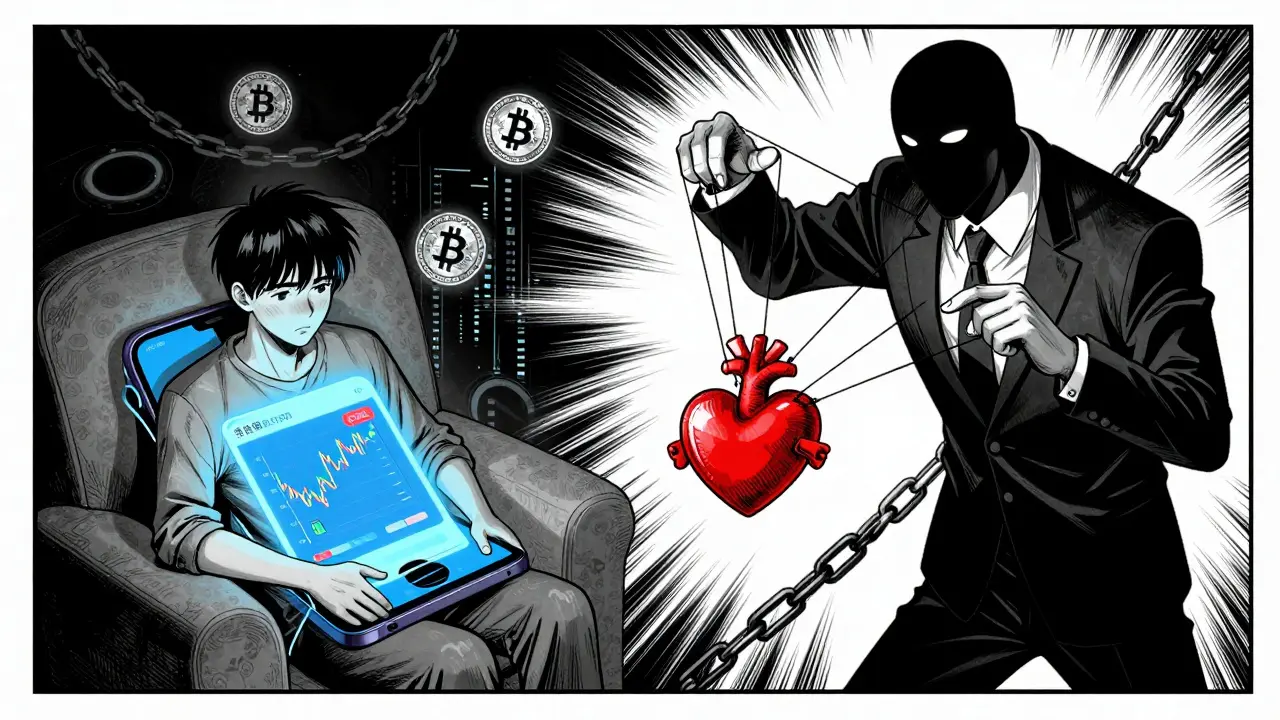
- The Trap: You invest a small amount. You see gains on the fake dashboard. You withdraw a little profit to prove legitimacy. Then, they urge you to invest everything you have.
- The Disappearance: When you try to withdraw your larger sum, fees are demanded, then more fees. Finally, the platform goes offline, and your contact disappears.
This methodology is terrifyingly effective because it exploits human emotion rather than software vulnerabilities. The scammers are trained psychologists, often working under duress themselves, using scripts refined by data analytics to maximize victim compliance.
Human Trafficking: The Hidden Cost
Behind every scammer messaging you is often a victim of human trafficking. This is the dark underside of the Myanmar crypto industry. Workers are recruited through false job advertisements promising high-paying roles in marketing, IT, or customer service in Southeast Asia.
Once they arrive in Shwe Kokko, passports are confiscated. Debt bondage is imposed for travel costs. Those who resist or fail to meet daily quotas face physical violence, torture, and threats of forced prostitution. The U.S. Treasury highlighted this dual victimization, noting that these operations subject thousands to modern slavery.
This human rights abuse is not a side effect; it is a feature of the business model. By trapping workers, the criminal syndicates ensure loyalty through fear. It also prevents whistleblowers from escaping to report the operation. This complexity is why the U.S. government invoked Executive Order 13818, which targets human rights abusers, alongside standard financial crime statutes.
September 2025 Sanctions: What Changed?
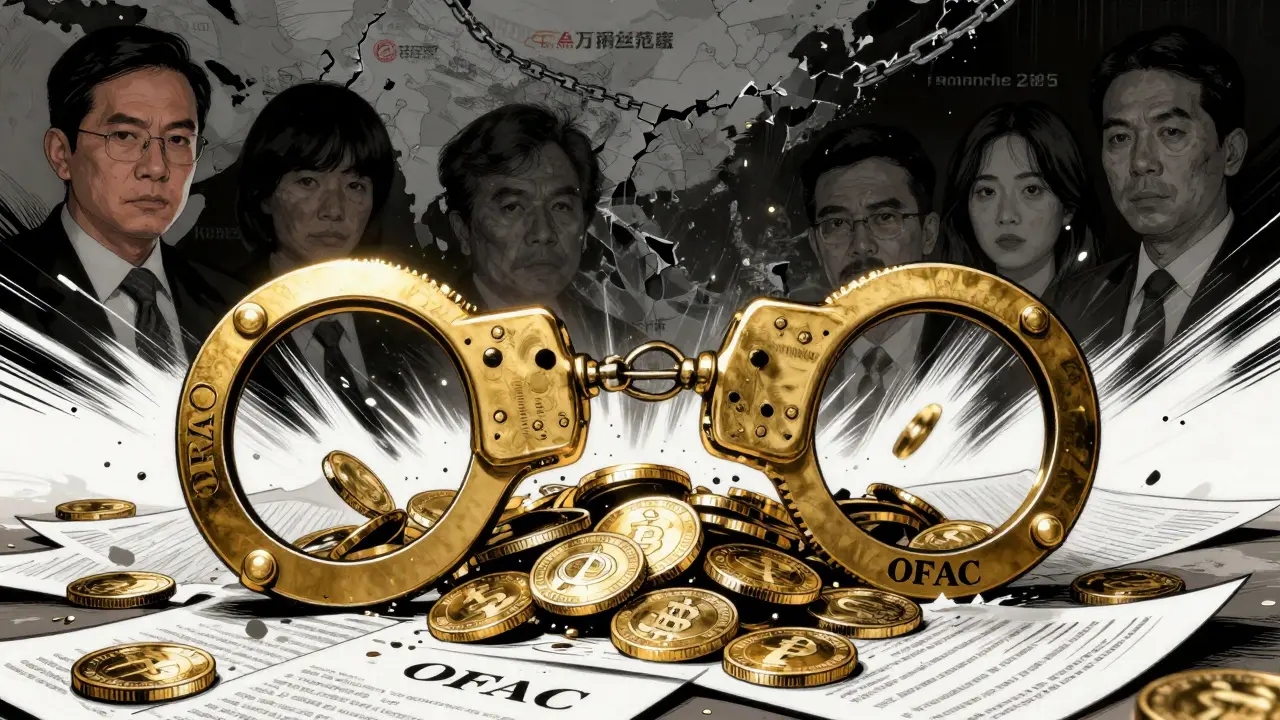
For years, these networks operated with impunity. However, the sheer scale of losses-$10 billion in 2024, a 66% increase from 2023-forced Washington’s hand. On September 9, 2025, the Office of Foreign Assets Control (OFAC) implemented comprehensive sanctions against 19 individuals and organizations across Myanmar and Cambodia.
This was not a symbolic gesture. The sanctions targeted specific infrastructure:
- Key Individuals: Figures like Tin Win and Saw Min Min Oo were sanctioned, freezing any assets they hold within the U.S. financial system and prohibiting Americans from doing business with them.
- Corporate Entities: Companies such as Chit Linn Myaing Mining & Industry Co. and She Zhijang were blocked. This disrupts their ability to move money through legitimate banking channels.
- Financial Channels: The sanctions aim to cut off the flow of fiat currency into these zones, making it harder to pay workers, buy equipment, or launder proceeds.
Under Secretary of the Treasury John K. Hurley emphasized that these actions utilize multiple executive orders, including those targeting transnational criminal organizations and malicious cyber activities. This multi-vector approach signals that the U.S. is treating this as a national security threat, not just a consumer protection issue.
| Approach | Target | Effectiveness | Limitations |
|---|---|---|---|
| Traditional Law Enforcement | Individual hackers | Low in Myanmar | No extradition treaties; lack of local police cooperation |
| OFAC Sanctions (2025) | Entities & Leaders | High for financial isolation | Criminals may shift to non-US dollar systems |
| Exchange Bans | Crypto Platforms | Medium | Scammers use decentralized exchanges (DEXs) |
Why Myanmar? The Perfect Storm
Why did this happen in Myanmar and not elsewhere? Several factors converge to make this region ideal for cybercrime.
First, there is the political instability following the 2021 military coup. The central government’s weakness allows ethnic armed groups like the KNA to exert control over border regions. Second, the proximity to Thailand provides easy access to international borders for moving people and goods. Third, the weak regulatory environment means there are few checks on the establishment of large corporate entities.
Compared to North Korean state-sponsored hacking or Russian ransomware gangs, Myanmar’s model is unique. It is a quasi-governmental enterprise. The armed group provides the guns, the criminals provide the tech, and the victims provide the money. This symbiosis makes it incredibly resilient to disruption.
What You Can Do: Protection Strategies
While governments work on sanctions, individual protection remains critical. Here is how to spot and avoid these scams:
- Never Invest Based on Social Media Contacts: If someone you met online suggests an investment, it is a scam. Period. Legitimate financial advisors do not recruit clients via Instagram DMs.
- Verify Exchange Legitimacy: Only use well-known, regulated exchanges like Coinbase or Kraken. Scammers create fake platforms that look identical to real ones but are controlled entirely by the fraudsters.
- Beware of "Guaranteed Returns": Crypto is volatile. Anyone promising consistent, high returns with low risk is lying.
- Check for Red Flags: Poor grammar, urgency tactics, and requests to communicate only via encrypted apps like Telegram are common signs.
- Report Suspicious Activity: File reports with the FBI’s Internet Crime Complaint Center (IC3). This helps law enforcement track patterns and identify networks.
The Independent Community Bankers of America (ICBA) has called for better information sharing between banks and regulators. As a user, you can help by being vigilant. If your bank flags a transaction, listen to them. They are often the first line of defense against these illicit flows.
The Future of Crypto Crime Enforcement
The September 2025 sanctions are a significant step, but they are not a silver bullet. Criminal networks are adaptive. They may shift operations to other parts of Southeast Asia, such as Cambodia or Laos, or move further underground into decentralized finance (DeFi) protocols that are harder to trace.
Future enforcement will likely focus on international cooperation. The U.S. is working with Thailand and other neighbors to disrupt the personnel pipelines and financial infrastructure supporting these scams. Additionally, we may see stricter regulations on cryptocurrency exchanges, requiring more rigorous Know Your Customer (KYC) procedures to prevent money laundering.
However, the root cause remains the governance failure in Myanmar. Until stability returns to the region and the rule of law is restored, Shwe Kokko and similar hubs will remain attractive to criminals. For now, the burden of protection falls heavily on users and financial institutions alike.
Who are the main actors behind the Myanmar crypto scams?
The operations are primarily run by criminal networks based in Shwe Kokko, protected by the Karen National Army (KNA). Key sanctioned entities include Chit Linn Myaing Co., Yatai International Holdings Group, and individuals like Tin Win and Saw Min Min Oo.
How much money have Americans lost to these scams?
In 2024 alone, Americans lost over $10 billion to cryptocurrency fraud, with Southeast Asian operations, particularly in Myanmar, accounting for the largest portion of this increase. This represents a 66% surge from the previous year.
What were the September 2025 sanctions?
On September 9, 2025, the U.S. Treasury's OFAC sanctioned 19 individuals and organizations linked to cyber scams and human trafficking in Myanmar and Cambodia. These sanctions freeze assets and prohibit U.S. persons from dealing with these entities.
Are the workers in these scam centers volunteers?
No. Many workers are victims of human trafficking. They are recruited with false job offers, then trapped through debt bondage, violence, and confiscation of passports. This forced labor component led to sanctions under human rights executive orders.
How can I protect myself from romance crypto scams?
Never invest money based on advice from someone you met online. Verify that any trading platform is a legitimate, regulated entity. Be skeptical of guaranteed returns and avoid communicating solely through encrypted apps like Telegram for financial matters.
Miss Masquer
May 31, 2026 AT 20:42It is truly fascinating, and frankly quite terrifying, to consider the sheer industrial scale of these operations when you really sit down to think about it. The fact that an entire town like Shwe Kokko has essentially become a criminal capital protected by armed groups speaks volumes about the breakdown of governance in the region. I have always been curious about how these networks manage to sustain themselves for so long without being completely dismantled by international pressure. It seems that the hybrid model of military protection and financial crime creates a shield that traditional law enforcement just cannot penetrate effectively. We often hear about cybercrime as isolated incidents, but this is clearly a systemic issue that requires a much more nuanced approach from governments worldwide. The human trafficking aspect adds another layer of horror that we simply cannot ignore or dismiss as collateral damage. It makes me wonder if there are similar hubs emerging in other unstable regions that we are not yet aware of. Understanding the geography of crime is just as important as understanding the technology behind it, don't you think? These workers are trapped in a nightmare scenario where their only escape is through violence or death. It is a stark reminder that our digital lives are deeply connected to physical realities we rarely see.
Edith Mair
June 2, 2026 AT 16:03The sanctions are a start, but let's be real, they won't stop the bleeding overnight. Criminals are adaptive creatures, and shifting to non-US dollar systems or moving further underground into DeFi protocols is exactly what we should expect them to do next. We need stricter KYC regulations on exchanges immediately because the current loopholes are wide open for exploitation. If Coinbase and Kraken were doing their job properly, half of these fake platforms wouldn't even exist. Stop making excuses for lax security standards.
Sam Dashti
June 3, 2026 AT 05:53Man, reading this feels like watching a dystopian sci-fi movie unfold in real-time, except the monsters are wearing suits and using Telegram bots instead of lasers. The romance scam angle is particularly diabolical because it preys on the most vulnerable part of us-our desire for connection. It’s not just greed; it’s loneliness weaponized against you. I mean, who doesn’t want to believe that someone out there sees your potential and wants to share their 'secret sauce' for getting rich? It’s a psychological trap wrapped in a digital bow. And then you realize the person on the other end might be a guy named Kevin who was kidnapped off the street in Bangkok and forced to type those sweet nothings under threat of torture. It’s grim stuff, folks. We need to wake up to the fact that if it sounds too good to be true, it’s probably being typed by a hostage in Myanmar.
Joe Clements
June 5, 2026 AT 04:49I can only imagine how devastating it must be for the victims who lost life savings to these schemes. It’s not just money; it’s trust that has been shattered. My heart goes out to everyone affected by this, especially the workers trapped in those compounds. They deserve so much better than what they’re enduring right now. Let’s all try to be more vigilant and look out for each other online. Sharing information like this helps keep people safe, and every little bit counts in fighting back against these criminals.
Rosie Morris
June 6, 2026 AT 16:32i cant even beleive people still fall for this sh*t. like seriously? if some rando u met on tinder starts talking bout crypto gains, block em immediately. its 2025 ppl, use yer brains. my aunt almost lost her house to one of these scams last year and it was a total mess. she refused to listen to anyone until the money was gone. just sad really. hope the sanctions actually do somethin useful this time.
lorna erni
June 6, 2026 AT 18:48This article is spot on! I’ve been saying for years that we need to treat these scam centers like terrorist organizations. The KNA isn’t just a rebel group; they’re running a multi-billion dollar extortion racket with blood on their hands. Sanctions are good, but we need boots on the ground to dismantle these compounds physically. Enough talk, let’s take action. Who’s with me?
Craig Swanson
June 8, 2026 AT 05:14We need to have a serious conversation about the role of social media platforms in facilitating these scams. Facebook and Instagram algorithms prioritize engagement over safety, which means these scammers get free advertising every day. It’s unacceptable that tech giants profit from user data while ignoring the predatory behavior happening on their sites. We hold them accountable, and we demand change. Your silence is complicity.
Dana Rapoport
June 9, 2026 AT 11:55The philosophical implications of this are profound. We live in a world where identity is fluid and trust is algorithmic. When you can’t verify the humanity on the other side of the screen, how do we build genuine connections? This crisis exposes the fragility of our digital social contract. We must rethink how we define value and risk in an age of instant communication. Silence is often louder than words in these situations.
stalin brian
June 10, 2026 AT 14:49hey guys, i read a lot about this stuff and its crazy how organized they are. its not just random hackers, its whole cities dedicated to scamming. i heard they even have HR departments and performance reviews for the scammers. wild right? we gotta stay smart out here. dont click weird links and never send money to strangers. easy peasy.
kamal ifrani
June 11, 2026 AT 21:44Typical Western victim mentality. You Americans walk around thinking you’re entitled to guaranteed returns in a volatile market, and then you cry foul when you get played. These scams work because people are greedy and lazy. Don’t blame the system for your own stupidity. The sanctions won’t fix your lack of financial literacy. Grow up and learn how money actually works before complaining about losing it.