NAMA Protocol Airdrop: Clarifying Nama Finance vs. Namada NAM
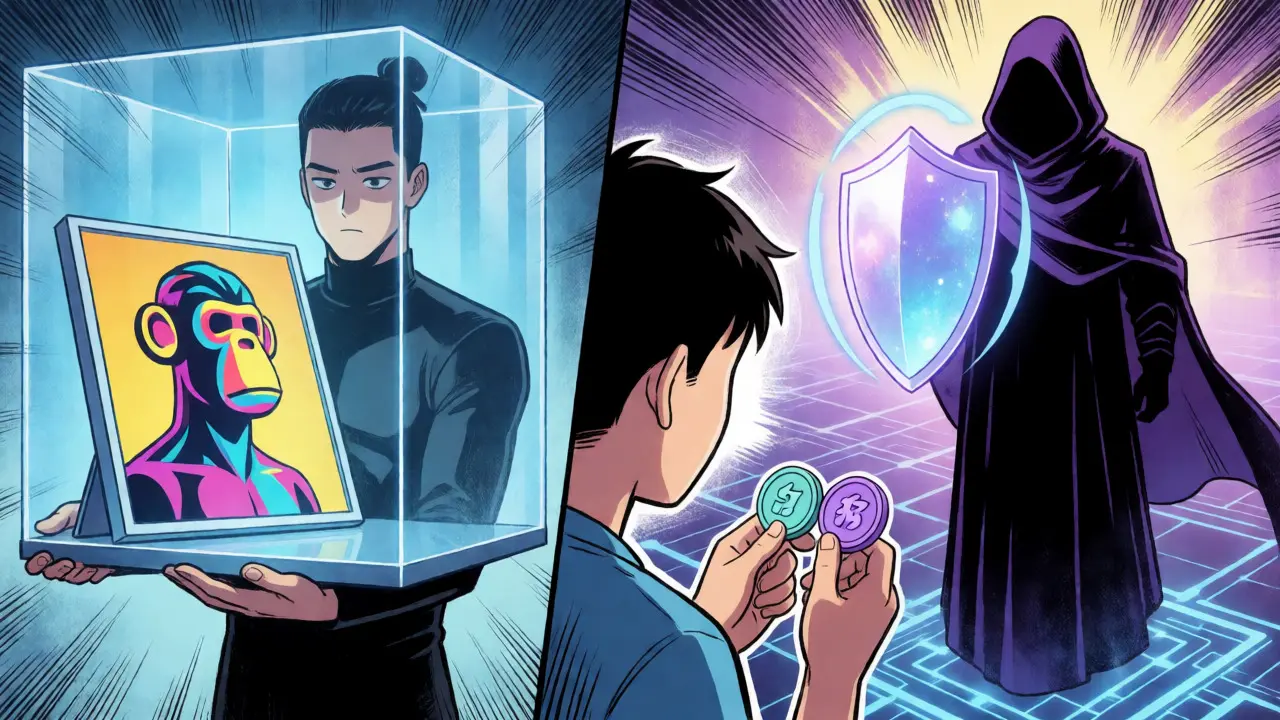
Ever feel like you’re chasing ghosts in the crypto world? You see an NAMA Protocol airdrop headline, get excited, and then realize the details don’t quite match up. This is a common trap because two very different projects share similar names: Nama Finance with its NAMA token, and Namada with its NAM token. If you are hunting for a specific airdrop by "Nama Finance," you might be looking at the wrong project entirely.
The confusion isn't just semantic; it’s financial. One project ran a massive retroactive airdrop that has already concluded, while the other operates as a niche NFT liquidity platform with no major recent airdrop campaign. Mixing them up could mean missing out on rewards or investing in a token with zero trading volume. Let’s untangle this web so you know exactly where your attention should go.
The Name Game: Why Confusion Happens
Blockchain naming conventions often lack strict regulatory oversight, leading to collisions like this. Nama Finance describes itself as a fully decentralized, community-driven NFT liquidity protocol built natively on multiple chains. It allows users to use NFTs as collateral for loans across Ethereum, Binance Smart Chain, and Solana. The native token here is NAMA.
On the other side of the spectrum sits Namada, developed by the Anoma Foundation. This is a privacy-focused blockchain protocol functioning as a shielded asset hub for the multichain ecosystem. Its native token is NAM. While both involve finance and blockchain tech, their core functions-NFT lending versus privacy infrastructure-are worlds apart.
| Feature | Nama Finance (NAMA) | Namada (NAM) |
|---|---|---|
| Core Function | NFT Liquidity & Lending | Privacy & Interoperability Hub |
| Native Token | NAMA | NAM |
| Airdrop Status | No major recent public airdrop | Retroactive Public Goods Funding (RPGF) completed Dec 2024 |
| Key Technology | Cross-chain NFT collateralization | Multi-Asset Shielded Pool (MASP), Cubic Proof-of-Stake |
| Market Activity | Limited trading volume, early stage | Active distribution, established ecosystem |
Nama Finance: The NFT Liquidity Play
If you are specifically interested in Nama Finance, you need to understand its utility before expecting free tokens. The protocol solves a real problem: NFTs are illiquid. You can’t easily borrow against a Bored Ape without selling it or using centralized platforms. Nama Finance lets you mint ERC721 or ERC1155 tokens as collateral to secure loans in stablecoins like USDT, USDC, or DAI.
For borrowers, interest rates start as low as 5% annually, with minimum loans around $500. For lenders, staking stablecoins into these pools offers yield farming opportunities, potentially reaching 35% APY depending on market conditions. But here’s the catch regarding airdrops: there is no evidence of a large-scale, retroactive airdrop for Nama Finance comparable to what Namada executed. Instead, NAMA tokens are distributed primarily through operational incentives-lending, borrowing, and governance participation.
As of late 2025, data from aggregators like CoinMarketCap shows NAMA with a maximum supply of 1 billion but negligible circulating supply and near-zero trading volume. This suggests the project is either in a deep development phase or has struggled to gain traction compared to larger DeFi protocols. If you hold NAMA, your value proposition relies on the protocol’s growth in the NFT lending sector, not a one-time windfall.
Namada (NAM): The Real Airdrop Story
Most search traffic for "NAMA airdrop" actually stems from people misremembering the name of the Namada RPGF drop. This was a significant event. The Anoma Foundation distributed 65 million NAM tokens, representing 6.5% of the total supply, to reward contributors to open-source privacy technology.
Who qualified? The criteria were broad but specific:
- Developers and researchers contributing to Zcash, Rust, and Zero-Knowledge Proof (ZKP) ecosystems.
- Gitcoin donors who supported ZK Tech and crypto advocacy groups.
- Stakers of ATOM and OSMO tokens who had at least $100 staked by November 1, 2023.
- Holders of BadKid NFTs (at least one held by November 14, 2023).
- Participants in the Namada Trusted Setup ceremony.
The deadline to claim these rewards passed on December 28, 2024. If you missed it, you can’t retroactively claim now. However, understanding this history helps clarify why "NAMA" keeps popping up in airdrop discussions-it’s often a typo for "NAM." Namada continues to operate as a privacy layer for Cosmos, enabling private transfers of assets like ATOM, OSMO, and TIA via its Multi-Asset Shielded Pool (MASP).
Technical Depth: Privacy vs. Liquidity
To appreciate why these projects aren’t interchangeable, look at their tech stacks. Namada uses Cubic Proof-of-Stake (CPoS). Unlike standard PoS, CPoS imposes exponential slashing penalties for validator misconduct, which discourages collusion and enhances security. Its ability to generate zero-knowledge proofs in sub-seconds on consumer devices makes privacy practical for everyday users, not just hardcore enthusiasts.
Nama Finance, meanwhile, focuses on smart contract logic for cross-chain asset locking. It doesn’t prioritize privacy in the same cryptographic sense; instead, it prioritizes composability across Ethereum, Solana, and BSC. If you care about anonymous transactions, Namada is your play. If you want to unlock cash flow from your digital art collection, Nama Finance is the tool.

How to Verify Your Airdrop Claims
Don’t let fake sites drain your wallet. With so many copycat projects, verification is key. Here’s a quick checklist before connecting your wallet:
- Check the Contract Address: Ensure the token contract matches the official documentation. NAMA and NAM have different addresses.
- Visit Official Domains: Use namada.net for NAM-related queries and nama.finance (or verified social links) for Nama Finance.
- Review Eligibility Dates: Most legitimate airdrops have clear snapshot dates. If a site asks you to "claim" without referencing a past snapshot, be skeptical.
- Analyze Trading Volume: A token with $0 volume is risky. Check if the exchange listings are reputable or obscure.
For Namada, the RPGF portal at rpgfdrop.namada.net was the sole legitimate claiming interface. For Nama Finance, check their official Discord or Twitter for any ongoing incentive campaigns rather than expecting a static airdrop page.
Investment Outlook and Risks
Investing in Nama Finance feels speculative right now. The lack of substantial trading volume indicates low market confidence or adoption. However, if the NFT market rebounds and cross-chain liquidity becomes critical, Nama could find its niche. It’s a high-risk, high-reward bet on a specific DeFi vertical.
Namada (NAM), conversely, benefits from broader trends in privacy and interoperability. As regulations tighten globally, the demand for compliant yet private transaction layers may grow. Its connection to the Cosmos ecosystem provides a strong foundation, but competition from other privacy chains remains fierce.
Remember, never invest more than you can afford to lose, especially in micro-cap tokens with unclear liquidity profiles. The "airdrop" hype often masks fundamental weaknesses in tokenomics or product-market fit.
Is the NAMA Protocol airdrop still active?
If you are referring to the Namada (NAM) Retroactive Public Goods Funding (RPGF) airdrop, it concluded on December 28, 2024. If you are asking about Nama Finance (NAMA), there is no widely recognized major retroactive airdrop currently active; rewards are typically earned through platform usage.
What is the difference between NAMA and NAM?
NAMA is the token for Nama Finance, an NFT liquidity protocol. NAM is the token for Namada, a privacy-focused interchain hub by the Anoma Foundation. They are separate projects with different technologies and goals.
Can I still claim the Namada airdrop?
The main RPGF claim period ended in late 2024. Some unclaimed tokens may remain in treasury contracts, but individual eligibility windows have closed. Check the official Namada website for any secondary distribution announcements.
Why does Nama Finance have low trading volume?
Low volume often indicates limited market adoption or that the token is still in early distribution phases. It may also reflect the niche nature of NFT lending compared to broader DeFi sectors. Always verify liquidity depth before trading.
How do I earn NAMA tokens?
You can earn NAMA tokens by participating in Nama Finance's ecosystem, such as providing liquidity with stablecoins, borrowing against NFTs, or engaging in community governance activities as outlined in their official docs.
Courtney Parker
September 9, 2026 AT 12:40Ugh, this is so obvious why are we still writing articles about it? 😒 You guys really think nobody knows the difference between a privacy chain and an NFT lending platform? It’s like explaining water is wet. 🙄 I feel like my time is being wasted here. 💅
Harish Ramaiah
September 11, 2026 AT 04:55I am absolutely devastated by this confusion... 😭😭😭 It hurts my soul to see people losing money because they can't read!!! 😩 The distinction is crystal clear yet everyone acts like it's rocket science!!! 🚀💔 Why must humanity suffer through such ignorance??? 😤📉
Eliza Stein-Dodd
September 12, 2026 AT 08:49Actually, Namada uses MASP for zero-knowledge proofs on consumer devices, which is way faster than most ZK rollups out there right now. 🧠✨ Nama Finance is just basic ERC721 collateralization. Simple tech stack. No real innovation there. 📉
John Lewis
September 12, 2026 AT 13:03To add to that point regarding Namada's tech: The Cubic Proof-of-Stake mechanism is indeed unique because it penalizes validators exponentially rather than linearly for downtime or double-signing. This creates a much stronger economic security model compared to standard Cosmos SDK chains. However, the user experience for claiming the RPGF was notoriously difficult for non-technical users, which likely contributed to some of the unclaimed tokens sitting in treasury contracts.
Saket Kulkarni
September 14, 2026 AT 12:19It is truly fascinating how human cognition struggles with semantic differentiation when visual cues are similar. We often conflate identity with nomenclature due to cognitive laziness. The essence of finance remains unchanged regardless of the token ticker. One seeks liquidity; the other seeks privacy. These are fundamentally different human desires manifesting in code. We must approach these distinctions with philosophical rigor to avoid financial ruin.
Jennifer Brosnan
September 15, 2026 AT 00:02You're missing the bigger picture. This isn't just about names. It's about control. Who benefits from the confusion? Hint: It's not us. 🕵️♀️ The Anoma Foundation has deep pockets and deeper agendas. They want you distracted while they consolidate power over the interchain privacy narrative. Wake up! 👁️ Don't let them gaslight you into thinking NAMA and NAM are interchangeable. They aren't. One is a tool for freedom, the other is a trap for the masses. Trust nothing. Verify everything. Or don't, and lose your shirt. Your choice. 💸
Idowu Emmanuel
September 16, 2026 AT 08:40This is such a helpful breakdown! I was totally confused before reading this. Thank you for clarifying the differences so clearly. It makes me feel more confident about where to put my next investment. Great job! 👏👏👏
Brittany Ross
September 20, 2026 AT 04:43Yeah, I missed the Namada drop deadline and I'm still kicking myself 🥲 It sucks when you know you qualified but just forget to claim. But honestly, seeing NAMA have near-zero volume is kinda scary too. Is it dead? Or just sleeping? 😴💤
lea terrade
September 21, 2026 AT 22:01i wonder if the lack of volume for nama means its actually dead or if its just waiting for a catalyst. feels like many of these small defi projects die quietly without anyone noticing until its too late. sad reality of crypto i guess.
Kathy Siew
September 21, 2026 AT 23:23Honey, look at the chart for NAMA again. Look at it. Really look at it. It's flatlining harder than my motivation on a Monday morning. 😂 If you're holding that expecting a moonshot, you might be better off buying lottery tickets. At least those have actual odds. Love ya, but check your bags! ❤️📉
Rachel Leet
September 23, 2026 AT 20:40The dichotomy presented here is false. Both entities represent the same hegemonic structure of speculative value extraction. Whether it is 'privacy' or 'liquidity', the underlying mechanic is the commodification of attention. Those who understand this do not care about tickers. They care about the flow of capital. To obsess over the name is to miss the nature of the beast entirely. It is all just noise.
Ritchie Grogg
September 25, 2026 AT 11:52Dude, seriously though, it's so stressful trying to keep track of all these acronyms. 😫 I just want to make some money without having a panic attack every time I see a new token launch. Thanks for breaking it down, I guess. Still anxious though. 😰
Finlay Samms
September 25, 2026 AT 15:48I think it's worth noting that the ecosystem effects are quite different. Namada benefits from the broader Cosmos interoperability trends, whereas Nama Finance is isolated in the niche of NFT lending. :/ It's risky comparing them directly as investments because their risk profiles are totally distinct. One is infrastructure play, the other is application layer gamble. (·_·)
Stephen McElreavy
September 27, 2026 AT 07:40From a technical standpoint, the Multi-Asset Shielded Pool (MASP) utilized by Namada is a marvel of cryptographic engineering, allowing for shielded transactions across heterogeneous assets without compromising the base layer's consensus. In contrast, Nama Finance relies on cross-chain bridge logic which introduces significant trust assumptions and potential vulnerability vectors inherent to wrapped asset protocols. When evaluating the 'airdrop' narrative, one must consider the fundamental utility divergence: Namada offers privacy-as-a-service within a sovereign rollup context, while Nama provides composable liquidity primitives for illiquid digital collectibles. The market cap disparity reflects this structural difference in scalability and addressable market size.
Maegan Rust
September 28, 2026 AT 23:36Hey everyone! Just wanted to say that navigating these waters can be tough, especially for newcomers. 🌊 Remember that asking questions is never silly! If you're unsure about a contract address, reach out to the community Discord. We've all been there. Let's support each other in learning these distinctions so no one gets left behind or scammed. You got this! 💖✨
Alexander James
September 30, 2026 AT 19:31It is morally imperative that we hold these projects accountable for clarity! 🗣️ The ambiguity surrounding these names is not an accident; it is negligence! Investors deserve transparency! Every lost dollar is a failure of communication! We must demand better standards from the entire industry! Shame on those who profit from confusion! Rise up and verify! ✊🔥
Sophie Fitzgerald
October 1, 2026 AT 22:54Agreed. Clear info helps. Less stress.
Mary Burnett
October 3, 2026 AT 09:41I appreciate the empathy shown in the earlier comments regarding the anxiety of missing out. It is important to validate those feelings. However, from a formal perspective, the distinction outlined in the post is critical for due diligence. While emotional responses are natural, financial decisions require rigorous adherence to factual data. I hope this discussion encourages a more thoughtful approach to token identification among all participants.