NFT Royalties for Musicians: How Artists Earn Passive Income from Secondary Sales
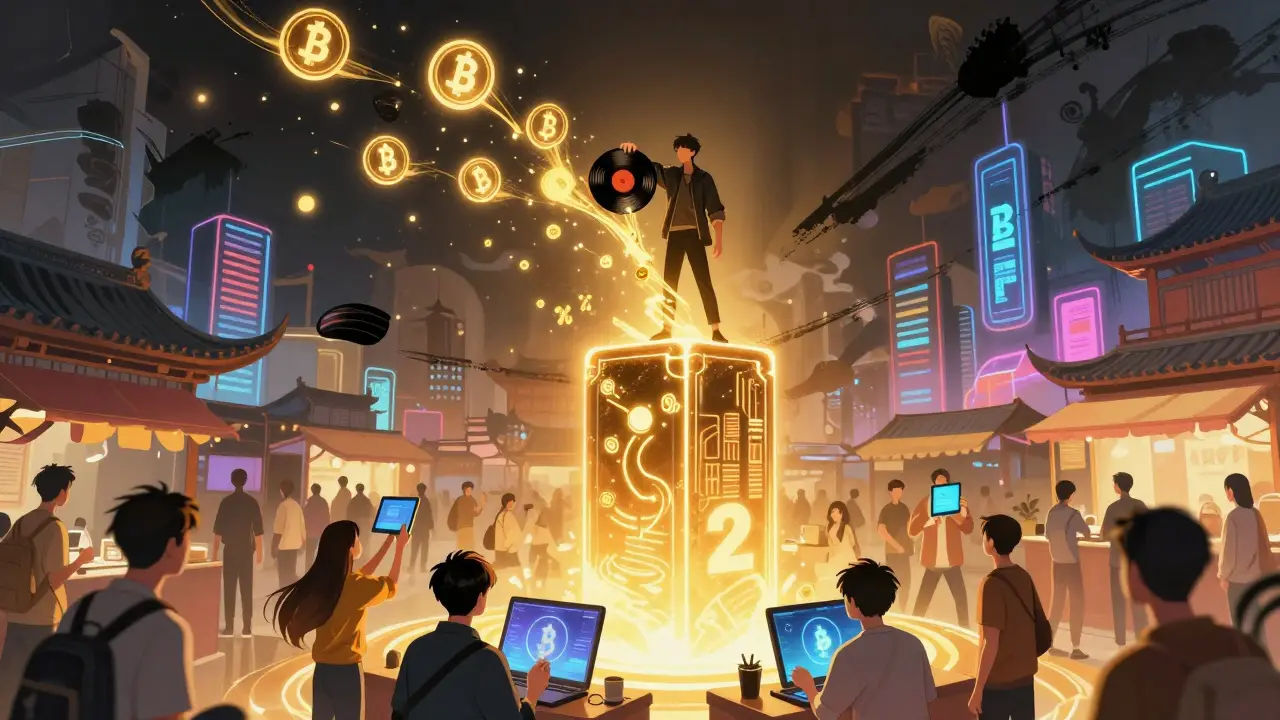
For decades, musicians have been stuck in a broken system. A single stream on Spotify might earn them less than half a cent. An album sale? Maybe 70 cents after labels, distributors, and retailers take their cut. Meanwhile, fans pay $20, $50, even $500 for exclusive digital collectibles - and the artist sees none of it. That changed with NFT royalties.
What NFT Royalties Actually Do for Musicians
NFT royalties let artists earn money every time their music is resold. It’s not a one-time sale. It’s a recurring payout. When you mint a song as an NFT, you program a smart contract to send you a percentage - usually between 5% and 10% - every time someone else sells that NFT later. This happens automatically, without labels, publishers, or middlemen.
Think of it like owning a rare vinyl record. If your album becomes a cult classic and someone resells it for ten times what they paid, you get a cut. In the traditional music world, that never happens. With NFTs, it does. Kings of Leon earned over $2 million in primary sales from their NFT album When You See Yourself - and kept earning from every resale. One fan bought it for $50 and later sold it for $500. The artist got $50. That’s real money for an independent musician.
How It Works: Smart Contracts and Blockchains
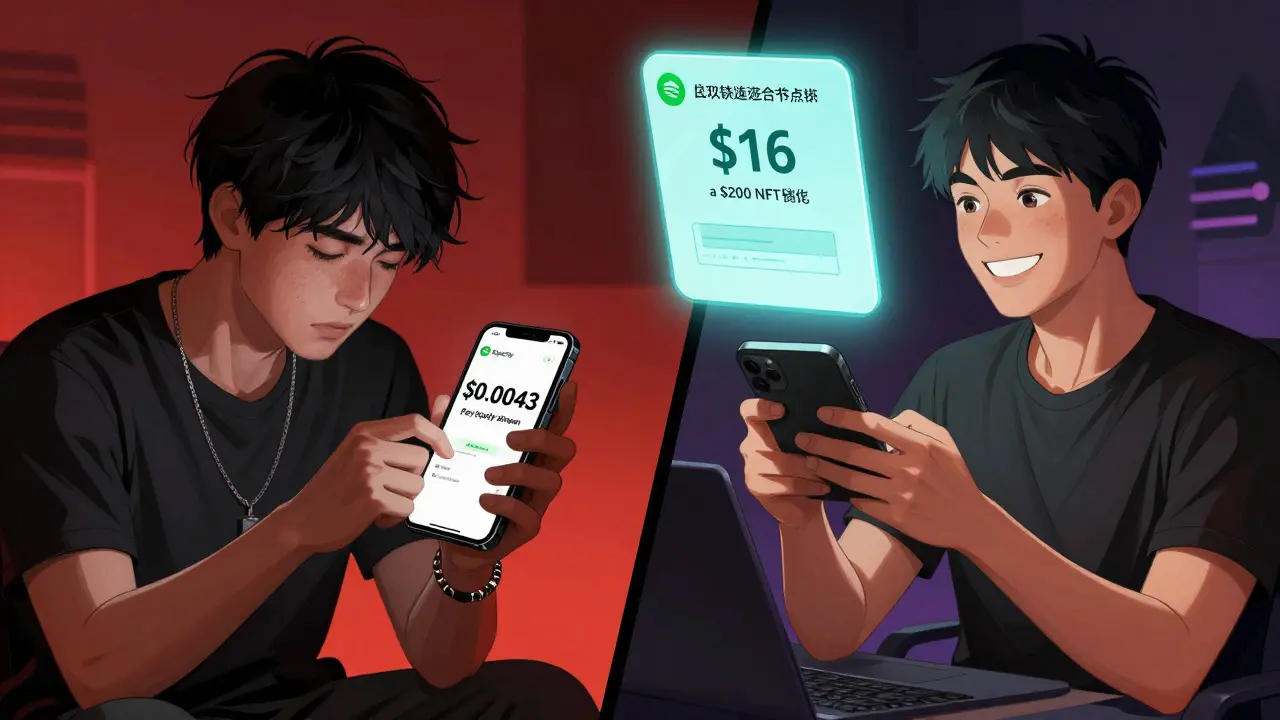
The magic is in the code. When a musician mints an NFT, they embed a royalty rule directly into the blockchain using a smart contract. This isn’t a handshake deal. It’s a self-executing program. If the sale price is $200, and the royalty is set at 8%, then $16 automatically goes to the artist’s wallet. No paperwork. No delays. No disputes.
Most music NFTs run on Ethereum, which handles about 80% of all music-related NFT transactions. But Solana and Polygon are growing fast because they’re cheaper. Ethereum gas fees can spike to $15 during busy times - sometimes more than the royalty itself. That’s why platforms like Royal and OneOf now use layer-2 solutions or alternative chains to keep costs low.
The process is simple in theory:
- Choose a music-specific NFT platform (Royal, OneOf, or Catalog are top choices).
- Upload your track, artwork, and any bonus content (like unreleased demos or behind-the-scenes videos).
- Set your royalty percentage - most artists pick 5% to 10%.
- Mint the NFT on the blockchain.
- List it for sale. Buyers pay in crypto. You get paid instantly.
Once it’s sold, the NFT can change hands dozens of times. Each time, you earn. And unlike streaming, where you get pennies per play, this income grows as your music gains value.
Real Earnings: From $50 to $17,000 in Royalties
Some artists are turning NFT royalties into serious income.
RAC, an electronic producer, sold one NFT for $1,000. Over the next year, it changed hands 17 times. Each resale triggered his 10% royalty. He earned $17,000 in secondary sales - more than he made from streaming that song in five years.
On Reddit, a producer named SynthWaveSam shared that his $50 NFT album generated $1,200 in royalties over six months. He said it now outearned his Spotify income. That’s not a fluke. It’s the math of scarcity and demand.
But it’s not all wins. Electronic artist BeatsByJen lost over 60% of her expected royalties because buyers used marketplaces that didn’t enforce payments. She set an 8% royalty, but some platforms ignored it. She had to track down buyers manually - and most never paid.
The Big Problem: Royalty Enforcement Isn’t Universal
This is the elephant in the room. NFT royalties only work if the marketplace respects them. And not all do.
OpenSea, the largest NFT marketplace, stopped enforcing royalties in 2022. It said it was “giving buyers freedom.” But for artists, that meant lost income. Foundation and LooksRare still enforce royalties - but they’re not the only places people trade.
Some collectors buy NFTs on one platform, then move them to another that doesn’t pay royalties. It’s legal. It’s common. And it’s devastating for creators.
Artists like Tyler Hobbs started blacklisting marketplaces that don’t pay. Others are pushing for industry-wide standards. The Music NFT Alliance proposed a 5% minimum royalty rule in early 2023. But without universal enforcement, it’s just a suggestion.
Platforms are starting to adapt. LooksRare now shares 25% of its protocol fees with creators - not as royalties, but as compensation. It’s a workaround. Not a fix.
Platforms That Actually Help Musicians
Not all NFT platforms are built the same. Some treat musicians like customers. Others treat them like afterthoughts.
- Royal: Lets fans buy fractional ownership in songs. Instead of buying a single NFT, you own 0.1% of a track’s future royalties. It’s like a mini-stock market for music.
- OneOf: Focuses on artists, not speculators. Has built-in royalty enforcement and handles crypto wallet setup for non-tech users.
- Catalog: Only sells 1-of-1 music NFTs. Royalties are locked in. They also pioneered “dynamic royalties” - where the percentage drops slightly over time to encourage trading without killing creator income.
These platforms offer real support: artist onboarding teams, 24-hour response times, and clear guides. General marketplaces like OpenSea? You’re on your own.
Why This Isn’t Just a Fad
Major labels are jumping in. Warner Music partnered with Royal in 2022. Universal Music Group launched its own NFT division in early 2023. That’s not a gimmick. It’s a shift.
Streaming pays artists $0.0043 per stream on average. An NFT with a 10% royalty on a $100 resale? That’s $10. One resale. One fan. One transaction. Multiply that by 1,000 resales? You’re looking at $10,000 - without a label, without a distributor.
And it’s not just about money. NFTs reconnect artists with fans. Buyers aren’t just listeners - they’re stakeholders. They get exclusive access, early releases, or even voting rights on future projects. That loyalty turns into long-term value.
What You Need to Know Before Getting Started
If you’re a musician considering NFT royalties, here’s what you need to do:
- Learn the basics: You don’t need to code. But you need to understand wallets, gas fees, and blockchain networks. Most artists spend 20-30 hours learning before minting.
- Choose the right platform: Avoid OpenSea if you care about royalties. Use Royal, OneOf, or Catalog - they enforce payments and guide you.
- Start small: Mint one track. Set a 7% royalty. Price it at $20-$50. See how fans respond.
- Track everything: Use tools like NFTScan or DappRadar to monitor sales. If royalties aren’t coming through, find out why.
- Don’t expect to get rich overnight: This isn’t lottery tickets. It’s building a sustainable income stream over time.
And remember: NFT ownership doesn’t mean you give up copyright. The U.S. Copyright Office made that clear in May 2023. You still own the music. The NFT is just a ticket to a piece of its future value.
The Future: DAOs, Dynamic Royalties, and Hybrid Models
The next wave is even bigger.
Artists like 3LAU are testing DAOs - decentralized organizations where fans vote on how royalty income is used. Should it fund a tour? A music video? A scholarship? Fans decide.
Platforms like Blocktones are merging NFT royalties with traditional publishing. That means you can earn from both streaming AND NFT resales - and get paid through your existing PRO (like ASCAP or BMI).
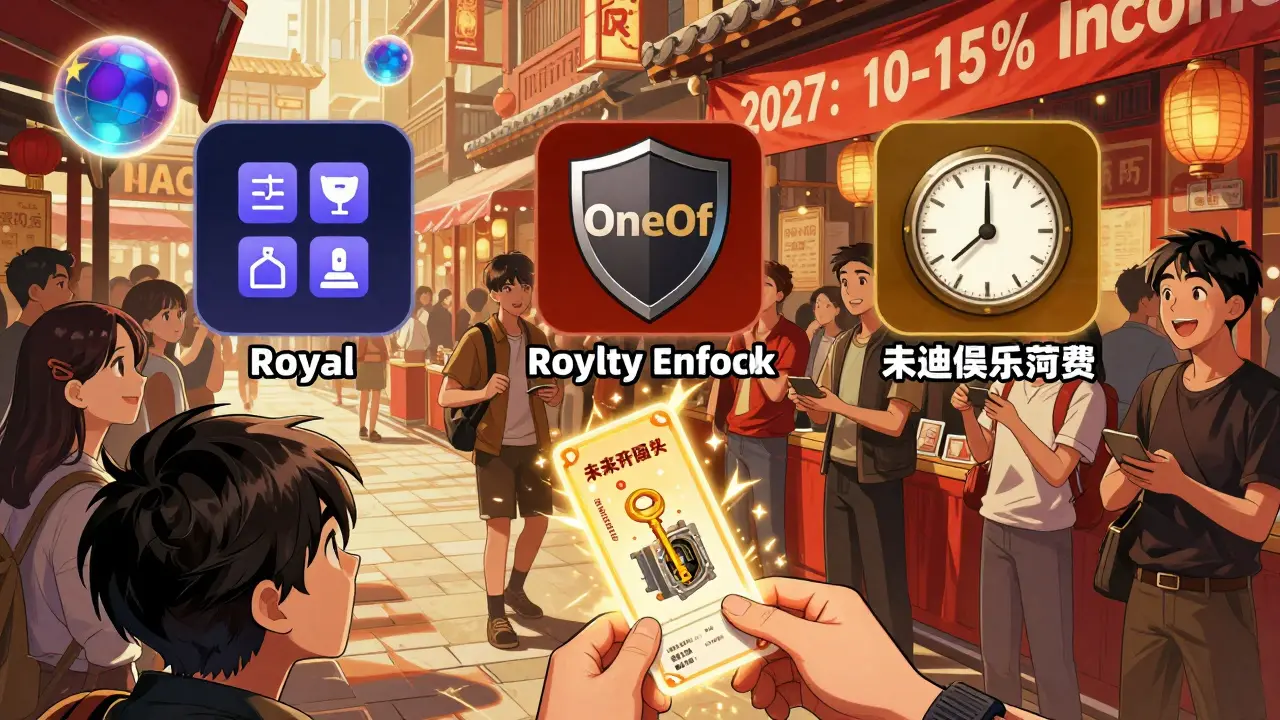
By 2027, Bernstein analysts predict NFT royalties will make up 10-15% of an artist’s total income. Not replace streaming. Complement it.
The music industry is changing. And for the first time, the people who create the music are starting to capture its real value.
Do musicians actually earn money from NFT royalties?
Yes. Artists like Kings of Leon and RAC have earned tens of thousands in secondary royalties. One artist made $17,000 from 17 resales of a single $1,000 NFT. The key is using platforms that enforce royalties and building a fanbase willing to trade the NFT.
How much do NFT royalties usually pay?
Most musicians set royalties between 5% and 10% of each resale price. Some go as high as 15%, but that can discourage buyers. The average sale price for music NFTs ranges from $20 to $500, so a 7% royalty on a $100 sale equals $7 per transaction.
Can I still earn from streaming if I release NFTs?
Absolutely. NFT royalties and streaming are separate income streams. Many artists use NFTs to fund tours or music videos while still relying on Spotify and Apple Music for regular exposure. In fact, NFTs often drive more streams because fans who own the NFT are more likely to listen and share.
Why do some NFT marketplaces not pay royalties?
Some platforms, like OpenSea, removed royalty enforcement in 2022 to attract more buyers. They argue it gives users freedom. But for artists, it means lost income. Marketplaces that ignore royalties prioritize volume over creator fairness. That’s why music-specific platforms like Royal and OneOf still enforce them.
Do I need to be tech-savvy to use NFT royalties?
Not anymore. Platforms like OneOf and Royal handle wallet setup, gas fees, and blockchain details for you. You just upload your music, set your royalty percentage, and list it. The hardest part is learning the terminology - not the technology. Most artists spend 20-30 hours learning before their first mint.
Bonnie Jenkins-Hodges
March 3, 2026 AT 15:04Melissa Ritz
March 5, 2026 AT 14:50jack carr
March 7, 2026 AT 13:32James Burke
March 8, 2026 AT 12:53Ian Thomas
March 10, 2026 AT 04:55Austin King
March 11, 2026 AT 11:47Bryanna Barnett
March 11, 2026 AT 12:03Josh Moorcroft-Jones
March 12, 2026 AT 19:37Rachel Rowland
March 13, 2026 AT 12:00Eva Gupta
March 13, 2026 AT 19:33Nancy Jewer
March 13, 2026 AT 21:20prasanna tripathy
March 15, 2026 AT 13:31jay baravkar
March 16, 2026 AT 21:10Cerissa Kimball
March 18, 2026 AT 07:21Jane Darrah
March 18, 2026 AT 10:52Denise Folituu
March 19, 2026 AT 02:10