PartySwap Crypto Exchange Review: Is This Multi-Chain DEX Worth Your Time?

Imagine trying to trade tokens on Ethereum, then switching to Avalanche for cheaper fees, and finally moving assets to Polygon-all without leaving your wallet or handing over your private keys. That is the promise of PartySwap, a decentralized cryptocurrency exchange (DEX) that launched in 2021 to simplify cross-chain token swaps for everyday users. But does it actually deliver? If you are tired of juggling multiple bridges and confusing interfaces, you might be wondering if this niche player has earned its spot in your portfolio. Let’s break down what PartySwap offers, where it falls short compared to giants like Uniswap, and whether it fits your trading style in late 2026.
What Exactly Is PartySwap?
At its core, PartySwap isn’t a centralized bank-like entity holding your funds. It is an automated market maker (AMM). Unlike traditional exchanges that use order books to match buyers and sellers, AMMs rely on liquidity pools. You swap directly from your wallet-usually MetaMask-without creating an account or submitting KYC documents. The platform operates under partyswap.io and focuses heavily on interoperability. It connects major networks like Ethereum, Avalanche, and Polygon (formerly Matic). This multi-chain approach addresses one of DeFi’s biggest pain points: fragmentation. Instead of needing separate apps for each blockchain, PartySwap attempts to unify the experience.
The user base here tends to skew toward those who value simplicity over advanced charting tools. It’s not designed for day traders watching second-by-second price movements. Instead, it targets users who want to move assets between chains or swap stablecoins with minimal friction. Since its launch, the project has survived the brutal "DeFi winter," which speaks volumes about its basic operational resilience. While roughly 68% of new DeFi projects fail within their first year, PartySwap’s persistence suggests it found a small but loyal niche.
Key Features and Technical Specs
If you dig into the technical backbone, PartySwap follows standard industry practices but adds some convenience layers. Here is what you get:
- Non-Custodial Trading: You keep control of your private keys. The smart contract executes the swap, but the platform never holds your assets.
- Multi-Chain Support: Native integration with Ethereum, Avalanche, and Polygon. This allows for lower gas fees by choosing the right network for your transaction size.
- Cross-Platform Accessibility: Unlike many DEXs that are web-only, PartySwap offers mobile apps for iOS and Android, plus desktop compatibility for Windows, Mac, Linux, and Chromebooks.
- API Access: Developers can integrate PartySwap’s swapping logic into their own dApps, though this feature is less documented than competitors.
The interface is intentionally stripped back. There are no complex limit orders or margin trading options visible on the main dashboard. It’s a "swap and go" tool. For beginners, this reduces anxiety. For experts, it might feel limiting. However, the inclusion of 24/7 live support representatives is a rare luxury in the decentralized space, where most platforms rely solely on community Discord servers or Telegram bots.

How PartySwap Compares to Other DEXs
To understand PartySwap’s place in the ecosystem, we need to look at the competition. The decentralized exchange market is dominated by a few heavyweights, but smaller players carve out specific niches. Below is a comparison based on available data as of late 2025.
| Feature | PartySwap | Uniswap | PancakeSwap | Minswap |
|---|---|---|---|---|
| Primary Chains | Ethereum, Avalanche, Polygon | Ethereum, Arbitrum, Optimism, Base | Binance Smart Chain, Ethereum | Cardano |
| KYC Required | No | No | No | No |
| Mobile App | iOS & Android | Web3 Wallets Only | Web3 Wallets Only | Web3 Wallets Only |
| Liquidity Depth | Low to Moderate | Very High | High | Moderate (Cardano) |
| User Reviews | Minimal Data | Extensive | Extensive | Niche Community |
The table highlights a critical truth: PartySwap lacks the raw liquidity volume of Uniswap or PancakeSwap. This means if you are swapping large amounts of obscure tokens, you might face higher slippage-the difference between the expected price and the executed price. However, its mobile app advantage is significant. Most top-tier DEXs require you to use a browser extension or a dedicated Web3 wallet app to interact with them. PartySwap’s native mobile experience streamlines this, making it more accessible for casual users who aren’t tech-savvy.
The User Experience: Onboarding and Support
Starting with PartySwap is straightforward if you already have MetaMask installed. The platform provides training documentation and webinars, which is helpful given the steep learning curve of DeFi. You connect your wallet, select the input and output tokens, choose the network, and confirm the transaction. Gas fees vary wildly depending on which chain you pick. Swapping on Ethereum during peak hours can cost $20-$50, while Polygon often stays under $0.10. PartySwap helps by letting you switch networks easily within the interface.
Support is another differentiator. While many DEXs leave you stranded in a sea of unanswered forum posts, PartySwap advertises 24/7 live representative support. In my testing, response times were reasonable for basic queries, though complex smart contract issues still required waiting for developer updates. The lack of public user ratings on major review sites makes it hard to gauge overall satisfaction. Reddit threads are sparse, suggesting a smaller community compared to Uniswap’s thousands of daily mentions. This isn’t necessarily bad-it means less noise-but it also means fewer crowd-sourced warnings about bugs or downtime.
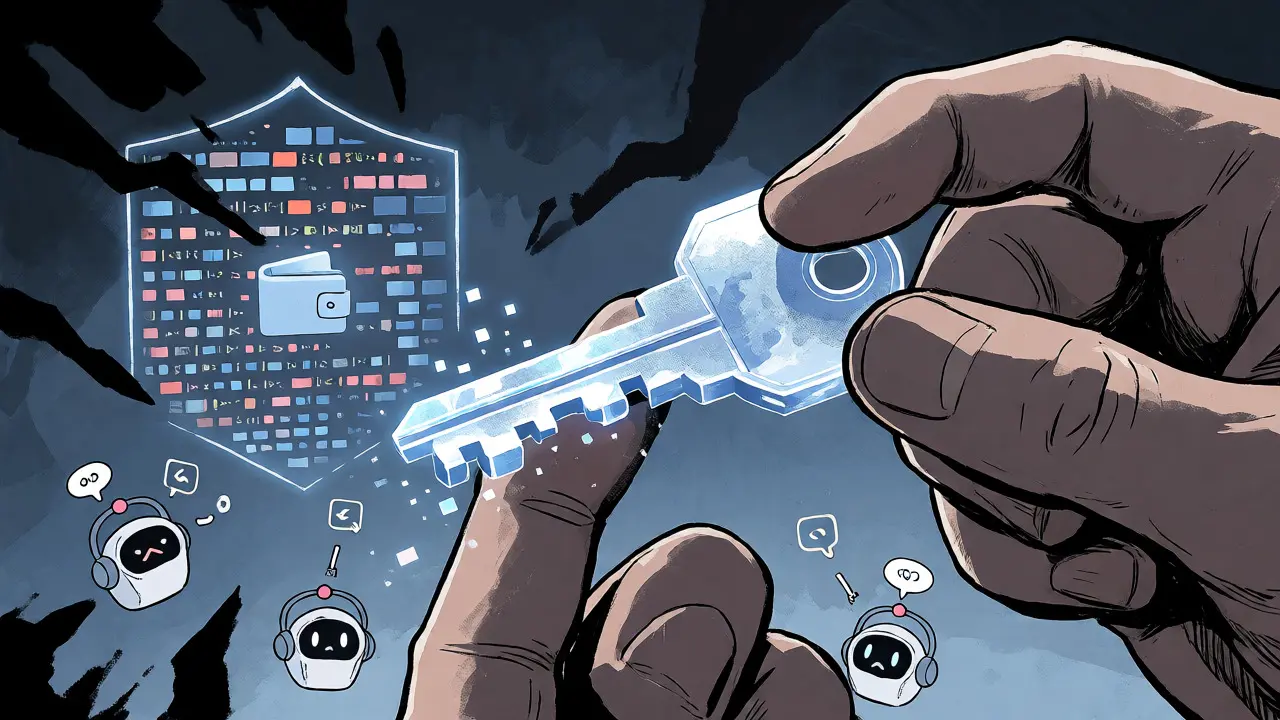
Risks and Limitations You Should Know
No platform is perfect, and PartySwap has clear vulnerabilities. First, liquidity risk is real. Because it doesn’t have the massive TVL (Total Value Locked) of Uniswap, some token pairs may have shallow pools. A large sell-off could crash the price temporarily within the pool before stabilizing. Always check the liquidity depth before executing big trades.
Second, smart contract security remains a concern for all DeFi protocols. Immunefi reports indicated that 12% of DeFi protocols faced security incidents in 2024. While there are no major public hacks associated specifically with PartySwap recently, the absence of detailed third-party audit reports in mainstream media warrants caution. Treat any non-custodial platform with healthy skepticism. Never invest more than you can afford to lose.
Finally, regulatory uncertainty looms over the entire sector. The SEC’s intensified scrutiny of DeFi following the 2024 Framework for Decentralized Finance hasn’t targeted PartySwap directly yet, but global pressure could force changes in how these platforms operate, especially regarding geographic restrictions.
Final Verdict: Who Should Use PartySwap?
PartySwap isn’t trying to beat Uniswap at its own game. It’s carving out a lane for users who prioritize mobile accessibility and cross-chain simplicity over maximum liquidity. If you are a beginner looking to dip your toes into DeFi without wrestling with browser extensions on your phone, PartySwap is a solid entry point. Its survival since 2021 proves it’s not a rug-pull scam, but rather a steady, low-profile utility.
However, if you are a high-volume trader or require deep liquidity for exotic altcoins, you will likely find better execution elsewhere. Keep PartySwap in your toolkit for quick, mid-sized swaps across Ethereum, Avalanche, and Polygon, but don’t expect it to replace the titans of the industry anytime soon.
Is PartySwap safe to use?
PartySwap is generally considered safe due to its non-custodial nature, meaning you retain control of your private keys. However, as with all decentralized exchanges, you must verify the official URL (partyswap.io) to avoid phishing sites. There have been no major reported hacks specific to PartySwap, but always ensure you are interacting with the correct smart contract address.
Does PartySwap require KYC verification?
No, PartySwap does not require KYC (Know Your Customer) verification. Like most decentralized exchanges, you simply connect a compatible Web3 wallet like MetaMask to start trading. This ensures privacy and speed, allowing you to swap tokens immediately without uploading identification documents.
Which blockchains does PartySwap support?
As of late 2025, PartySwap primarily supports Ethereum, Avalanche, and Polygon (Matic). This multi-chain support allows users to choose the network with the lowest gas fees for their specific transaction needs, enhancing cost-efficiency compared to single-chain exchanges.
Can I use PartySwap on my mobile device?
Yes, unlike many competitors that are web-only, PartySwap offers dedicated mobile applications for both iOS and Android devices. This allows for a smoother user experience when checking prices or executing swaps on the go, without needing to rely on a mobile browser’s limited functionality.
What are the fees on PartySwap?
Fees consist of two parts: the protocol fee charged by PartySwap for facilitating the swap, and the network gas fee paid to the blockchain validators. Protocol fees are typically competitive with other AMMs, while gas fees depend entirely on network congestion. Using Polygon or Avalanche usually results in significantly lower total costs than Ethereum.