Smart Grid Management with Blockchain: Real Benefits & Limits
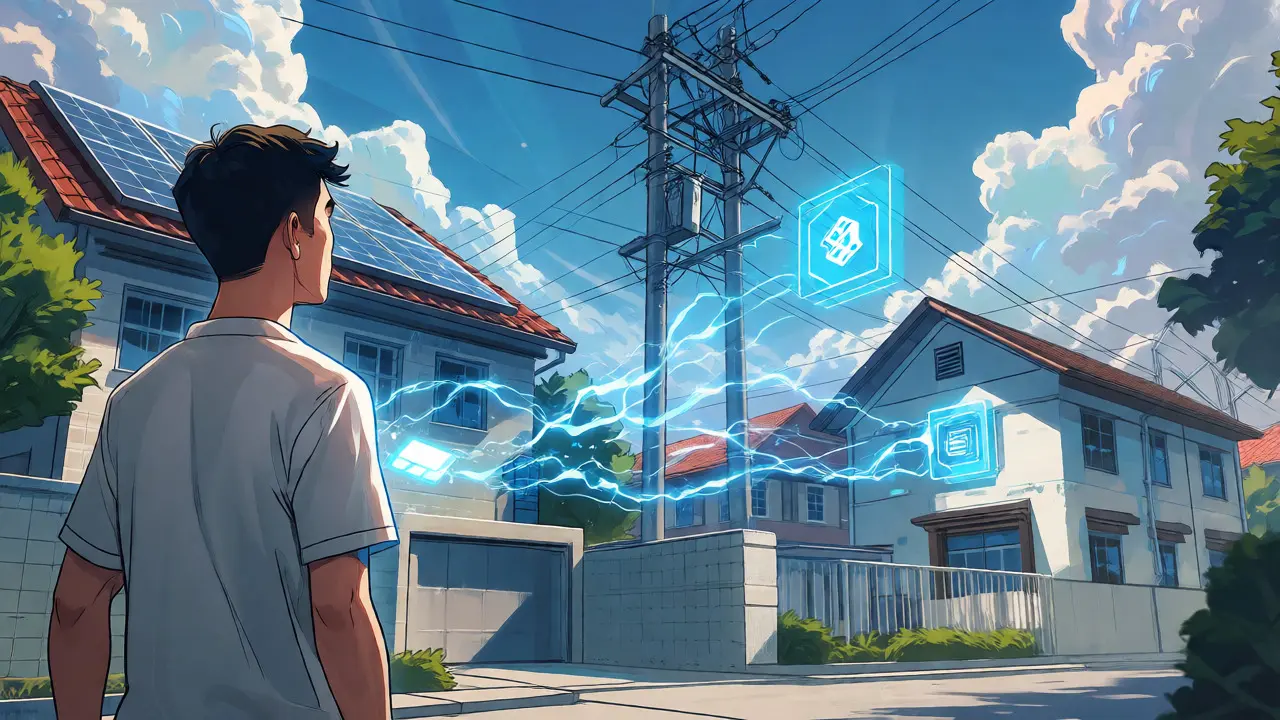
Imagine your neighbor sells you excess solar power directly, and the transaction settles in seconds without a utility company taking a cut or a bank verifying it. This isn't science fiction; it’s happening right now in pilot projects from Brooklyn to Berlin. But here is the catch: while blockchain is a distributed ledger technology that records transactions across many computers so that the record cannot be altered retroactively promises to revolutionize how we trade energy, it struggles to keep up with the lightning-fast demands of keeping the lights on. If you are wondering whether this tech will actually fix our aging electrical grids or just add another layer of complexity, you are asking the right question.
The core problem with traditional smart grids isn’t just efficiency; it’s trust and transparency. As we shift toward decentralized energy sources like rooftop solar and wind turbines, managing who generated what, when, and where becomes a nightmare for centralized utilities. Blockchain offers a solution by creating an immutable record of every kilowatt-hour. It allows for peer-to-peer energy trading, enabling consumers to become "prosumers"-both producers and consumers of energy. However, integrating this digital layer into physical infrastructure requires navigating significant technical hurdles, from latency issues to regulatory compliance.
Why Traditional Grids Need Digital Trust
Traditional electrical grids were designed for one-way flow: power plants send electricity to homes. Today, the flow is bidirectional. You might sell power back to the grid at noon and buy it at night. Tracking these micro-transactions using legacy systems is slow and prone to errors. For instance, verifying Renewable Energy Certificates (RECs) traditionally involves multiple intermediaries, leading to a verification gap estimated at $400 million annually due to double-counting risks.
Smart Grid Management refers to the use of digital information technology to improve the reliability, efficiency, sustainability, and economics of electricity delivery leverages blockchain to solve this by providing a single source of truth. When a solar panel generates electricity, a timestamped, geolocated token can be created on the ledger. This ensures that the green energy claim is verifiable and unique. The Energy Web Foundation (EWF), a key player in this space, argues that this level of granularity helps utilities prove their carbon reduction progress accurately.
How Blockchain Integrates with Energy Infrastructure
You might assume that Bitcoin-like public blockchains run these systems, but that’s rarely the case. Public chains are too slow and consume too much energy. Instead, most successful implementations use permissioned architectures like Hyperledger Fabric is an open-source permissioned blockchain framework that provides modular architecture and confidentiality features suitable for enterprise applications. According to industry analyses, Hyperledger Fabric powers about 68% of documented smart grid projects because it offers higher throughput and privacy controls.
The technical setup usually involves smart meters sending data to a local node. These nodes validate transactions using consensus algorithms like Practical Byzantine Fault Tolerance (PBFT). A typical transaction block might contain the meter ID, energy amount, price, and cryptographic signatures, totaling around 75-120 bytes. While this sounds efficient, the average block creation interval of 5-15 seconds is acceptable for billing but far too slow for real-time grid stability, which often requires millisecond responses.
| Feature | Traditional SCADA System | Blockchain-Based System |
|---|---|---|
| Transaction Settlement Time | 24-48 hours | Under 5 minutes |
| Response Latency | ~2 milliseconds | ~22 milliseconds |
| Double-Counting Risk | 12.7% error rate | Near 0% |
| Primary Use Case | Real-time control | Settlement & Trading |
| Data Integrity | Centralized database | Immutable ledger |
Real-World Successes: Peer-to-Peer Trading
The most compelling argument for blockchain in energy is peer-to-peer (P2P) trading. Take the Brooklyn Microgrid is a community-based energy project in New York that allows neighbors to trade locally produced solar energy as a prime example. Launched by LO3 Energy, this project allowed households with solar panels to sell excess power to neighbors. The results were striking: transaction accuracy hit 98.7%, compared to 89.3% in conventional systems. More importantly, settlement times dropped from days to minutes.
This speed changes consumer behavior. Users reported high satisfaction with transparency-they could see exactly where their solar dollars went. However, user experience wasn’t perfect. Many complained about the complexity of mobile interfaces and multi-step verification processes. One user noted that while they loved seeing their energy impact, the friction of verifying each transaction was tedious. This highlights a critical lesson: technology must be invisible to succeed. If users have to understand cryptography to pay their electric bill, adoption will stall.
Where Blockchain Falls Short: The Speed Problem
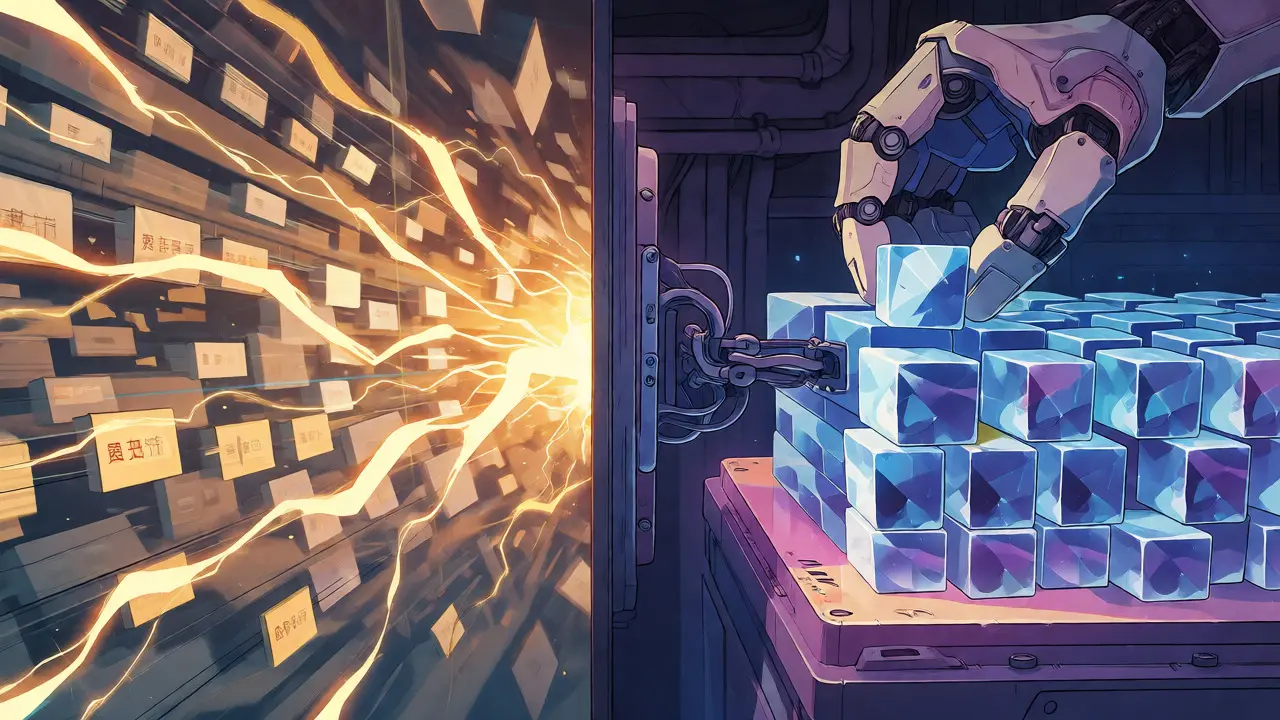
Let’s address the elephant in the room: blockchain is slow compared to industrial control systems. Grid frequency regulation requires responses in milliseconds to prevent blackouts. Blockchain’s computational overhead adds 15-25ms of latency per transaction. For context, traditional SCADA (Supervisory Control and Data Acquisition) systems respond in about 2ms. This makes blockchain unsuitable for critical operational tasks like balancing load during a sudden spike in demand.
Experts like Dr. Jianying Zhou from Singapore University of Technology argue that the computational cost makes blockchain impractical for real-time control. Instead, blockchain shines in post-event settlement, auditing, and market clearing. Utilities are increasingly adopting a hybrid model: using SCADA for immediate control and blockchain for financial reconciliation and customer-facing transactions. This separation of duties ensures reliability while leveraging blockchain’s transparency benefits.
Security and Privacy Implications
As grids become more connected via IoT devices, they become vulnerable to cyberattacks. Blockchain enhances security by decentralizing data storage. Instead of a single point of failure, data is replicated across nodes. Testing by IEEE suggests that blockchain solutions can reduce attack surfaces by up to 63%. Furthermore, advanced techniques like zero-knowledge proofs allow utilities to verify transactions without revealing sensitive user data, addressing privacy concerns raised by regulators.
However, security isn’t foolproof. Key management remains a major hurdle. In 31% of pilot failures, lost or compromised cryptographic keys caused significant disruptions. Unlike a password reset, losing a private key can mean losing access to energy assets permanently. Additionally, smart contract vulnerabilities pose risks. Audits by firms like ConsenSys Diligence found flaws in 22% of energy-related smart contracts, underscoring the need for rigorous code review before deployment.

Implementation Challenges and Costs
Deploying blockchain in a utility environment is not a plug-and-play affair. It typically takes 18-24 months from planning to operation. The integration complexity with legacy systems is substantial. Many older smart meters lack the processing power to handle cryptographic signatures required for blockchain interactions. One UK utility spent £280,000 only to discover their 2015 meters couldn’t support the necessary protocols, requiring a costly hardware upgrade.
Talent scarcity is another bottleneck. There are only about 1,200 certified Energy Web Developers globally, creating a competitive hiring landscape. Utilities need teams that understand both power engineering and distributed ledger technology-a rare combination. Moreover, storage requirements grow rapidly. A utility with one million customers could generate 2.3 petabytes of blockchain data annually, raising questions about long-term data retention costs.
The Future Outlook: Niche but Essential
Is blockchain going to replace the entire grid? Probably not. The Electric Power Research Institute suggests its role will remain niche, solving specific transactional problems rather than replacing core control systems. Gartner predicts that 75% of current pilots may fail to scale due to interoperability issues. Yet, for distributed energy resources, blockchain is becoming indispensable.
We are moving toward a future where Renewable Energy Certificates are tradable commodities representing proof that one megawatt-hour of electricity has been generated from a renewable resource are tracked automatically, reducing fraud. By 2027, analysts forecast that blockchain could underpin 25% of distributed energy transactions. The technology won’t manage the physics of electron flow, but it will likely manage the economics of energy exchange, making the grid smarter, fairer, and more transparent.
Can blockchain handle real-time grid control?
Generally, no. Current blockchain implementations have latency rates of 15-25ms, which is too slow for sub-second grid stability operations that require millisecond responses. Traditional SCADA systems are better suited for real-time control, while blockchain excels at settlement and auditing.
Why do utilities prefer permissioned blockchains over public ones?
Public blockchains like Ethereum are often too slow and expensive for high-volume grid data. Permissioned networks like Hyperledger Fabric offer higher throughput (100-500 TPS), lower latency, and better privacy controls, which are essential for commercial utility operations.
What is the main barrier to adopting blockchain in smart grids?
Integration complexity with legacy infrastructure is the biggest hurdle. Many existing smart meters and SCADA systems cannot easily communicate with blockchain nodes, requiring expensive hardware upgrades and custom middleware. Interoperability standards are still evolving.
Does blockchain save money for consumers?
It can, primarily by removing intermediaries in peer-to-peer trading. For example, EV charging payments via blockchain can save $0.07 per transaction. However, initial implementation costs for utilities are high, which may offset savings in the short term.
How does blockchain prevent double-counting of green energy?
Each unit of renewable energy is tokenized with a unique identifier and timestamp on the ledger. Once sold or claimed, the token is marked as consumed. Since the ledger is immutable and shared among participants, the same energy unit cannot be sold twice, eliminating the 12.7% error rate seen in traditional REC tracking.