StrongNode Edge (SNE) Airdrop: How to Participate and What You Need to Know

The SNE airdrop from StrongNode Edge isn’t just another free token giveaway-it’s a real attempt to bootstrap a decentralized edge computing network by putting tokens directly into users’ hands. If you’ve seen ads about earning free SNE tokens just by signing up, you’re not alone. But here’s the truth: most people who join don’t understand what they’re signing up for, or why it matters. This isn’t about getting rich quick. It’s about becoming part of a new kind of internet infrastructure-one where your idle computer power gets paid in crypto.
What Is StrongNode Edge and Why Does SNE Exist?
StrongNode Edge isn’t a typical crypto project. It’s an Infrastructure-as-a-Service (IaaS) platform built on Polygon that turns ordinary devices-laptops, home servers, even old Raspberry Pis-into edge computing nodes. Think of it like sharing your Wi-Fi bandwidth, but for processing power. Instead of relying on big data centers in remote locations, StrongNode Edge lets businesses and apps process data closer to where it’s generated. That means faster load times, lower latency, and better privacy. The SNE token is the fuel for this system. It’s not just a currency-it’s the key to accessing services, earning rewards, and voting on future upgrades. Node operators (people who contribute computing power) get paid in SNE. Small businesses can accept SNE as payment. And users who stake SNE get governance rights, meaning they can influence what features get built next. This model isn’t theoretical. It’s already being tested in real-world scenarios like decentralized video streaming, AI inference at the edge, and secure IoT data handling. The team says they’ve seen 40% faster response times in pilot deployments compared to cloud-based alternatives.The SNE Airdrop: How It Actually Works
The current airdrop campaign, listed on CoinMarketCap, is one of the largest token distributions in StrongNode Edge’s history. Here’s what you need to know:- 33,333,334 SNE tokens are being distributed
- Exactly 5,000 winners will be selected
- Each winner receives 6,666.67 SNE tokens
- No purchase or deposit required
- Only one entry per person
What’s the Value of SNE Tokens Right Now?
As of January 2026, SNE trades around $0.000000975 on CoinMarketCap. That sounds tiny-but remember, this is an early-stage project. The total supply is 10 billion SNE, and only 33 million are being given away in this round. The rest are locked in team, ecosystem, and staking rewards. Here’s the reality check: SNE has lost over 90% of its value in the past year. On Coinbase, it’s listed as down 85.55%. On Crypto.com, the 24-hour volume is $4. That’s not a typo-it’s four dollars. Liquidity is extremely low. You won’t be able to sell SNE on Binance, Coinbase, or Kraken. Right now, the only exchange where SNE is listed is MEXC. So why bother? Because this isn’t about today’s price. It’s about being early. If StrongNode Edge succeeds in getting even 1% of the edge computing market, SNE could see massive demand. Think of it like buying Bitcoin in 2012-not because it was worth $50, but because you believed in the network.
How to Use SNE Tokens After the Airdrop
If you win, you won’t just sit on tokens. Here’s what you can actually do with them:- Stake SNE to earn additional tokens from partner projects and get voting rights on platform upgrades
- Pay for services like AI processing, data storage, or video encoding hosted on StrongNode’s edge network
- Run a node and earn SNE by sharing your device’s unused CPU/GPU power
- Participate in governance-vote on things like fee structures, new chain integrations, or community grants
Is This Safe? Security and Audits
You’re right to be cautious. Most airdrops are scams. But StrongNode Edge has taken unusual steps to build trust. They’ve completed a full smart contract audit by a third-party firm (name undisclosed, but they showed the certificate publicly during a live AMA). They said, “Every time the code changes, we audit again. Security isn’t a one-time thing.” They also use Polygon, which is far more secure and cheaper than Ethereum for small transactions. Their smart contracts are open-source on Polygonscan. You can verify the airdrop contract address yourself. No rug pulls. No anonymous team. The founders have LinkedIn profiles, past work at tech firms, and have been answering questions on YouTube for months. They’ve done 26 AMAs so far.Why This Matters Beyond the Airdrop
Most crypto projects try to sell you a dream. StrongNode Edge is trying to build something real: a decentralized alternative to AWS, Google Cloud, and Azure-but powered by everyday people’s devices. Edge computing is growing fast. By 2027, Gartner estimates over 75% of enterprise data will be processed at the edge, not in centralized data centers. StrongNode Edge isn’t trying to replace those giants-it’s giving individuals a way to profit from that shift. If you’re a student with a gaming PC, a freelancer with a home server, or even someone with a Raspberry Pi gathering dust, you have something valuable. Your idle computing power. The SNE airdrop is the first step to unlocking that value. You’re not just getting free tokens. You’re getting access to a new economic layer of the internet.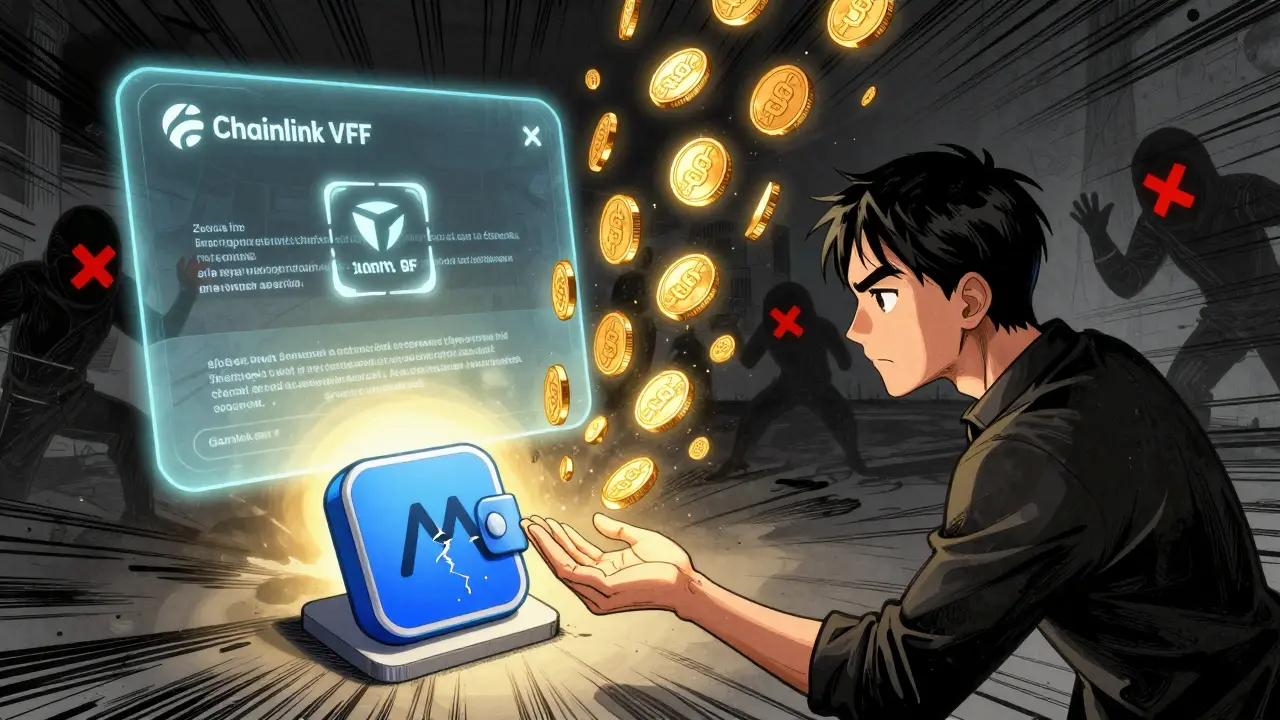
What Happens After the Airdrop?
StrongNode Edge says the next phase is node activation. Winners will get an email with instructions to install their node software. Once you run a node, you’ll start earning SNE daily-not just from the airdrop, but from real usage on the network. They’re also planning staking contests, referral bonuses, and partnerships with IoT device manufacturers. The goal? To get 100,000 active nodes online by the end of 2026. This isn’t a pump-and-dump. It’s a slow build. But if you join now, you’re part of the foundation.How to Enter the SNE Airdrop (Step-by-Step)
1. Go to the official StrongNode Edge airdrop page on CoinMarketCap (search “StrongNode Edge airdrop”) 2. Connect your Polygon-compatible wallet (MetaMask recommended) 3. Follow @StrongNodeEdge on Twitter/X 4. Join their Discord server and verify your account 5. Confirm your email address 6. Click “Submit Entry” That’s it. You’re in. Winners will be announced within 14 days after the campaign ends. No fees. No risks beyond your time.Is the StrongNode Edge airdrop real or a scam?
It’s real. The project has completed third-party smart contract audits, uses Chainlink VRF for random winner selection, and the team is publicly identifiable with active YouTube AMAs and LinkedIn profiles. The airdrop is hosted on CoinMarketCap, a trusted platform. However, always verify the official website URL and never share your private key.
Do I need to buy SNE tokens to participate in the airdrop?
No. The airdrop is completely free. You don’t need to deposit any money, buy anything, or send crypto. All you need is a wallet and to complete a few simple social tasks. If anyone asks you to pay to join, it’s a scam.
Can I sell SNE tokens after receiving them?
Yes, but only on MEXC exchange. SNE is not listed on Coinbase, Binance, or Crypto.com. Liquidity is extremely low, and the price is volatile. Selling immediately after the airdrop may result in a loss. Many participants choose to hold and stake instead, betting on future network growth.
What happens if I don’t claim my SNE tokens after winning?
Unclaimed tokens will be redistributed to other participants or added to the ecosystem fund. There’s no grace period-once winners are announced, you have 30 days to claim via your wallet. After that, the tokens are lost to you.
Can I run a node on my phone or old laptop?
Yes. StrongNode Edge is designed to work on low-power devices. A Raspberry Pi, an old Windows laptop, or even a Chromebook can run a node as long as it has a stable internet connection and at least 2GB of RAM. The software is lightweight and runs in the background without slowing down your device.
Is there a limit to how many nodes I can run?
No technical limit exists, but each node must be tied to a unique wallet and device. Running multiple nodes from the same IP or hardware may trigger fraud detection. The team encourages fair participation-quality over quantity.
Anthony Ventresque
January 14, 2026 AT 23:23Also, 6,666.67 SNE isn’t much now, but if even 1% of edge computing goes decentralized, this could be huge. Not a get-rich-quick scheme-more like a get-involved-slowly-and-stay-for-the-long-game.
Patricia Chakeres
January 15, 2026 AT 07:04kristina tina
January 16, 2026 AT 11:30Also, if you win, stake it. Don’t cash out. Let it grow. I believe in this.
Michael Jones
January 17, 2026 AT 12:25Stephanie BASILIEN
January 18, 2026 AT 23:46Hailey Bug
January 19, 2026 AT 16:06Stephen Gaskell
January 20, 2026 AT 14:21CHISOM UCHE
January 22, 2026 AT 10:50Pat G
January 22, 2026 AT 19:31Alexandra Heller
January 24, 2026 AT 09:24myrna stovel
January 24, 2026 AT 10:06Hannah Campbell
January 26, 2026 AT 01:25Bryan Muñoz
January 27, 2026 AT 14:22THEY’RE ALL SCAMMERS BUT I’M STILL IN. I’M RUNNING 3 NODES ON MY LAPTOP AND A RASPBERRY PI. I’M THE FUTURE. THEY CAN’T STOP ME. I’M THE NODE. I’M THE BLOCK. I’M THE TOKEN. I’M THE CHAIN. I’M THE GOD OF EDGE COMPUTING. 🤖🔥
Pramod Sharma
January 29, 2026 AT 03:30Liza Tait-Bailey
January 29, 2026 AT 13:06nathan yeung
January 31, 2026 AT 11:13Bharat Kunduri
January 31, 2026 AT 20:53