Supply Chain Blockchain Platforms: Top Solutions for Enterprise Transparency
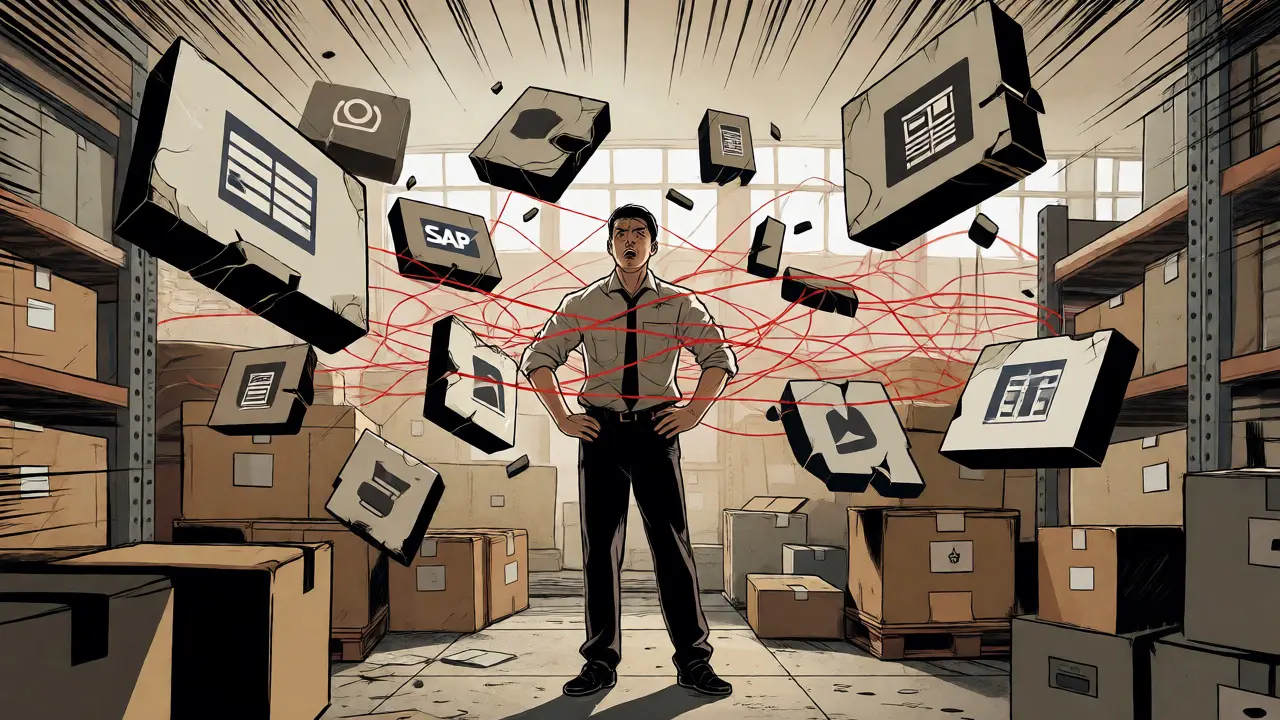
You know that feeling when you’re waiting for a package and have no idea where it actually is? Or worse, when a food recall hits the news and nobody knows which batch came from which farm? That’s the mess traditional supply chains are in. Supply chain blockchain platforms are the tech fix for this chaos. They create a shared, unchangeable record that every partner in the chain can trust. No more arguing over who said what or whose spreadsheet is right.
We aren’t talking about Bitcoin here. These are specialized tools built for businesses. Since Hyperledger Fabric launched back in 2015 under the Linux Foundation, we’ve seen a boom in these systems. Today, about 38% of Fortune 500 companies run production blockchain networks for their supply chains. If you’re trying to figure out if your business needs one, or which platform fits best, let’s break down what actually works.
Why Traditional Supply Chains Are Broken
Most supply chains rely on silos. Your supplier uses SAP, your logistics partner uses Oracle, and your retailer uses something else entirely. Data gets stuck. Reconciling invoices takes days. Tracking a product from raw material to shelf takes weeks. A blockchain platform solves this by acting as a single source of truth. It allows multiple stakeholders to access the same data simultaneously. Once a transaction is recorded, it can’t be changed without everyone agreeing. This builds trust without needing a middleman.
Think about Walmart. Before using blockchain, tracing the origin of mangoes took seven days. With IBM Food Trust, they cut that time to 2.2 seconds. That’s not just faster; it saves money during recalls and reduces waste. But speed isn’t the only benefit. Immutability means audit trails are solid. Provenance lets you prove where goods came from, which matters huge amounts for ethical sourcing claims.
The Big Three: Who Leads the Market?
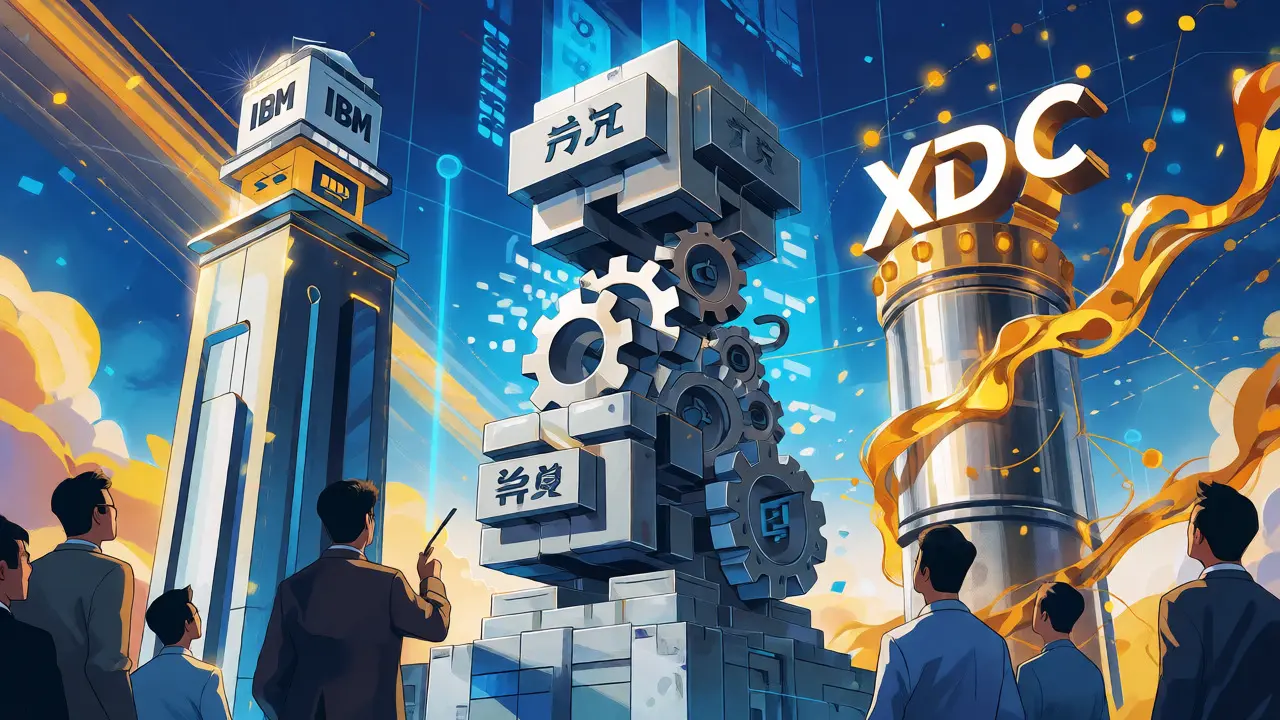
Not all blockchains are created equal. Public chains like Ethereum are great for crypto but often too slow or expensive for heavy industrial use. Most enterprises use permissioned networks, where you control who joins. According to recent industry surveys, three names dominate the space: IBM Blockchain, Hyperledger Fabric, and XDC Network.
| Platform | Best For | Key Feature | Performance | Market Share (Est.) |
|---|---|---|---|---|
| IBM Blockchain | Food & Retail | Seamless legacy integration | Up to 3,500 TPS | 31% |
| Hyperledger Fabric | Manufacturing | Modular architecture | Highly customizable | 29% |
| XDC Network | Trade Finance | Hybrid public/private model | 2,000 TPS | 14% |
IBM Blockchain is the heavyweight for consumer-facing chains. Built on Hyperledger Fabric, it adds enterprise security features like hardware security modules. It integrates well with existing IBM Cloud services. If you’re a retailer wanting to show customers exactly where their coffee beans were grown, this is likely your go-to.
Hyperledger Fabric is the open-source favorite for manufacturers. It doesn’t have a native cryptocurrency, which removes regulatory headaches. Its modular design lets you plug in different consensus mechanisms. About 47% of manufacturing supply chains use Fabric because it plays nicely with ERP systems like SAP. You need skilled developers for this-usually Go language experts-but the flexibility is worth it for complex industrial processes.
XDC Network carved out a niche in trade finance. Cross-border payments used to take five to ten business days. XDC brings that down to near real-time. It combines public transparency with private privacy, making it ideal for letters of credit and international settlements. If your pain point is cash flow tied up in shipping documents, look at XDC.
Real-World Results: What Actually Works?
Pilots are easy. Production is hard. But some big players have cracked it. Maersk’s TradeLens, built on Hyperledger, processed over $1.2 trillion in trade value before shifting its governance model. While it faced challenges scaling, it proved that industry-wide adoption is possible.
FedEx provides another strong example. By using smart contracts to automate shipment verification, they automated 76% of their checks. Paperwork dropped by 68%. Delivery confirmations sped up by 52%. That’s direct operational savings. In pharma, clients using IBM’s Transparent Supply solution saw dispute resolution costs drop by 41%. Forecast accuracy improved by 33%. These aren’t vague promises; they are measured outcomes.
However, failure happens too. A major European auto manufacturer dumped its pilot after 18 months. Why? Integration costs hit $4.2 million, but process improvement was only 19%. The lesson? Don’t digitize a bad process. Fix the workflow first, then apply blockchain.
Implementation Challenges You Can’t Ignore
Before you sign a contract, understand the hurdles. The biggest one is people. Blockchain requires new skills. Developers need training in smart contract languages like Go or Solidity. Architects need to understand distributed ledger concepts. Training can take three to six months. Experienced blockchain architects command salaries between $145,000 and $185,000 in North America. Budget for talent.
Integration is the other beast. Connecting a blockchain node to your legacy ERP system isn’t plug-and-play. ScienceSoft reports an average cost of $285,000 per integration point. And timelines? Expect eight to twelve weeks for medium-sized implementations. Six months is more realistic for full deployment including testing and user onboarding.
Data standardization is critical. If Supplier A calls a part "Widget-X" and Supplier B calls it "Part #123," the blockchain won’t magically fix that. You need common data standards across partners. Without them, you’re just creating a messy immutable database. Ensure your partners agree on data formats before going live.
Future Trends: AI and IoT Convergence
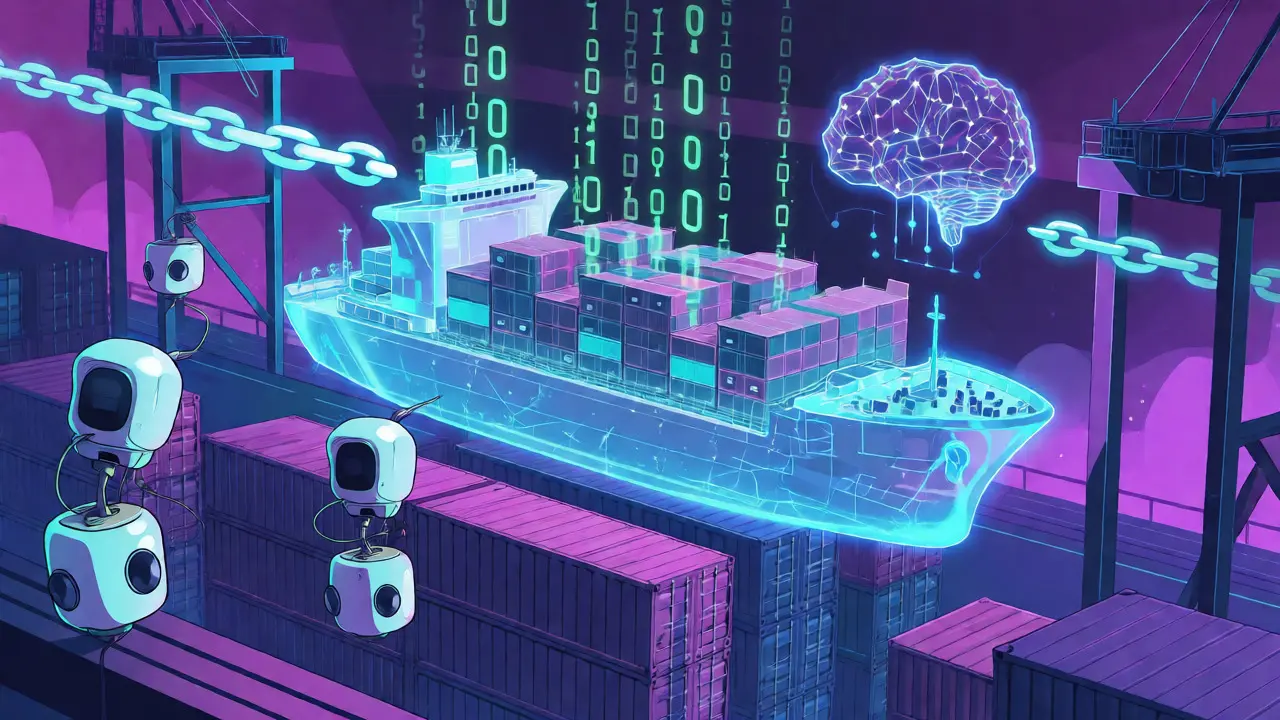
Blockchain doesn’t work alone. The most powerful setups combine it with Internet of Things (IoT) sensors and Artificial Intelligence (AI). Imagine a cold-chain shipment for vaccines. IoT sensors record temperature data directly onto the blockchain. AI analyzes that data to predict spoilage risks. Siemens recently announced a Digital Supply Chain Twin platform that blends these technologies, improving disruption prediction accuracy by 44%.
Gartner predicts that by 2027, 75% of large enterprises will use blockchain integrated with AI for risk prediction. Regulatory pressure is also driving adoption. The FDA now requires high-grade traceability for pharmaceuticals by 2027. The EU’s Digital Product Passport initiative demands similar transparency for electronics and textiles. If you export to Europe or sell regulated goods in the US, blockchain might soon be mandatory, not optional.
Interoperability remains the final frontier. Right now, there are 63 distinct supply chain blockchain implementations operating without standard communication protocols. If you use IBM and your partner uses XDC, getting those systems to talk can be tricky. Look for platforms supporting emerging cross-chain protocols, especially with Hyperledger Fabric 3.0 focusing heavily on interoperability.
How to Choose the Right Platform
Don’t pick based on hype. Pick based on your specific job-to-be-done.
- Do you need consumer trust? If yes, choose IBM Food Trust or similar retail-focused solutions. Visibility to end-users is key.
- Are you in heavy manufacturing? Go with Hyperledger Fabric. Its modularity handles complex BOMs (Bill of Materials) and multi-tier supplier networks better.
- Is your bottleneck financial settlement? Look at XDC Network or Corda. Speeding up cash flow matters more than tracking individual units.
- Do you have strict privacy needs? Permissioned chains are non-negotiable. Avoid public chains unless you use layer-2 solutions designed for enterprise privacy.
Start small. Pilot one product line or one region. Measure the impact on reconciliation time, dispute costs, and inventory accuracy. If the ROI isn’t clear within six months, reassess your use case. Blockchain is a tool, not a magic wand.
What is the main difference between public and private supply chain blockchains?
Public blockchains like Ethereum allow anyone to join and view transactions. Private (permissioned) blockchains restrict access to approved members. Supply chains typically use private networks because businesses need privacy for pricing and strategy, plus higher transaction speeds without paying gas fees.
How long does it take to implement a supply chain blockchain?
For a medium-sized implementation, expect 8 to 12 weeks for technical integration. However, full deployment including partner onboarding, data standardization, and staff training usually takes 6 to 9 months. Complex global networks can take longer.
Which platform is best for food traceability?
IBM Food Trust is the leading choice for food supply chains. It connects growers, distributors, and retailers like Walmart, enabling rapid traceability from farm to store. It has proven results in reducing recall investigation times significantly.
Does blockchain replace ERP systems?
No. Blockchain complements ERP systems. ERPs handle internal accounting and resource planning. Blockchains handle external trust and data sharing between different companies. They integrate via APIs rather than replacing each other.
What are the biggest risks in adopting supply chain blockchain?
The top risks include poor data quality (garbage in, garbage out), lack of partner participation, and high integration costs with legacy systems. Also, choosing a platform with low interoperability can lead to vendor lock-in issues later.