Taiwan Selective Banking Crypto Restrictions and Regulatory Framework

Imagine trying to buy a cup of coffee with Bitcoin in Taipei. You can’t. Not because the shop doesn’t want your money, but because the bank card linked to your wallet simply won’t process the transaction. This is the reality of Taiwan’s selective banking crypto restrictions, which create a unique financial environment where owning digital assets is legal, but connecting them to traditional banks is strictly forbidden.
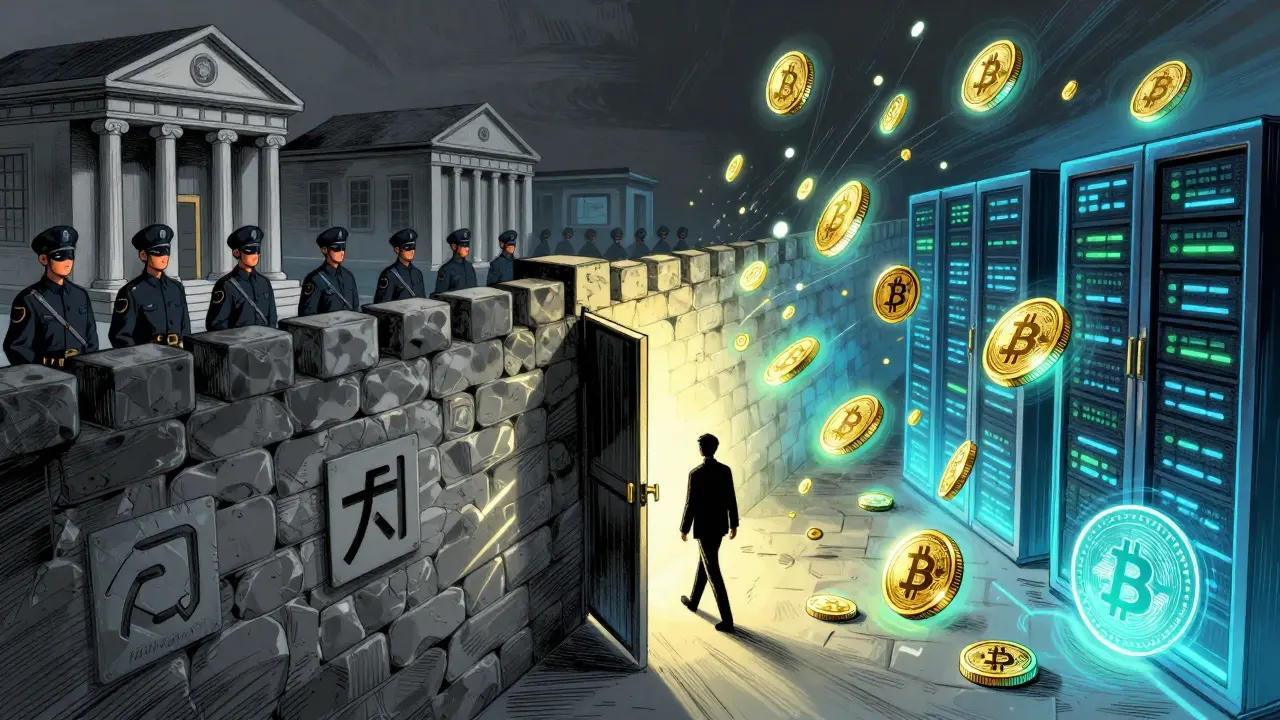
If you are navigating the crypto landscape in Taiwan, understanding these boundaries is not just helpful-it’s essential. The government has built a wall between the traditional banking sector and cryptocurrency exchanges. But here is the twist: that wall has doors. You just need to know which ones are open and how to walk through them without getting fined or frozen out.
The Core Rule: Banks Stay Away from Crypto
To understand why things work the way they do today, we have to look at the foundation laid by the Financial Supervisory Commission (FSC) and the Central Bank of the Republic of China (Taiwan) (CBC). Back in December 2013, these two bodies issued a joint statement classifying Bitcoin as a "highly speculative digital virtual commodity." That label stuck. It meant Bitcoin was not money, so banks didn’t have to treat it like money. But it also meant banks couldn’t touch it.
In 2014, the FSC issued a clear directive: local banks are prohibited from accepting Bitcoin or providing any services related to it. This includes exchanging fiat currency for crypto. If you walk into a major bank in Taiwan and ask to deposit cash to buy Ethereum, the teller will say no. They aren’t being difficult; they are following federal regulation.
This restriction tightened further on July 4, 2022. The FSC instructed the local bankers association to ban credit card acquirers from processing payments for crypto-asset purchases. Think about what this means for your daily life. You cannot swipe your Visa or Mastercard to buy crypto on an app. The system treats crypto transactions similarly to online gambling or high-risk futures trading-activities that banks are legally barred from facilitating.
Why did they do this? The goal was risk mitigation. By keeping crypto separate from the banking system, regulators aimed to prevent systemic risks. If a crypto exchange collapsed, it wouldn’t drag down the national banking infrastructure. However, this separation created a friction point for users who wanted easy access to their investments.
The Solution: Mandatory VASP Registration
If banks can’t help you, who can? The answer lies in the rise of Virtual Asset Service Providers (VASPs). Before 2025, operating a crypto exchange in Taiwan was somewhat of a gray area with voluntary compliance measures introduced in 2021. That changed drastically on January 1, 2025.
On that date, mandatory registration requirements for VASPs took effect. Now, any entity operating in digital assets must secure governmental registration to conduct legal business. If you run an exchange without this license, you face fines up to NT$5 million (approximately $155,900) and potential criminal charges leading to imprisonment for up to two years.
As of late 2024, exactly 23 VASPs had completed this registration for Anti-Money Laundering (AML) compliance. This list is your whitelist. If an exchange is not on this list, you should avoid it. These registered platforms act as the bridge between your fiat money and your crypto holdings, bypassing the restricted banking channels.
MaiCoin emerged as a key player in this space. As Taiwan’s largest crypto exchange, MaiCoin handles approximately $70 million in daily trading volume. In 2023, they announced plans to become the first Taiwanese crypto firm to go public on the local stock exchange. Their success shows that while banks are locked out, licensed businesses can thrive.
How Users Actually Buy Crypto Today
You might be wondering, "Okay, so banks are banned and only 23 exchanges are legal. How do I actually get my money in?" The process requires a bit more effort than tapping a phone at a store, but it is manageable if you follow the right steps.
- Choose a Registered VASP: Stick to one of the 23 registered entities. MaiCoin is the most popular, but others exist. Using unregistered platforms puts your funds at risk and may violate local laws.
- Use Third-Party Payment Processors: Since direct bank transfers to crypto wallets are blocked, many users rely on third-party payment processors that have negotiated specific arrangements with payment networks. These processors handle the fiat-to-crypto conversion behind the scenes.
- P2P Trading Platforms: For those seeking more flexibility, peer-to-peer (P2P) trading remains common. Users report using P2P platforms to find other individuals willing to trade cash or bank transfers directly for crypto. While effective, this method carries higher counterparty risk.
- Cash Deposits: Some local exchanges allow cash deposits at designated ATMs or partner locations. This is less convenient but offers a direct way to enter the market without involving complex banking rails.
User experiences on forums like r/Taiwan and r/cryptocurrency reflect this reality. Many users express frustration with the lack of seamless integration. Reviews show mixed satisfaction: MaiCoin averages a 3.8/5 rating on local sites, often criticized for limited banking integration options. International platforms operating under the VASP framework score slightly higher at 4.2/5 for functionality, though they still operate within the same regulatory constraints.
Different Rules for Different Tokens
Not all digital assets are treated equally in Taiwan. The regulatory framework draws sharp distinctions based on the type of token.
Security Tokens: If a digital asset is deemed a security, it falls under the Securities and Exchange Act. Specific regulations enacted in 2020 govern these tokens, requiring strict disclosure and compliance similar to traditional stocks.
General Cryptocurrencies: Assets like Bitcoin and Ethereum remain classified as virtual commodities under FSC oversight. They are legal to own and trade, but they carry no special status as currency.
Stablecoins: This is where things are changing. Starting June 2025, Taiwan plans to introduce a new regulatory framework specifically for stablecoins pegged to the New Taiwan Dollar (TWD). The FSC will unveil draft legislation enabling regulated financial institutions to issue government-backed stablecoins. This move aims to provide a safe, legal alternative to unregulated options like USDC and USDT.
| Asset Type | Regulatory Body | Banking Access | Key Restriction |
|---|---|---|---|
| Bitcoin / Ethereum | FSC | Prohibited | No direct bank transfers or credit card purchases |
| Security Tokens | Securities and Exchange Act | Limited (via brokers) | Strict disclosure and investor accreditation required |
| TWD Stablecoins (Future) | FSC / CBC | Permitted (for regulated issuers) | Must be issued by licensed financial institutions |
| Unregulated Stablecoins (USDT/USDC) | FSC | Restricted | No official backing; subject to general crypto bans |
The Future: CBDCs and Softening Restrictions?
Is this restrictive stance permanent? Probably not entirely. The Central Bank of the Republic of China announced in December 2023 that it completed a comprehensive feasibility study for a Central Bank Digital Currency (CBDC). Prototype testing is scheduled to begin in collaboration with the Ministry of Digital Affairs, potentially leveraging existing digital voucher infrastructure.
Experts predict that successful CBDC implementation could lead to a gradual relaxation of banking restrictions-but only for government-supervised digital assets. The idea is to maintain strict separation for speculative cryptocurrencies like Bitcoin while allowing banks to interact with state-backed digital currencies. This hybrid approach balances innovation with financial stability.
For now, however, the wall stands. The FSC’s commitment to balancing innovation with risk mitigation suggests that any changes will occur incrementally. Regulators are watching closely, ensuring that consumer protection remains the priority over convenience.

Challenges for Businesses and Startups
If you are looking to start a crypto business in Taiwan, the path is narrow but defined. New companies face a learning curve of 3-6 months to navigate VASP registration requirements. Setup costs range from NT$2-5 million for compliance infrastructure, including cybersecurity protocols and asset segregation systems.
The Taiwan Virtual Asset Service Provider Association, established in June 2024, provides self-regulatory standards and guidance. However, industry participants report ongoing difficulties securing traditional banking partnerships for operational needs like payroll and vendor payments. Even if you are a licensed VASP, your own company account might face scrutiny when trying to pay rent or salaries.
Documentation from the FSC provides detailed compliance guidelines, but interpretation of banking restriction boundaries remains inconsistent across different financial institutions. One bank might approve a transaction that another blocks, creating uncertainty for business owners.
Market Context: A Constrained but Active Ecosystem
Despite these hurdles, the market is alive. The FSC estimates that approximately 2.3 million Taiwanese citizens own cryptocurrencies as of late 2024, representing roughly 10% of the population. Daily crypto trading volume reaches approximately $200 million across all registered platforms, with Bitcoin and Ethereum comprising 65% of activity.
Growth rates show 15% year-over-year increases in registered users on local platforms. This suggests that selective banking restrictions have not deterred retail adoption. Instead, they have channeled activity through regulated VASPs rather than traditional banking channels. Users are adapting, finding workarounds, and supporting the compliant ecosystem.
Can I use my bank card to buy Bitcoin in Taiwan?
No. Since July 2022, the Financial Supervisory Commission (FSC) has prohibited credit card acquirers from processing payments for crypto-asset purchases. Banks are also banned from facilitating direct exchanges between fiat currency and cryptocurrency.
What is a VASP in Taiwan?
A Virtual Asset Service Provider (VASP) is a licensed entity authorized to facilitate cryptocurrency transactions. As of January 1, 2025, all crypto exchanges operating in Taiwan must register as VASPs to comply with Anti-Money Laundering (AML) laws. There are currently 23 registered VASPs.
Is it illegal to own cryptocurrency in Taiwan?
No, owning cryptocurrency is legal. The government classifies assets like Bitcoin as virtual commodities. You can buy, sell, and hold them, but you must use registered VASPs or peer-to-peer methods since banks cannot process these transactions.
What happens if I use an unregistered crypto exchange?
Operating an unregistered exchange can result in fines up to NT$5 million ($155,900) and up to two years in prison. For users, using unregistered platforms poses significant security risks and lacks consumer protection guarantees provided by the FSC framework.
Will Taiwan launch its own digital currency?
Yes, the Central Bank of the Republic of China (Taiwan) has completed a feasibility study for a Central Bank Digital Currency (CBDC). Prototype testing is expected to begin in late 2024 or early 2025, potentially allowing regulated banks to interact with government-backed digital assets in the future.