The Future of Block Reward Systems: From Halvings to Fees and Modular Networks
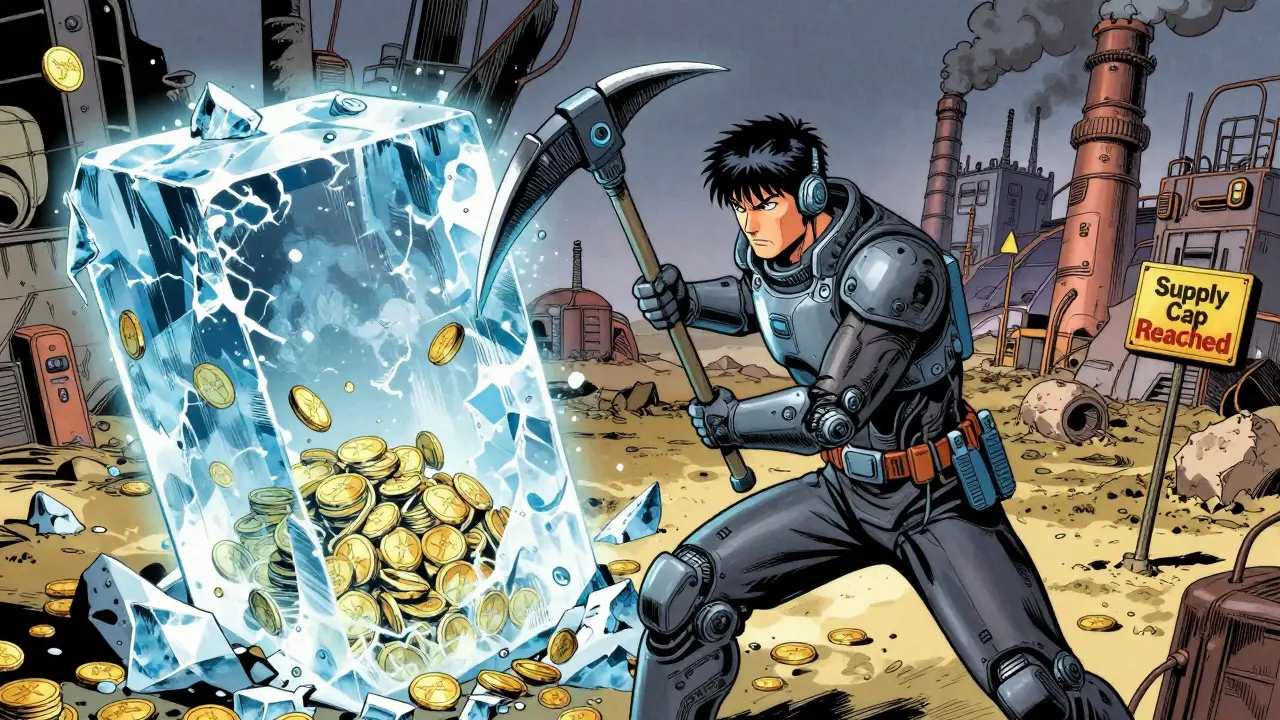
Imagine a world where the digital gold rush is over. The miners have dug up all the coins, yet the network keeps running. This isn’t science fiction; it’s the inevitable future of block reward systems, which are the economic incentive mechanisms that compensate validators or miners for securing blockchain networks and processing transactions. For nearly two decades, we’ve relied on inflationary token issuance-printing new coins-to pay for security. But as supply caps approach, this model breaks down. What happens next? How do we keep networks safe when there are no more free coins to give away?
The answer lies in a fundamental shift from subsidy-based rewards to fee-driven economies, supported by new architectural innovations like modular blockchains and liquid staking. If you’re holding crypto, building on-chain, or just watching the space, understanding this transition is critical. It changes how much your transactions cost, how secure your assets are, and who gets paid to run the infrastructure.
The End of Infinite Subsidies: Bitcoin’s Halving Reality
To understand where we’re going, we have to look at where we started. Bitcoin was designed with a fixed supply cap of 21 million coins and a programmable monetary policy that reduces issuance over time. Every four years, roughly every 210,000 blocks, the reward for validating a block is cut in half. This event, known as the halving, has reduced the payout from 50 BTC in 2009 to 6.25 BTC after the 2024 halving. By 2140, the last satoshi will be mined, and the block subsidy will hit zero.
This creates a massive economic cliff. Today, miners cover their electricity bills, hardware depreciation, and operational overhead largely through these newly minted coins. Transaction fees make up a small fraction of their income. As the subsidy shrinks, fees must rise to fill the gap. If they don’t, miners shut down. If too many shut down, hash rate drops, and the network becomes vulnerable to attacks.
We are already seeing signs of this tension. During periods of low network activity, mining profitability squeezes thin. Miners are forced to operate with razor-thin margins, relying on efficient hardware and cheap energy sources. The question isn’t if Bitcoin will survive the post-subsidy era-it likely will-but how painful the transition will be. Will transaction fees skyrocket to levels that exclude average users? Or will Layer 2 solutions absorb the congestion before it hits the base layer?
Modular Blockchains: Specializing Security and Rewards
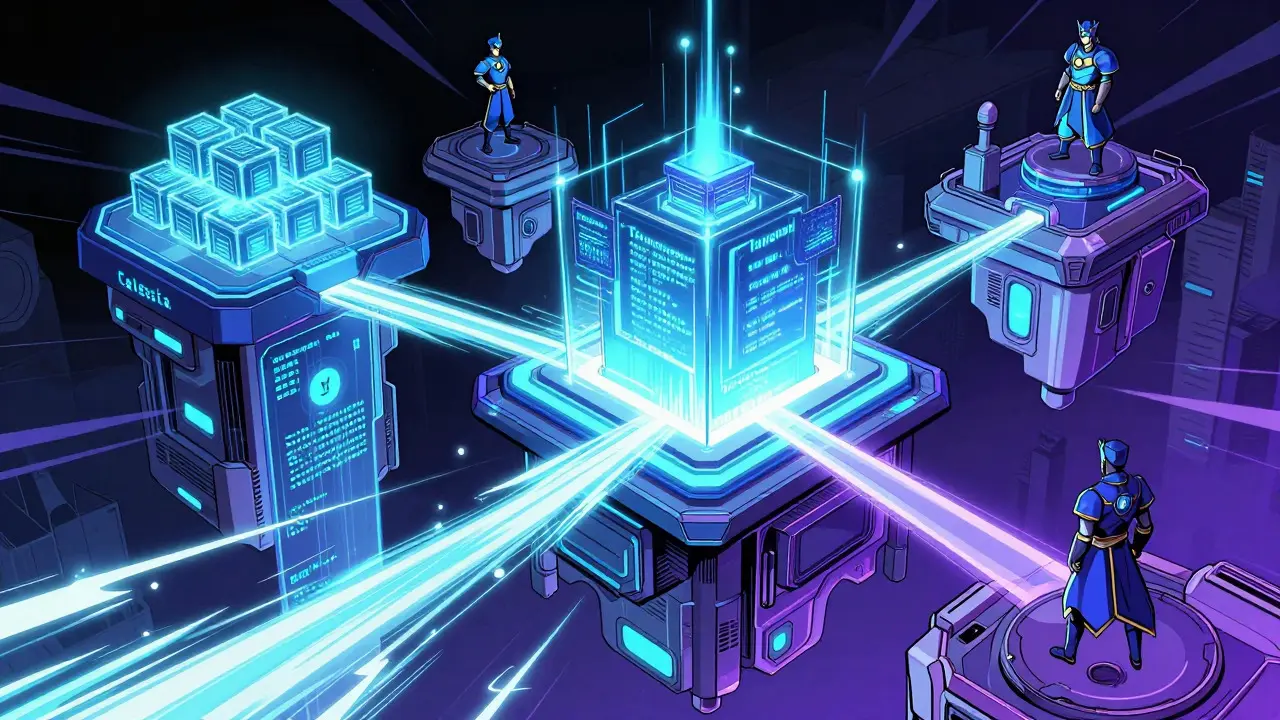
While Bitcoin evolves slowly, newer architectures are rewriting the rules entirely. The monolithic model, where one chain handles execution, consensus, and data availability, is giving way to modular blockchains, which are network architectures that split blockchain functions into specialized layers to improve scalability and efficiency. Projects like Celestia launched as the first modular data availability network, allowing other chains to outsource data storage while focusing on execution.
In a modular setup, reward systems become fragmented and specialized. You might have validators earning rewards for providing data availability on Celestia, while another set of validators earns rewards for executing smart contracts on an app-specific chain built on top of it. This allows for customized incentive structures. A high-frequency trading chain might prioritize speed and offer lower, faster payouts, while a privacy-focused chain might offer higher yields to attract robust validator sets.
EigenLayer introduces a restaking mechanism that allows Ethereum validators to reuse their staked ETH to secure additional services, earning multiple streams of rewards simultaneously.
This creates a shared security economy. Instead of launching a new chain with weak security because few people want to stake its native token, developers can tap into Ethereum’s vast pool of secured value. Validators get paid by multiple protocols, increasing their yield without locking up extra capital. For users, this means cheaper access to secure infrastructure. However, it also introduces complexity. If a service secured by restaked ETH fails, does the underlying Ethereum stake get slashed? These economic risks are still being mapped out.
Liquid Staking and Yield Optimization
Traditionally, staking meant locking up your tokens. Your assets were illiquid, sitting idle while you earned a modest annual percentage yield (APY). Liquid staking derivatives changed this by issuing a receipt token representing your staked asset, which you could trade or use in DeFi. Now, with protocols like Babylon and EigenLayer, we’re moving into a phase of active yield optimization.
Validators are no longer passive. They are active participants in a marketplace of security. By restaking, they provide security to multiple networks, earning rewards from each. This increases the total value locked (TVL) in proof-of-stake networks but also concentrates risk. If a bug exists in the restaking protocol, it could affect thousands of validators simultaneously.
For the average user, this means higher potential yields on staked assets. But it also means doing more homework. Are you earning yield from pure staking, or from risky sidecar services? The line between safe staking and speculative yield farming is blurring. As block rewards evolve, liquidity providers and stakers become the primary source of network security, shifting power away from specialized miners.
The Fee Market: Who Pays for Security?
As subsidies vanish, transaction fees become the lifeblood of network security. This shifts the burden of payment from the system (via inflation) to the user. In Bitcoin’s case, this could mean significantly higher fees during peak times. Imagine paying $50 or $100 in fees to send a single Bitcoin transaction if the network is congested and miners are desperate for revenue.
This dynamic forces innovation in scaling. Layer 2 solutions like Optimistic Rollups and Zero-Knowledge Rollups bundle thousands of transactions off-chain and submit a single proof to the mainnet. This drastically reduces the load on the base layer, keeping fees manageable. However, these L2s also need to pay fees to the L1 for data availability. So, the cost doesn’t disappear; it just moves up the stack.
Users will increasingly interact with abstracted interfaces where fee payments are handled automatically or sponsored by dApps. But under the hood, the economics remain tight. If fee revenue doesn’t cover the cost of security, the network dies. We may see the emergence of “fee markets” where users bid not just for priority, but for inclusion, creating a volatile pricing environment similar to airline tickets or Uber surge pricing.
New Frontiers: AI, RWA, and CBDCs
Block rewards aren’t just about crypto natives anymore. Traditional finance and emerging tech sectors are adopting these models.
- Real-World Asset (RWA) Tokenization: As real estate, bonds, and commodities move on-chain, hybrid reward systems emerge. Investors might earn yield from the underlying asset (e.g., rent or interest) plus a blockchain-based incentive for providing liquidity or validating transactions. This bridges traditional finance yields with decentralized incentives.
- Central Bank Digital Currencies (CBDCs): Governments exploring CBDCs may implement controlled reward structures. Unlike decentralized networks, CBDCs might use negative interest rates or targeted subsidies to influence monetary policy. Validators in these networks could be licensed institutions rather than open participants, changing the nature of “reward” from market-driven to regulatory-compliant.
- AI and Blockchain Convergence: Decentralized AI platforms are experimenting with reward mechanisms for computational resources. Users who contribute GPU power or data for training AI models receive tokens. This creates a dynamic reward system based on real-time contribution rather than fixed block intervals.
These developments suggest that block reward systems will become highly contextual. A supply chain blockchain might reward participants for verifying physical goods, while a social media dApp might reward content creation. The one-size-fits-all model of early crypto is gone.
Regulatory Headwinds and Tailwinds
How governments treat these rewards matters immensely. If a block reward is classified as a security, it opens validators to SEC scrutiny. If it’s treated as a commodity or utility, it remains relatively free. The EU’s MiCA regulation provides some clarity, classifying certain stablecoins and whitepapers, but the US remains fragmented.
Clear regulations could boost institutional adoption, bringing deeper liquidity and more sophisticated reward strategies. Conversely, harsh crackdowns could force nodes underground, reducing transparency and security. As of 2026, we’re seeing a split: Europe and Asia are embracing crypto-friendly frameworks, while the US oscillates between enforcement and legislative debate. This geopolitical divide will shape where innovative reward systems launch and thrive.
| Model Type | Primary Income Source | Security Risk | User Cost Impact |
|---|---|---|---|
| Traditional PoW (Early Bitcoin) | Block Subsidy (Inflation) | Low (High Hash Rate) | Negligible |
| Post-Halving PoW | Transaction Fees | Medium (Fee Dependency) | High (During Congestion) |
| Modular Restaking | Multiple Service Fees | Complex (Correlated Risks) | Low (Efficient Scaling) |
| CBCD / Permissioned | Regulatory Subsidies | Centralized Failure Points | Controlled by Policy |
What This Means for You
If you’re a holder, expect volatility around halving events and fee spikes. Diversify into ecosystems that generate organic demand, not just speculation. If you’re a builder, design your tokenomics with the endgame in mind. Can your protocol survive without inflationary subsidies? If not, you’ll need a strong utility driver for fees.
The future of block rewards is not a single path but a branching tree of economic experiments. Some will fail, leading to centralization or collapse. Others will succeed, creating sustainable, self-funding networks. The key takeaway is this: security costs money. Whether it comes from printing coins, charging fees, or selling data, someone has to pay. Understanding who pays, and why, is the most important skill in the next era of blockchain.
What happens to Bitcoin miners when the block reward reaches zero?
When the block subsidy hits zero around 2140, Bitcoin miners will rely entirely on transaction fees for income. This will likely cause fees to increase significantly, especially during network congestion, as users compete to have their transactions processed. Miners with inefficient hardware or high electricity costs may exit the market, potentially leading to temporary reductions in network hash rate until equilibrium is reached.
How do modular blockchains change reward distribution?
Modular blockchains split functions like execution, consensus, and data availability into separate layers. This allows for specialized reward systems where validators are paid specifically for the function they perform. For example, a validator might earn rewards for storing data on a data availability layer like Celestia, while another earns rewards for executing smart contracts on an application layer. This creates more efficient and customizable incentive structures compared to monolithic chains.
Is restaking safer than traditional staking?
Restaking offers higher potential yields by allowing validators to secure multiple protocols simultaneously, but it introduces complex risks. If a secondary protocol secured by restaked assets has a vulnerability, the underlying stake (e.g., ETH) could be slashed. Therefore, restaking is generally considered riskier than traditional single-protocol staking due to correlated failure modes and smart contract complexity.
Will transaction fees always go up as block rewards decrease?
Not necessarily. While the pressure on fees increases as subsidies drop, technological advancements like Layer 2 scaling solutions can mitigate this. By processing transactions off-chain and settling them in batches on the mainnet, L2s reduce the demand for base-layer block space. This can keep user-facing fees low even if the underlying base layer requires higher fees to maintain security.
How do Central Bank Digital Currencies (CBDCs) handle rewards?
CBDCs typically operate on permissioned networks where validators are licensed financial institutions. Rewards are not driven by market competition but by regulatory agreements and operational budgets. Central banks may use these systems to implement monetary policy tools, such as negative interest rates or targeted subsidies, rather than relying on decentralized incentive mechanisms like proof-of-work or proof-of-stake.