Tunisia's Complete Crypto Ban Explained: Rules, Risks, and Future
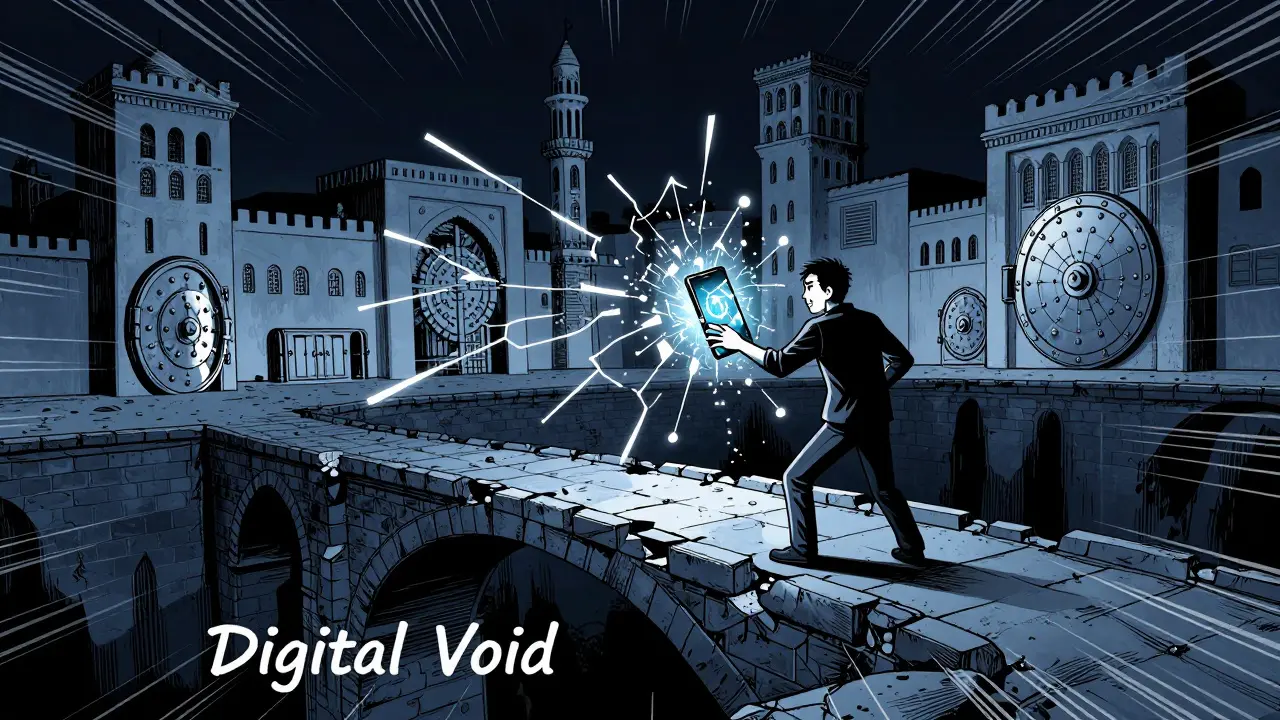
Imagine trying to send money to a friend abroad, only to find that every digital bridge has been burned. In Tunisia, a North African nation with one of the strictest financial controls in the world, this isn't just a hypothetical scenario-it is daily reality for anyone interested in digital assets. The country operates under a comprehensive prohibition on cryptocurrencies, making it one of only eight nations globally to enforce such a total ban. If you are holding Bitcoin, planning to mine Ethereum, or even thinking about accepting crypto payments as a merchant, you need to understand exactly what is off-limits and why.
This article breaks down the legal framework behind Tunisia’s crypto ban, explains the severe penalties for non-compliance, and explores the narrow exceptions that exist for blockchain technology. We will also look at whether the political winds might shift, given recent discussions about decriminalization and regulatory sandboxes.
The Legal Backbone: Why Crypto Is Banned
To understand the current situation, we have to look back to May 2018. That is when the Central Bank of Tunisia (BCT), the primary monetary authority responsible for issuing currency and regulating banks issued a directive that effectively killed the local cryptocurrency market. This wasn't a vague suggestion; it was a blanket prohibition on all virtual currency transactions without explicit state authorization.
The logic behind this decision stems from deep-seated economic fears. Tunisia faces significant balance of payments challenges and limited foreign exchange reserves. The BCT cited two main risks: capital flight and money laundering. In an economy where getting hold of US dollars or Euros can be difficult, allowing citizens to convert their Tunisian dinars into Bitcoin-which can then be sold globally-threatens the stability of the national currency. From the central bank’s perspective, crypto is not an investment opportunity; it is a leak in the dam holding back their foreign reserves.
This stance places Tunisia in a small, restrictive club alongside countries like China, Qatar, Egypt, Algeria, Morocco, Nepal, and Bangladesh. While most of the world has moved toward regulation-even if strict-Tunisia has chosen outright prohibition. This means there is no middle ground. You cannot register a crypto exchange. You cannot legally trade tokens. The door is simply closed.
What Is Actually Prohibited?
The scope of the ban is incredibly broad. It doesn’t just target big financial institutions; it targets individuals, merchants, and tech enthusiasts alike. Here is what is strictly illegal under the current framework:
- Trading and Exchanges: Operating a cryptocurrency exchange service is criminalized. Even buying or selling crypto on peer-to-peer platforms is technically a violation of currency-control regulations.
- Mining Operations: Mining is particularly scrutinized. Customs authorities are authorized to seize ASIC mining rigs upon import. Furthermore, exchanging mined coins for Tunisian dinar constitutes a direct violation of the 2018 directive.
- Merchant Payments: Businesses are strictly prohibited from accepting digital assets as payment for goods or services. If you run a shop in Tunis, you cannot accept Bitcoin for coffee.
- Banking Facilitation: Financial institutions are barred from facilitating any cryptocurrency transactions. Banks actively block card purchases at foreign exchanges, ensuring that even if you want to buy crypto abroad, your local bank card won’t work.
The penalties for breaking these rules are severe. Under currency-control regulations, operating an exchange, marketing tokens, or even holding cryptocurrencies can result in fines and imprisonment of up to five years. This is not a slap on the wrist; it is a serious criminal offense.
Enforcement and the Underground Reality
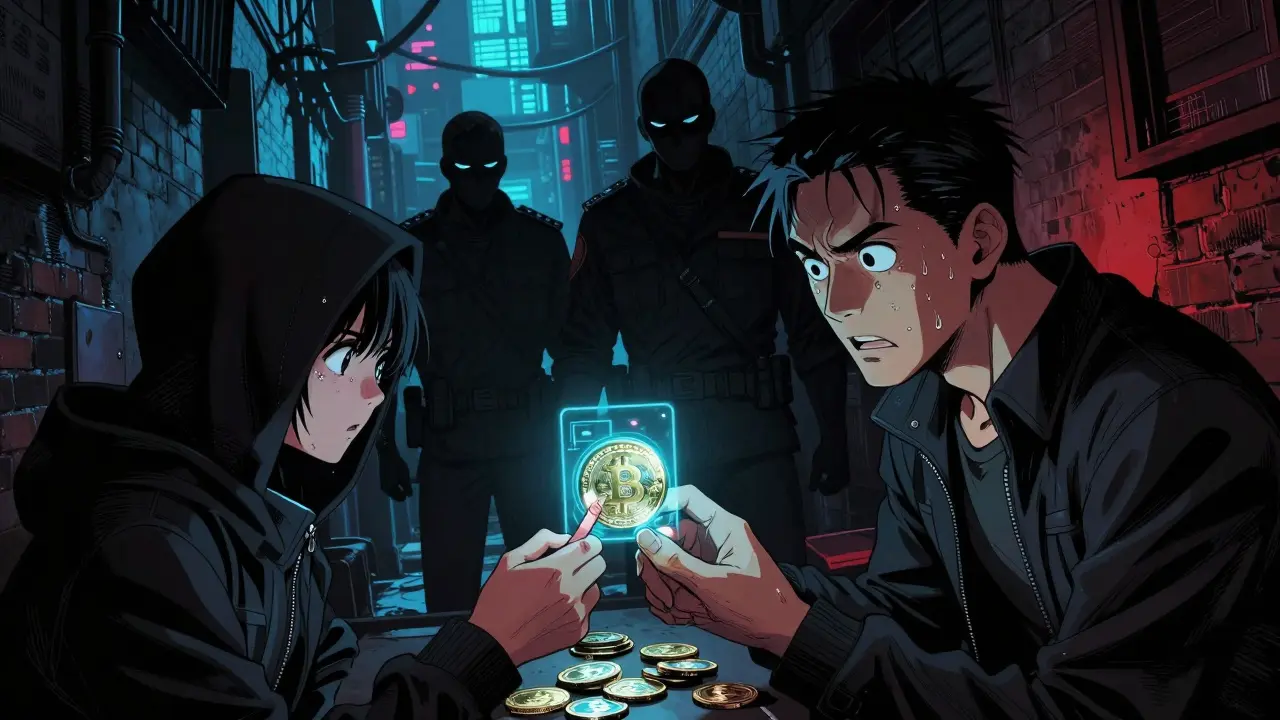
Laws on paper are one thing; enforcement is another. Despite the harsh penalties, a complex underground ecosystem exists. Before the formal prohibition in 2018, Bitcoin trading occurred largely through peer-to-peer chat rooms, indicating significant grassroots interest. Today, that interest hasn’t disappeared-it has gone dark.
Local cryptocurrency enthusiasts report that enforcement varies. Small-scale peer-to-peer trading continues, often facilitated through informal networks and social media groups. However, the risk remains high. A notable case in 2021 involved a teenager who was jailed for exchanging a small amount of cryptocurrency. This incident sparked public debate and reached cabinet-level discussions about potential decriminalization, highlighting the tension between strict law enforcement and public sentiment.
For businesses, compliance is mandatory. Companies operating in Tunisia must implement rigorous Anti-Money Laundering (AML) checks. This includes Customer Due Diligence (CDD) to verify identities and Enhanced Due Diligence (EDD) for high-risk clients, such as Politically Exposed Persons (PEPs). Know Your Customer (KYC) requirements mandate a Customer Identification Program (CIP), involving verification through official photo documents like National Identity Cards or passports, plus address confirmation via recent utility bills. All records must be retained for at least 10 years, and suspicious transactions must be reported to the Tunisian Financial Analysis Committee (CTAF), the body responsible for combating money laundering and terrorist financing within 10 days.
The Blockchain Exception: Regulatory Sandbox
Here is where things get interesting. While Tunisia bans cryptocurrencies, it does not hate blockchain technology. In fact, the government sees value in the underlying distributed ledger technology for specific applications. To explore this, the BCT launched a regulatory sandbox program in 2020.
This sandbox allows small groups of fintech companies to test blockchain-based solutions under tight supervision. These experiments focus on areas like payments, remittances, and traceability platforms, but they do not involve speculative crypto trading. Individual cohorts last six to twelve months, with strict user and volume limits.
Several local startups have participated in these programs:
| Company Name | Focus Area | Status |
|---|---|---|
| VFunder | Creative crowdfunding using blockchain transparency | Participant |
| Hydro E-Blocks | Carbon tracking and environmental data integrity | Participant |
| No Phobos | AI-generated NFTs (infrastructure maintained outside Tunisia) | Participant |
Note that companies like No Phobos typically maintain their infrastructure outside Tunisia to comply with broader regulatory restrictions. The government has also expressed interest in using blockchain for land registry digitization and targeted subsidy distribution. This selective acceptance shows that policymakers distinguish between the *technology* (blockchain) and the *asset* (cryptocurrency).

Global Context: How Tunisia Compares
Tunisia’s position becomes increasingly isolated as global adoption accelerates. Let’s compare Tunisia’s approach with other regions:
- El Salvador: Has adopted Bitcoin as legal tender, integrating it into everyday commerce.
- Germany, Switzerland, Singapore: Have developed comprehensive regulatory frameworks that legitimize trading while enforcing strict AML/KYC rules.
- Kuwait, Vietnam, Georgia: Take a middle-ground approach, limiting banking sector involvement but allowing private trading.
- Tunisia: Maintains a total ban, aligning only with a handful of other restrictive nations.
This isolation creates pressure. Major corporations like Microsoft, PayPal, and Tesla have embraced cryptocurrency payments or investments. International bodies like the Financial Action Task Force (FATF), an intergovernmental organization setting standards for anti-money laundering have developed frameworks that balance innovation with security. Tunisia’s refusal to adapt may hinder its ability to attract fintech investment or integrate into global digital finance systems.
Future Outlook: Will the Ban Lift?
There are signs that the wind might be changing. As of 2025, parliamentary committees have considered a draft bill to decriminalize cryptocurrency possession and create a licensing regime. This would be the most significant shift since the 2018 ban. The BCT’s Digital Tunisia 2025 project specifically lists blockchain technology for supply chain transparency, indicating institutional acceptance of the tool, if not the token.
However, do not expect immediate change. Policymakers are balancing innovation potential against traditional monetary policy concerns. With currency devaluation pressures and limited foreign exchange reserves still affecting the economy, the fear of capital flight remains strong. Any move toward legalization will likely be gradual, starting with stricter oversight rather than free-market access.
Is it illegal to own Bitcoin in Tunisia?
Yes. Under the 2018 Central Bank of Tunisia directive, holding cryptocurrencies is considered a violation of currency-control regulations. While enforcement varies, owning crypto can lead to fines or imprisonment of up to five years.
Can I use crypto to pay for goods in Tunisia?
No. Merchants are strictly prohibited from accepting digital assets as payment for goods or services. All crypto payments within the state are classified as illegal.
What happens if I import mining equipment?
Customs authorities are authorized to seize ASIC mining rigs upon import. Additionally, exchanging mined coins for Tunisian dinar is a direct violation of the law and carries severe penalties.
Are there any exceptions for blockchain technology?
Yes. Through the BCT regulatory sandbox launched in 2020, select fintech companies can test blockchain applications for payments, remittances, and traceability under strict supervision. However, this does not extend to public cryptocurrency trading.
Will Tunisia lift the crypto ban soon?
As of 2025, there are discussions in parliamentary committees about decriminalizing possession and creating a licensing regime. However, due to ongoing economic challenges and fears of capital flight, any changes are expected to be gradual and highly regulated.