Underground Crypto Market in Ecuador: Risks, Rules, and Reality
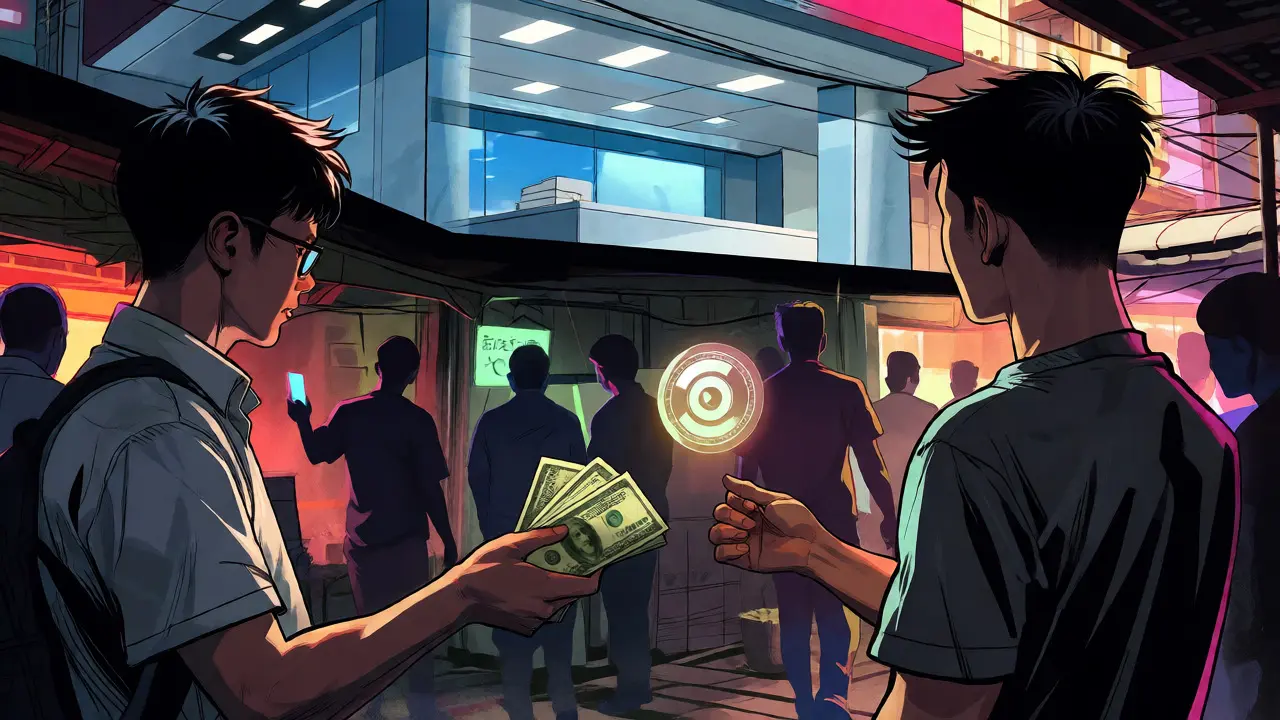
You might think that because you can buy Bitcoin on a major exchange in Quito, the wild west days of crypto are over. But look closer at the streets, the WhatsApp groups, and the unregistered kiosks in Guayaquil. There is a parallel economy running right under the nose of the regulators. This isn't just about people trying to dodge taxes; it's about speed, anonymity, and sometimes, sheer necessity. The underground crypto market in Ecuador exists not because the law forbids it entirely, but because the official channels often feel too slow, too watched, or too rigid for what many locals actually need.
The Legal Gray Zone That Fuels the Shadows
Here is the tricky part: buying and selling crypto in Ecuador is legal. You won't go to jail for holding Ethereum. However, cryptocurrencies are not legal tender. This means you cannot legally force a shop owner to accept your digital coins for a loaf of bread. The government banned non-state digital currencies years ago, intending to launch their own electronic money system, which largely fizzled out. Today, the Central Bank of Ecuador watches closely, but they don't have a comprehensive regulatory framework specifically for decentralized assets like USDT.
This ambiguity creates a perfect breeding ground for underground activity. If an exchange demands strict KYC (Know Your Customer) checks, some users prefer to hand over cash directly to a stranger for their tokens. No bank records. No immediate paper trail. It’s risky, sure, but for someone who wants to move value without alerting their bank or the tax authority, it’s tempting. The lack of clear rules on how these peer-to-peer transactions should be reported leaves a massive gap that informal networks fill.
Why Go Underground? Speed and Anonymity
Why would anyone skip the safety of a platform like CEX.IO or Binance? Two words: friction and fear. Official exchanges require you to link a bank account. In Ecuador, where banking services can be inconsistent and fees high, this is a hurdle. Plus, if you are dealing with large sums, banks might flag your transaction as suspicious, freezing your funds while they investigate.
In the underground market, deals happen face-to-face or via encrypted messaging apps. A seller in Cuenca might offer a better rate for Tether than the global spot price because they want quick liquidity in US Dollars. The buyer gets instant settlement. No waiting for blockchain confirmations to interact with a banking API. This speed is valuable, especially when the local currency-the US Dollar-is stable, but access to international digital assets fluctuates based on local demand spikes.
| Feature | Formal Exchanges (e.g., Binance, CEX.IO) | Underground/P2P Markets |
|---|---|---|
| Regulation | Compliant with AML/KYC standards | Largely unregulated; trust-based |
| Speed | Dependent on bank processing times | Immediate cash-for-token swaps |
| Anonymity | Low; full identity verification required | High; no formal ID record created |
| Risk | Platform failure, hacking, frozen accounts | Fraud, physical theft, counterfeits |
| Fees | Transparent trading fees + withdrawal costs | Hidden spreads; variable rates per deal |
The Role of Peer-to-Peer Platforms
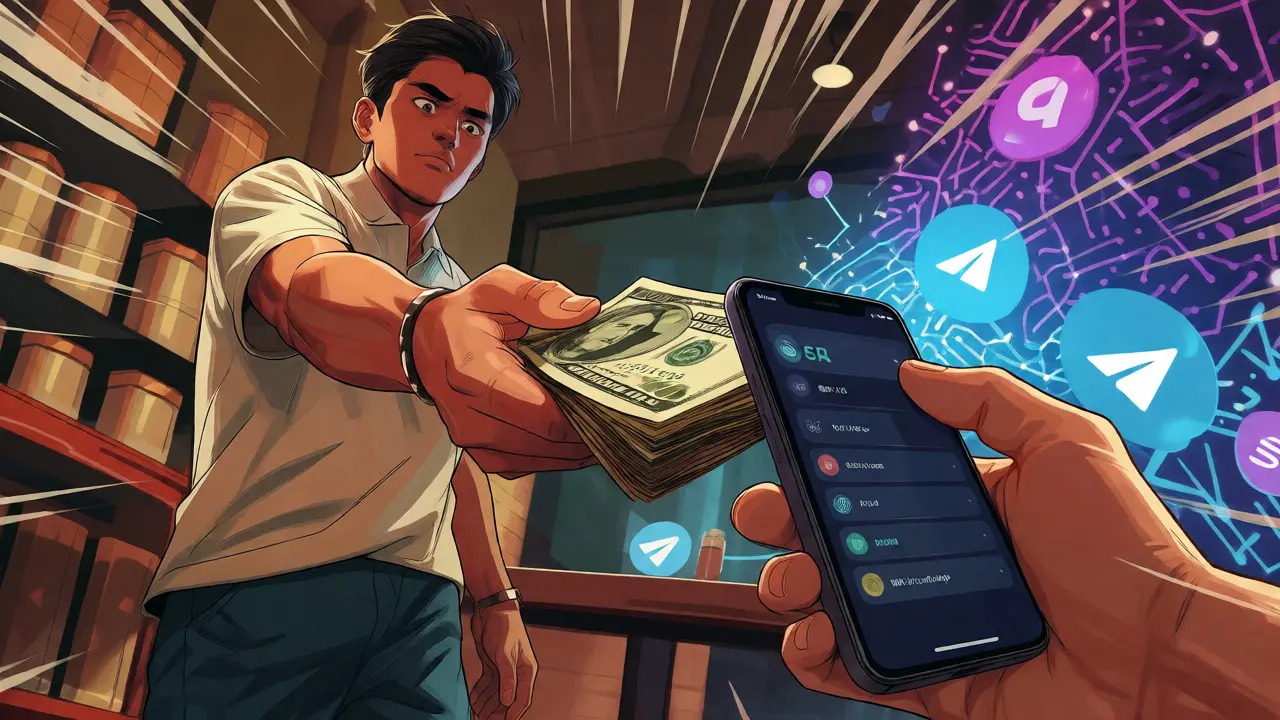
It’s important to distinguish between truly "illegal" operations and semi-formal peer-to-peer (P2P) trading. Platforms like LocalCoinSwap operate legally in Ecuador. They connect buyers and sellers but often act as escrow agents. However, many traders use these platforms merely to find each other, then complete the payment in cash outside the platform to avoid fees or scrutiny. This hybrid model blurs the line between regulated commerce and underground trade.
For instance, a user might list 50 USDT for sale on a P2P board. A buyer sees the ad, meets the seller at a public place, hands over $51 in cash, and receives the USDT transfer. The platform facilitated the introduction, but the actual value exchange was physical and off-ledger. This method bypasses the banking system entirely for the fiat side of the transaction. It’s efficient, but it lacks the consumer protections of a fully integrated fintech solution.
Risks You Can’t Ignore
Let’s be real: the underground market is a minefield. Without a central authority to arbitrate disputes, you are on your own. What if the seller sends the wrong amount of tokens? What if the cash you receive is counterfeit? These aren't hypotheticals; they happen regularly in informal economies worldwide.
Another major risk is legal exposure. While holding crypto isn't illegal, using it to launder money or evade taxes definitely is. If you are caught moving significant amounts of value through informal channels without proper documentation, you could face audits from the Servicio de Rentas Internas (SRI). The SRI has been increasing its digital footprint, using data analytics to spot discrepancies between lifestyle and declared income. Cash-heavy crypto trades fit that profile perfectly.
How Locals Navigate the Chaos
Ecuadorians are savvy. They don’t just jump into the deep end blindly. Most successful participants in the informal market rely on reputation. They trade within closed groups-WhatsApp communities, Telegram channels, or local business associations. Trust is the currency here. If you break a deal, you’re blacklisted instantly. This social pressure acts as a substitute for legal enforcement.
Many also use stablecoins like USDT as a bridge. Since Ecuador uses the US Dollar, converting local dollars to USDT is straightforward. It allows users to store value digitally without exposing themselves to the volatility of Bitcoin. When they need to spend, they convert back to USD via these informal networks. It’s a clever workaround for a country that doesn’t allow crypto payments in stores but tolerates private ownership.
The Future: Regulation or Crackdown?
Will the government step in? Possibly. As adoption grows, so does the political pressure to regulate. Other Latin American countries are tightening their grip on crypto flows to prevent capital flight. Ecuador might follow suit, introducing stricter reporting requirements for P2P transactions or mandating that all exchanges register locally with specific capital reserves.
For now, the underground market persists because it solves problems the formal sector hasn’t addressed yet: accessibility for the unbanked, privacy for the cautious, and speed for the impatient. Until the official channels become as seamless and private as handing someone a stack of bills, the shadow economy will keep humming along.
Is it illegal to trade Bitcoin in Ecuador?
No, it is not illegal to buy, sell, or hold Bitcoin and other cryptocurrencies in Ecuador. However, they are not considered legal tender, meaning businesses are not obligated to accept them for goods and services. Trading is permitted, but users must comply with anti-money laundering regulations if using registered exchanges.
What are the main risks of the underground crypto market?
The primary risks include fraud (receiving fake tokens or counterfeit cash), lack of consumer protection in case of disputes, potential legal issues regarding tax evasion or money laundering, and security threats such as robbery during physical cash exchanges.
Can I use crypto to pay for groceries in Ecuador?
Generally, no. Because cryptocurrencies are not legal tender in Ecuador, most merchants do not accept them directly. You would typically need to convert your crypto to US Dollars first, either through a bank-linked exchange or via a peer-to-peer cash swap, before making everyday purchases.
Which cryptocurrencies are most popular in the informal market?
Stablecoins, particularly Tether (USDT), are extremely popular due to their peg to the US Dollar, which is Ecuador's official currency. Bitcoin remains popular for long-term investment, while Ethereum and other altcoins see less volume in informal cash-based trades compared to stablecoins.
Do I need to report crypto gains to the Ecuadorian tax authority?
Yes, profits from cryptocurrency trading are generally subject to income tax in Ecuador. While enforcement on small, informal trades may vary, the Servicio de Rentas Internas (SRI) expects taxpayers to declare capital gains. Failure to report significant gains can lead to penalties and audits.
Mark Riquelme
September 17, 2026 AT 03:29Having lived in the Andes region for several years, I can confirm that the dynamic described here is accurate but often misunderstood by outsiders. The preference for USDT over Bitcoin in Ecuador is not merely a trend; it is a rational economic response to the country's dollarized economy. Since the local currency is already the USD, holding volatile assets like BTC introduces unnecessary risk for daily liquidity needs.
The informal networks mentioned rely heavily on social capital rather than legal contracts. In cities like Guayaquil and Cuenca, reputation within specific WhatsApp groups serves as the primary enforcement mechanism. If a trader defaults or commits fraud, they are effectively exiled from these digital communities, which is a powerful deterrent in tight-knit professional circles.
Furthermore, the regulatory ambiguity mentioned regarding the SRI (Servicio de Rentas Internas) is a double-edged sword. While there is no explicit ban on P2P trading, the lack of clear reporting guidelines means that many users operate under an implicit assumption of non-enforcement for smaller transactions. This creates a false sense of security for those moving significant sums without documentation.
It is also worth noting that the banking infrastructure in Ecuador has historically been less robust than in neighboring countries like Colombia or Chile. High transaction fees and inconsistent service levels push even tech-savvy users toward cash-based P2P swaps. The friction involved in linking bank accounts to international exchanges is a genuine barrier, not just a perceived one.
Therefore, the 'underground' market is not necessarily illegal in intent, but it operates in a space where formal compliance is cumbersome and costly. Until the Central Bank provides a streamlined framework for digital asset integration, these shadow channels will remain the most efficient route for value transfer.
Kyle Whitehead
September 18, 2026 AT 01:37dude this is so real i literally got scammed last month handing over cash for usdt in a parking lot in Quito... felt like a movie scene but way more stressful
the guy just took my bills and vanished into the crowd before i even checked my wallet balance properly... total chaos
Dominic Hird
September 19, 2026 AT 21:10I appreciate the nuance here because it’s easy to demonize informal economies when we’re used to sterile, regulated environments. It reminds me that trust is a human construct that evolves based on necessity. For many locals, the 'shadow' isn't about hiding from justice but navigating a system that doesn't fully serve their needs yet.
We should look at this with empathy rather than judgment. These individuals are adapting to a complex financial landscape with creativity and resilience. The social pressure mentioned acts as a beautiful, if harsh, form of community governance that keeps people honest when the state cannot.
It’s fascinating how technology intersects with traditional social bonds. The use of encrypted messaging apps to facilitate physical cash handovers is a hybrid solution that feels very modern yet deeply rooted in old-school handshake deals.
Manish Pahuja
September 21, 2026 AT 01:06Chill take. Just remember that convenience always comes with a price tag. Stay safe out there fam.
Speed is king in crypto but safety is queen. Don't let the crown slip.
musa farid
September 22, 2026 AT 21:34Omg stop lying to yourselves 🛑🛑 You think you're smart dodging taxes? NOPE! 🚫 The government sees everything eventually!! 👀
You are playing Russian roulette with your freedom 🔫💀 One day the SRI knocks and boom 💥 game over!!! 😱
People are so naive thinking anonymity exists on a blockchain linked to a bank account 🤡🤡 Wake up sheeple!! 🐑🐑
Harmony Davidson
September 23, 2026 AT 08:43they don't tell you the truth... the banks are working with the tax authorities... its all connected... every single transaction is tracked even if you think its hidden... i saw it happen to my cousin... he thought he was clever... now he pays triple... watch out... they are watching... always watching...
Alexis Riggle
September 23, 2026 AT 23:26Technically correct on the legal status but misses the practical reality of KYC fatigue. Many users simply cannot provide the required documentation due to informal employment structures common in the region. This exclusion drives them underground not out of malice but out of necessity.
The point about stablecoins is key. Volatility is a feature for investors but a bug for merchants and daily spenders. USDT bridges that gap effectively.
Tiffany Ngo
September 25, 2026 AT 13:49Listen, I’ve analyzed the data from similar markets in Argentina and Nigeria. The pattern is identical. Informal markets thrive on information asymmetry. The person selling the USDT usually knows the global spot price better than the buyer, who is often desperate for liquidity.
This isn't just about speed; it's about arbitrage opportunities that formal exchanges eat up in fees. If you aren't calculating the spread against the exchange rate, you are losing money. Most locals aren't doing that math. They are paying a premium for convenience. That is the real cost of the 'underground'. It’s inefficient, but it’s accessible.
Lorena Fernández Amores
September 26, 2026 AT 10:51It breaks my heart to see how much anxiety this causes people. I know someone who lost her entire savings because the person she trusted didn't show up to the meeting place. She waited for three hours in the rain, clutching a bag of cash, terrified and alone. The emotional toll of these transactions is completely ignored in discussions about efficiency and regulation. We talk about spreads and fees, but we forget the human element. The fear of theft, the stress of verification, the loneliness of operating outside the safety net of institutions. It’s exhausting. People are just trying to survive in a system that wasn't built for them. They deserve better than being treated as anomalies or risks. They are resilient survivors navigating a broken landscape with nothing but their wits and their courage. It’s tragic, really, how much burden falls on the individual when the collective support systems fail to adapt to new technologies.
HUDSON AKINO
September 28, 2026 AT 07:56Great breakdown! 🌟 Really highlights the cultural context well.
One thing to add: the role of remittances is huge here. Many families receive dollars from abroad and convert them to USDT to send back via crypto rails because it's faster than Western Union. The underground market facilitates this loop seamlessly. 😊
Mark Riquelme
September 28, 2026 AT 20:43That is an excellent observation regarding remittances. The bidirectional flow of value through USDT creates a self-sustaining ecosystem. Sellers need USD to pay local expenses, while buyers need USDT to send value abroad. This circularity stabilizes the informal rates somewhat, preventing extreme volatility compared to pure speculative markets.
Bruce Percival
September 29, 2026 AT 19:59I wonder if this model could be replicated in other dollarized economies like Panama or El Salvador. The structural similarities seem strong enough to suggest that the friction points would be nearly identical. It seems like a universal problem for small open economies with limited banking penetration.
Tiffany Ngo
September 29, 2026 AT 21:01El Salvador is a bad comparison because of their legislative mandate to accept BTC. Panama is closer, but their banking secrecy laws create a different incentive structure. Ecuador's situation is unique because of the complete lack of a national digital currency framework post-2014. The vacuum is what allows this chaos to flourish.
Taylor Szalaiy
October 1, 2026 AT 07:41Love this perspective! It really paints a vivid picture of the street-level reality.
It’s like a dance between tradition and innovation. The old ways of trusting a handshake meet the new world of blockchain. It’s messy, sure, but it’s alive. It breathes. Unlike the sterile coldness of big banks, this has soul. Even if that soul is occasionally robbed at gunpoint. 😂
Respect to the hustlers keeping the economy moving.
Joseph Brink
October 2, 2026 AT 11:21We must consider the philosophical implications of value. What is money if not a shared illusion? In the underground market, the illusion is maintained by immediate social feedback. If you break the illusion, you lose your standing instantly. In the formal market, the illusion is maintained by distant authority. Which is more real? The threat of social exile or the threat of bureaucratic audit? Both are constructs. But one feels immediate. One touches the skin. The other touches the paper. Humans respond to the skin. That is why the underground persists. It appeals to our primal need for direct consequence.
keanu macasieb
October 3, 2026 AT 15:16Typical Latin American dysfunction. No rules means no respect. Just chaos. Fix your banks or fix your laws. Stop making excuses for incompetence.
Heather Butcher
October 5, 2026 AT 11:38Hey everyone, hope you're all staying safe! ❤️
Just wanted to say that reading these stories is both inspiring and terrifying. It makes me realize how privileged we are to have seamless banking options, even if we complain about them. Sending good vibes to all the traders navigating these tricky waters! 🙏✨
Curtis Scott
October 5, 2026 AT 23:25Understood. Valid points on all sides. Proceed.
Ervin Kery
October 6, 2026 AT 00:47OH MY GOD THE RISK!!! 😱😱 Imagine walking around with $5k in cash?!?! My heart couldn't take it!!! 💔💔 I would faint right there in the street!!! 😵💫😵💫 Why do they do it?!?! Is it worth the panic attack?!?! 📉📈 I don't know!!! I'm shaking just reading about it!!! 🌪️🌪️
Glenn Watts
October 7, 2026 AT 20:44Look, I get the romantic idea of the 'free market,' but let's be honest about the power dynamics here. Who profits from this chaos? Not the average Joe buying bread. It profits the middlemen who hoard liquidity and manipulate the spread. It profits the cartels who wash their money through these unregulated nodes. The narrative of 'freedom' is often a mask for exploitation. When you remove regulation, you don't remove power; you just move it to the shadows where accountability goes to die. This isn't liberation; it's a different kind of cage made of invisible bars.