Validator Selection for Staking: How to Pick the Right Node
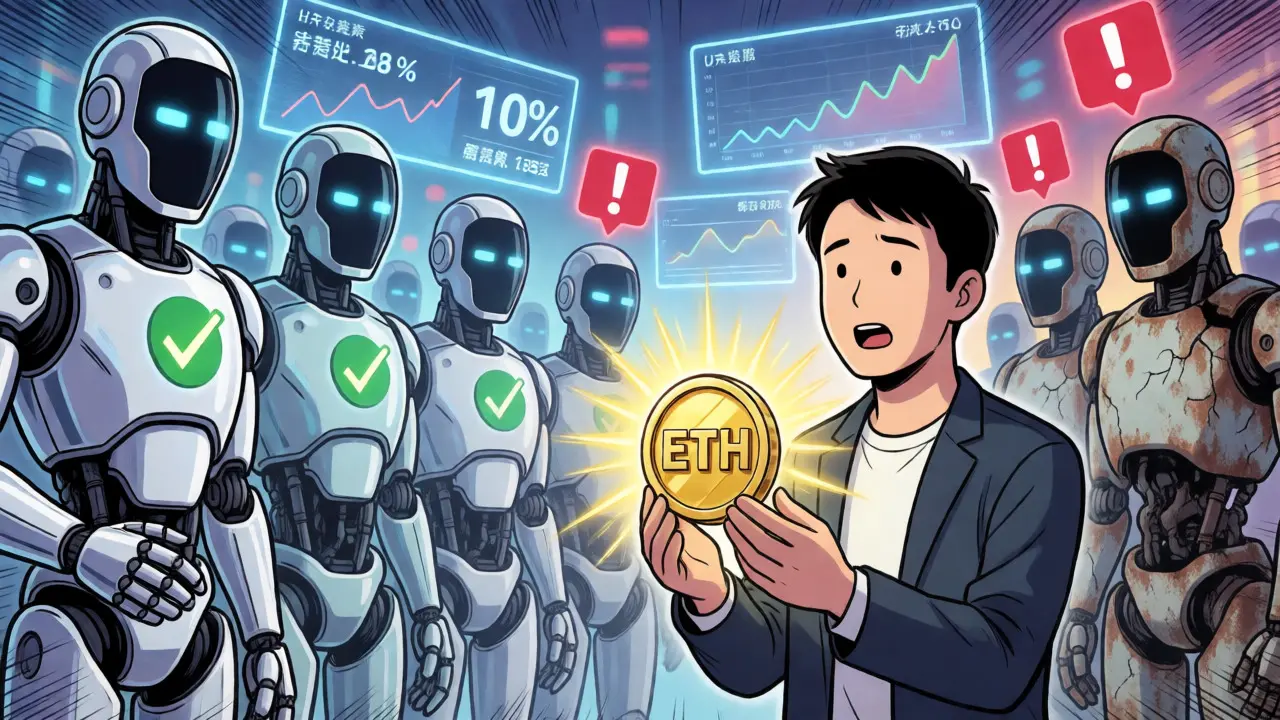
You just bought your first batch of ETH, Ethereum, or maybe some DOT. You want passive income, but you don't have $102,400 sitting around to run a solo node. So, you look at delegating your stake to a validator. Sounds simple, right? Just pick one with the highest percentage and wait for the money to roll in.
Here is the catch: picking the wrong validator can cost you more than you earn. A bad choice means lost rewards, missed airdrops, or worse-slashing penalties where you lose actual coins because someone else's server crashed. This guide breaks down exactly how to vet validators so you aren't gambling with your portfolio. We will look at what actually matters, ignore the marketing fluff, and give you a checklist that works whether you are on Ethereum, Polkadot, or Solana.
Why Validator Choice Actually Matters
Think of a validator as the engine of a Proof-of-Stake (PoS) network. If the engine sputters, the car doesn't move, and nobody gets paid. When you delegate, you are lending your tokens to this engine operator. In return, they take a commission (usually 5-15%) and pass the rest to you.
The stakes are high. As of late 2023, over $300 billion was locked in staking across major networks. That is a lot of money relying on software running on servers in basements and data centers. If a validator goes offline during a critical period, you miss out on block proposals. On Ethereum, missing a proposal isn't fatal, but it hurts. If a validator acts maliciously-like signing two different blocks at the same time-the network slashes their stake. On some chains, like Polkadot, slashing can wipe out up to 70% of the validator's bonded funds. If you are delegated to them, you often share that pain.
So, why not just pick the cheapest fee? Because cheap often means risky. A validator charging 0% commission might be new, underfunded, or planning to hike fees later. A validator with a slightly higher fee but 99.9% uptime and a solid track record usually nets you better returns after accounting for downtime losses.
The Five Core Metrics You Must Check
Don't get bogged down in complex technical jargon if you don't need to. Focus on these five indicators. They tell you almost everything you need to know about a validator's health and reliability.
1. Uptime and Performance History
This is non-negotiable. Look for validators with at least 99.9% uptime over the last 30 to 90 days. Anything below 99% is a red flag. Why? Because downtime directly reduces your APR. On Ethereum, every minute a validator is down costs roughly 0.000015 ETH in lost attestation rewards. It sounds small, but multiply that by thousands of minutes over a year, and it adds up.
Check specific performance metrics if the chain exposes them. For Ethereum, look at "head," "target," and "source" voting accuracy. Top-tier validators maintain 99.5%+ accuracy across all three. If a validator has perfect uptime but poor voting accuracy, they are likely struggling with network latency or hardware issues.
2. Self-Bonded Ratio (Skin in the Game)
How much of their own money does the validator have at risk? This is called the self-bonded ratio. Validators with low self-bonds (under 5%) are riskier. They have less to lose if they mess up. Industry data suggests that validators with self-bonded ratios above 10% experience 37% fewer slashing events. You want operators who care about the outcome because their own wallet is on the line.
3. Commission Structure and Stability
Most validators charge between 5% and 15%. Be wary of anyone advertising 0% commission. Often, this is a bait-and-switch tactic. They attract delegators with zero fees, then raise the commission to 20% or more once they hit capacity. Others use 0% fees as a sign of being a scam or a testnet node masquerading as production.
Look for stable commission rates. Did they change their fee last week? Frequent changes suggest instability or a lack of long-term strategy. Also, check if they offer any rebates or special terms for large delegators, though this is rare for retail users.
4. Geographic and Client Diversity
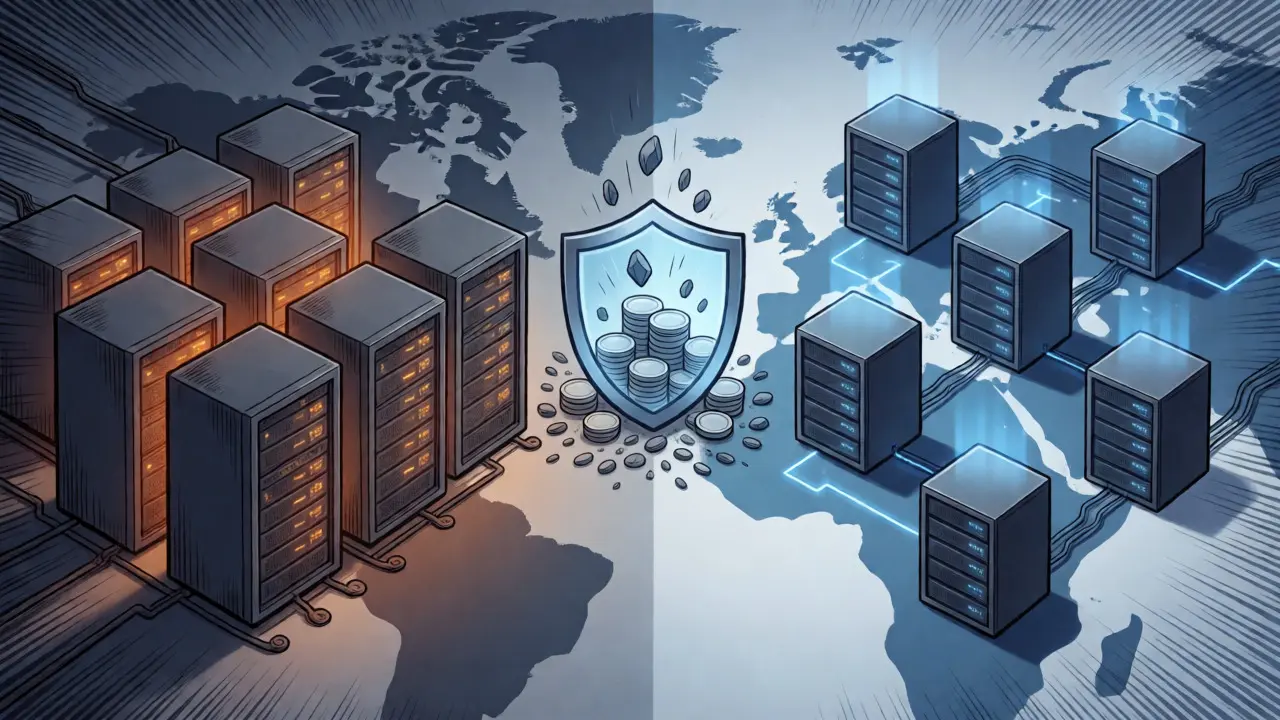
Decentralization is the whole point of blockchain. If you delegate to ten validators all running the same software client (e.g., Geth) and located in the same country (e.g., Germany), you are creating a single point of failure. If that specific client has a bug or that region suffers a power outage, your entire stake is affected.
Aim for diversity. Choose validators using different clients (Nethermind, Teku, Lighthouse, Prysm for Ethereum) and located in different jurisdictions. The top 10 Ethereum staking providers control nearly 49% of all staked ETH, so actively avoiding the biggest names helps support decentralization and reduces correlated risk.
5. Community Reputation and Communication
Does the validator team communicate? Do they have a website, a Twitter handle, or a Discord channel? Validators who provide regular updates during network upgrades or incidents tend to retain delegators better. A study showed that validators with active communication channels see 23% higher retention rates. Silence during a crisis is a bad sign.
Network-Specific Nuances
Not all blockchains work the same way. Your strategy should shift depending on which network you are staking on.
| Feature | Ethereum | Polkadot | Solana | Cardano |
|---|---|---|---|---|
| Typical APR | 3.5% - 4.5% | 14% - 15% | 6% - 8% | 4% - 5% |
| Min. Solo Stake | 32 ETH (~$100k+) | ~560 DOT | N/A (Delegation only) | Low (ADA) |
| Slashing Risk | High (0.5 ETH min) | Very High (up to 70%) | Low (rare) | None (no slashing) |
| Key Metric | RANDAO/Voting Accuracy | Nomination Trust/Uptime | Commission/Performance | Pledge Amount |
Ethereum: Since the Merge in 2022, Ethereum has become the gold standard for institutional staking. Here, RANDAO performance is critical. Validators are randomly selected to propose blocks every 12 seconds. If they fail to propose when selected, they lose potential rewards. Prioritize validators with strong historical proposal success rates.
Polkadot: Polkadot offers higher yields but comes with higher complexity and risk. Slashing is severe here. You can nominate up to 16 validators, but only the top ones receive rewards. Diversification is key. Use tools like Nova Wallet or Polkadot.js to check nomination pools, which now allow entry with as little as 1 DOT since the Nomination 2.0 update.
Solana: Solana prioritizes speed. Downtime is common due to network congestion. Look for validators with robust infrastructure and low commission rates. Since slashing is rare, uptime is the primary concern. Many users prefer validators that participate in MEV (Maximal Extractable Value) sharing, which can boost effective yields beyond the base inflation rate.
Cardano: Cardano is unique because there is no slashing. You cannot lose your principal stake due to validator error. This makes it a lower-risk option for beginners. However, rewards depend heavily on the validator's pledge (self-stake). Higher pledge amounts from the validator increase the probability of earning rewards for delegators. Check the "pledge" metric on platforms like AdaPools.
How to Execute the Selection Process
Ready to pick? Follow this step-by-step workflow. It takes about 2-5 hours for a thorough job, but it saves headaches later.
- Shortlist Candidates: Use aggregators like Staking Rewards, ValidatorDB, or native explorer sites. Filter for uptime >99.5%, commission <15%, and established history (>6 months).
- Vet Infrastructure: Check their location. Avoid clusters if possible. Look for signs of professional management, such as dedicated teams or partnerships with cloud providers like AWS or Google Cloud.
- Check Social Proof: Search their name on Twitter or Reddit. Are people complaining about unexpected downtime? Have they responded to issues?
- Diversify: Don't put all your eggs in one basket. Spread your stake across 3-5 validators. On Polkadot, aim for 4-12 nominations. On Ethereum, if you have enough capital, split between solo staking and delegation.
- Monitor Regularly: Set a reminder to check performance monthly. Most wallets or staking dashboards will alert you if a validator goes offline or changes commission.

Common Pitfalls to Avoid
Even experienced stakers make mistakes. Here are the most frequent ones:
- Chasing the Highest APR: A validator offering 20% APR on a low-cap chain might be unsustainable. If the token price crashes, the yield becomes meaningless. Stick to established networks unless you are speculating.
- Ignoring Commission Changes: Some validators lock their commission for a set period, while others change it weekly. Always check the current rate before delegating. Trustpilot reviews show that 41% of negative feedback stems from surprise fee hikes.
- Selecting Based on Name Recognition Alone: Big brands like Coinbase or Kraken are convenient but often charge higher commissions and contribute to centralization. Smaller, independent validators often provide better service and support network health.
- Forgetting to Rebalance: Network conditions change. A validator that was great six months ago might be struggling now. Regular audits are part of the job.
The Future of Validator Selection
The landscape is evolving fast. With the EU's MiCA framework taking effect, regulatory clarity is forcing staking providers to adopt stricter vetting processes. Institutional investors are entering the space, managing billions through services like Figment and Coinbase Institutional. This drives demand for professional-grade validators with transparent reporting.
Technological upgrades are also changing the game. Ethereum's upcoming Verkle trees implementation aims to reduce hardware requirements, potentially allowing more individuals to run nodes. Meanwhile, innovations like liquid staking (where you hold a receipt token representing your staked asset) are making liquidity easier, though they introduce smart contract risks.
Ultimately, validator selection is about balancing risk and reward. There is no perfect validator, only informed choices. By focusing on uptime, skin-in-the-game, and transparency, you protect your assets while supporting the decentralized future of blockchain technology.
What happens if my validator goes offline?
If a validator goes offline temporarily, you simply miss out on rewards for that period. You do not lose your principal stake. However, prolonged downtime can lead to minor penalties on some networks. If the validator fails to attest for several epochs, they may be ejected from the active set until they come back online and sync correctly.
Can I switch validators easily?
Yes, but the process varies by network. On Ethereum, you must exit your current validator and enter a new queue, which can take days or weeks depending on network congestion. On Polkadot, you can re-nominate instantly, but rewards are distributed based on the era, so timing matters. On Cardano, you can switch pool IDs immediately without unlocking funds.
Is 0% commission always the best choice?
No. While attractive, 0% commission can signal a new validator testing operations or a provider planning to raise fees later. Established validators with 5-10% commission often reinvest those earnings into better infrastructure, security, and monitoring, leading to more consistent uptime and reliable rewards.
What is slashing and how does it affect me?
Slashing is a penalty imposed on validators for malicious behavior, such as double-signing blocks. On networks like Ethereum and Polkadot, a portion of the validator's stake is burned. Since delegators share in the validator's risk, a significant slash can reduce your staked balance. Choosing reputable validators with strong security protocols minimizes this risk.
Do I need to keep my wallet open to stake?
No. Once you delegate your tokens to a validator, you can close your wallet application or turn off your computer. The validator operates independently on its own server. You only need to access your wallet to claim rewards, unstake, or re-delegate.
Abid Bhatti
September 3, 2026 AT 18:43The whole system is rigged and you are all just sheep following the herd into a slaughterhouse while the whales laugh from their yachts.
Jess Emmerson
September 4, 2026 AT 06:19Great breakdown on the technical metrics. I would add that checking the client diversity is crucial not just for decentralization but for avoiding correlated failures during hard forks or bugs specific to one implementation like Prysm or Lighthouse.
Also, don't underestimate the importance of MEV distribution policies on Solana as that can swing your effective yield by more than the base commission rate ever could.
Sophie Fitzgerald
September 5, 2026 AT 03:13Very helpful guide. I was worried about picking the wrong one before my first stake.
Dominic Jones
September 6, 2026 AT 22:14We must consider the philosophical implications of trust in decentralized systems; when we delegate our assets, we are essentially outsourcing our agency to an operator who may not share our risk tolerance or ethical framework regarding network participation.
The concept of "skin in the game" is merely a modern reiteration of ancient principles of accountability, yet many users ignore it because they lack the patience for due diligence.
If one does not understand the slashing conditions, one cannot truly claim to participate in the consensus mechanism, regardless of how much capital is locked.
Therefore, education is not optional; it is a prerequisite for financial sovereignty in this new paradigm.
We should also reflect on the environmental impact of proof-of-work versus proof-of-stake, although that is perhaps beyond the scope of immediate validator selection.
Still, the long-term viability of these networks depends on community engagement and informed decision-making rather than passive accumulation.
Let us strive for wisdom over convenience, even if it requires more effort upfront.
The market will always reward those who do their homework with better returns and lower stress levels.
It is a simple truth that complexity often masks incompetence, so simplicity in selection criteria is vital.
Ultimately, the choice reflects one's values as much as one's strategy.
Consider carefully before acting.
The blockchain remembers everything.
Trust no one blindly.
Verify everything.
Paige Ray
September 8, 2026 AT 11:39I appreciate the emphasis on communication channels. Knowing that a validator team is active and responsive really puts my mind at ease when I am delegating funds that I cannot afford to lose sleep over.
Eugene McGrath
September 9, 2026 AT 15:58This guide is decent but misses the point entirely about geopolitical risk. US-based validators are getting squeezed by SEC regulations anyway so why bother looking at uptime if the government is going to freeze your assets next year? Focus on jurisdiction first, performance second. Anything else is naive optimism from people who haven't read the fine print on MiCA compliance.
Stephen McElreavy
September 10, 2026 AT 10:37As someone operating in the APAC region, I find that latency issues are often underestimated in these discussions. A validator might have 99.9% uptime but if their peer-to-peer connections are poor, they miss attestations which effectively lowers your yield despite the server being online.
We need to look beyond binary uptime status and examine the quality of network propagation for each node.
Furthermore, the distinction between solo staking and delegation becomes blurred with liquid staking protocols, introducing smart contract risks that this article barely touches upon.
For institutional players, the audit history of the validator's codebase is paramount, whereas retail investors focus on APR.
This divergence in priorities creates information asymmetry that savvy operators exploit.
Always verify the source of the data you are using for selection, as aggregators can be manipulated.
Decentralization is a spectrum, not a binary state, and we must accept that perfect decentralization is impossible.
Our goal should be resilience against black swan events rather than optimization for average conditions.
Keep your eyes open for regulatory changes in Singapore and Japan as well.
The global nature of crypto means local laws have global consequences.
Stay vigilant and diversified across jurisdictions.
Do not rely on a single data point for your decision making process.
Context is key in all things cryptographic.
Abid Bhatti
September 12, 2026 AT 09:37You think checking the location matters? The NSA probably owns the data center anyway. They know every packet you send. Your privacy is gone the moment you connect to a node. This whole guide is just propaganda to keep you staking while they drain the liquidity pools.
Jess Emmerson
September 13, 2026 AT 11:11That is a bit extreme Abid. While privacy is important, the primary concern here is economic loss from downtime or slashing. Even if the NSA is watching, they aren't stealing your ETH rewards unless there is a bug in the protocol itself. Stick to the technical facts for now.
Maegan Rust
September 14, 2026 AT 00:35I love how this post breaks down the scary parts into manageable steps! It feels less like gambling and more like gardening 🌱. You plant your seeds (stake) in good soil (validator) and tend to them (monitoring). If the soil is bad, the flowers won't bloom, no matter how much water you give them. Thanks for sharing this wisdom!
Harish Ramaiah
September 14, 2026 AT 14:47Good info 👍 but honestly too much reading 😴. Just pick the biggest one with lowest fee and pray it doesn't crash 🙏. Life is short ⏳. Don't overthink it 🤷♂️.
John Lewis
September 14, 2026 AT 17:31Could you elaborate on the "self-bonded ratio" metric specifically for Polkadot nomination pools? Since the introduction of Nomination 2.0, the dynamics have shifted significantly compared to the old direct nomination model. I am trying to understand if the self-bond requirement applies differently to pool operators versus individual nominators.
Additionally, what tools do you recommend for tracking commission changes automatically?
Sheryl Nelsen Hutton
September 15, 2026 AT 01:22It seems to me that the most critical aspect often overlooked is the psychological bias towards recency, where users judge a validator based on the last week's performance rather than the long-term stability which is actually what protects capital preservation over multi-year horizons especially during bear markets when infrastructure costs remain high regardless of token price volatility.
Ritchie Grogg
September 15, 2026 AT 14:02Dude seriously though, I lost like 2% of my portfolio because I picked a guy with 0% fees who turned out to be running his node on a laptop in his mom's basement lol. Learned my lesson the hard way. Definitely worth spending a few hours researching like the OP said. Don't be lazy like me.
Alexander James
September 15, 2026 AT 21:32It is morally imperative that we support independent validators over corporate giants. Every dollar delegated to Coinbase is a dollar taken from the hands of the community. We must choose with our wallets to ensure the spirit of decentralization survives. Do not sell your soul for convenience!
Kathryn Haber
September 17, 2026 AT 11:04validators are just mirrors of our own desires for control without effort. we delegate power hoping it remains dormant. but power corrupts. even digital power. choose wisely. or don't. entropy wins either way.
Indu Nair
September 18, 2026 AT 06:54You are absolutely right to highlight the risks! But remember, fear is the enemy of progress. We should embrace the challenge of vetting validators as an opportunity to learn more about the underlying technology. Every mistake is a lesson in disguise. Keep pushing forward and stay optimistic about the future of PoS networks! 💪🚀