Virtual Digital Assets Taxation in India: Complete Guide for 2026

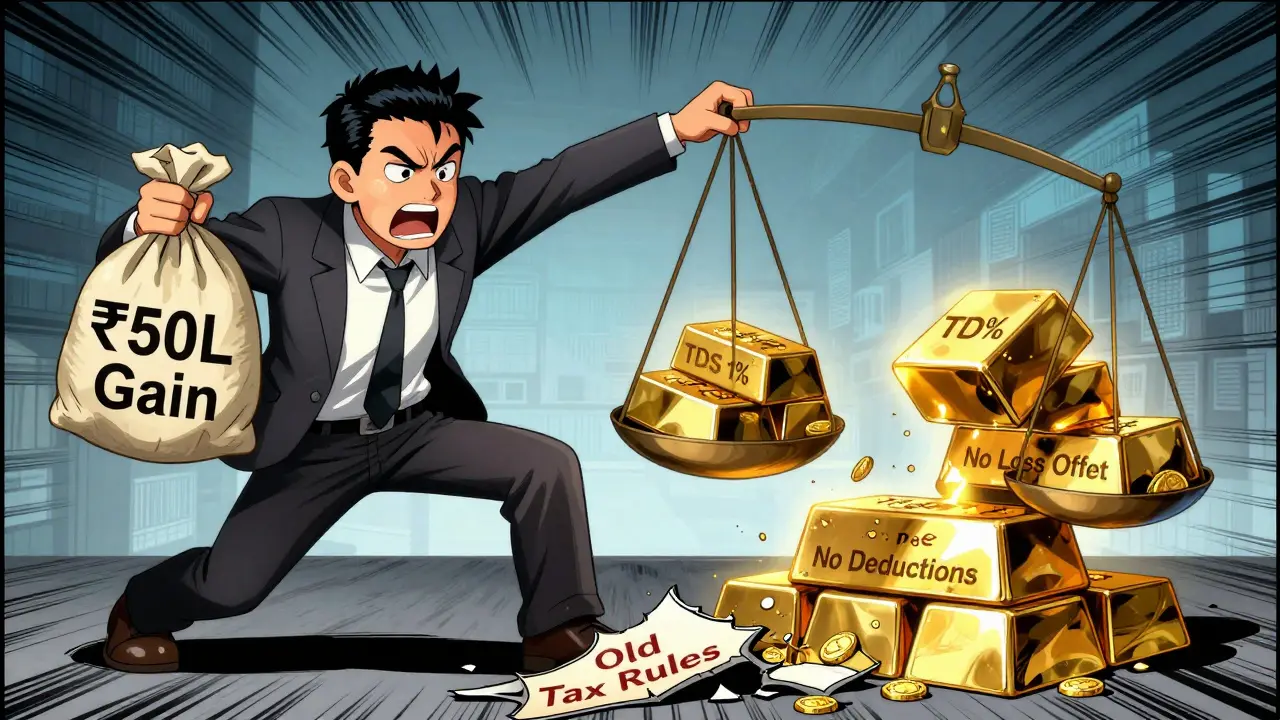
India’s approach to taxing virtual digital assets (VDAs) is one of the strictest in the world. If you’re buying, selling, or holding Bitcoin, Ethereum, NFTs, or any other digital token in India, you’re subject to a 30% tax on every gain-with almost no deductions allowed. Unlike most countries that treat crypto like stocks or real estate, India treats it like a high-risk gambling asset. And it’s not just about the 30%. There’s also a 1% TDS on every transaction over ₹10,000, no loss offsetting, and strict reporting rules. This isn’t a gray area anymore. It’s a fully enforced system. If you’re trading crypto in India, you need to know exactly how this works-or risk penalties.
What Exactly Counts as a Virtual Digital Asset?
Under Section 2(47A) of the Income Tax Act, India defines VDAs as any digital token, code, or number that represents value and can be transferred electronically. This includes cryptocurrencies like Bitcoin and Ethereum, NFTs, stablecoins, and even tokens from DeFi protocols. It does not include Indian rupees or foreign currencies. So if you trade USDT for SOL, that’s a taxable event. If you buy an NFT of a digital artwork, that’s a taxable event. Even swapping one crypto for another triggers tax.
The government doesn’t care if you’re mining, staking, or airdropped tokens. All of it falls under VDA. The key is whether it’s a digital representation of value that can be traded, stored, or used in a financial transaction. That’s broad-and intentional. The goal was to cover everything before it even got started.
The 30% Flat Tax: No Exceptions
Here’s the hard part: every time you sell or trade a VDA and make a profit, you pay 30% tax on that gain. No matter your income level. No matter how long you held it. No matter if you’re a casual buyer or a professional trader. This is not capital gains tax like you’d see on stocks. This is a flat rate with zero indexation benefits.
Let’s say you bought 1 BTC for ₹30 lakh in 2021 and sold it in 2025 for ₹50 lakh. Your gain is ₹20 lakh. You owe ₹6 lakh in tax. That’s it. You can’t deduct gas fees, exchange fees, wallet costs, or even the cost of buying a new laptop to trade. Nothing. The only thing you can subtract is the original purchase price. Everything else? Gone.
This is a major shift from pre-2022. Before, long-term gains (held over 36 months) could be taxed at 20% with indexation, which often reduced the effective tax rate to under 12%. Now, even if you held Bitcoin for 10 years, you still pay 30%. That’s a 15-20% tax hike for most long-term holders.
No Loss Offsetting: You Can’t Use Losses to Reduce Your Tax
Here’s where it gets brutal. If you lose money on crypto, you can’t use that loss to reduce your tax bill on salary, business income, or even other crypto gains. Losses from VDAs can only be carried forward to offset future VDA gains-and only for eight years.
Imagine this: you lose ₹5 lakh on Ethereum in 2024 but make ₹8 lakh on Solana in 2025. You still pay 30% on the ₹8 lakh. The ₹5 lakh loss doesn’t help. You can carry it forward and use it against future VDA profits, but if you stop trading crypto, that loss disappears. This rule makes crypto investing feel like a one-way bet: you can’t win without paying heavily, and you can’t lose without being stuck with the loss.
1% TDS: Every Transaction Gets a Tax Deduction
Every time you sell or trade VDAs on an Indian exchange-whether it’s WazirX, CoinDCX, or ZebPay-the platform automatically deducts 1% as Tax Deducted at Source (TDS). This applies if your total VDA transactions in a year exceed ₹10,000. For specified persons (those with annual business income under ₹1 crore or professional income under ₹50 lakh), the threshold is ₹50,000.
What does this mean in practice? If you sell ₹1 lakh worth of Bitcoin, ₹1,000 is taken out immediately and sent to the government. You don’t get to choose when or how much. The exchange does it for you. If you don’t have a PAN, the TDS jumps to 20%.
This is unlike the U.S., where backup withholding only kicks in if you’re non-compliant. In India, it’s automatic. Even if you’re not liable for tax, the 1% is still taken. You can claim it back when you file your return-but you’re still out of pocket until then.
How to Report VDAs in Your Tax Return
You must report all VDA transactions in Schedule VDA of ITR-2 or ITR-3. You need to list:
- Date of acquisition
- Date of transfer
- Cost of acquisition (in INR)
- Full value of consideration (sale price in INR)
- Any TDS deducted
For crypto-to-crypto trades, the value is calculated in INR at the time of the swap. So if you trade 0.5 BTC for 10 ETH, you need to know the INR value of both at that exact moment. Exchanges like CoinDCX and WazirX provide this data, but if you use a non-Indian wallet, you’re responsible for tracking it yourself.
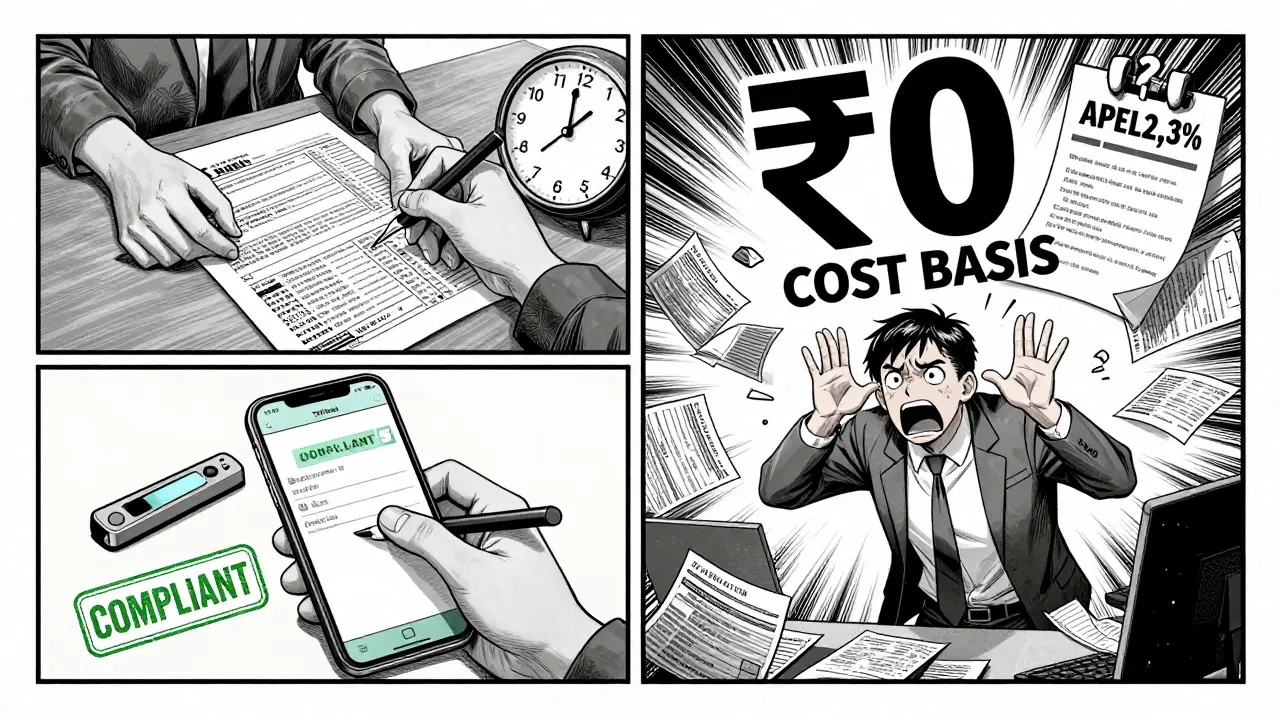
Keep records. Always. The Income Tax Department requires proof of acquisition cost. If you can’t show how much you paid, they’ll assume the entire sale amount is profit-and tax you on it. According to PwC India, 28% of crypto tax notices in FY2023-24 were issued because people didn’t keep records.
What About Mining, Staking, and Airdrops?
These are treated as income, not capital gains. If you mine Bitcoin, stake ETH, or receive an airdrop, the value of the asset at the time you receive it is added to your income. It’s taxed at your slab rate-up to 30% plus cess.
Then, if you later sell that asset, you pay another 30% on the gain. Yes, double taxation. You pay tax once when you receive it, and again when you sell it. There’s no exemption. Even if you received a token worth ₹5,000 as an airdrop and sold it for ₹15,000, you pay 30% on the ₹10,000 gain-on top of the tax you already paid on the ₹5,000 value.
How Do Other Countries Compare?
India’s rules are extreme. Portugal taxes crypto gains at 0%. Singapore only taxes business-related crypto. Germany lets you trade tax-free after one year. Even Japan, with its 55% top rate, allows loss offsetting.
India’s 30% flat rate with no loss offset and automatic TDS is unique. It’s not designed to encourage innovation. It’s designed to capture revenue. The government collected ₹3,920 crore in VDA taxes in FY2023-24-27% more than expected. That’s the goal.
What Do Experts Say?
There’s no middle ground. Tax professionals like Pankaj Nahta of Tax2Win say the system makes crypto investing unviable. He points out that after taxes, returns on crypto often fall below fixed deposit yields. Meanwhile, economists like Dr. S. Rajeesh argue the system’s simplicity saves compliance time and boosts revenue.
KPMG’s 2023 survey found 68% of institutional investors cut their Indian crypto exposure by over half. BlackRock’s India manager said the tax structure makes India non-competitive for global crypto funds. But retail traders? They’re still here. A WalletInvestor survey found 61% continue trading despite the tax, because the potential returns are still too high to ignore.
Common Mistakes and How to Avoid Them
- Forgetting TDS: Many think TDS is their final tax. It’s not. You still have to report gains and pay any additional tax owed.
- Mixing wallet addresses: If you move crypto between wallets, you still need to track cost basis. Don’t assume your exchange will do it for you.
- Not reporting gifts: If someone gifts you crypto, it’s taxable to you as income at fair market value.
- Ignoring foreign exchanges: Even if you trade on Binance or Coinbase, you must report the gains to India.
The most common error? Failing to keep transaction records. Use a crypto tax tool like Koinly or CoinTracker. Export your history from every exchange and wallet. Save screenshots. Print them. Store them offline. You’ll thank yourself when the tax notice arrives.
The Future: What’s Changing in 2026?
The Income Tax Act, 2025, passed in October 2025, didn’t change the 30% rate. But it did introduce a “Tax Year” system-replacing the financial year for VDA reporting. This means your crypto gains are now assessed based on calendar year (Jan-Dec), not April-March. It’s a small shift, but it changes how you plan.
There’s also talk of a Virtual Asset Service Providers Bill, which could require licenses for Indian crypto platforms. If that happens, exchanges may start blocking users who don’t comply with tax rules. Already, 65% of tax disputes come from poor record-keeping. The government is building systems to catch you before you file.
Will the rules soften? Unlikely. The government is collecting billions. And with 73% of Indian crypto users saying the tax is “too harsh,” there’s little political pressure to change it. The message is clear: if you want to trade crypto in India, pay the price.
Is crypto legal in India?
Yes, crypto is legal to buy, sell, and hold in India. But it’s not legal tender. You can’t use Bitcoin to pay for groceries. The government recognizes it as a taxable asset, not money. You’re allowed to trade it, but you must report every transaction and pay tax on gains.
Can I offset crypto losses against stock gains?
No. Losses from virtual digital assets can only be used to offset future gains from other VDAs. You cannot use crypto losses to reduce tax on salary, business income, or capital gains from stocks, real estate, or mutual funds.
Do I pay tax if I just hold crypto and don’t sell?
No. Holding crypto without selling or trading it doesn’t trigger tax. Tax is only due when you dispose of the asset-whether by selling, swapping, or using it to buy goods or services.
What if I trade crypto on Binance or Coinbase?
You still owe tax in India. Indian tax law applies to all Indian residents, regardless of where the exchange is based. You must report all global VDA transactions in your ITR. Foreign exchanges don’t deduct TDS, so you’re responsible for calculating and paying the tax yourself.
How do I calculate cost of acquisition for crypto-to-crypto trades?
Convert the value of the asset you gave up into INR at the time of the trade. Use the exchange rate from a government-notified platform like CoinDCX or WazirX. If you can’t find a reliable rate, use the average price from major exchanges on that date. Keep screenshots or transaction logs as proof.
What happens if I don’t file my VDA tax return?
You could face penalties up to 50% of the tax due, interest at 1% per month, and even prosecution under Section 276CC. The Income Tax Department cross-checks data from exchanges and FIU-IND. If they see unreported gains, they’ll send a notice. Ignoring it makes the situation worse.
Sharon Tuck
March 8, 2026 AT 18:42Jennifer Pilot
March 10, 2026 AT 05:56Sherry Kirkham
March 10, 2026 AT 10:08Leah Dallaire
March 12, 2026 AT 00:59prasanna tripathy
March 12, 2026 AT 08:26James Burke
March 13, 2026 AT 05:35Jonathan Chretien
March 14, 2026 AT 03:43Bill Pommier
March 16, 2026 AT 01:55Olivia Parsons
March 17, 2026 AT 09:06jay baravkar
March 19, 2026 AT 07:28Ian Thomas
March 21, 2026 AT 06:15Austin King
March 22, 2026 AT 07:56Bryanna Barnett
March 23, 2026 AT 10:36Josh Moorcroft-Jones
March 23, 2026 AT 20:41Melissa Ritz
March 24, 2026 AT 05:12