WaultSwap (BSC) Review: Is This Low-Fee DEX Worth Your Risk?
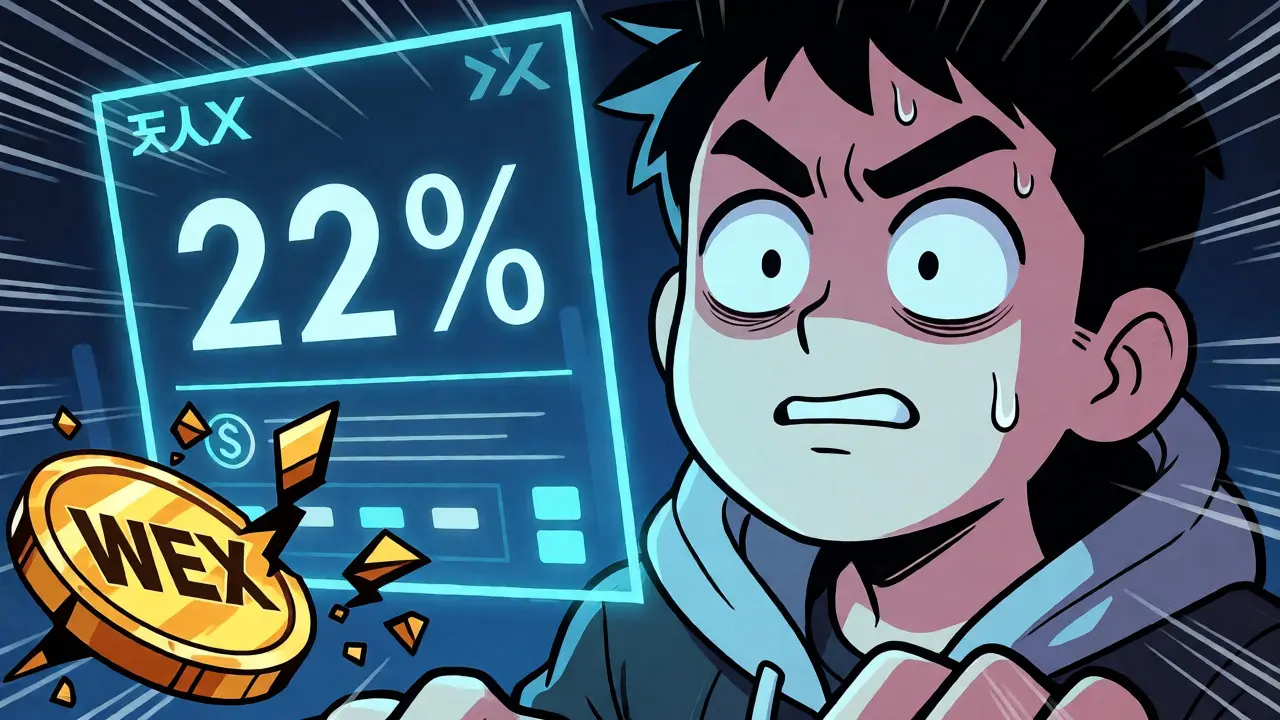
Imagine swapping a small amount of crypto and watching 22% of your value vanish into thin air due to slippage. That is the reality for many users trying to trade on WaultSwap today. While the platform promises ultra-low fees of just 0.17%, significantly cheaper than PancakeSwap’s 0.25%, the hidden cost is extreme liquidity risk. If you are hunting for the next big DeFi gem on the Binance Smart Chain (BSC), you need to look past the marketing gloss and examine the cold, hard data. As of late 2026, WaultSwap sits in a precarious position: it offers high theoretical yields but suffers from near-zero trading volume and stagnant development.
The Core Promise: Low Fees and High Yields
At its heart, WaultSwap is an automated market maker (AMM) built on the Binance Smart Chain. It operates as part of the broader Wault Finance ecosystem, which aims to be an "all-in-one" DeFi hub. The main draw for traders has always been the fee structure. By charging only 0.17% per swap, it undercuts major competitors like Uniswap (0.30%) and PancakeSwap (0.25%). For high-frequency traders or those moving large volumes, this marginal difference can add up.
Beyond swapping, the platform attracts yield farmers with its LP mining farms. Reports indicate annual percentage yields (APY) reaching up to 187%. Compare that to PancakeSwap’s typical 30-60% range, and the appeal is obvious. However, you must ask yourself: why are these yields so high? In DeFi, exceptionally high APYs often signal high inflationary pressure on the reward token or, more critically, extremely low liquidity depth. You aren't just earning rewards; you are being compensated for taking on significant smart contract and liquidity risks.
Liquidity Crisis: The Elephant in the Room
Here is where things get tricky. A decentralized exchange is only as good as its liquidity. Without deep pools, every trade moves the price dramatically. According to recent data from CoinCodex and CoinGecko, WaultSwap has only three active trading pairs: WEX/BUSD, WEX/BNB, and WEX/ETH. The 24-hour trading volume for each pair hovers below $5,000. To put that in perspective, PancakeSwap processes over $1.2 billion daily across thousands of pairs.
| Metric | WaultSwap | PancakeSwap | Uniswap (BSC) |
|---|---|---|---|
| Transaction Fee | 0.17% | 0.25% | 0.30% |
| Active Trading Pairs | 3 | 2,500+ | 1,000+ |
| Daily Volume | <$15,000 | $1.2 Billion | $50 Million+ |
| Market Cap Rank | #7865 | Top 50 | Top 100 |
This lack of depth creates a hostile environment for serious traders. Users report slippage rates averaging 15.7%, with some trades experiencing over 20% price impact even on small amounts. If you try to swap $100 worth of BNB for WEX, you might lose nearly $20 just to the spread before the transaction even confirms. This makes WaultSwap unusable for anything other than micro-speculative plays.
User Experience and Technical Hurdles
Getting started with WaultSwap isn't complicated if you already know how to use MetaMask or Trust Wallet. You simply connect your wallet, ensure you are on the BSC network (ChainID 56), and start swapping. But here is the catch: the user experience is buggy. Community feedback from Reddit and Telegram highlights frequent issues with failed transactions and missing token balances after successful swaps. Approximately 22% of new users report not seeing their tokens immediately, requiring manual contract addition to their wallets.
Support is another pain point. With a Telegram community that has shrunk from nearly 5,000 members to just over 1,200, real-time help is scarce. Average response times stretch to 8 hours on Telegram and 72 hours via email. If you encounter a stuck transaction, you are largely on your own. Unlike centralized exchanges or larger DEXs like PancakeSwap, there is no robust ticketing system or live chat support to rescue you when things go wrong.

Security and Development Activity
Wault Finance claims its smart contracts are fully audited, emphasizing safety as a top priority. While audits reduce the risk of basic coding errors, they do not eliminate all threats, especially given the platform's declining activity. The most concerning metric for any long-term investor is developer engagement. Data from GitHub shows zero commits in the last 90 days. The last major update occurred in early 2025, primarily fixing minor UI bugs rather than introducing new features.
The roadmap promised cross-chain functionality and institutional-grade security enhancements back in 2024. As of late 2026, these features remain unimplemented. This stagnation suggests the project may be entering a maintenance phase or, worse, abandonment. Industry analysts at Delphi Digital classify WaultSwap among "low-activity DEX projects at high risk of abandonment," citing a 92% probability of becoming completely inactive within 18 months based on historical trends of similar projects.
Tokenomics: The WEX Reality Check
The native token, WEX, serves as the governance and utility token for the platform. Its market cap is tiny-around $3,750 USD. This low valuation makes the token highly susceptible to manipulation. Market depth analysis shows only $382 available within 2% of the current price. A single whale selling could crash the price by double digits instantly.
Price predictions for WEX are wildly contradictory. Some models suggest a potential 300% ROI in the short term due to speculative volatility, while technical analysts predict a further 90% decline due to lack of volume and partnerships. There is no consensus because there is no consistent buying pressure. Most holders are early adopters who bought in during the 2021 bull run and are now holding onto bags hoping for a miracle pump that never seems to arrive.
Who Should Use WaultSwap?
So, who actually benefits from using WaultSwap in 2026? It is not for beginners. The learning curve involves managing gas fees, understanding slippage tolerance, and verifying contract addresses manually. It is also not for large-scale traders who care about execution quality.
You might consider it if:
- You are a die-hard yield farmer willing to accept high risk for potentially higher APYs on niche pools.
- You are speculating on a tiny market cap asset with very little capital ($10-$50).
- You have excess BNB and want to experiment with non-mainstream AMMs without caring much about losing a portion of your principal to slippage.
If you are looking for reliability, deep liquidity, and active development, stick to PancakeSwap or newer aggregators like 1inch. WaultSwap feels like a relic of the previous DeFi summer, surviving on inertia rather than innovation.
Final Verdict
WaultSwap (BSC) is a cautionary tale in the decentralized finance world. It checks the boxes for low fees and high yields, but fails on the fundamentals of liquidity, usability, and active development. The 0.17% fee saves you pennies, but the 20%+ slippage costs you dollars. With dwindling community support and stagnant code, the platform poses a significant risk of abandonment.
Before connecting your wallet, ask yourself: is the potential extra yield worth the hassle of failed transactions and the anxiety of illiquid markets? For most users, the answer is likely no. Keep your funds on established platforms unless you are specifically targeting a unique farming opportunity that WaultSwap uniquely offers-and even then, proceed with extreme caution.
Is WaultSwap safe to use?
While the smart contracts are audited, the platform carries high operational risk due to low liquidity and stagnant development. Users frequently report failed transactions and missing tokens, so always test with small amounts first.
Why is slippage so high on WaultSwap?
Slippage is high because of extremely low liquidity depth. With only three active trading pairs and minimal daily volume, even small buy or sell orders significantly move the price against you.
Does WaultSwap require KYC?
No, WaultSwap is a decentralized exchange (DEX) and does not require Know Your Customer (KYC) verification. You connect directly via a Web3 wallet like MetaMask or Trust Wallet.
What is the WEX token used for?
WEX is the governance and utility token for WaultSwap. It is used for voting on proposals, paying reduced transaction fees, and participating in liquidity mining rewards.
Is WaultSwap better than PancakeSwap?
Generally, no. PancakeSwap offers vastly superior liquidity, more trading pairs, better user experience, and active development. WaultSwap only wins on marginally lower transaction fees, which are often negated by high slippage.
Chukwunanu Sunday
October 26, 2026 AT 17:25Chill read man. The data speaks for itself, no need to hype it up or trash it unnecessarily. Just facts about the liquidity crunch and why yields look pretty on paper but bleed you dry in practice. Stay safe out there fam 🌿
Mark Regan
October 27, 2026 AT 22:29Oh wow, another "low fee" scam disguised as a DEX?? 🙄 I am literally shaking with excitement over saving 0.08% while losing my entire shirt to slippage!! 💸 Who actually designed this interface? Did they just throw spaghetti at the wall and hope it stuck?? 🍝 It is absolutely hilarious that anyone thinks this is viable in 2026 when PancakeSwap exists!!! 😂👏🔥
Ellie Probus
October 29, 2026 AT 11:35I AM SO ANGRY ABOUT THIS!!! 😡😡😡 I lost like $50 trying to swap some random altcoin last week because of THAT STUPID SLIPPAGE!!! 🤬🤬🤬 Why are we even talking about this garbage platform??? 🇺🇸🇺🇸🇺🇸 America deserves better DEXs!!! 🦅🦅🦅 This thing is basically dead and nobody told us!!! 💀💀💀
Ryan Hall
October 30, 2026 AT 12:18It’s draining. You spend energy hoping for yield, get drained by fees and slippage, and feel empty. 🧛♂️ Sad reality.
Anshu Raj
October 31, 2026 AT 07:11they probably rug pulled already but dont want to admit it... the dev team is likely offshore and hiding... watch the github commits drop to zero again... its all rigged...
Jamie Robb
October 31, 2026 AT 09:27honestly idk why people still bother w/ this. i tried it once n got confused af. tokens didn't show up for hrs. felt like a waste of time. gas fees were weird too. kinda sus imo. just stick to pancakeswap tbh. way less headache.
Grace Glandy
November 1, 2026 AT 09:43Hey everyone! ✨ While the risks are real, don't let fear paralyze your learning journey! Every trader has to start somewhere, right? Maybe use WaultSwap as a sandbox environment to understand how thin liquidity impacts price action without risking your life savings! 🚀 It's not about winning every trade, it's about understanding the mechanics! Keep pushing forward, warriors! 💪🔥
Dr. Abhishek Upadhyay
November 2, 2026 AT 08:22The technical debt here is catastrophic!! 📉 Zero commits in 90 days is a death sentence for any DeFi protocol!! The audit is worthless if the codebase is abandoned!! Liquidity providers are essentially exit liquidity for early whales!! Do not touch this with a ten-foot pole unless you enjoy donating money to ghosts!! 👻💸
Manish Pudasaini
November 3, 2026 AT 14:58The analysis is accurate. One must acknowledge that low transaction fees do not equate to low total cost of ownership. Slippage acts as a hidden tax. If the spread exceeds the fee differential, the user loses capital. Therefore, rational actors should avoid this venue for anything other than micro-transactions. The lack of development activity further confirms its obsolescence.
Brian Klidies
November 5, 2026 AT 01:15I appreciate the detailed breakdown. It helps to see the numbers laid out clearly so users can make informed decisions based on their own risk tolerance rather than just chasing high APYs blindly.
Drew Lemmy
November 6, 2026 AT 12:37Thank you for sharing this perspective. It is helpful for those of us who might be new to the ecosystem to understand the nuances between fee structures and actual execution costs. We value community insights like these.
Jack Denter
November 7, 2026 AT 08:11Bro this is wild 🤯🤯 I had no idea the volume was THAT low 😱😱 Like $5k daily??? That's nothing lol 🤣🤣 But hey, sometimes you find gems in the dust 💎💎 Gotta stay open minded! 🌈✨ Peace! ✌️✌️
Joy Joseph
November 9, 2026 AT 07:33This review provides a comprehensive assessment of the current state of WaultSwap. It is imperative that investors conduct thorough due diligence before allocating capital. The disparity between advertised yields and realized returns is significant. Prudence dictates caution in such volatile environments.
Samantha McClafferty
November 10, 2026 AT 04:59LISTEN UP!! 👂 Don't let the shiny APY blind you!! 🚫👀 If you are farming, check the TVL weekly!! 📉 If it drops, GET OUT!! 🏃♀️💨 Don't be stubborn!! Your capital preservation is more important than being right!! Learn from others' mistakes so you don't have to make them yourself!! YOU GOT THIS!! 💪🔥
Ankush Goyal
November 11, 2026 AT 14:48One must ask oneself: Is the potential reward worth the stress???. Absolutely not!!!!. The moral hazard of chasing inflated yields in illiquid markets is profound!!!!. True wealth is built on stability, not gambling on dying projects!!!!. End of discussion!!!!. 🙏🙏🙏
Raman Tiwari
November 12, 2026 AT 07:18Wow, this is incredibly insightful!! 🤩 I never realized how much the liquidity depth impacted the effective fee structure!! 🤯 It really makes me wonder if there are other hidden costs in seemingly cheap platforms!! 🕵️♂️ Thank you for shedding light on this!! 🙏✨
Edington Vernita
November 13, 2026 AT 06:54I respect the differing opinions here. Some prefer the control of smaller DEXs despite the friction, while others prioritize ease of use. Both approaches have merit depending on individual strategy and risk appetite. Let's keep the discussion respectful.