What Crypto Exchanges Are Banned in China?
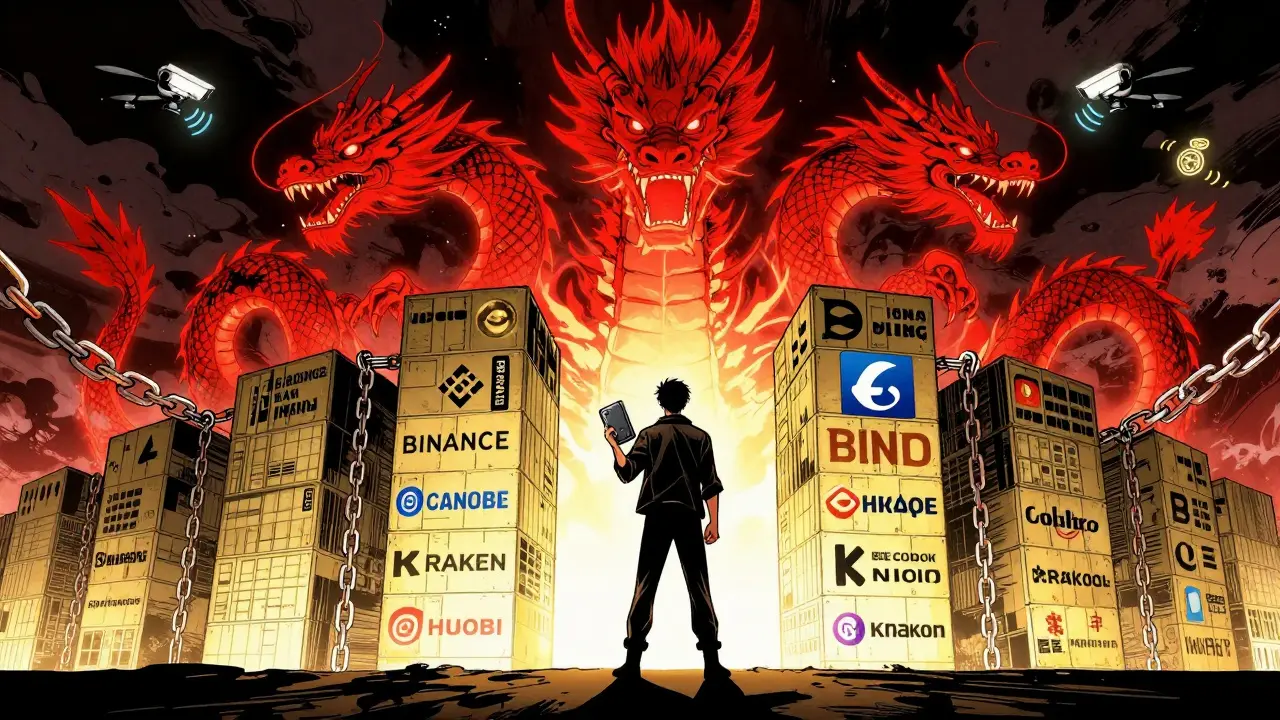
China doesn't just discourage cryptocurrency trading-it blocks it. Since 2017, the Chinese government has systematically shut down access to every major centralized crypto exchange operating within its borders. By 2021, the ban became total: no Binance, no Coinbase, no Kraken, no Huobi. Not even through VPNs. Not even with offshore accounts. The rules are clear, and enforcement is getting tighter.
What Exchanges Are Actually Banned?
The list isn't long, but it's complete. All centralized exchanges that once served Chinese users are now officially blocked. That includes the biggest names: Binance is the world's largest crypto exchange by volume, which was shut down in China after failing to comply with local licensing rules. Also known as Binance.com, it has been inaccessible to mainland users since 2021.
Coinbase is a U.S.-based exchange that stopped onboarding new Chinese customers in 2021 and removed all local payment methods. The company now explicitly states in its terms that Chinese residents are not permitted to use its services.
Kraken is a U.S. exchange that fully complied with China’s 2021 ban by restricting IP access and freezing accounts tied to Chinese identification.
Huobi is originally founded in China, but after the 2017 ban, it relocated its operations overseas and ceased serving mainland users.
Even lesser-known platforms like OKX, Gate.io, and Bitget are blocked. The government doesn’t publish an official list-instead, it uses automated systems to detect and block any exchange that allows Chinese users to register with local ID cards or bank accounts.
How the Ban Works
It’s not enough to just block websites. China’s system is layered.
The Great Firewall is a national internet censorship system that filters and blocks access to foreign websites, including all major crypto exchanges. If you try to visit Binance from a Chinese IP address, you’ll get a connection error before the page even loads.
Then there’s the financial wall. The People’s Bank of China (PBOC) is China’s central bank, which issued directives in 2021 prohibiting all financial institutions from providing services to cryptocurrency exchanges. Banks can’t process payments to or from crypto platforms. Credit cards, Alipay, and WeChat Pay are all cut off.
And if you try to bypass the firewall with a VPN? That’s risky too. Internet service providers are ordered to detect and throttle VPN traffic. Many users report sudden slowdowns or complete disconnections when using tools like NordVPN or ExpressVPN.
Even more chilling: Chinese authorities now monitor KYC data. If you used your Chinese ID to sign up for a foreign exchange-even years ago-your account can be flagged. In 2024, multiple reports emerged of users having their crypto wallets frozen after authorities traced their real-world identity through old registration records.
Is It Illegal to Own Crypto in China?
This is where confusion creeps in. In 2025, rumors spread online that China had made crypto ownership illegal. Posts claimed, "China bans holding Bitcoin as of May 31, 2025." But that’s false.
There has been no new law since 2021. The original ban targets trading and exchanges, not personal possession. You can still hold Bitcoin in a private wallet. You can still receive crypto as a gift. You can still mine it-though mining was banned outright in 2021, and any hardware found is confiscated.
Fact-checkers from Bitcoin Junkies and Grok confirmed in August 2025 that the "new ban" claims were recycled from 2021. No official government document, press release, or court ruling supports the idea that owning crypto is now a crime.
But here’s the catch: if you trade it, convert it to fiat, or use it to send money abroad, you’re violating laws against illegal fundraising and capital flight. Those are serious offenses. In 2023 alone, Chinese courts handled over 300 cases related to crypto transactions, with sentences ranging from fines to prison time.

What Are People Doing Instead?
Despite the ban, demand for crypto hasn’t disappeared. It’s just gone underground.
Over-the-counter (OTC) trading is thriving. Chinese users now meet in private Telegram groups or use peer-to-peer platforms like LocalBitcoins and Paxful to buy and sell crypto directly. Sellers often take cash, bank transfers, or even gift cards.
Decentralized exchanges (DEXs) like Uniswap and PancakeSwap are seeing increased traffic from China. Since these platforms don’t require KYC and operate on public blockchains, they’re harder to block. But they come with risks: scams are common, liquidity is thin, and there’s no customer support.
Some users set up offshore corporate structures-using Hong Kong, Singapore, or even U.S.-based LLCs-to open bank accounts and access exchanges. But this is expensive, legally murky, and increasingly monitored. Authorities have started tracking foreign bank accounts linked to Chinese nationals.
One Reddit user from Shenzhen told a journalist in early 2025: "I keep 3 Bitcoin in a hardware wallet. I don’t trade. I don’t talk about it. I just wait. If the ban lifts, I’ll be ready. If not… I’ll still have it."
The Economic Impact
China’s ban didn’t just affect users-it shook global markets.
Before the 2021 crackdown, Chinese traders accounted for nearly 30% of global Bitcoin volume. After the ban, trading volumes dropped sharply. Markets like Binance and Kraken saw revenue losses in the billions.
When rumors of a new ban surfaced in May 2025, Bitcoin dropped from $111,000 to under $104,000 in under two hours. Ethereum fell 7%. The panic wasn’t caused by a real policy change-it was triggered by fear. But it showed how much weight China’s market still carries, even when it’s officially out.
Stablecoins like USDT surged as people looked for digital assets that could hold value without triggering regulators. China now accounts for 40% of global USDT trading volume, mostly through OTC channels.
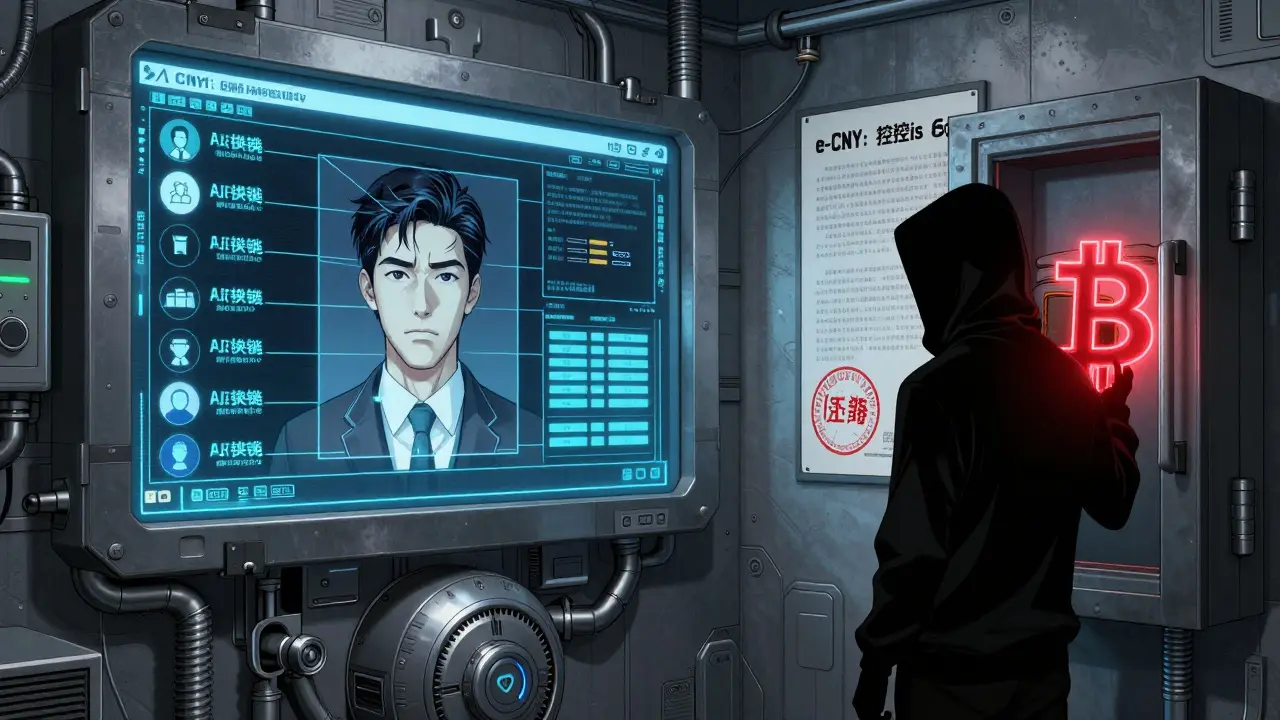
Meanwhile, China is building its own alternative: the e-CNY, or digital yuan. This isn’t crypto. It’s a government-controlled digital currency with full traceability. Every transaction is monitored. Every wallet is linked to identity. It’s the opposite of Bitcoin’s philosophy-but it fits China’s goal: total financial control.
What’s Next?
Will China lift the ban? Most experts say no.
The PBOC and State Council have shown no interest in reversing course. Even in July 2025, when the Shanghai State-owned Assets Supervision and Administration Commission hinted that "digital asset evolution might lead to policy softening," no timeline, no proposal, no draft law followed.
Instead, China is doubling down on surveillance. New AI systems launched in 2024 can now detect crypto transactions across multiple blockchain networks and link them to real-world identities. Facial recognition is being integrated into wallet monitoring systems.
Some analysts think China might one day allow trading on state-approved exchanges-think of them as "crypto ETFs" under government control. But that’s not legalization. It’s nationalization.
For now, the ban stands. Over 200 exchanges are blocked. 400 million potential users are locked out. And enforcement is getting smarter, not softer.
What Should You Do If You’re in China?
If you’re a resident: don’t risk it. Don’t sign up for foreign exchanges. Don’t use your Chinese ID. Don’t link your bank account. Don’t trade. The penalties aren’t worth it.
If you’re outside China but hold crypto tied to a Chinese identity: consider moving your assets to a wallet with no KYC history. Update your contact info. Remove any links to Chinese banks or addresses.
If you’re just curious: understand this isn’t about technology. It’s about control. China doesn’t fear Bitcoin. It fears losing power over money. And that’s not going to change anytime soon.
Are all crypto exchanges banned in China?
Yes. All centralized exchanges that allow Chinese users to register with local identification or bank accounts are banned. This includes Binance, Coinbase, Kraken, Huobi, OKX, and more. The government blocks access automatically, and financial institutions are forbidden from supporting them.
Is it illegal to own Bitcoin in China?
No, owning Bitcoin or other cryptocurrencies is not illegal. The ban targets trading platforms and financial services-not personal possession. However, if you trade, convert crypto to fiat, or send money abroad using crypto, you could face legal consequences under laws against capital flight or illegal fundraising.
Can I use a VPN to access crypto exchanges in China?
Technically, yes-but it’s risky. Many VPN services are blocked or throttled by Chinese ISPs. Using one to access crypto exchanges can trigger government monitoring. Accounts linked to Chinese IDs may be frozen, and repeated attempts could lead to investigations. It’s not recommended.
Why did China ban crypto exchanges?
China’s government wants full control over its financial system. Crypto threatens that control because it operates outside banks, avoids capital controls, and enables anonymous transactions. The ban was also meant to prevent capital flight, financial instability, and illegal fundraising through ICOs.
What is the e-CNY, and how is it different from Bitcoin?
The e-CNY, or digital yuan, is China’s state-backed digital currency. Unlike Bitcoin, it’s fully controlled by the People’s Bank of China. Every transaction is tracked, and users must link it to their real identity. It’s not decentralized-it’s designed to replace cash, not compete with crypto.
Are there any signs China might lift the ban?
No credible signs exist. While some officials have hinted that digital asset innovation might lead to policy adjustments, no laws have changed, and no proposals have been published. Experts believe any future change would involve state-controlled platforms-not open exchanges. The ban is expected to remain in place through 2026 and beyond.
prasanna tripathy
March 7, 2026 AT 15:02Been watching this play out for years. China’s move isn’t about fear of crypto-it’s about control. They don’t want people holding assets outside their system. Bitcoin’s decentralization is a threat not because it’s volatile, but because it’s untrackable. The e-CNY? That’s not innovation. That’s surveillance with a better UI. 🤷♂️
Issack Vaid
March 8, 2026 AT 22:50Let me guess-you think the ban is about financial control? Nah. It’s about power. The moment people realize money doesn’t need permission, the whole pyramid scheme of centralized authority starts to crack. China’s not banning crypto because it’s dangerous. They’re banning it because it’s *liberating*. And that’s scarier than any hack or rug pull.
Meanwhile, the rest of the world’s still stuck in the "regulation = safety" delusion. Wake up. This isn’t about compliance. It’s about who holds the keys.
Megan Lutz
March 9, 2026 AT 01:20Just to be clear: owning Bitcoin isn't illegal. Trading it? Yeah, that’s where the line is. And honestly? That’s a weirdly specific distinction. You can hold a gun in your home in some states, but you can’t use it to rob a bank. Same logic. The state doesn’t care what’s in your wallet-it cares what you do with it. Stop conflating possession with activity.
Leah Dallaire
March 9, 2026 AT 02:57Everyone’s acting like China’s the villain here. What about the US? The SEC bans crypto tokens like they’re contraband. The Fed’s printing money like it’s Monopoly. The real crime isn’t holding Bitcoin-it’s trusting any government to manage money. China’s just more honest about it. They don’t pretend to care about your freedom. They just take it.
And don’t get me started on the e-CNY. That’s not digital currency. That’s a behavioral tracking device with a blockchain veneer. You think your transactions are private? Try using it to buy a book on anarchism. See how fast your account gets flagged.
jonathan swift
March 10, 2026 AT 17:05LOL the "ban" is just a rumor. I’ve been in Shenzhen for 3 years. My buddy buys BTC via WeChat Pay from a guy who works at a crypto mining farm in Inner Mongolia. No one cares. The cops? They’re too busy chasing TikTok influencers. The ban? It’s theater. Like when your mom says "no candy" but you still get it at grandma’s.
Also, e-CNY? That’s just PayPal with a Chinese flag. I’d rather have 0.01 BTC than 1000 e-CNY. 🤡
Nick Greening
March 10, 2026 AT 18:01China banned exchanges because they’re centralized. But guess what? They’re now building their own centralized digital currency. So they’re not anti-crypto. They’re anti-decentralization. They want control. They don’t want people to have money outside their system. That’s the real story. Bitcoin’s not the enemy. Freedom is.
And if you think the e-CNY is "different" from crypto, you haven’t read the PBOC white papers. It’s not just traceable-it’s programmable. You can’t spend it on "unapproved" goods. Think of it as a debit card with a built-in nanny state.
Meanwhile, the West is pretending we’re in a free market. We’re not. We’re just more polite about the leash.
Rachel Rowland
March 11, 2026 AT 15:09OTC trading is booming. I know people in Guangzhou who trade crypto with cash in parking lots. No KYC. No trace. Just hand-to-hand. It’s wild. And honestly? It’s more honest than using a bank. You know exactly who you’re dealing with. No middleman. No algorithm. Just people.
And yeah, the government’s watching. But people are adapting. They’re using burner phones. They’re meeting in temples. They’re trading gift cards for ETH. The system’s not perfect-but it’s alive. And that’s more than you can say for the e-CNY.
Jackson Dambz
March 13, 2026 AT 01:49I read the whole thing. Boring. China bans crypto. Big deal. So does every authoritarian regime. This isn’t news. It’s a Wikipedia page with extra paragraphs. Why are we still talking about this in 2025? The future’s on-chain. The past is just noise.
Shawn Warren
March 13, 2026 AT 16:10Let me state this clearly. The Chinese government is not against innovation. It is against unpredictability. Crypto is unpredictable. The e-CNY is not. That is the entire difference. You cannot control what you cannot track. And China wants total control. That is not evil. That is efficiency. The West fears what it cannot manage. China does not. They simply build what they need.
Stop romanticizing decentralization. It is not moral. It is merely inconvenient for governments. And governments always win.
Ethan Grace
March 14, 2026 AT 05:17They banned crypto because they’re afraid of what happens when people stop trusting the system. Not because Bitcoin’s volatile. Not because it’s a bubble. But because it proves that money doesn’t need kings. And that’s the real threat. The state doesn’t fear hackers. It fears philosophers.
Every time someone in Chengdu buys BTC with cash, they’re not just investing. They’re saying: "I don’t need your permission." And that? That’s a revolution in tiny, quiet steps.
One day, they’ll look back at this ban and realize: it didn’t stop crypto. It just made it more human.
Jesse VanDerPol
March 14, 2026 AT 07:08Interesting. I wonder how many of the people using OTC or DEXs are just trying to protect savings from inflation. Not rebellion. Not ideology. Just survival. Maybe the real story isn’t about freedom. Maybe it’s about people trying to keep what little value they have left.
James Burke
March 14, 2026 AT 19:03Look, I get why people are angry. But let’s not pretend China’s the only one doing this. The U.S. froze Russian crypto assets. The EU is pushing CBDCs. Even Canada’s cracking down on DeFi. This isn’t a China thing. It’s a control thing. And the real question isn’t "Will they lift the ban?" It’s "Will we ever get back to real financial freedom?"
Maybe the answer isn’t in Bitcoin. Maybe it’s in how we talk to each other about money. Without fear. Without flags. Just truth.