What is a Public Blockchain Network? A Complete Guide for 2026
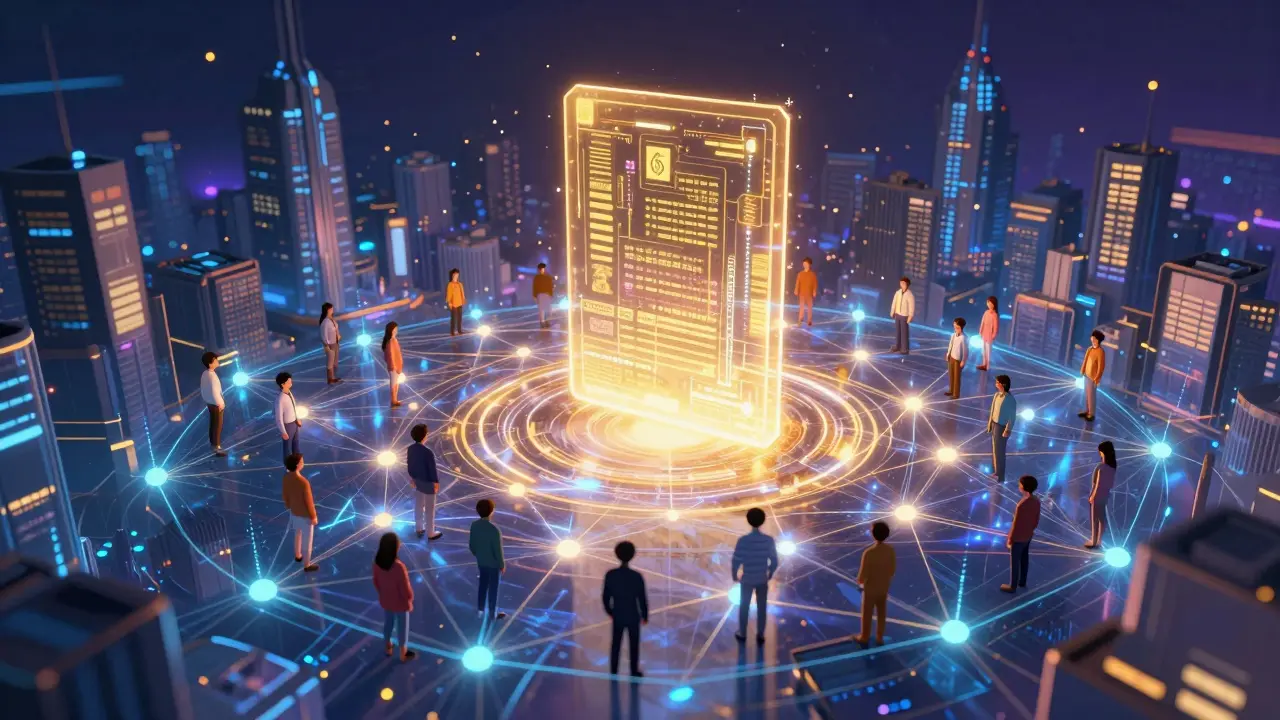
Imagine a global ledger that no single person, company, or government owns, but everyone can see and trust. That is the core of a public blockchain network is a permissionless, decentralized distributed ledger system that allows anyone to participate, verify transactions, and access the entire history of data without needing a central authority's approval. It is the invisible engine powering everything from Bitcoin to the complex world of DeFi.
For most of history, we relied on "middlemen"-banks, lawyers, or government registries-to prove that a transaction happened. If you sent money, the bank verified it. If you bought a house, the government recorded the deed. Public blockchains flip this model on its head by replacing a central authority with a global community of computers (nodes) that agree on the truth using math and cryptography.
How a Public Blockchain Actually Works
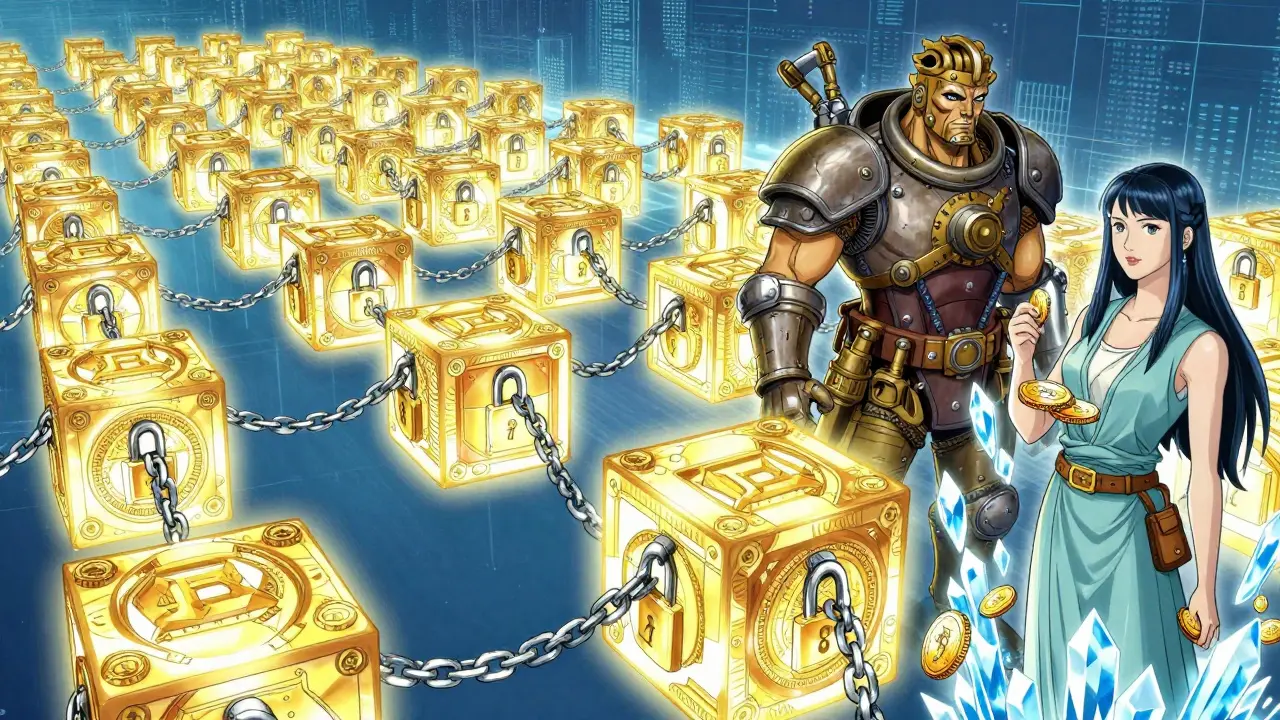
The name isn't just a fancy term. Data is literally grouped into blocks, which are then cryptographically linked together in a chronological chain. Once a block is added to the chain, changing the information inside it is nearly impossible because you would have to redo the work for every single block that came after it. This creates a property called immutability.
To keep the network honest without a boss in charge, public blockchains use a consensus mechanism a fault-tolerant process used in blockchain systems to achieve agreement on a single data value among distributed processes . The two most common versions are:
- Proof of Work (PoW): Used by Bitcoin. Miners use powerful hardware to solve complex puzzles. This is incredibly secure but consumes a lot of energy-Bitcoin's annual usage has been compared to the electricity consumption of Argentina.
- Proof of Stake (PoS): Used by Ethereum (since the 2022 Merge). Instead of mining, participants "stake" their own coins to earn the right to validate transactions. It is significantly more energy-efficient and faster.
Every user interacts with the network using public-key cryptography a cryptographic system that uses pairs of public keys which may be shared and private keys which are kept secret . Your public key is like your email address-anyone can send things to it. Your private key is like your password; if you lose it, your assets are gone forever, as there is no "forgot password" button on a decentralized network.
Public vs. Private Blockchains: What's the Difference?
Not all blockchains are created equal. While public networks are open to everyone, private (or permissioned) blockchains are restricted. Think of a public blockchain as a public park where anyone can enter, and a private blockchain as a corporate office where you need an ID badge to get through the door.
| Feature | Public Blockchain | Private Blockchain | Consortium Blockchain |
|---|---|---|---|
| Access | Open to anyone | Restricted (Single Org) | Restricted (Group of Orgs) |
| Speed (TPS) | Slow (e.g., 7-30 TPS) | Very Fast (10,000+) | Fast (1,000-2,000) |
| Decentralization | High | Low | Medium |
| Transparency | Full (Publicly Auditable) | Low (Internal) | Partial (Shared) |
If you need absolute transparency and resistance to censorship-like when sending money across borders without a bank-a public network is the only choice. However, if a company needs to share supply chain data with a few trusted partners while keeping the rest of the world out, they would likely choose a private or consortium setup.
Real-World Use Cases and Practical Value
Public blockchains aren't just for trading coins. They are the foundation for several massive shifts in how we handle value and data:
Financial Sovereignty: People in countries with unstable currencies or limited banking access can use public blockchains to save and send money. For example, users have documented saving thousands in remittance fees by bypassing traditional wire transfers, even if the transaction takes an hour to fully confirm.
Decentralized Applications (dApps): Using Ethereum a decentralized, open-source blockchain with smart contract functionality , developers build apps that don't have a central server. These power Decentralized Finance (DeFi), where you can lend or borrow assets without a bank manager approving your loan.
Digital Ownership: Non-Fungible Tokens (NFTs) allow for the verification of unique digital assets. Because the public blockchain records every transfer, you can prove you own a specific piece of digital art or a game item without relying on the game developer's database.
The Hard Truth: Trade-offs and Limitations
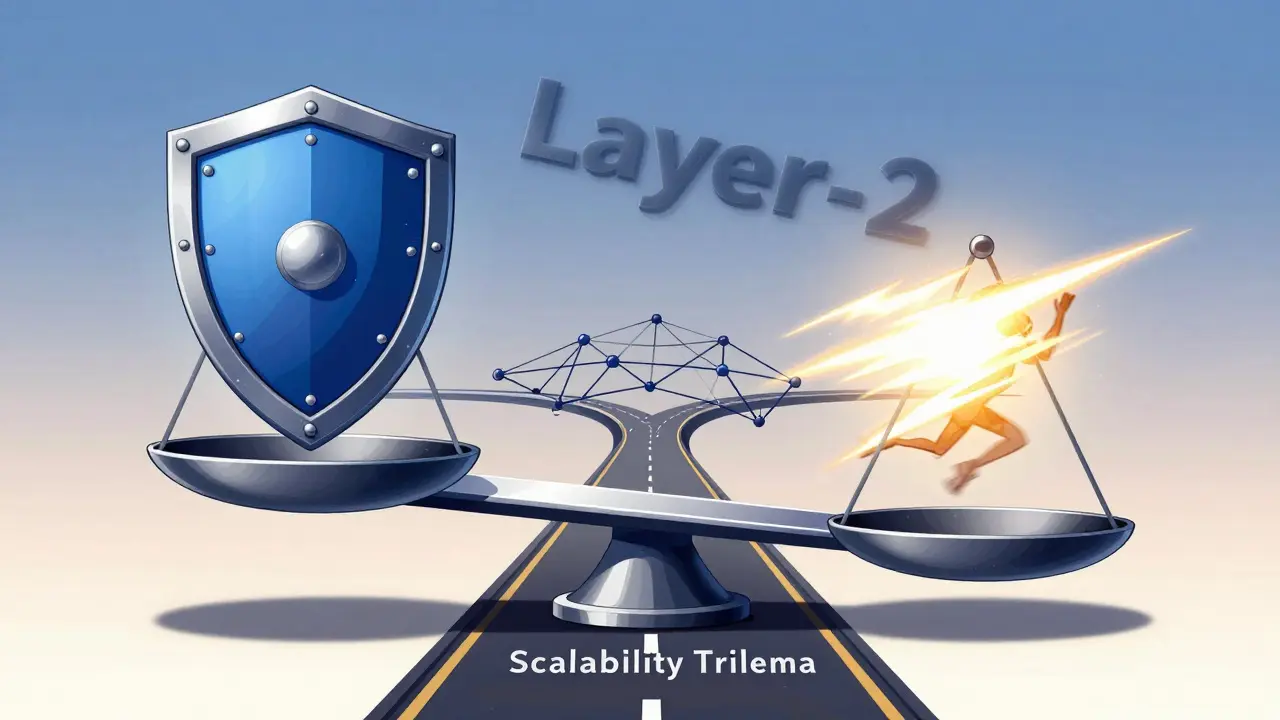
It sounds like a utopia, but public blockchains have significant "growing pains." The biggest issue is the Scalability Trilemma: the idea that you can't have perfect security, total decentralization, and high speed all at once.
For instance, Bitcoin is incredibly secure and decentralized, but it only processes about 7 transactions per second. Compare that to Visa, which handles 65,000 TPS. If the whole world used Bitcoin for coffee, the network would grind to a halt. This is why we see the rise of Layer-2 scaling solutions Secondary frameworks or protocols built on top of an existing blockchain to improve speed and reduce cost like rollups. These handle the bulk of the transactions off the main chain and only post the final result to the public ledger, acting like a "tab" at a bar instead of paying for every single drink individually.
Then there is the cost. When a network gets crowded, users enter a bidding war to get their transaction processed first. This results in "gas fees." During the NFT craze of 2021, some users spent $50 just to mint a single piece of art because the network was so congested.
How to Get Started (and Avoid Pitfalls)
If you want to interact with a public blockchain, you don't need to be a coder. You can use a wallet (like MetaMask or Coinbase Wallet) to hold assets. But if you are a developer or a power user, there are higher hurdles:
- Running a Node: To truly verify the network yourself, you can run a full node. This requires significant hardware-usually a 2TB SSD and 16GB of RAM. Be prepared: syncing the entire Bitcoin history can take several days.
- Learning the Language: If you want to build dApps, you'll need to learn Solidity A contract-oriented, high-level programming language used for implementing smart contracts on Ethereum . Most developers report needing 6 to 9 months of dedicated study to master it.
- Key Management: The most critical rule is to never share your private key or seed phrase. Billions of dollars have been lost because users stored their keys in emails or screenshots that were then hacked. Use a hardware wallet (cold storage) for any significant amount of money.
The Future of Public Networks
We are moving toward a world where the "base layer" of the blockchain is just a settlement layer. Most users won't even know they are using a blockchain; they will interact with fast, cheap apps that settle their data on a public network in the background. Projects like Danksharding aim to push Ethereum toward 100,000 TPS, which would put it in the same league as traditional payment processors.
We are also seeing a push toward quantum-resistant cryptography. Since public blockchains rely on math that today's computers can't solve, the advent of powerful quantum computers could potentially threaten the security of private keys. Leading researchers are already developing upgrades to ensure the chain remains unhackable by 2028 and beyond.
Is a public blockchain the same as a cryptocurrency?
No. The blockchain is the underlying technology (the ledger), while the cryptocurrency is the digital asset that lives on that ledger. Think of the blockchain as the internet and the cryptocurrency as the websites or emails that move across it.
Can a public blockchain be shut down?
It is nearly impossible to shut down a truly decentralized public blockchain. Because the data is mirrored across thousands of independent nodes worldwide, there is no single server to unplug. To stop the network, you would have to shut down every single participating computer on Earth simultaneously.
Why are transaction fees so high sometimes?
Public blockchains have limited space in each block. When thousands of people try to send transactions at once, they compete for that limited space by offering higher fees to validators. This "priority fee" system ensures the network doesn't crash, but it makes it expensive for the user during peaks.
Who controls a public blockchain?
No one entity controls it. Instead, the network is governed by a set of rules (the protocol) that the community agrees upon. If a major change is needed, the community must reach a consensus. If they can't agree, the network can "fork," creating two different versions of the blockchain.
Is my identity public on a public blockchain?
Public blockchains are pseudonymous, not anonymous. Your name isn't attached to your wallet, but your wallet address is. Since the entire ledger is public, anyone can see every transaction tied to that address. If someone links your real-world identity to your wallet address, your entire financial history on that chain becomes public knowledge.
Joshua Aldrich
April 6, 2026 AT 05:18The scalability trilema is really the crux of the whole thing. Most people dont get that you cant just add more nodes to make it faster, actually sometimes more nodes can slow down consensus if the network latency is too high. its like trying to get 10,000 people to agree on a pizza topping... it takes forever lol.
Hugo Lopez
April 7, 2026 AT 13:15This is such a helpful breakdown! 🌟 I love how it explains the difference between PoW and PoS so clearly. Decentralization really is the future of trust! ✨
Earnest Mudzengi
April 9, 2026 AT 04:17Wake up people!! This "decentralization" is just a front for the globalist shadow government to track every single Satoshi you move via metadata analysis. They want you on-chain so they can implement a Social Credit System using smart contracts that auto-freeze your funds the second you say something unpatriotic. It's all a honeypot for the deep state's quantum computing arrays to crack our keys by 2028 just like they planned. The so-called "public" nature is just a psychological operation to make you feel in control while the whales manipulate the liquidity pools from their bunkers in Switzerland!
Susan Wright
April 10, 2026 AT 08:54If anyone is struggling with the hardware requirements for a full node, just look into pruned nodes. You don't actually need to keep the entire history of every block since the beginning of time to verify new transactions, which saves a ton of disk space.
Deepak Prusty
April 11, 2026 AT 22:06Actually, the comparison of Bitcoin's energy use to Argentina is a widely debunked metric because it ignores the massive amount of stranded energy and methane capture used by modern miners.
sekhar reddy
April 12, 2026 AT 01:04Omg the gas fees in 2021 were literally a nightmare!! I tried to mint one tiny jpeg and I basically paid for a whole dinner for two just in fees!!! Absolute madness it was!! 😱
Trish Swanson
April 13, 2026 AT 08:25L2s are the only way forward!!! Without them, public chains are just fancy databases for billionaires!!!
Emma Pease-Byron
April 14, 2026 AT 23:45Oh, how quaint. The idea that the average user will actually manage their own private keys without losing them in a week is truly touching. I'm sure the "financial sovereignty" will be great right up until a million people send funds to the wrong address because they can't handle a 64-character string.
Diana Martín Prieto
April 15, 2026 AT 18:37I've seen a lot of newcomers struggle with the seed phrase part. Just a tip: never, ever store it in a cloud service. I always recommend writing it on a piece of fireproof paper and keeping it in a physical safe. It seems old school, but it's the only way to be truly secure against remote hacks.
Carmelita Gonzales
April 16, 2026 AT 07:36it's interesting how this tech can help people in places with high inflation just to keep their savings safe
Arwyn Keast
April 17, 2026 AT 09:38Typical American optimism about these digital tokens. The systemic risk of a flash loan attack on a DeFi protocol is completely ignored here. It's all just jargon and hype until the liquidity vanishes in a black swan event and the retail traders are left holding the bag while the architects vanish.
Siddharth Bhandari
April 19, 2026 AT 09:15Regarding the quantum resistance mentioned, most of the research is focusing on Lamport signatures and other hash-based schemes. It's a complex migration, but perfectly feasible if the community agrees on a hard fork.
alex rodea
April 21, 2026 AT 02:51Keep it simple folks. Just get a hardware wallet and don't share your keys. You got this!
Susan Payne
April 21, 2026 AT 22:51The sheer audacity of believing that a "community consensus" can replace professional institutional oversight is laughable. One cannot simply replace a regulated bank with a group of anonymous computers and expect stability in a global economy.
Matthew Wright
April 22, 2026 AT 21:02The distinction between pseudonymous and anonymous is so critical... a lot of people think they're invisible until they link their KYC exchange account to their on-chain wallet!!! Then the tax man knows everything!!!
Suzanne Robitaille
April 23, 2026 AT 04:30Imagine a world where we truly own our digital identities without a corporate entity acting as the gatekeeper! It's a poetic shift in the power dynamic of the internet!
akash temgire
April 24, 2026 AT 14:53TPS numbers are misleading. Many chains claim 100k TPS but only in theoretical testnets. Real-world mainnet congestion is the only metric that matters.
Evan Borisoff
April 24, 2026 AT 18:42The geopolitical implications of a non-sovereign currency are staggering, especially when you consider the erosion of the dollar's hegemony through the proliferation of permissionless settlement layers that bypass the SWIFT system entirely, effectively neutralizing the efficacy of economic sanctions imposed by the treasury.
Nicholas Whooley
April 25, 2026 AT 23:00It is wonderful to see such an inclusive guide for those who may feel intimidated by the technical jargon. We are all learners in this space, and the path to decentralization is open to everyone who wishes to participate with a spirit of cooperation.
Brooke Herold
April 26, 2026 AT 18:00I appreciate the clarity on dApps. It's nice to see how the tech can be used for more than just speculation.