What is Axelrod by Virtuals (AXR)? A Deep Dive into the AI Hedge Fund Token
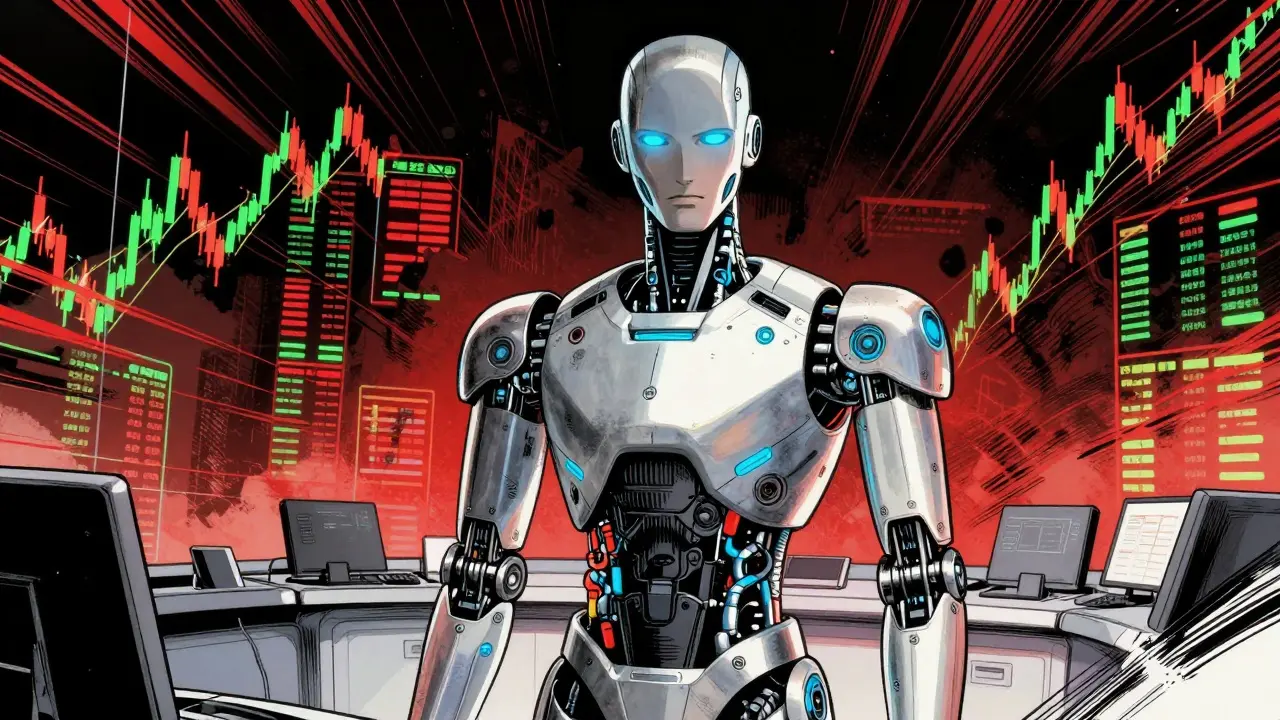
Imagine a trading partner that never sleeps, never panics during a market crash, and never gets greedy during a bull run. That is the promise behind Axelrod by Virtuals, an artificial intelligence agent designed to manage cryptocurrency portfolios without emotional bias. But before you buy in, you need to understand what this token actually does, how it works, and why its price swings so wildly. This guide breaks down the mechanics of the AXR token, the technology powering it, and the real risks involved in holding this micro-cap asset.
The Core Concept: An AI-Native Hedge Fund
AXR is not just another speculative meme coin or a standard utility token. It positions itself as the flagship agent of AIxVC, which functions as an AI-native hedge fund manager. The primary goal is simple but ambitious: eliminate human emotional errors from trading decisions. In traditional finance, fear and greed often lead investors to sell at the bottom or buy at the top. Axelrod aims to remove these variables by executing strategy-based, risk-adjusted allocations within decentralized finance (DeFi) ecosystems.
The project was developed by Virtuals Protocol, a platform described as a society of productive AI agents. These agents are designed to generate services or products and autonomously engage in on-chain commerce. Within this ecosystem, AXR serves as the default currency for these AI interactions. Think of it less like a stock and more like fuel for a network of autonomous financial managers that trade on your behalf or collaborate with other specialized agents.
How the Technology Works: MCP and ACP
To understand if Axelrod delivers on its promises, we have to look under the hood. The token operates on two core protocols that form its technical backbone:
- Model Context Protocol (MCP): This acts as the cognitive engine of Axelrod. It maintains context across various AI models, allowing the system to adapt to evolving market conditions. Instead of reacting blindly to data spikes, MCP helps the AI retain historical context and user-defined risk profiles, ensuring consistent decision-making logic.
- Agent Commerce Protocol (ACP): This protocol facilitates collaboration among different AI agents. For example, Axelrod might use data from Gigabrain for deep analytics or leverage Mamo for yield optimization. ACP ensures these distinct agents can communicate and execute trades seamlessly.
Unlike general AI marketplaces like Fetch.ai or SingularityNET, Axelrod focuses specifically on autonomous fund management. Its differentiator is the claimed ability of the MCP to maintain contextual awareness across multiple analytical models simultaneously. However, independent technical audits detailing the security or effectiveness of these specific implementations remain scarce, which is a point of caution for technical investors.

Blockchain Infrastructure and Supply Mechanics
Axelrod by Virtuals is built on the Solana blockchain. This choice is strategic; Solana offers high-speed transactions and low costs, which are essential for an AI agent that may need to execute frequent, small-scale trades or rebalances. If the underlying chain were slow or expensive, the AI’s efficiency would be severely compromised.
Regarding supply, the total maximum supply of AXR is capped at 1 billion tokens. This fixed cap is standard for many modern cryptocurrencies, preventing inflationary pressure on the token's value over time. However, the circulating supply tells a more complex story. Data varies significantly across platforms:
| Metric | CoinMarketCap | CryptoRank | CoinGecko |
|---|---|---|---|
| Circulating Supply | 584.98 Million | 675.47 Million | 580 Million |
| Market Cap | $2.09 Million | $3.59 Million | $14.41 Million* |
| Fully Diluted Valuation (FDV) | $3.58 Million | N/A | N/A |
*Note: CoinGecko’s market cap figure appears inconsistent with its own supply data and other sources, suggesting potential indexing errors or liquidity fragmentation.
This discrepancy in data is a red flag for transparency. When major aggregators show such wide gaps in circulating supply and market capitalization, it indicates either poor data reporting by the project or fragmented liquidity across different exchanges. Always check multiple sources before making investment decisions based on market cap rankings.
Price Volatility and Trading Risks
If you are looking for stability, AXR is likely not for you. The token has exhibited extreme volatility. On June 11, 2025, AXR reached an All-Time High (ATH) of $0.0498. Since then, it has experienced significant declines. As of recent reports, prices vary drastically depending on where you look:
- Binance: Listed around $0.0063 (though noted as 'Not listed' in some contexts, indicating potential delisting or liquidity pool issues).
- CoinMarketCap: Reported around $0.0041.
- CoinGecko: Showed lows near $0.0035.
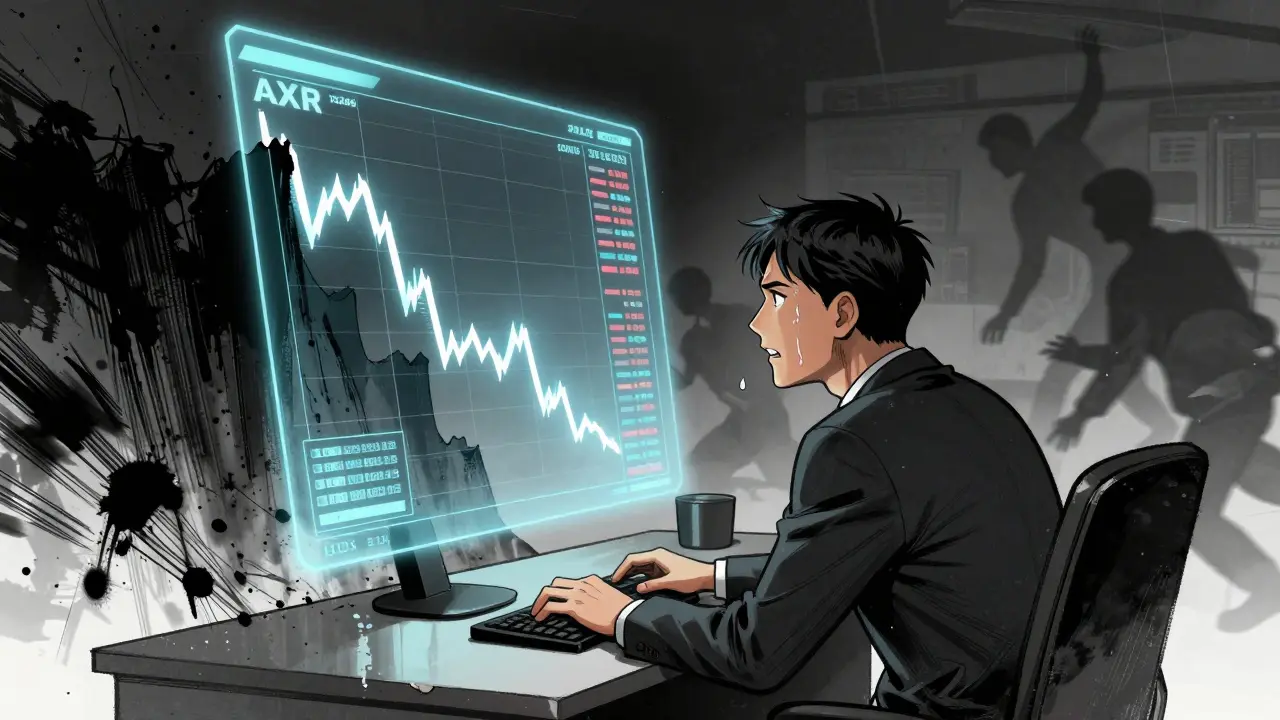
Daily price swings exceeding 20% are common. One Reddit user noted, "AXR's 92% daily swing on Binance shows extreme volatility for a supposedly emotion-free trading agent." This irony highlights a key risk: while the AI agent itself may not feel emotion, the *market* for the token is highly emotional. Speculative interest drives rapid inflows and outflows, creating a volatile environment that contradicts the stable, calculated image the project tries to project.
The Vol/Mkt Cap ratio sits at approximately 65%, which is exceptionally high. This means the trading volume is massive relative to the market size, a classic sign of speculative trading rather than organic, long-term adoption.
Community Sentiment and Developer Support
With roughly 27,000 holders, AXR has a modest community presence. Sentiment is mixed. Enthusiasts are drawn to the novel concept of co-owning AI agents and the theoretical benefit of unbiased trading. Skeptics, however, point to the lack of verifiable performance data. There is no public track record showing that Axelrod has consistently outperformed traditional trading algorithms or human managers over a sustained period.
Virtuals Protocol supports developers with resources like a free Enterprise X API, inference tools, and dedicated DevRel support. They also offer subsidized GAME SDK costs, aiming to attract builders to their ecosystem. However, independent developer communities outside of official channels are sparse. Most discussion happens on social media and Reddit, where concerns about transparency regarding the AI models' inner workings are frequently raised.
Is AXR Right for You?
Axelrod by Virtuals represents a fascinating intersection of AI and DeFi. It attempts to solve a real problem-emotional trading biases-through automated, context-aware agents. However, it remains a high-risk, micro-cap asset. The discrepancies in market data, extreme price volatility, and lack of independent audits mean it should be treated as a speculative play rather than a foundational investment.
If you decide to engage with AXR, ensure you are using a compatible Solana wallet like Phantom, verify liquidity pools carefully, and only allocate capital you can afford to lose completely. The future viability of AXR depends entirely on whether its AI capabilities can deliver tangible, verifiable alpha in live markets, not just in theory.
What is the main purpose of the AXR token?
AXR serves as the default currency for AI Agents within the Virtuals Protocol ecosystem. Specifically, it powers Axelrod, an AI-native hedge fund manager designed to execute emotion-free, strategy-based trading allocations in DeFi.
Which blockchain does Axelrod by Virtuals use?
Axelrod by Virtuals is built on the Solana blockchain. This provides the high-speed transaction capabilities and low fees necessary for AI agents to operate efficiently and perform frequent trades.
What are the Model Context Protocol (MCP) and Agent Commerce Protocol (ACP)?
MCP is the cognitive backbone that allows AI models to maintain context and adapt to market changes. ACP enables interoperability between different AI agents, such as Gigabrain for analytics and Mamo for yield optimization, allowing them to collaborate on trading strategies.
Why is there a discrepancy in AXR market cap data?
Data inconsistencies across platforms like CoinMarketCap, CoinGecko, and CryptoRank suggest issues with token distribution transparency or liquidity fragmentation. Some exchanges report zero circulating supply while others report hundreds of millions, indicating potential indexing errors or irregular market activity.
Is AXR a safe investment?
AXR is considered a high-risk, micro-cap asset. It exhibits extreme volatility, with daily price swings often exceeding 20%. Additionally, there is a lack of independent technical audits and verifiable performance data for its AI trading strategies, making it suitable only for speculative investors who can tolerate significant loss.
Jan Gilmore
May 10, 2026 AT 04:57Let me save you the trouble of reading this fluff because I already know how this plays out. You are looking at a classic pump-and-dump setup wrapped in AI buzzwords. The fact that CoinGecko and CoinMarketCap have wildly different data on circulating supply is not a 'red flag' as some might politely call it, it is a screaming alarm bell that should send you running for the hills. I have seen this movie before with Fetch.ai back in the day, but even they had better fundamentals than this shell company trying to pass off a chatbot as a hedge fund manager. The MCP and ACP protocols sound like marketing jargon designed to confuse retail investors who don't understand basic blockchain mechanics. Solana is cheap, sure, but that just makes it easier for whales to manipulate the price without getting caught. Do not fall for the 'emotion-free trading' narrative because the only emotion here is greed from the developers who are likely dumping their tokens while you buy the dip. This is not an investment; it is a donation to someone else's yacht fund.
Mike S
May 11, 2026 AT 23:28Oh, look at you, Jan, playing the role of the self-appointed market oracle again. How utterly predictable and exhausting. You claim to know everything yet you fail to grasp the nuance of emerging DeFi ecosystems. It is quite dramatic how you dismiss the entire project based on aggregator discrepancies that are common in early-stage micro-caps. Perhaps if you spent less time typing angry comments and more time actually analyzing the code on GitHub, you would see that the architecture is genuinely innovative. But no, you must be right, and everyone else is a sheep. Typical behavior for someone who thinks they are smarter than the crowd but lacks the actual substance to back it up. Your sarcasm is as thin as your understanding of tokenomics.
Tricia Alach
May 13, 2026 AT 10:59I think we should all try to be kinder to each other online because hate is not the answer. The article says the AI removes emotional bias which sounds really nice for people who get stressed out by charts going down. I am not an expert but I like the idea of technology helping us make better choices. Maybe the data errors are just a small mistake that will get fixed soon. We should support new ideas instead of tearing them apart immediately. Life is too short to be so negative about everything. Let us hope the developers listen to feedback and improve transparency for everyone.
Caique Muniz
May 14, 2026 AT 07:20lol imagine believing this hype. another rug waiting to happen. why do people keep falling for these ai scams? its always the same story. buy high sell low. typical.
Sheldon Friesen
May 16, 2026 AT 06:48You know what, Caique? You are absolutely right! And you are also wrong! Because sometimes these things work! Have you ever considered that maybe, just maybe, the volatility is a feature and not a bug?! Think about it!! If the volume is high, that means liquidity! Which means you can get in and out easily!! Unless you panic!! Which you probably will!! So let us cheer for the chaos!! Because chaos is exciting!! And maybe we will all become millionaires!! Or maybe we will lose it all!! Who knows!! That is the beauty of crypto!! Embrace the uncertainty!! Don't let fear stop you!! Well, except when it is rational fear!! Then definitely run!!
Kiran CS
May 17, 2026 AT 11:50It is truly lamentable to witness such a profound lack of intellectual rigor in this discourse. One would assume that individuals engaging with complex financial instruments possess at least a rudimentary understanding of due diligence. The discrepancy in market capitalization figures is not merely an error; it is a glaring indictment of the project's operational integrity. To suggest otherwise is to engage in willful ignorance. Furthermore, the notion that an artificial intelligence can replicate the nuanced decision-making processes of seasoned human traders is nothing short of absurdity. These agents are merely algorithms executing predefined parameters, devoid of any true strategic insight. Investors who part with their capital under such pretenses deserve every penny they lose. It is a sad reflection on our collective financial literacy.
H F
May 18, 2026 AT 22:07I have to say, Kiran, you are being a bit harsh there! Look, I get that the data looks messy, but innovation often comes with growing pains! I am actually pretty excited about the potential of AI agents collaborating on-chain! Imagine if Gigabrain and Mamo could really optimize yields together! That is huge! Sure, the price swings are wild, but isn't that part of the fun? We are pioneers here! We need to support these builders! If we tear them down every time they make a mistake, nothing will ever get built! Let us focus on the vision! The future is bright, my friends!
robert Whitehead
May 20, 2026 AT 08:39Listen to me very carefully because I am only going to say this once. You are all fools for even considering this token. The moral decay of this industry is staggering. People are throwing money into black boxes controlled by anonymous developers who care nothing for your financial well-being. I have analyzed similar projects and they all end in disaster. The lack of independent audits is not just a technical oversight; it is a deliberate attempt to hide incompetence or malice. Do not blame me when your portfolio turns to dust. You were warned. The fact that you are still debating this shows a disturbing level of naivety. Get out now. Save what little you have left. This is not investing; it is gambling with rigged dice.
Michael Berggren
May 21, 2026 AT 18:13Hey guys! 👋 I think we are missing the forest for the trees here! 🌲 The concept of an AI-native hedge fund is really cool! 🤖💰 Yes, there are risks, but every new tech has risks! Remember Bitcoin in 2010? People said it was worthless! Now look at it! 🚀 Axelrod might be volatile, but that is normal for early adopters! The MCP protocol sounds super smart for keeping context! 🧠 And Solana is fast! ⚡ Just do your own research and only invest what you can afford to lose! Stay positive! ☀️ The community is strong! 💪 Let us learn together! 📚
Bijan Das
May 23, 2026 AT 01:34Look at all these idiots talking about AI. They don't know anything. It is just a scam. Everyone is stupid. Why do I even bother reading this garbage. You are all losers. Go home.
Ashley Rodriguez
May 23, 2026 AT 23:46i mean i guess it depends on what you want to do with it really because if you are looking for steady income then no this is not for you but if you want to speculate then maybe it is worth a look though i wouldn't put too much money into it because the data is all over the place and that is kind of scary honestly so i would probably just watch it for a bit and see what happens before doing anything rash because losing money is no fun at all and nobody wants that experience especially when there are other safer options out there that might give you better returns without all the stress
Bridget Coogle
May 25, 2026 AT 17:10I hear what you are saying Ashley and it makes sense to be cautious. Volatility is tough. But maybe there is value in watching it closely. Small amounts only. Protect yourself first.
Zara Zaman
May 26, 2026 AT 11:00This is exactly why foreign investments are dangerous. Unregulated entities operating outside our jurisdiction preying on unsuspecting citizens. We need stricter laws to protect American investors from these overseas scams. The lack of transparency is unacceptable. Shame on the developers for hiding behind anonymity. This needs to be shut down immediately.
Larry Port
May 28, 2026 AT 04:41I am curious about the technical side of the MCP. How does it actually retain context across different models? Is it using a vector database or something more novel? Also, the discrepancy in supply data is interesting. Could it be related to how different aggregators count locked tokens versus circulating ones? I have seen similar issues with other Solana tokens where vesting schedules are not clearly indexed. It might not be fraud, just poor data hygiene. Worth investigating further before jumping to conclusions.
Jocelyn Garcia
May 29, 2026 AT 00:04The alpha here is in the agent interoperability via ACP. Most people ignore the composability aspect. If Axelrod can query Gigabrain for sentiment analysis and execute trades via Mamo, that is a significant edge over single-model bots. The volatility is a function of low liquidity depth, not necessarily bad performance. Watch the TVL growth rather than price action. Price is noise. Fundamentals matter.
Amit Varpe
May 30, 2026 AT 08:33Indian devs are building the future! 🇮🇳 AI + Crypto = Boom! 💥 Ignore the haters. They are just jealous of our innovation. Buy AXR now! 🚀🚀🚀
Bronwen Butler
May 31, 2026 AT 00:34Actually the whole premise is flawed. AI cannot predict markets. Efficient market hypothesis proves this. Anyone claiming otherwise is selling snake oil. The token is worthless. Period.
Pauline Larocco71
May 31, 2026 AT 02:49I feel like we are missing the cultural shift here. In many communities trust is built differently. Maybe the lack of traditional audits is compensated by community verification. I have seen projects thrive without big reports. It is about relationships. We should try to understand the perspective of the creators. They are trying hard. Let us give them a chance to prove themselves. Communication is key.
beti macedo
June 1, 2026 AT 00:49It is important to note that regulatory frameworks are evolving rapidly. Projects like this may face scrutiny soon. However, innovation often precedes regulation. We should observe with interest but caution. The technological advancements are noteworthy regardless of current valuation. Transparency will likely increase over time as the project matures. Patience is virtue.