What is Bio Protocol (BIO) Crypto Coin? A Real-World Guide to DeSci and Biotech Tokenization
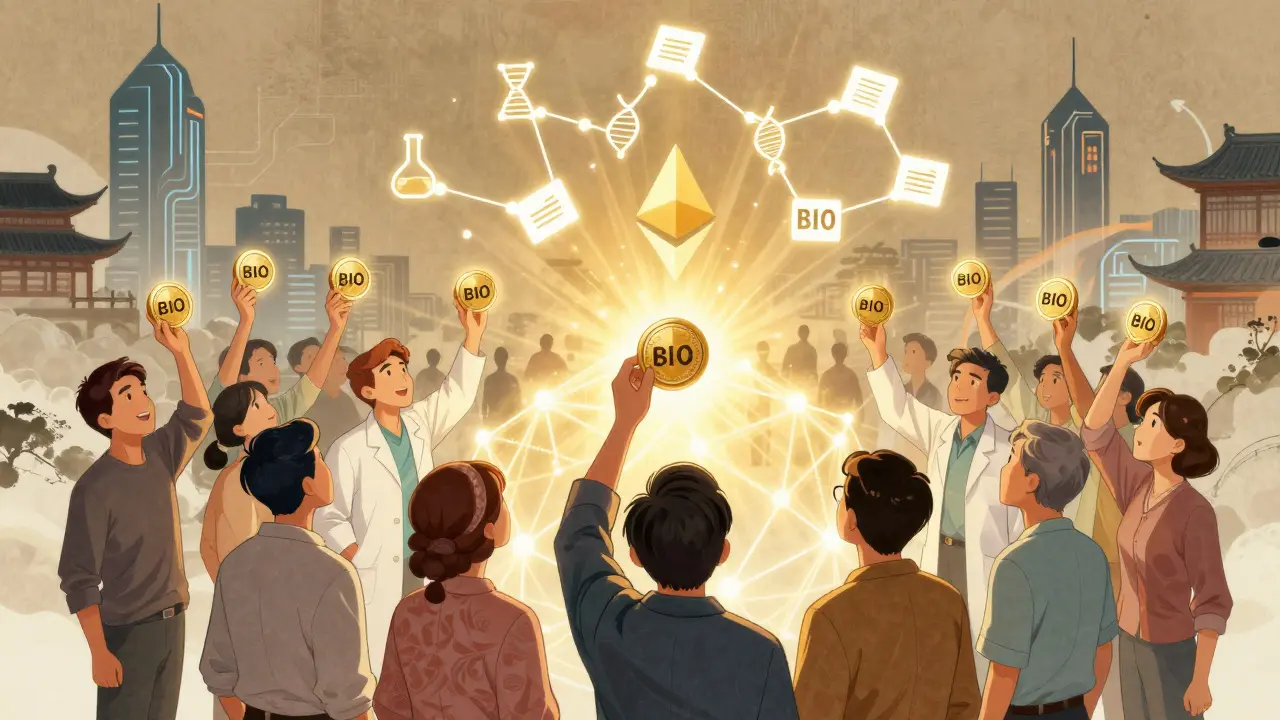
Bio Protocol (BIO) isn't just another cryptocurrency. It’s a radical experiment in how science gets funded - and who gets to own the results. While most crypto projects focus on finance, gaming, or social media, Bio Protocol is trying to fix a broken system in biotechnology. Imagine being able to fund research for a rare disease you or a loved one has - not through a government grant or a big pharma company, but by pooling money with thousands of others around the world. That’s what Bio Protocol is building.
How Bio Protocol Works: Science as a Community Project
Bio Protocol launched in 2024 as a decentralized science (DeSci) platform built on Ethereum. It uses the BIO token - an ERC-20 cryptocurrency - to connect researchers, patients, investors, and developers into a single ecosystem. Instead of waiting years for a single lab or corporation to fund a breakthrough, Bio Protocol lets communities vote on which research projects get money.
The core of the system is something called a BioDAO. These are decentralized autonomous organizations focused on specific health areas - like longevity, rare diseases, or gene therapy. Each BioDAO has its own group of token holders who decide where funding goes. For example, VitaDAO, one of the most active BioDAOs, focuses on anti-aging research. HairDAO, another, funds studies on hair loss. These aren’t just side projects. They’re real labs with real scientists, funded by people who aren’t venture capitalists.
Here’s the twist: when a project succeeds, the intellectual property (IP) doesn’t go to a single company. It’s tokenized. That means if a BioDAO develops a new drug, ownership is split into digital shares - IP tokens - that are distributed to contributors. If you helped fund the research, you might own a piece of the patent. If the drug sells, you get a cut. This flips the traditional model on its head. Normally, only big investors profit from medical breakthroughs. With Bio Protocol, even someone who staked $50 could benefit.
The BIO Token: Governance, Not Just Speculation
The BIO token is the engine of this whole system. It’s not just a currency - it’s a voting right. Holding BIO lets you participate in decisions like:
- Which research projects get funded
- How much money each BioDAO receives
- Changes to the protocol’s rules
Bio Protocol also has a second token called Acc, which rewards users for contributing to the ecosystem - like reviewing research proposals or helping with community outreach. Acc tokens can be converted into BIO, but they’re not used for voting. This two-token system keeps governance separate from simple participation rewards.
As of October 2025, there are about 1.66 billion BIO tokens in circulation, with a maximum supply of 3.32 billion. The price hovered around $0.0864, giving the project a market cap of roughly $265 million. That’s small compared to Bitcoin or Ethereum, but it’s huge for DeSci. Bio Protocol is currently one of the top three projects in the entire decentralized science space, behind only Ocean Protocol and Incentivise.
Why Bio Protocol Is Different From Other Crypto Projects
Most crypto tokens are either speculative assets or utility tokens for apps. BIO is neither. It’s a governance tool for science. That’s rare. You won’t find another crypto project where your holdings directly influence whether a new cancer treatment gets tested.
Compare it to VitaDAO - which is actually part of the Bio Protocol ecosystem, not a competitor. VitaDAO focuses only on longevity. Bio Protocol is the infrastructure that lets VitaDAO, HairDAO, and dozens of others exist. Think of Bio Protocol as the operating system, and the BioDAOs as the apps running on it.
Another difference? The backing. Bio Protocol received early support from Binance Labs - the investment arm of the world’s largest crypto exchange. That’s not just a stamp of approval. It means access to resources, networks, and credibility that most DeSci projects never get.
Real Numbers: Is Bio Protocol Growing?
Numbers don’t lie. As of September 2025:
- 47 active BioDAOs are running under the Bio Protocol umbrella
- 85,000 unique wallets hold BIO tokens
- 12,300 people actively vote in governance proposals
- 24-hour trading volume averages $20 million
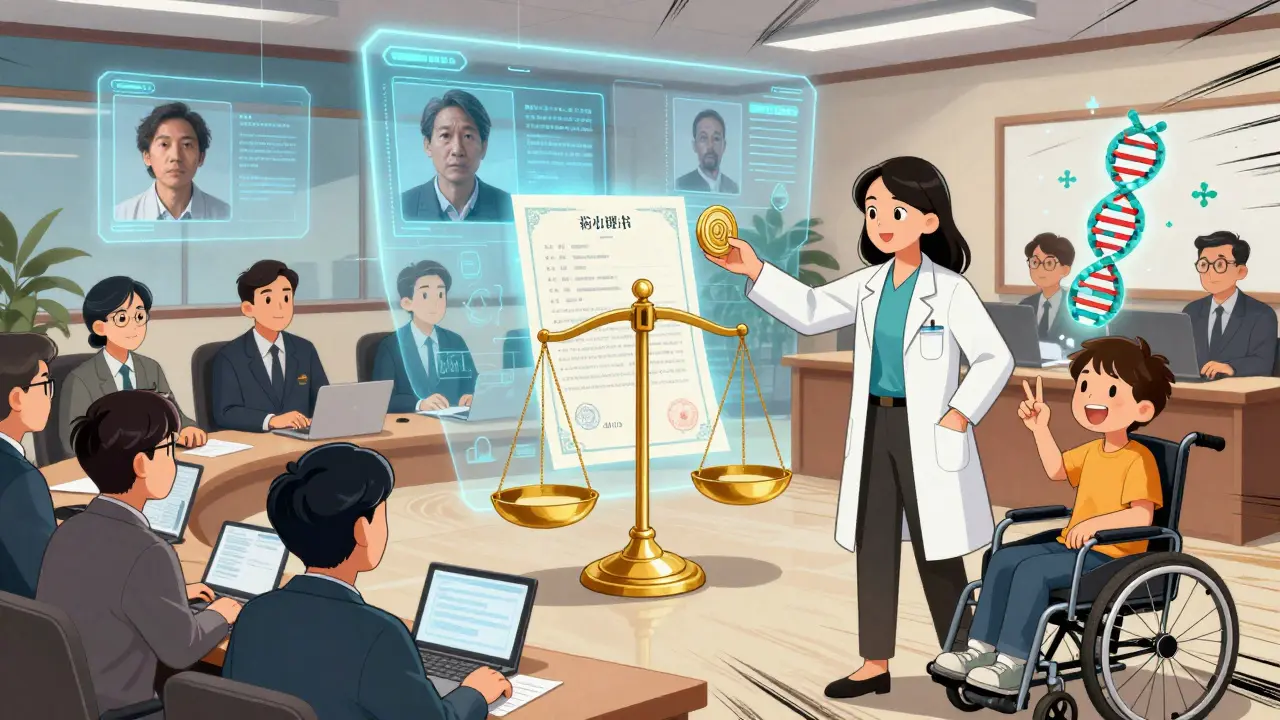
The DeSci sector as a whole grew 2,640% in 2024 - more than double the growth of AI-related tokens. Bio Protocol is riding that wave. It’s not just hype. Real money is flowing into real research. One BioDAO funded a gene-editing trial for a rare pediatric disorder that had been ignored by big pharma for over a decade. The trial started in early 2025. Early results are promising.
Challenges: Can Decentralization Work in Science?
It’s not all smooth sailing. Science is complicated. Peer review, clinical trials, regulatory approval - these aren’t things you can vote on like a meme coin. Critics point out that while tokenizing IP sounds great, it doesn’t automatically make bad science good. A DAO full of crypto investors might fund a flashy idea that lacks scientific rigor.
There’s also the issue of speed. Traditional research institutions have decades of experience navigating FDA and EMA regulations. Bio Protocol’s DAOs are still learning. Some governance votes take weeks. That’s slow when you’re waiting for a treatment that could save your child.
Liquidity is another concern. With a market cap under $300 million, BIO isn’t as easy to buy or sell as Bitcoin. You’ll need to use exchanges like Binance or Phemex. And because it’s still early, price swings can be wild - ranging from $0.08 to $0.13 in just seven days in October 2025.
How to Get Involved
If you want to participate, here’s what you need:
- Set up a Web3 wallet like MetaMask or Trust Wallet
- Buy ETH or SOL (depending on the chain you use)
- Purchase BIO tokens on Binance, Phemex, or another supported exchange
- Connect your wallet to the Bio Protocol dApp at bio.xyz
- Join a BioDAO or vote on funding proposals
It’s not hard - but it’s not beginner-friendly either. You need to understand wallets, gas fees, and how DAO voting works. Binance Academy estimates it takes 2-3 hours for someone with crypto experience to get comfortable. For newcomers, it could take longer.
The Big Picture: Could This Change Medicine?
The global biotech industry is worth $1.7 trillion. But most innovation happens in a handful of labs in the U.S., Europe, and China. The rest of the world waits. Bio Protocol is trying to change that. It’s giving people in Nigeria, Indonesia, or rural America a voice in research that affects them.
Partnerships with Harvard Medical School and the Max Planck Institute show this isn’t just a crypto fantasy. Real scientists are using the platform. The V2 upgrade in October 2025 added Solana support, cutting transaction costs and speeding things up. That’s a big deal for global participation.
Will it succeed? No one knows. But the fact that people are funding real medical research with crypto - and getting ownership in return - is unprecedented. If Bio Protocol can balance community input with scientific integrity, it could become the foundation for the next era of medicine.
For now, it’s a bold experiment. And sometimes, the most important breakthroughs start with a question no one thought to ask: What if science belonged to everyone?
George Cheetham
December 18, 2025 AT 18:59Imagine if every time someone got sick, the cure wasn’t locked behind a patent owned by a CEO who’s never met the patient. This isn’t just crypto-it’s a new kind of social contract for science. People are finally saying: ‘If I help fund it, I should own a piece of it.’ That’s revolutionary. And yeah, it’s messy. DAOs aren’t perfect. But at least now, someone in Nigeria can vote on a gene therapy for their kid’s disease instead of waiting decades for Big Pharma to care.
Science shouldn’t be a luxury. It should be a commons. And this? This is the first time I’ve seen crypto actually build something that feels human.
Sue Bumgarner
December 19, 2025 AT 18:07Ugh, another crypto scam pretending to be altruistic. The FDA doesn’t care about your DAO votes. You think a bunch of guys in their basements voting on clinical trials is gonna get FDA approval? Wake up. Real science takes years, money, and regulators-not Twitter degens with MetaMask. This is just pharma’s worst nightmare dressed up as ‘decentralization.’ And don’t even get me started on Solana support. That’s a joke waiting to crash.
Dionne Wilkinson
December 20, 2025 AT 00:04I just read about a BioDAO funding a rare pediatric trial. My niece has that disorder. I didn’t know anything about crypto before, but I donated $75. I didn’t do it for the tokens. I did it because someone somewhere said, ‘Hey, your kid’s life matters too.’ That’s the first time I’ve felt like science wasn’t just for rich people. I don’t even know how to vote yet. But I’m learning.
Thank you for making this real.
Emma Sherwood
December 20, 2025 AT 03:38Let’s be real-this isn’t just about science. It’s about who gets to be heard. In the U.S., we’ve spent decades ignoring diseases that affect Black, Brown, and Indigenous communities. But now? A BioDAO in Ghana just got funded to study sickle cell gene editing. That’s not luck. That’s structure.
And the IP tokenization? Genius. If you’re a researcher in Indonesia and you help develop a drug, you don’t get fired after the patent’s filed. You get equity. That’s not just fair. It’s the future.
Yes, it’s messy. But if we wait for perfection, we’ll never fix anything.
Kelsey Stephens
December 20, 2025 AT 19:29I’ve been following this for a year. I used to think crypto was all about getting rich. But seeing how Bio Protocol lets ordinary people-parents, teachers, nurses-vote on research that affects them? That changed my mind.
I’m not an investor. I’m just someone who lost my dad to ALS. I didn’t fund a project, but I voted on three proposals. Felt like I had a voice for the first time.
It’s not perfect. But it’s the closest thing to hope I’ve seen in this space.
Tom Joyner
December 22, 2025 AT 08:49Let’s be honest: this is just another attempt to bypass peer review by gamifying science with tokens. The fact that you can vote on a gene therapy without understanding CRISPR is terrifying. The academic rigor here is nonexistent. And calling it ‘decentralized science’ is a semantic fraud. Science requires hierarchy, expertise, and accountability-not a Reddit poll with ETH.
SeTSUnA Kevin
December 23, 2025 AT 04:36ERC-20 governance token with secondary utility token (Acc) for non-voting participation. Market cap: $265M. 85K unique holders. 12.3K active voters. 47 BioDAOs. Solana integration reduced gas fees by 92%. Data verifiable on Etherscan and BioProtocol’s on-chain governance dashboard. No speculation. Only institutional-grade DeSci infrastructure.
Craig Nikonov
December 24, 2025 AT 23:20They’re not funding science-they’re funding a CIA psyop. Did you know the same people who backed this also funded the 2020 election deepfakes? Crypto’s a Trojan horse. Bio Protocol? It’s a front for the Illuminati to control medical data and implant tracking chips via mRNA. The fact they’re using Ethereum? Classic. They need blockchain to hide the real AI-driven surveillance layer.
They’ll release a ‘cure’-then charge you $10,000 for the ‘authentic’ tokenized version. You think you’re helping? You’re being harvested.
Donna Goines
December 25, 2025 AT 09:16Okay, but what if the DAOs get hacked? What if someone buys up 51% of the BIO tokens and votes to fund a cure for baldness while ignoring cancer? And don’t even get me started on the fact that Binance Labs is involved-aren’t they the ones who got caught laundering money for Russian oligarchs? This isn’t science. It’s a Ponzi scheme with a lab coat.
And why are they using Solana? Isn’t that the chain that crashed 17 times last year? I’m not buying this ‘revolution’-I’m buying a time bomb.
Greg Knapp
December 26, 2025 AT 13:05so like i just bought some bio tokens because my cousin has ms and i thought hey maybe this could help right but then i saw the gas fees and i lost like 12 bucks just to vote on one proposal and now i feel like a sucker and also why does the website look like it was made in 2017 and also i think i might have sent my eth to the wrong address and now i'm crying in my car and also why is everyone so calm about this i just want my cousin to live
Shruti Sinha
December 27, 2025 AT 04:49Interesting. In India, we have no access to rare disease treatments. But I saw a BioDAO funded a trial for spinal muscular atrophy-using data from a clinic in Bangalore. That’s the first time an Indian patient’s data helped shape a global treatment. I didn’t vote. I just watched. But I felt seen.
Cheyenne Cotter
December 28, 2025 AT 11:19Okay so I’ve been reading about this for like three weeks now and I think I get it but also I don’t? Like the whole idea of tokenizing IP sounds cool but what happens if the drug fails? Do you lose your tokens or do you still own the patent? And if you own the patent but the company that actually manufactures it doesn’t want to pay you royalties because you only held 0.0001% of the token supply-does that even matter? And also I’m confused about the difference between BIO and Acc because the website says one is for voting and the other is for rewards but then it says you can convert Acc to BIO so why not just use one token? And also why does the whitepaper use the word ‘ecosystem’ 87 times? I think I need to lie down.
Sean Kerr
December 28, 2025 AT 11:25OMG this is SO COOL!!! 😍 I just joined a BioDAO for fibromyalgia!! 🤗 I voted for the first time and I cried!! 🥹 I didn’t even know I could do this!! 💪 I sent 0.05 ETH and now I feel like I’m part of something REAL!!! 🙌 I’m telling all my friends!! You guys have to check this out!! 🚀 It’s not just crypto-it’s HOPE!! 💖 #BioProtocolRevolution #ScienceForThePeople 🌱
Sally Valdez
December 30, 2025 AT 06:23So let me get this straight-you’re telling me a bunch of hippies with crypto wallets are gonna cure cancer better than Johns Hopkins? You think a guy in Ohio voting on a trial for pancreatic cancer is more qualified than a Nobel-winning oncologist? This isn’t democracy. It’s mob rule with a blockchain. And don’t even get me started on the fact that the founder used to work for a crypto gambling site. This isn’t science. It’s a cult with a whitepaper.