What is Blade Games (BLADE) Crypto Coin? A Deep Dive into On-Chain Gaming and AI
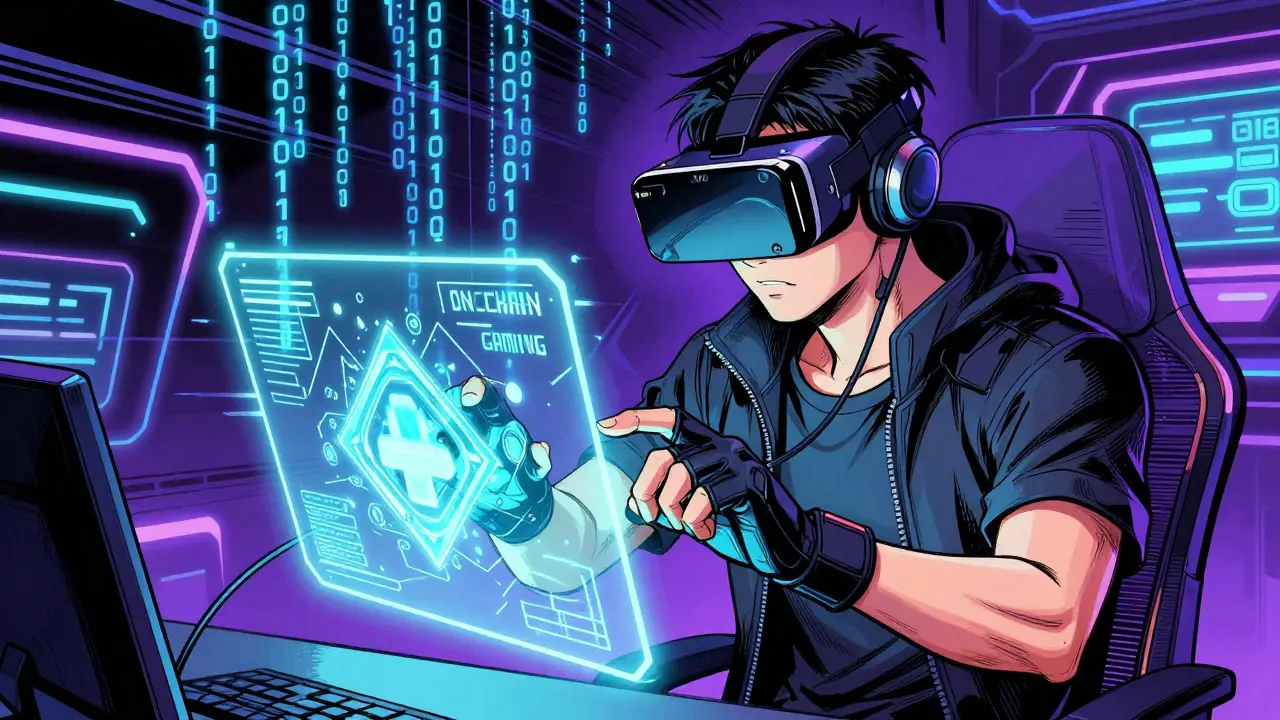
Imagine playing a video game where every move you make is verified by math, not just code running on a central server. That’s the promise of Blade Games, an ecosystem that blends blockchain technology with artificial intelligence to create fully on-chain experiences. At the heart of this system sits the BLADE token, the core economic asset used for gameplay incentives, governance, and AI training fees. But what exactly is it, and why should you care?
As of mid-2026, Blade Games positions itself as one of the largest on-chain game ecosystems on networks like Arbitrum and Mantle. It claims over 850,000 registered users across five ecosystem games. However, don’t let those user numbers fool you into thinking this is a blue-chip investment. The reality is much more complex-and risky.
The Core Concept: What Is Blade Games?
Blade Games isn’t just a single game; it’s a platform. Think of it as a studio building a universe where players can compete, train AI agents, and earn rewards. The technical backbone here is the zkVM stack, or Zero-Knowledge Virtual Machine. This tech allows gameplay actions to be processed off-chain for speed but verified on-chain for security. This means you get smooth graphics without paying massive gas fees for every button press, while still maintaining trustless ownership of your in-game assets.
The ecosystem currently features titles like "Dune Factory," which serves as the flagship experience. Players interact with AI agents inside these games, creating economies that run entirely on the blockchain. The BLADE token acts as the fuel for this engine-used to buy resources, pay for AI training, and participate in governance through the BladeDAO structure.
Tokenomics: Supply, Distribution, and Vesting
If you’re looking at the charts, you might notice conflicting data about how many BLADE tokens exist. This is common for emerging projects. Most major trackers like CoinMarketCap list a maximum supply of 100 million BLADE. However, some sources cite 97.5 million. For practical purposes, treat the cap as roughly 100 million, but understand that only a tiny fraction is actually circulating right now.
Here is how the tokens are allocated, based on detailed project documentation:
| Category | Percentage | Vesting Schedule |
|---|---|---|
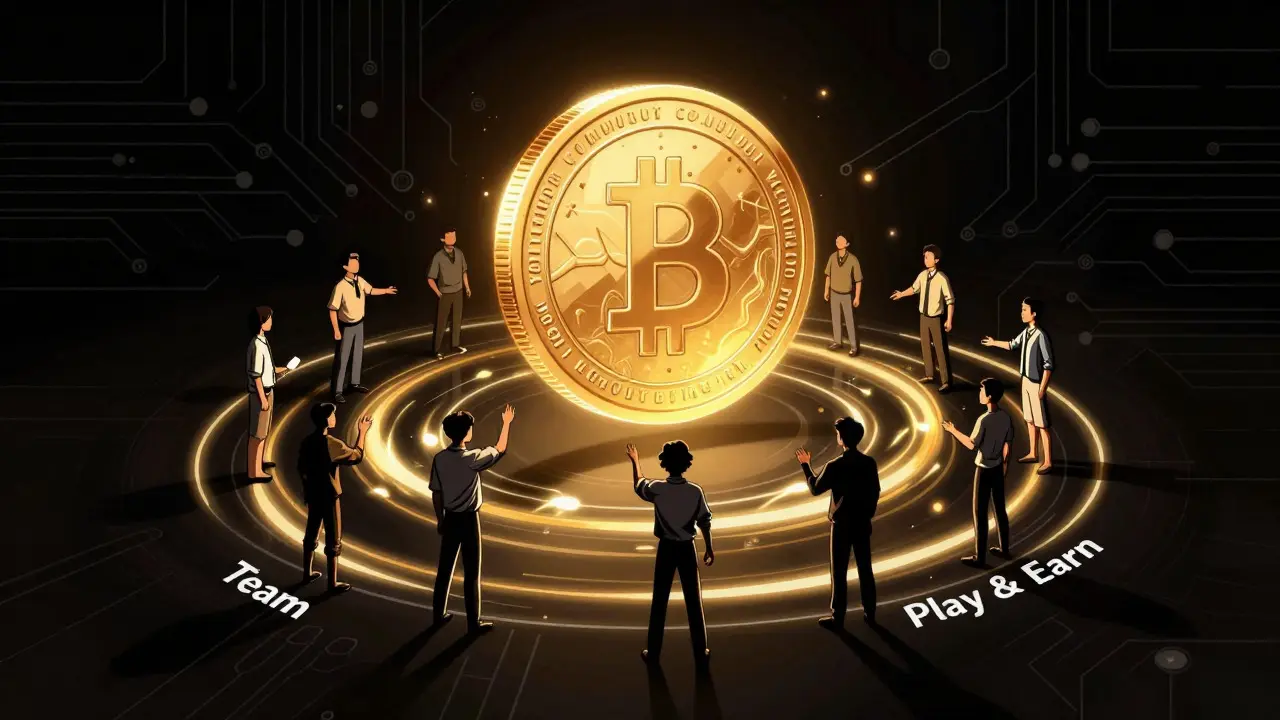
| Play & Earn (Dune Factory) | 20% | 7.5% unlocked at launch, rest vests over 24 months |
| Play & Earn (Other Games) | 17% | 6-month cliff, then 24-month vesting |
| Ecosystem & Development | 15% | 10% unlocked at launch, rest vests over 18 months |
| Team | 18.25% | 9-month cliff, then 24-month vesting |
| Seed Investors | 10% | 5% unlocked at launch, rest vests after 6-month cliff |
| Community & Marketing | 12% | Linear release over 24 months |
This distribution highlights a key risk: inflation pressure. With nearly 40% of tokens reserved for play-to-earn rewards and ecosystem growth, new tokens will continuously enter circulation as the games grow. If demand doesn’t outpace this supply, prices could face downward pressure.
How Do You Earn BLADE?
You don’t just buy BLADE and hold it; the protocol encourages active participation. Emissions are tied to the xBlade mining pool. This is a virtual item pool within the games. To mine BLADE, you need to:
- Unlock higher levels in games like Dune Factory.
- Purchase monthly bundles or specific in-game items.
- Promote the game to increase your efficiency rate.
The emission rate adjusts algorithmically, similar to an Automated Market Maker (AMM). More participants mean lower individual yields unless you increase your contribution or skill level. This creates a competitive environment where top players and promoters earn significantly more than casual users.
Governance and veBLADE: The DeFi Layer
For serious investors, there’s another layer: veBLADE. Inspired by Curve Finance’s veCRV model, holders can lock their BLADE tokens to mint veBLADE. This gives them two main benefits:
- Yield Boosts: Higher returns from NFT royalties and AMM fees generated within the ecosystem games.
- Governance Power: Voting rights in BladeDAO to decide which games receive more token emissions. This leads to "bladewar" scenarios where game developers bid for veBLADE support to boost their player base.
This mechanism attempts to align incentives between players, developers, and investors, creating a circular economy where success in one area fuels the others.
Risk Profile: Why Is It So Volatile?
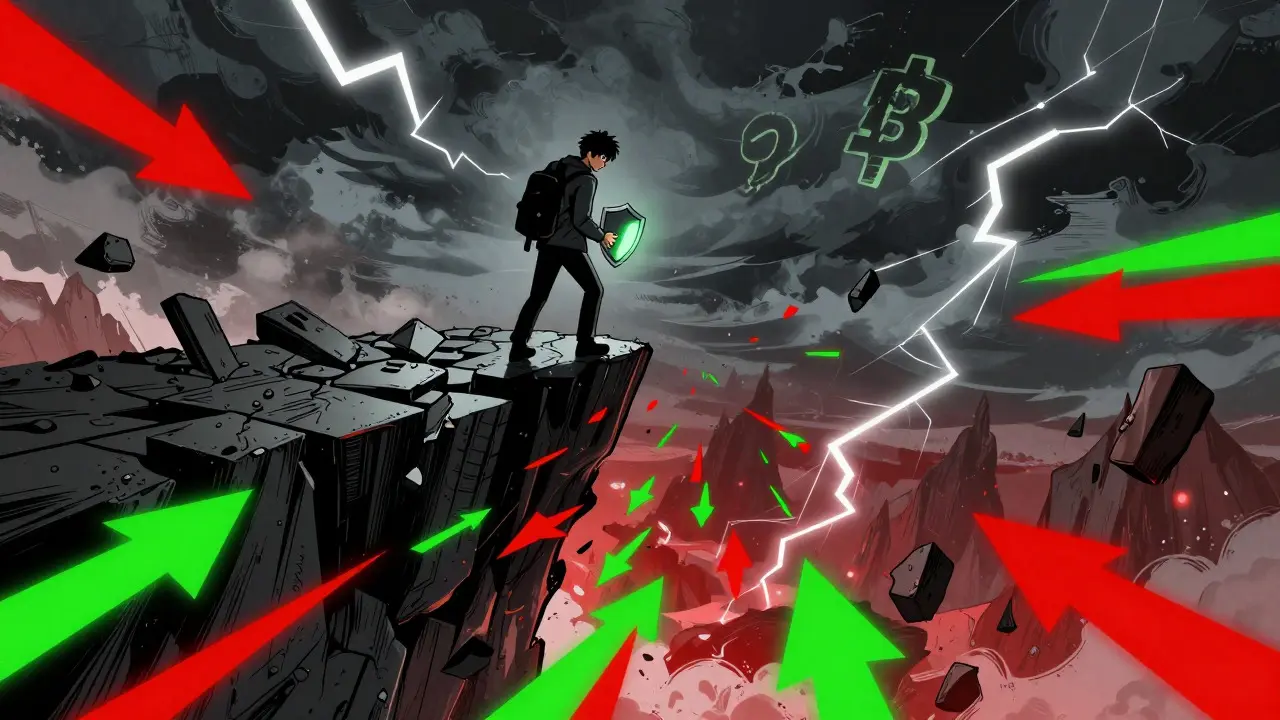
Let’s talk numbers. As of early 2026, BLADE trades in the micro-cap range, with market capitalizations often fluctuating between $13,000 and $150,000 depending on liquidity snapshots. Prices have swung wildly, dropping nearly 30% in single days during periods of low volume.
Why such volatility? Two reasons:
First, liquidity sensitivity. With daily trading volumes often under $100,000 on exchanges like Gate.io, even small sell orders can crash the price. Second, speculative nature. While the tech (zkVM + AI) is innovative, the actual revenue generation from these games is still unproven at scale. Most major exchanges like Binance do not yet list BLADE for trading, limiting its accessibility and institutional interest.
Is Blade Games Legit?
Yes, in the sense that it has a working product, a clear team background (including ZKP researchers and game economists), and real user activity. CertiK Skynet lists the project, noting its use of zero-knowledge proofs for verifiable gameplay. However, "legit" doesn’t mean "safe." The lack of named public founders and the heavy reliance on future adoption make it a high-risk bet.
The project launched via Gate.io Launchpad in December 2024, raising $2.4 million in seed funding from investors like IOSG Ventures. This provides some credibility, but remember: venture-backed status doesn’t guarantee token appreciation.
How to Get Started
If you want to explore Blade Games, here’s the path:
- Set up an Arbitrum-compatible wallet like MetaMask.
- Buy ETH on Arbitrum and swap it for BLADE on decentralized exchanges or centralized platforms like Gate.io.
- Register on the Blade Games platform and start playing Dune Factory or other ecosystem titles.
- Engage with the xBlade pool by completing levels and buying bundles to start earning BLADE.
- Consider locking BLADE for veBLADE if you plan to stay long-term and want governance rights.
Keep position sizes small. Treat this as experimental capital, not retirement savings.
What blockchain is Blade Games built on?
Blade Games primarily operates on the Arbitrum network, using the ERC-20 standard for its BLADE token. It also has integrations with Mantle, leveraging Layer 2 scaling solutions to reduce transaction costs and improve speed for on-chain gaming interactions.
What is the maximum supply of BLADE tokens?
Most major data providers list the maximum supply as 100 million BLADE. However, some sources cite 97.5 million. Regardless of the exact figure, only a small percentage (around 3-5%) is currently in circulation, with the rest locked in vesting schedules for teams, investors, and ecosystem rewards.
How does the zkVM technology work in Blade Games?
The Zero-Knowledge Virtual Machine (zkVM) allows game logic to be executed off-chain for performance but generates cryptographic proofs that verify the outcome on-chain. This ensures fairness and ownership without requiring players to pay high gas fees for every action, making complex on-chain games feasible.
Can I earn BLADE just by playing games?
Yes, but it’s not passive. You earn BLADE through the xBlade mining pool, which requires active participation. Your earnings depend on your in-game progress, the items you purchase, and your promotional efforts. Higher skill levels and contributions lead to better mining efficiency.
Is BLADE listed on Binance?
As of late 2025 and early 2026, Binance does not list BLADE for trading. The token is primarily traded on exchanges like Gate.io and KCEX, with spot pairs against USDT. Its absence from tier-1 exchanges contributes to its lower liquidity and higher volatility.
What is veBLADE and why does it matter?
veBLADE is a vote-escrowed version of the BLADE token. By locking BLADE, you gain governance power in BladeDAO and boosted yields from NFT royalties and AMM fees. It allows long-term holders to influence which games receive more token emissions, creating a competitive dynamic among game developers.