What is DogeBonk (DOBO)? A Deep Dive into the Meme Coin on BSC and Ethereum
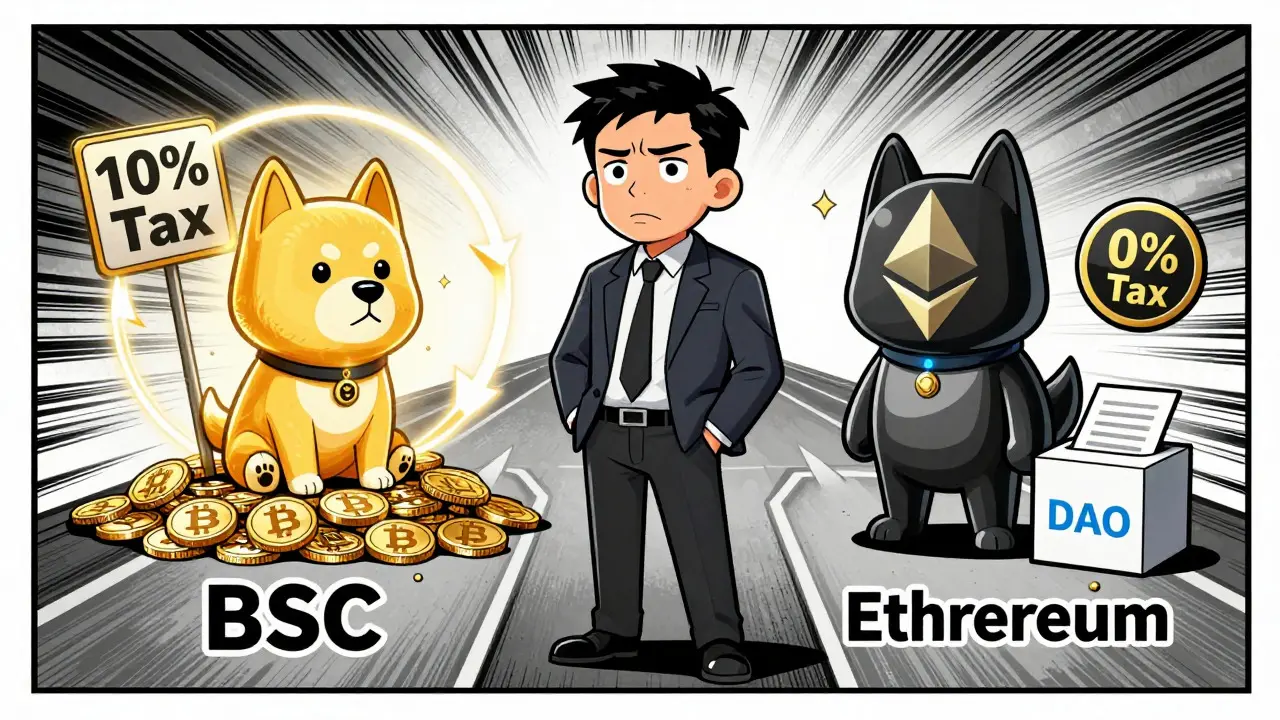
You see a ticker symbol DOBO, hear the name DogeBonk, and wonder if this is your next big opportunity or just another internet joke with a price tag. The answer isn't simple because there isn't just one DogeBonk. In fact, you are likely looking at two completely different assets sharing the same name and ticker across different blockchains. One lives on Binance Smart Chain (BSC) and operates like a traditional deflationary memecoin. The other sits on Ethereum, structured as a decentralized autonomous organization (DAO) with zero taxes. Understanding which one you are holding-and how they work-is critical before you spend a single dollar.
The confusion stems from the nature of the memecoin sector. Unlike established cryptocurrencies with clear utility, memecoins often rely on community hype, viral branding, and speculative trading. DogeBonk fits squarely into this category. It does not offer enterprise solutions, smart contract infrastructure, or payment processing for global merchants. Instead, it offers "reflections" (automatic rewards) on BSC or governance participation on Ethereum. Let's break down exactly what these tokens are, how their economics work, and why the numbers might look so different depending on where you check them.
The Two Faces of DogeBonk: BSC vs. Ethereum
Before you buy anything, you need to know which chain you are interacting with. Most people searching for DogeBonk are actually looking at the Binance Smart Chain version, but the Ethereum version has its own distinct identity. Mixing them up can lead to buying the wrong asset entirely.
| Feature | DogeBonk (BSC) | Doggy-Bonk (Ethereum) |
|---|---|---|
| Blockchain | Binance Smart Chain (BEP-20) | Ethereum (ERC-20) |
| Token Model | Deflationary Memecoin | Zero-Tax DAO Memecoin |
| Transaction Tax | 10% (5% Reflections, 5% Liquidity) | 0% |
| Total Supply | ~540-583 Trillion Circulating | 420.69 Million Fixed |
| Primary Venue | PancakeSwap | Bilaxy / Centralized Exchanges |
| Market Cap (Mid-2026) | ~$1.9M - $2.1M | Data inconsistent/low volume |
The BSC version is the more widely tracked asset in terms of consistent data availability on aggregators like CoinGecko and CoinMarketCap. It launched prior to January 2022 and has maintained a presence as a small-cap speculative asset. The Ethereum version, sometimes called "Doggy-Bonk," positions itself as a community-driven project with a humorous narrative centered around fictional characters. While both use the DOBO ticker, their underlying mechanics are opposites. One charges you to hold; the other lets you trade freely but relies on community governance for value.
How DogeBonk (BSC) Tokenomics Work
If you are dealing with the Binance Smart Chain version, you are engaging with a classic "reflection" model. This means you don't have to stake your tokens to earn rewards. Instead, every time anyone buys or sells DOBO, a tax is applied. Here is how that 10% transaction fee breaks down:
- 5% Redistribution (Reflections): This portion is automatically sent to all existing holders proportional to their wallet balance. If you hold a large amount of DOBO, your balance grows slightly with every trade made by others. This encourages long-term holding since active traders pay the tax that rewards passive holders.
- 5% Liquidity Addition: This half goes directly into the liquidity pool on PancakeSwap. By constantly adding liquidity, the protocol aims to stabilize the price and reduce volatility over time. The LP tokens associated with this pool are reportedly locked "forever," meaning developers cannot withdraw the funds-a key protection against rug pulls.
This system creates a deflationary pressure. As trades happen, supply dynamics shift, and liquidity deepens without manual intervention. However, there is a catch. Because every transaction costs 10%, frequent trading eats away at your capital. If you buy and sell repeatedly, you will lose significant value to the tax mechanism. This model is designed for "HODLers"-people who plan to keep the coins for months or years-not day traders.
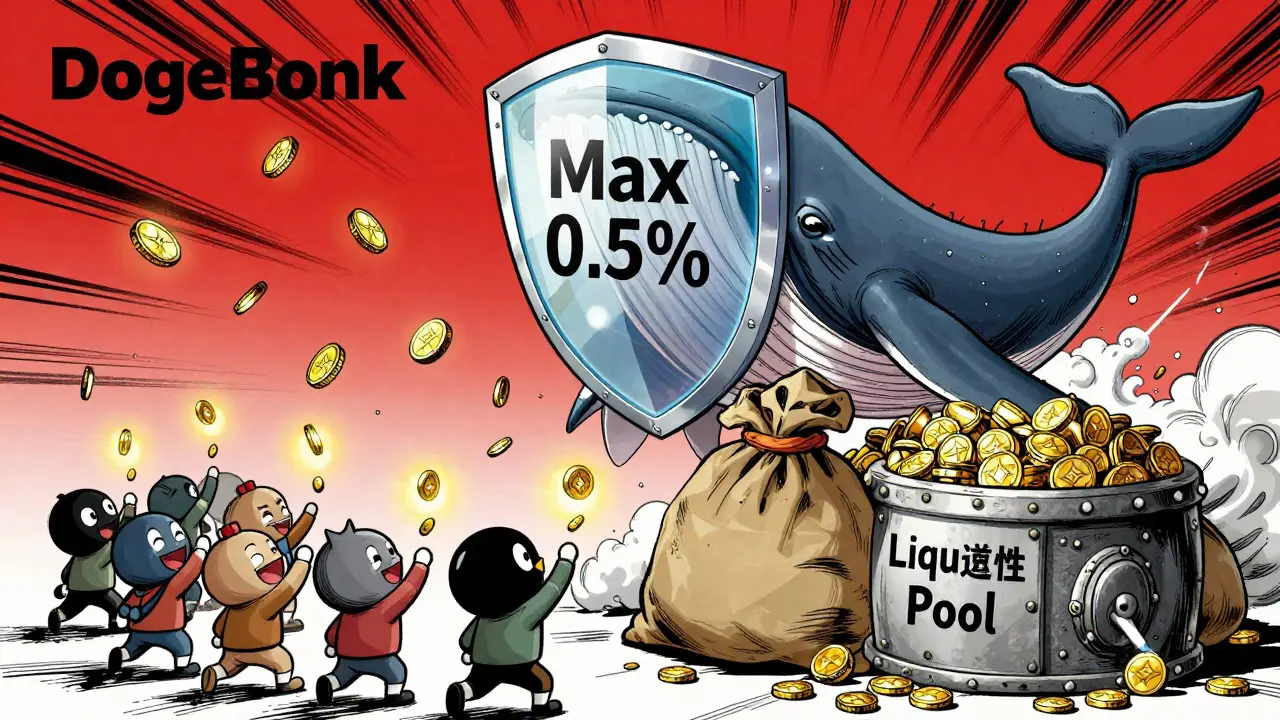
To prevent whales from manipulating the market, the smart contract enforces a strict limit. No single transaction can exceed 0.5% of the total supply. Given the original supply was approximately 1 quadrillion tokens, this caps individual buys or sells at roughly 5 trillion DOBO per transaction. This restriction makes it difficult for a single entity to dump a massive amount of tokens at once, protecting smaller investors from sudden crashes caused by whale activity.
Security, Ownership, and Risks
When evaluating a micro-cap memecoin, security is usually the biggest concern. For the BSC DogeBonk, the primary safety feature is that contract ownership has been renounced. In simple terms, the developer gave up administrative privileges. They can no longer change the tax rate, pause transactions, or blacklist addresses. Combined with the permanently locked liquidity, this provides a baseline level of trust that the code won't be altered maliciously after launch.
However, "renounced ownership" does not mean "audited code." There are no public records of formal third-party security audits for the DogeBonk BSC contract. This means while the parameters can't be changed easily, bugs in the code could still exist. Without a bug bounty program or certification from firms like CertiK or Hacken, you are relying on the transparency of the open-source code rather than professional verification.
Another risk factor is liquidity depth. Despite the automatic liquidity additions, the daily trading volume for DOBO on PancakeSwap often hovers between $24 and $777. This is extremely low compared to major cryptocurrencies. Low liquidity means high slippage. If you try to sell a large position, you might get a much worse price than expected because there aren't enough buyers in the pool to absorb your sale at the current market price.
Market Performance and Data Discrepancies
One frustrating aspect of tracking DogeBonk is the inconsistency in data across platforms. As of mid-2026, you will notice varying figures for circulating supply and market capitalization depending on whether you check CoinMarketCap, CoinGecko, or CryptoSlate.
CoinMarketCap lists the circulating supply at approximately 582.95 trillion DOBO, resulting in a market cap of around $2.09 million. CoinGecko, however, shows lower figures, often citing a circulating supply closer to 540-543 trillion DOBO, with a market cap near $1.96 million. These discrepancies arise from how different aggregators track burns and liquidity events. Since DogeBonk is deflationary, tokens are removed from circulation over time, but not all platforms update this data in real-time.
The price itself is microscopic, typically trading between $0.0000000035 and $0.0000000037. At these levels, even small percentage moves result in negligible dollar amounts for individual holders unless they possess billions of tokens. The Ethereum version presents similar challenges. Coinbase Canada listed the price at CA$0.000892 in March 2025, noting it was down over 93% from its all-time high. This sharp drawdown is typical for memecoins after their initial hype cycle fades.

How to Buy and Trade DogeBonk
If you decide to proceed, the process differs based on the blockchain. For the BSC version, you need a non-custodial wallet like MetaMask or Trust Wallet configured for the Binance Smart Chain network. You must also have BNB (Binance Coin) to pay for gas fees and swap for DOBO.
- Set Up Your Wallet: Ensure your wallet is connected to the BSC network. Import the correct DOBO contract address from a reliable source like CoinGecko to avoid fake tokens.
- Acquire BNB: Buy BNB on a centralized exchange and transfer it to your wallet, or swap ETH for BNB using a bridge.
- Connect to PancakeSwap: Go to PancakeSwap (v2) and connect your wallet.
- Configure Slippage: This is crucial. Set your slippage tolerance to at least 12-15%. Since the transaction tax is 10%, setting slippage too low will cause your transaction to fail.
- Swap for DOBO: Enter the amount of BNB you wish to spend. Remember the 0.5% supply cap per transaction. Confirm the swap and approve the transaction in your wallet.
For the Ethereum version, the process is similar but uses ETH for gas fees and involves ERC-20 standards. You might find better liquidity on centralized exchanges like Bilaxy, though availability varies by region. Always double-check the contract address. Scammers often create fake tokens with the same name to trick users.
Is DogeBonk a Good Investment?
Let's be direct: DogeBonk is a high-risk, speculative asset. It lacks fundamental utility, institutional backing, or a clear roadmap for technological development. Its value is driven almost entirely by community sentiment and meme culture. The BSC version offers a passive income mechanism through reflections, which appeals to some investors, but the low liquidity and lack of audits remain significant red flags.
The Ethereum DAO version attempts to add structure through governance, but with a fixed supply of only 420.69 million tokens and zero tax, it competes in a saturated market of thousands of other ERC-20 memecoins. The historical performance shows severe drawdowns from all-time highs, indicating that early adopters may have already exited.
If you choose to invest, treat it as entertainment spending rather than financial planning. Never allocate more than you can afford to lose. The multi-chain nature of the brand adds complexity, so ensure you understand which specific contract you are interacting with. The crypto market is volatile, and memecoins are the most volatile segment within it.
What is the difference between DogeBonk on BSC and Ethereum?
The BSC version is a deflationary memecoin with a 10% transaction tax used for holder rewards and liquidity. It has a massive supply in the trillions. The Ethereum version is a zero-tax DAO token with a fixed supply of 420.69 million, focusing on community governance and narrative rather than automatic yield generation.
Is DogeBonk (DOBO) safe to buy?
Safety depends on due diligence. The BSC version has renounced ownership and locked liquidity, which reduces the risk of a rug pull. However, it lacks formal third-party audits. Always verify the contract address and be aware of low liquidity risks, which can make selling difficult.
Why do DogeBonk prices vary across websites?
Data aggregation methods differ between platforms like CoinMarketCap and CoinGecko. Discrepancies in circulating supply calculations due to burn events and delayed updates lead to variations in reported market cap and price. Always cross-reference multiple sources.
What is the maximum transaction size for DogeBonk BSC?
The smart contract limits each buy or sell to a maximum of 0.5% of the total supply. Based on the original supply, this equates to approximately 5 trillion DOBO tokens per transaction to prevent whale manipulation.
Does DogeBonk have any real-world utility?
Currently, DogeBonk is primarily a speculative memecoin. It does not offer enterprise services, payments, or technical infrastructure. Its value proposition is based on community engagement, meme culture, and the tokenomic mechanics of reflections (BSC) or DAO governance (Ethereum).