What is FOGNET (FOG)? A Deep Dive into the Real Estate NFT Token
Have you ever looked at a skyscraper under construction and thought, "I wish I could own a tiny slice of that future profit?" That’s the pitch behind FOGNET, an Ethereum-based ERC-20 utility token designed to tokenize real estate development rights. But here is the kicker: as of September 2026, this project is trading for less than a penny, has almost no community buzz on major forums, and lives on just one exchange. Is it a hidden gem in the real estate sector, or a ghost town waiting to be abandoned?
If you are digging into FOGNET (FOG), you need to cut through the marketing fluff. This isn't Bitcoin, and it isn't even Ethereum. It’s a niche asset with specific mechanics, thin liquidity, and significant risks. Let’s break down exactly what this coin does, how its economy works, and why you should be extremely careful before buying.
The Core Concept: Tokenizing Real Estate Rights
At its heart, FOGNET is a blockchain platform that turns real estate development projects into tradable digital assets. Unlike platforms that let you buy fractional shares of an already-built apartment complex, FOGNET focuses on the *rights* to execute and sell development projects. Think of it as buying a ticket to a movie production before the cameras start rolling. If the project succeeds, the value goes up; if it flops, you’re holding a bag of digital dust.
The technology relies on two main pillars:
- Ethereum Blockchain: The platform runs on Ethereum, leveraging its security and smart contract capabilities.
- NFTs (Non-Fungible Tokens): Each real estate project is represented by an NFT. These aren't just pictures of cats; they are legal or contractual representations of development rights.
The FOG token serves as the primary currency within this ecosystem. You use it to pay for fees, access premium data, or potentially bid on these development rights. It’s not a stablecoin, so its value fluctuates wildly based on market sentiment rather than the underlying real estate assets directly pegged to it.
Tokenomics: Supply, Price, and Market Cap
Understanding the numbers is critical because FOGNET has some inconsistencies in how different data providers report its status. Here is the current snapshot as of mid-September 2026:
| Metric | Value / Status | Notes |
|---|---|---|
| Current Price | $0.006995 - $0.00701 | Extremely low price point. |
| Total Supply | 10,000,000,000 FOG | Fixed maximum supply. |
| Circulating Supply | Varies by source (6.5B - 10B) | Data providers disagree on exact circulation. |
| Fully Diluted Valuation (FDV) | ~$70 Million | Based on total supply. |
| Daily Volume | <$20,000 USD | Very low liquidity. |
You’ll notice the circulating supply discrepancy. Some trackers say 6.5 billion tokens are out, while others assume all 10 billion are active. This matters because it changes the market cap calculation. If only 6.5 billion are circulating, the market cap looks smaller, but the potential dilution from the remaining 3.5 billion is a massive risk factor. Always check the latest contract data on Etherscan if you decide to invest.
Where to Buy: The MEXC Monopoly
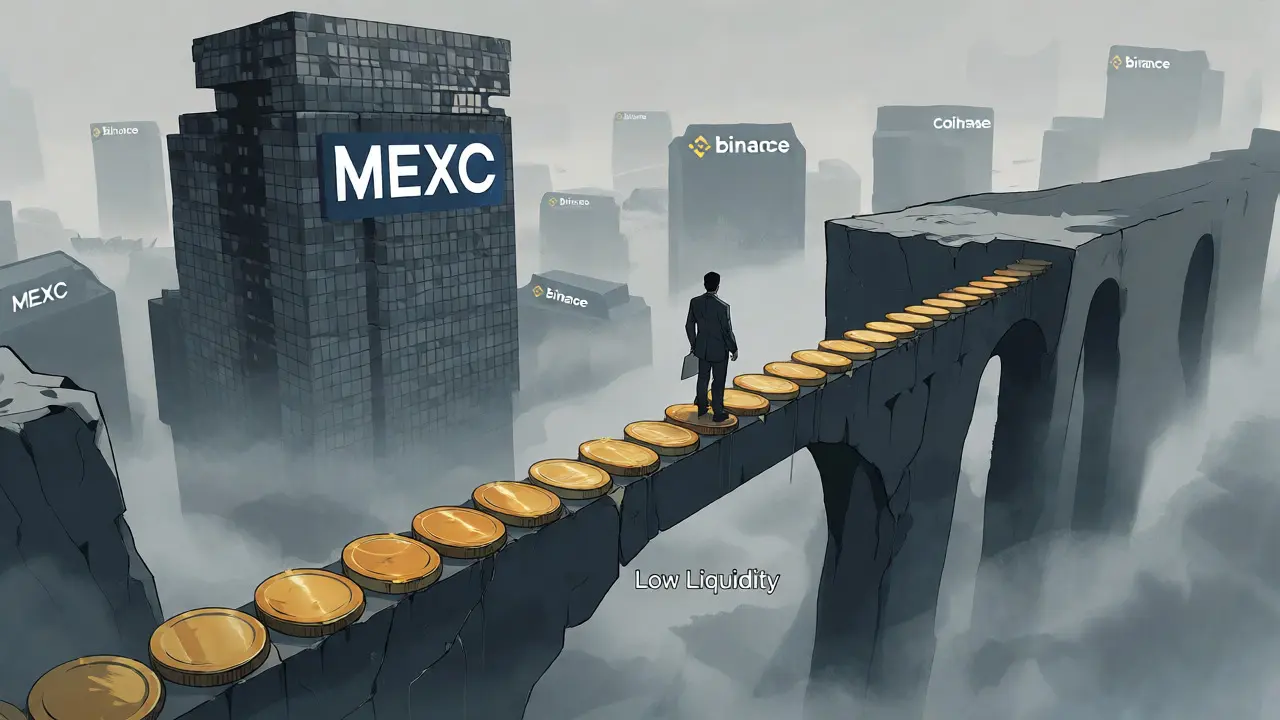
Here is a red flag that every investor should see immediately: FOGNET trades almost exclusively on MEXC Global. According to CoinGecko and CoinLore data from early September 2026, over 58% of the daily trading volume happens on the FOG/USDT pair on MEXC. Other exchanges like Coinbase or Binance don’t list it.
Why does this matter?
- Liquidity Risk: With daily volumes often dipping below $20,000, selling a large position could crash the price instantly due to thin order books.
- Exchange Dependency: If MEXC delists FOGNET, your exit strategy vanishes overnight.
- KYC Requirements: To trade on MEXC, you must complete identity verification, which adds friction compared to decentralized exchanges (DEXs).
There are no significant DeFi liquidity pools listed for FOGNET on major aggregators. This means you can’t easily swap FOG for ETH on Uniswap without risking high slippage or finding obscure pools with negligible depth.
The Ticker Collision Trap: Beware of Solana FOG
This is where beginners get burned. The ticker symbol "FOG" is not unique. If you search for "FOG" on DEX Screener or GeckoTerminal, you will find multiple tokens with the same name but completely different networks and purposes.
- FOGNET (Ethereum): The real estate NFT platform discussed in this article.
- FOG (Solana): A separate token launched in June 2025, likely a meme or utility token on the Solana network, trading at fractions of a cent with a much lower market cap (~$27k).
- FogSwap (Solana): Another unrelated asset.
Always verify the contract address. For FOGNET, ensure you are interacting with the Ethereum ERC-20 contract. Sending funds to a Solana wallet address for an Ethereum token (or vice versa) results in permanent loss.
Risks and Red Flags
When analyzing FOGNET, several warning signs stand out that differentiate it from established projects like Chainlink or Polygon:
1. Lack of Public Team Information
Major data aggregators like CoinMarketCap and CoinGecko do not list named founders or a clear corporate entity behind FOGNET. In the crypto world, anonymity isn't always bad (Bitcoin was anonymous), but for a utility token claiming to disrupt a regulated industry like real estate, it raises questions about accountability. Who is legally responsible if the smart contracts fail or the real estate deals fall through?
2. Minimal Community Engagement
There are no prominent Reddit threads, Twitter/X influencers driving constant hype, or Trustpilot reviews for FOGNET. This suggests a very small holder base. While this can mean less volatility from retail panic, it also means there is no safety net of community support during downturns.
3. Regulatory Ambiguity
Tokenizing real estate rights touches securities laws. Are these NFTs considered securities in the US or EU? FOGNET’s documentation doesn’t clearly outline its compliance framework. If regulators crack down on unregistered securities offerings, the token’s utility could be severely hampered.
4. Price Decline Trend
Historical data shows a steady decline. From highs around $0.14 in April 2025 to roughly $0.007 in September 2026, the token has lost over 95% of its value. This trend indicates weak demand and consistent selling pressure.
How to Acquire and Store FOGNET
If you still want exposure to this niche, here is the practical path forward:
- Create a MEXC Account: Sign up and complete KYC verification.
- Deposit USDT: Since FOG/USDT is the primary pair, deposit Tether (USDT) via TRC20 or ERC20 networks depending on MEXC’s current support.
- Buy FOG: Place a limit order to avoid slippage on the thin order book.
- Withdraw to Self-Custody: Do not leave large amounts on the exchange. Withdraw to a wallet like MetaMask or Ledger. Ensure you add the correct FOGNET contract address to your wallet interface to see your balance.
Remember, once you withdraw, you are solely responsible for managing the private keys. There is no customer service to help you recover funds if you lose your seed phrase.
Is FOGNET Worth Your Money?
FOGNET represents a speculative bet on the intersection of blockchain and real estate. It solves a real problem-illiquidity in development capital-but faces steep hurdles: low adoption, single-exchange dependency, and regulatory uncertainty.
It is suitable for investors who:
- Understand the risks of micro-cap altcoins.
- Are comfortable with low liquidity and potential inability to exit quickly.
- Believe in the long-term narrative of tokenized real estate despite current lackluster performance.
It is likely unsuitable for those seeking stability, regular dividends, or robust community governance. Treat any allocation to FOGNET as money you are willing to lose entirely, given the stark price trajectory since its launch.
Is FOGNET a good investment?
FOGNET is a high-risk, speculative asset. It has seen significant price declines since 2025 and suffers from low trading volume and limited exchange listings. While the concept of tokenizing real estate rights is innovative, the lack of public team information and regulatory clarity makes it a risky hold compared to more established cryptocurrencies.
Where can I buy FOGNET (FOG)?
As of September 2026, FOGNET is primarily traded on MEXC Global via the FOG/USDT pair. It is not widely available on major centralized exchanges like Binance or Coinbase, nor does it have significant liquidity on decentralized exchanges like Uniswap.
What is the difference between FOGNET and other 'FOG' tokens?
FOGNET is an Ethereum-based ERC-20 token focused on real estate NFTs. Other tokens using the ticker "FOG," such as those on the Solana network (e.g., FogSwap or generic Solana FOG), are entirely different projects with different blockchains, use cases, and contract addresses. Always verify the network and contract address before trading.
Does FOGNET pay dividends?
No, FOGNET does not currently offer traditional dividends. Its value proposition is tied to the appreciation of the token itself and the potential utility gains within the real estate NFT platform. Any returns would come from selling the token at a higher price than you bought it.
Is FOGNET audited?
Publicly indexed data from major aggregators does not highlight prominent third-party security audits for FOGNET's smart contracts. Investors should exercise caution and look for direct audit reports on the project's official GitHub or website, as the absence of widely cited audits increases technical risk.
Zach Evans
September 14, 2026 AT 13:52Let's be real for a second. This isn't a hidden gem; it's a graveyard with a fancy website. You're looking at a token that has lost over 95% of its value since April 2025. That is not a dip, that is a collapse. The fact that it trades almost exclusively on MEXC is the biggest red flag imaginable. If MEXC sneezes, FOGNET catches pneumonia. And don't even get me started on the 'FOG' ticker collision with Solana tokens. Beginners are going to send their life savings to the wrong chain and lose it all because they couldn't read a contract address. This project screams 'rug pull waiting to happen.' The lack of public team info? In a regulated industry like real estate? It’s laughable. Who do you sue when the smart contract fails? Ghosts? I’ve seen this movie before, and the ending is always the same: retail investors holding heavy bags while insiders quietly exit. Do yourself a favor and keep your wallet in your pocket. This isn't innovation, it's desperation dressed up as utility.
Alison Cooper
September 15, 2026 AT 16:00The concept itself is actually quite compelling if you look past the current market performance. Tokenizing development rights rather than just completed assets allows for capital formation at the earliest stage of a project. This is where the highest risk and highest reward exist. While the liquidity issues are severe, the structural idea addresses a genuine inefficiency in how small-scale developers access funding. We need to support these niche experiments even if they struggle initially, otherwise, we never move beyond speculative meme coins into true utility adoption.
musa farid
September 15, 2026 AT 22:48Brother please 😭😭😭 you are talking about hope but where is the volume?? $20k daily volume is nothing! 📉📉📉 I saw this pattern many times in Nigeria crypto scene. One exchange only means manipulation city. If MEXC delist tomorrow everyone cry. No audit = no trust. No team name = who run this show? 👻👻👻 Keep your money safe my friend. Real estate is hard enough without blockchain complications. Don't buy dust thinking it is gold. 🚫💰
John Morgan
September 16, 2026 AT 22:35This whole thing reeks of American financial engineering gone wrong. Why would anyone touch an asset that depends entirely on a single offshore exchange for survival? It shows a complete lack of confidence from major US institutions. If this was truly viable, Binance or Coinbase would have listed it by now. Instead, we get a ghost town trading on a platform known for listing obscure altcoins to extract fees from retail traders. It’s pathetic. The regulatory ambiguity mentioned in the article is understated. The SEC will crush this thing the moment they decide to look closely at unregistered securities offerings disguised as NFTs. Americans should stop throwing money at foreign-registered junk projects that have no domestic backing or legal clarity.
Abby Walker
September 17, 2026 AT 15:31I find the premise fundamentally flawed. Real estate is inherently illiquid and local. Attempting to force it onto a global, volatile blockchain network creates a mismatch of fundamental asset characteristics. Furthermore, the reliance on a single centralized exchange contradicts the decentralized ethos usually claimed by such projects. It is inefficient, poorly marketed, and likely destined for irrelevance. One does not invest in assets with negative momentum and zero institutional support unless one enjoys losing capital.
Samantha Dalton
September 19, 2026 AT 11:01i think yall r being too harsh on the tech side. yes the price is trash right now but the idea of buying dev rights is cool. i mean imagine owning a slice of a building before it even breaks ground. that kinda stuff could work if they actually got more exchanges. its risky sure but someone has to try these things. maybe in 5 yrs it blows up idk. dont hate on it just cause its small rn. give it time.
Steve McNeil
September 20, 2026 AT 00:44Listen to me closely because I am screaming this into the void! You are staring at a 95% drawdown and calling it a 'hidden gem'? That is not optimism, that is delusion! When a token loses nearly all its value, the market is telling you something profound: nobody wants it. The liquidity is non-existent. The community is silent. The team is anonymous. This is not a business opportunity; it is a trap for the unwary. Every single warning sign is flashing red simultaneously. To ignore this is to invite financial ruin upon yourself. Wake up!
Kyle Whitehead
September 21, 2026 AT 06:39dude seriously tho
one exchange
no audits
anonymous team
95% down
that's not a coin that's a tombstone waiting for a name
Dominic Hird
September 23, 2026 AT 04:05It is understandable to feel frustrated by the lack of transparency, yet we must remember that early-stage projects often operate with limited resources. The emotional weight of seeing a 95% decline can cloud our judgment regarding the underlying technological merit. Perhaps the silence in the community reflects a quiet accumulation phase rather than abandonment. We should approach this with empathy for those trying to innovate in a crowded space, even if the current metrics are discouraging.
emmanuel ivan
September 23, 2026 AT 10:35Dear readers, I wish to offer a slightly different perspective. While the risks are indeed substantial, the mechanism of using NFTs to represent contractual development rights is technically sound.
One must consider that Ethereum gas fees and congestion might have deterred earlier users, but Layer 2 solutions could eventually lower barriers. However, I agree that the single-exchange dependency is critical. If MEXC were to face regulatory scrutiny, FOGNET would suffer disproportionately. It is advisable to treat this as a high-risk venture capital bet rather than a liquid investment. Please ensure you verify the contract address carefully, as the confusion with Solana-based 'FOG' tokens is a common pitfall for newcomers. Typos in whitepapers often signal deeper operational disorganization, which seems to be present here.
Janine John
September 24, 2026 AT 09:53The grammatical precision of the analysis highlights the disparity between marketing claims and operational reality. A project claiming to disrupt a regulated industry must adhere to strict compliance standards, yet the absence of named founders suggests a lack of accountability. This discrepancy undermines investor confidence more effectively than any price fluctuation could.
Theresa Flores
September 25, 2026 AT 09:29There is a certain beauty in the struggle of small projects against the tide of mainstream apathy. Even if FOGNET fades away, the attempt to bridge real-world assets with digital ownership is a noble philosophical pursuit. We should celebrate the courage to build, regardless of the immediate financial outcome. 🌟 Every failure teaches us what works and what doesn't. Let us remain hopeful that the next iteration of this technology finds its footing. ✨
Sagan Bogda
September 26, 2026 AT 05:49You guys are overthinking it. It's a token. It goes up or down. Who cares about the team names? Bitcoin didn't have a CEO either. Just buy low sell high. Simple. Stop making it complicated with all these 'audit' and 'compliance' words. It's crypto. It's gambling. Get used to it.
dillon wright
September 26, 2026 AT 16:28honestly though i think the main issue is just visibility. if they got listed on binance or coinbase tomorrow the volume would probably spike. but until then yeah its pretty dead. not saying its a scam necessarily but its definitely not a safe bet. just gotta wait and see i guess.
Charlotte Owen
September 28, 2026 AT 07:38The data speaks for itself. Low volume, single venue, declining price. There is no need for speculation when the facts are this clear. Avoid.