What is Gorbagana (GOR)? Origin, Utility, and MemeFi Explained
You might have seen the name Gorbagana pop up in your feed, likely accompanied by images of trash cans or Oscar the Grouch. It’s easy to dismiss it as just another chaotic meme coin on the Solana blockchain. But if you dig past the jokes, you’ll find something different: a working developer network, a bridge system, and a story born from a very public argument about decentralization.
This article breaks down what Gorbagana actually is, how it started, and why some people call it the start of "MemeFi"-a mix of internet humor and real financial tools. We will look at the numbers, the tech, and the risks so you can decide if this fits your strategy.
The Origin Story: A Public Dare on X
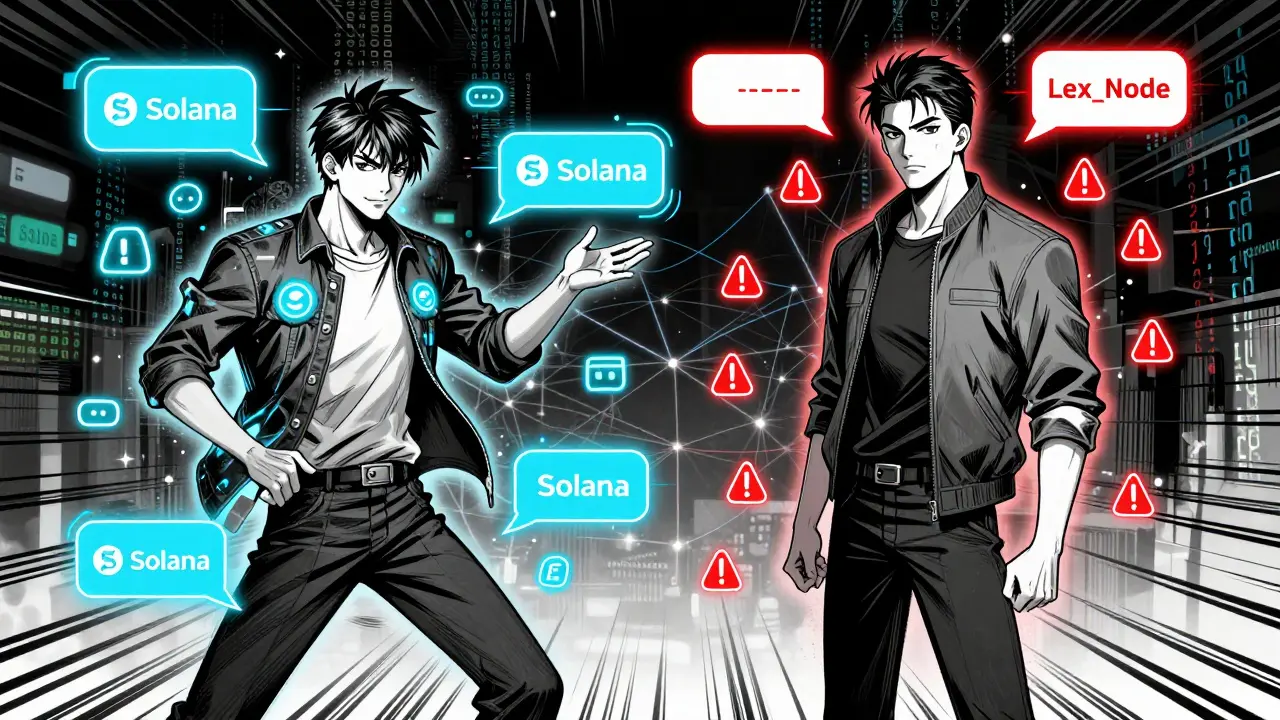
Gorbagana didn't start in a quiet lab or a venture capital boardroom. It started with an ego clash on social media. In early June 2025, Anatoly Yakovenko, the co-founder of Solana, got into a heated debate with Lex_Node, the founder of MetaLeX. The topic was standard for crypto Twitter: who controls the brand? Is Solana truly decentralized?
Yakovenko took the conversation to a new level. He publicly challenged the community to build a "Gorbagana chain" within 48 hours. It was a dare meant to prove that anyone could build infrastructure quickly on Solana. Two pseudonymous developers, going by Moonshot and MidTermDev, accepted the challenge. They launched the GOR token via Pumpfun, a popular launchpad on Solana, on June 19, 2025.
The result was explosive. Within 24 hours, the market cap went from near zero to roughly $40 million. That is a 400x increase in a single day. This wasn't driven by long-term utility at first; it was pure momentum fueled by Yakovenko’s attention and the viral nature of the debate. Even today, that origin story defines the project's identity.
What Makes Gorbagana Different? The MemeFi Concept
Most meme coins are just tokens. You buy them, you hope the price goes up, and you sell them. They usually have no code behind them other than the basic smart contract. Gorbagana tries to change that model. Analysts and the team itself refer to this as "MemeFi."
MemeFi combines the marketing power of memes with actual decentralized finance (DeFi) tools. Here is how Gorbagana does it:
- GorbaganaChain Devnet: This is a test network built on Solana. Developers use it to write and test code without risking money on the main network.
- gGOR Gas Token: To pay for transactions on this devnet, you need gGOR. This gives the main GOR token a specific job: it acts as fuel for development.
- Zero-Fee Bridge: There is a direct bridge that lets you swap GOR (on Solana) for gGOR (on GorbaganaChain) at a 1:1 rate. No middlemen, no hidden fees, and instant speed.
This setup means GOR isn't just a picture of a grouch. It is a key that unlocks access to a developer sandbox. If you want to learn how to build apps on Solana, Gorbagana offers a low-stakes environment to practice.
Tokenomics: Fair Launch vs. Insider Control
If you are tired of projects where the founders hold half the supply and dump it on retail investors later, Gorbagana’s structure might appeal to you. The project followed a strict "fair launch" model.
Here are the hard numbers:
| Attribute | Value |
|---|---|
| Total Supply | ~1 Billion (999.98 Million) |
| Circulating Supply | ~1 Billion (Nearly 100%) |
| Team Allocation | 0% |
| Vesting Period | None |
| Contract Standard | SPL (Solana Program Library) |
There were no venture capitalists involved. There are no locked tokens waiting to be released. Every single token was available to the public from minute one. This aligns the interests of the builders with the community because the developers don't have a guaranteed exit strategy via insider sales. However, it also means there is no central team holding back supply to prop up the price during a crash.
How to Use Gorbagana: Trading vs. Building
Your interaction with GOR depends entirely on what you want to get out of it. Are you a trader looking for quick gains, or a developer wanting to test code?
For Traders
You can trade GOR on centralized exchanges like CoinEx and LBank, or on decentralized platforms using the Solana ecosystem. Since the launch hype faded, the volatility remains high but the volume has settled. As of late 2025, the price hovered around fractions of a cent, with a market cap under $1 million. This makes it a micro-cap asset. High risk, high potential reward, but mostly driven by social sentiment rather than fundamental value changes.
For Developers and Learners
If you want to try the utility side, here is the workflow:
- Get a Wallet: Download a Solana-compatible wallet. Backpack wallet has native support for Gorbagana configuration.
- Acquire GOR: Buy GOR on an exchange or get some from a faucet if you are just testing.
- Bridge to Devnet: Use the official bridge interface to swap your GOR for gGOR. The rate is fixed at 1:1.
- Deploy Code: Use the gGOR to pay for gas fees while deploying smart contracts on the GorbaganaChain devnet.
This process mimics real-world development on Solana but in a controlled, experimental environment. It’s a great way to understand how gas fees and bridges work without spending significant amounts of SOL.

Risks and Realities: What You Need to Know
Let’s be clear about the downsides. Gorbagana is not a finished product. It is an experiment.
No Mainnet Yet: Currently, GorbaganaChain exists only as a devnet (development network). There is no live mainnet where real economic activity happens outside of testing. The roadmap hints at a future mainnet, but there are no confirmed dates. Until then, the "utility" is limited to learning and testing.
Extreme Volatility: Remember the 400x rise? The fall was just as sharp. From a peak of ~$40 million market cap, GOR dropped to under $1 million. This is typical for meme coins. The price is heavily influenced by tweets from influencers and the general mood of the Solana community. If the narrative shifts, the price can drop rapidly.
Liquidity Risks: While listed on several exchanges, the trading volume is relatively low compared to major coins. This means large orders can slip the price significantly. Always check the order book before entering a position.
Is Gorbagana Worth Your Attention?
Gorbagana occupies a unique spot in the crypto world. It proves that a meme can bootstrap serious infrastructure. The fact that a functional devnet and bridge exist shows technical competence that most meme coins lack. For developers, it’s a useful sandbox. For traders, it’s a speculative play tied to the Solana ecosystem's health and social media trends.
If you are looking for stable, long-term store of value, this is not it. But if you are interested in seeing how community-driven projects evolve, or if you want to experiment with Solana development tools in a fun, low-pressure environment, Gorbagana delivers on its promise of being more than just a joke.
What is the current price of Gorbagana (GOR)?
The price of GOR is highly volatile. After launching in June 2025 with a massive spike, it settled into a micro-cap range. Recent data shows prices fluctuating in the fraction-of-a-cent band (e.g., around $0.0005), with a market cap under $1 million. Always check a live tracker like CoinMarketCap or CoinGecko for the second-by-second price.
Is Gorbagana a scam?
Based on available information, Gorbagana appears to be a legitimate community project with verifiable code on the Solana blockchain. It features a fair launch with no insider allocations and functional infrastructure (devnet and bridge). However, "legitimate" does not mean "safe investment." Like all meme coins, it carries extreme financial risk due to volatility and lack of established utility beyond experimentation.
What is the difference between GOR and gGOR?
GOR is the main token traded on Solana and various exchanges. gGOR is the gas token used specifically on the GorbaganaChain devnet. You can swap GOR for gGOR at a 1:1 ratio using the project's zero-fee bridge. You use GOR for trading and holding, and gGOR to pay for transaction fees when developing on their test network.
Who created Gorbagana?
The token was launched by pseudonymous developers known as Moonshot and MidTermDev. They responded to a public challenge from Solana co-founder Anatoly Yakovenko to build a chain in 48 hours. The project is community-owned with no traditional corporate structure or venture capital backing.
Does Gorbagana have a mainnet?
As of late 2025, GorbaganaChain operates only as a devnet (development network). There is no live mainnet yet. The roadmap mentions a potential future mainnet, but no official launch date has been set. Users should treat the current infrastructure as a testing ground rather than a production environment.
Where can I buy Gorbagana (GOR)?
You can trade GOR on centralized exchanges such as CoinEx and LBank. It is also tradable on decentralized platforms within the Solana ecosystem, often via liquidity pools on Raydium or through the initial Pumpfun launchpad interface. Ensure you are using the correct contract address to avoid fake tokens.
What is "MemeFi"?
MemeFi is a term coined to describe projects like Gorbagana that combine meme culture branding with functional DeFi infrastructure. Unlike traditional meme coins that rely solely on hype, MemeFi projects offer tangible tools like bridges, developer networks, or staking mechanisms, aiming to provide utility alongside speculation.