What is Kudai (KUDAI) Crypto? A Deep Dive into the Meme Coin
Imagine buying a lottery ticket that costs less than a penny. Now imagine that ticket is tied to a cryptocurrency with no clear purpose, conflicting technical details, and price swings that could wipe out your investment in hours. That is essentially what Kudai (KUDAI) represents in today’s market. It is a micro-cap token that tries to ride every trending wave at once-artificial intelligence, non-fungible tokens, bots, and memes. But does it have any real substance, or is it just another speculative experiment on the blockchain?
If you are seeing KUDAI pop up in social media feeds or small trading groups, you probably want to know if it is worth your attention. The short answer is: proceed with extreme caution. This article breaks down what Kudai actually is, where it lives on the blockchain, why its data is so confusing, and what the risks look like for someone considering a trade.
The Identity Crisis of Kudai
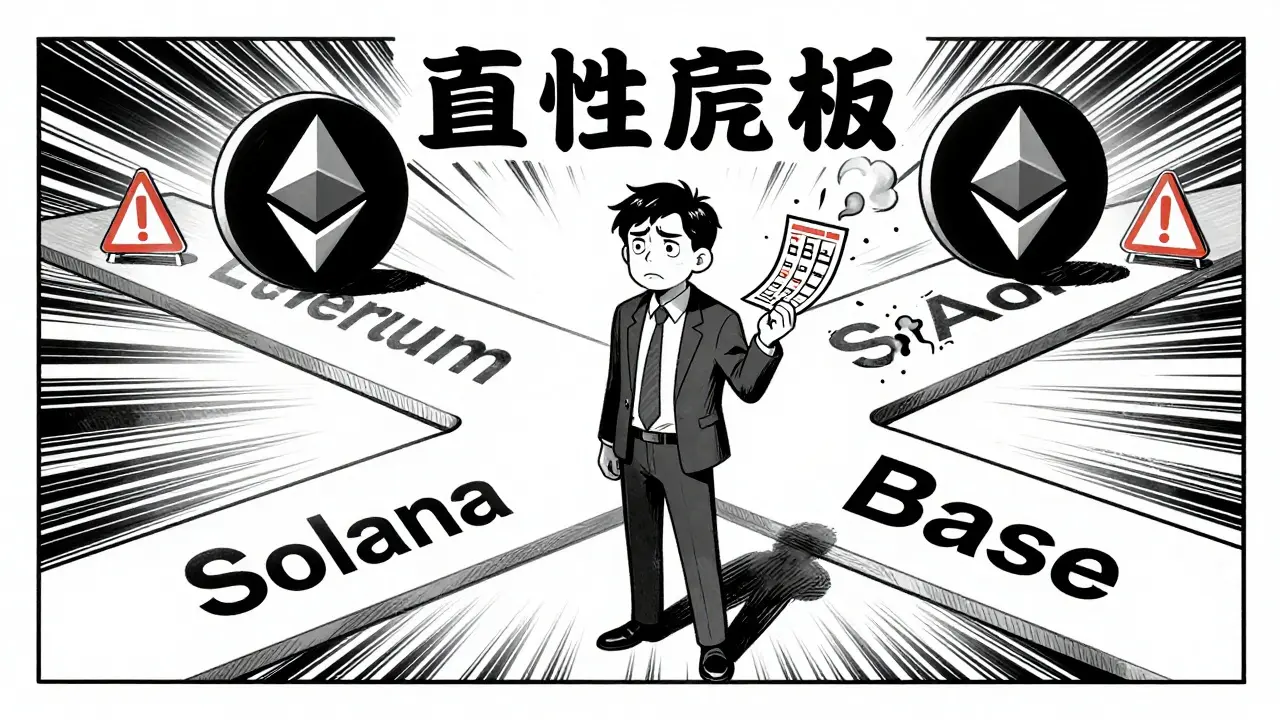
One of the first red flags when researching KUDAI is that nobody seems to agree on its basic technical foundation. In the world of crypto, knowing which blockchain a token lives on is crucial because it determines which wallet you need and how transactions work. Here is the problem: major tracking platforms give contradictory information.
CoinPaprika, a widely used crypto data aggregator, lists KUDAI as an ERC-20 token built on the Ethereum blockchain. However, other sources like CoinSwitch claim it operates on the Solana blockchain. Then there is the trading activity itself, which appears primarily on the Base network, a Layer-2 solution built on Ethereum. This discrepancy isn’t just a minor error; it suggests a lack of transparency or poor documentation from the project team. For a trader, this confusion creates a significant usability challenge. You might buy the token on one platform only to find you cannot move it to your preferred wallet because the network address is wrong.
Market Reality: Micro-Cap Volatility
Let’s look at the numbers, because they tell a stark story about liquidity and risk. As of mid-2026, KUDAI ranks around #2465 globally by market capitalization. Its total market cap hovers near $1.1 million. To put that in perspective, Bitcoin’s market cap is in the trillions. KUDAI is what we call a "micro-cap" asset. These coins are highly susceptible to manipulation. A single large trade can move the price by 20% or more because there is not enough depth in the order books to absorb the shock.
| Metric | Value / Observation |
|---|---|
| Circulating Supply | 100,000,000,000 (100 Billion) KUDAI |
| Market Cap | ~$1.1 Million USD |
| All-Time High (ATH) | $0.000169 |
| All-Time Low (ATL) | $0.00000646 |
| Current Price Range | $0.000008 - $0.000012 (varies by exchange) |
| 24-Hour Volume | ~$1,200 - $3,100 (extremely low) |
Notice the circulating supply: 100 billion tokens. When a coin has such a massive supply but a tiny market cap, the price per token will always be fractions of a cent. This psychological pricing often attracts retail investors who think, "If I buy 10 million tokens for $100, and the price goes to $0.01, I’ll be rich." But remember, for the price to go to $0.01, the market cap would need to jump from $1 million to $1 billion. That requires massive institutional interest, which currently does not exist for KUDAI.
Where Is KUDAI Actually Traded?
You won’t find KUDAI on major centralized exchanges like Coinbase or Binance. Instead, it trades almost exclusively on decentralized exchanges (DEXs). The primary venue is Uniswap V3 and Uniswap V4 running on the Base chain. There is also some minimal activity on Alien Base v2.
This means trading KUDAI requires a few steps:
- You need a self-custody wallet like MetaMask.
- You must configure your wallet to connect to the Base network.
- You need ETH or BASE tokens to pay for gas fees.
- You swap your assets for KUDAI directly through the DEX interface.
The danger here is slippage. With daily volumes sometimes dipping below $1,300, if you try to sell a relatively large amount of KUDAI, you might not find enough buyers at the current price. Your sale could crash the price further, resulting in a much lower payout than expected. Additionally, since these are unregulated DEX pairs, there is no customer support if something goes wrong with the transaction.

The "Narrative Soup" Problem
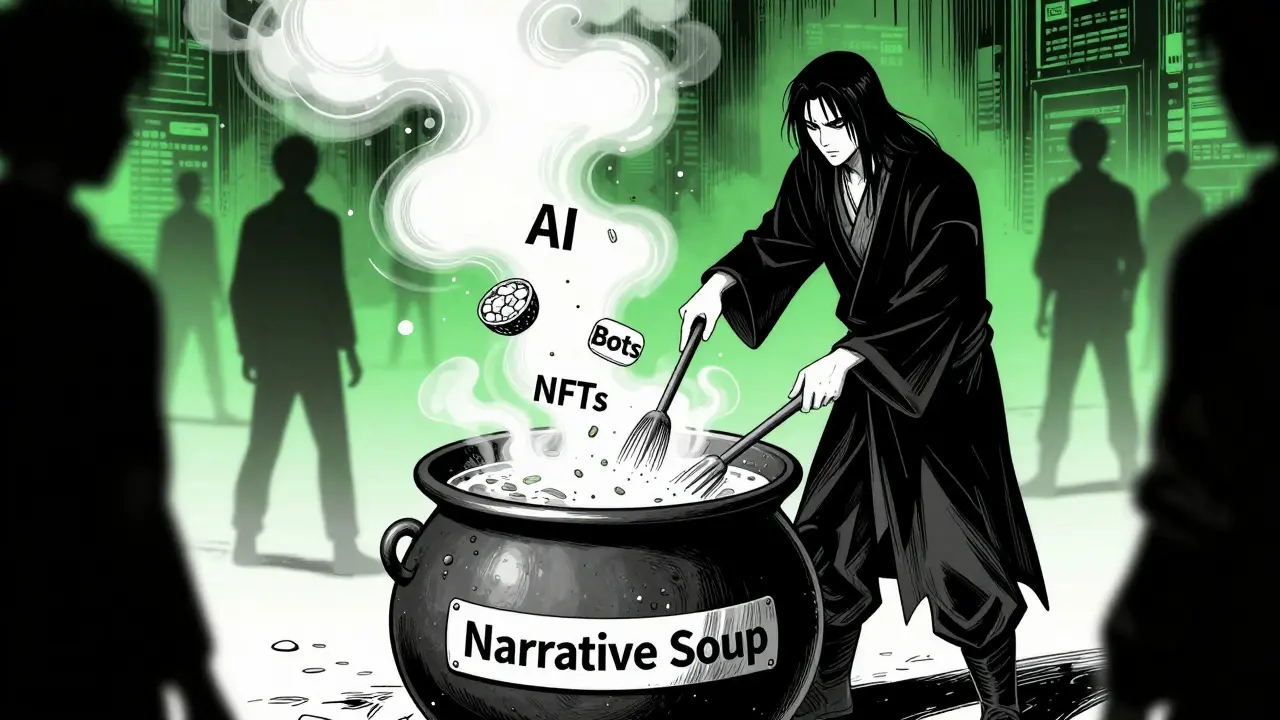
Kudai is categorized under Artificial Intelligence, Bots, Meme, and Non-Fungible Tokens (NFTs). On paper, this looks like a powerhouse combination. In reality, it is what analysts call "narrative soup." The project attempts to attach itself to every hot topic in crypto without providing specific technical integration for any of them.
There is no public whitepaper detailing how AI algorithms improve the token’s utility. There is no evidence of a bot ecosystem that generates revenue. There is no NFT marketplace linked to the token. Without concrete use cases, KUDAI functions purely as a speculative vehicle. Its value is driven entirely by sentiment-what people believe it might become, rather than what it actually does. When the hype cycle shifts away from memes or AI wrappers, tokens like KUDAI tend to lose their remaining value rapidly.
Price Predictions and Technical Indicators
Looking at historical performance helps set realistic expectations. KUDAI hit an all-time high of $0.000169. Currently, it trades roughly 93% below that peak. Recent technical analysis from platforms like CoinCodex shows a bearish outlook. The Fear & Greed Index for the broader market may be in "Greed," but for KUDAI specifically, the momentum is neutral to negative.
Some algorithmic models suggest a short-selling opportunity, predicting a potential drop in value over the coming months. While shorting is risky for beginners, the prediction highlights the lack of upward catalysts. Key moving averages, such as the 50-Day SMA ($0.00001365) and 200-Day SMA ($0.00001816), sit above the current price, acting as resistance levels. Until KUDAI can break above these levels with significant volume, the trend remains downward.
Is KUDAI a Scam or Just a Bad Investment?
It is important to distinguish between a scam and a failed project. A scam involves intentional deception to steal funds. A bad investment is a project that fails to deliver value due to poor execution, lack of interest, or market forces. Based on available data, KUDAI appears to fall into the latter category, though the ambiguity regarding its blockchain origin raises concerns about transparency.
The team behind KUDAI has not released detailed roadmaps or regular updates. The documentation is sparse. This silence is common among meme coins that launch quickly, pump in price during initial hype, and then fade into obscurity. If you hold KUDAI, understand that the likelihood of it recovering to its all-time high is statistically low without a major, unforeseen partnership or listing on a top-tier exchange.
Risk Management for Curious Traders
If you still decide to explore KUDAI, treat it as entertainment spending, not investing. Follow these rules:
- Never invest money you cannot afford to lose. Assume the value could go to zero.
- Verify the contract address. Because there are multiple claims about its blockchain, ensure you are interacting with the correct smart contract on the Base network to avoid fake tokens.
- Watch the liquidity. Check the pool size on Uniswap before buying. If the pool is shallow, exiting your position will be difficult.
- Take profits early. If the price spikes 50% or 100%, consider selling half your position to recover your initial capital.
In the crowded landscape of cryptocurrencies, standing out requires either superior technology or a massive community. KUDAI currently lacks both. It serves as a reminder that in crypto, correlation with trending topics like AI does not equal intrinsic value. Always do your own research, verify sources independently, and prioritize projects with clear utility and transparent teams.
Is Kudai (KUDAI) a legitimate cryptocurrency?
KUDAI is a registered token that trades on decentralized exchanges, so it exists on the blockchain. However, its legitimacy is questioned due to conflicting information about its underlying blockchain (Ethereum vs. Solana) and a lack of clear utility or active development. It is considered a high-risk speculative asset rather than a established financial instrument.
Which blockchain does KUDAI operate on?
There is significant confusion. Some data providers list it as an ERC-20 token on Ethereum, while others claim Solana. Trading activity is primarily observed on the Base network (an Ethereum Layer-2). Users should verify the specific contract address on Base before attempting to trade to ensure compatibility with their wallet.
Can I buy KUDAI on Coinbase or Binance?
No, KUDAI is not listed on major centralized exchanges like Coinbase, Binance, or Kraken. It is only available on decentralized exchanges (DEXs) such as Uniswap on the Base chain. This requires using a crypto wallet like MetaMask and swapping tokens directly, which carries higher risks of scams and user error.
Why is the price of KUDAI so volatile?
KUDAI has a very low market capitalization (around $1.1 million) and extremely low trading volume. In such "micro-cap" assets, even small buy or sell orders can cause massive percentage swings in price. Additionally, the lack of deep liquidity means there are fewer buyers and sellers to stabilize the price.
Does KUDAI have any real-world use case?
Currently, no. While KUDAI is tagged with categories like AI, NFTs, and Bots, there is no public documentation or technical evidence showing how the token integrates with these technologies. It functions primarily as a meme coin, deriving value from speculation and community sentiment rather than utility.
What is the All-Time High of KUDAI?
The all-time high for KUDAI was approximately $0.000169. As of recent data, the token trades significantly below this level, often around $0.000010, representing a decline of over 90% from its peak. This indicates substantial loss of value since its highest point.
Is it safe to store KUDAI in my wallet?
Storing the token in a reputable self-custody wallet like MetaMask is technically safe from theft, provided you keep your private keys secure. However, the safety of the *asset* is questionable due to the project's lack of transparency and potential for the token to become worthless. Ensure you add the correct Base network token address to avoid storing a fake version of the coin.
Tim Lefebvre
June 23, 2026 AT 08:44hey guys just wanted to drop a quick tip here since i see a lot of people getting confused about the wallet setup. if you are trying to swap on base network make sure you actually add the custom rpc details to metamask otherwise it will just fail every time and eat your gas fees. also double check that contract address because there are like five fake kundai tokens out there right now that look identical but have different decimals. i lost like 50 bucks last week cause i clicked a link from discord and bought the wrong one so please be careful. its not worth the stress honestly.
Monica Pathammavong
June 24, 2026 AT 00:35you people are literally blind if you think this has any merit. the fact that coinpaprika says ethereum and others say solana is not a glitch it is a deliberate obfuscation tactic by dev teams who want to hide their footprints before they rug pull. i have analyzed hundreds of these micro-cap garbage coins and they all follow the exact same pattern of narrative soup. ai plus nft plus meme equals zero utility. stop pretending you are investing when you are just gambling with money you clearly do not understand how to manage. it is pathetic really.
Dr Lynea LaVoy
June 25, 2026 AT 09:24i completely agree with the cautionary tone here but i think we should also acknowledge why people are drawn to these assets in the first place. often it is not just greed but a feeling of being left behind by traditional financial systems that feel inaccessible or rigged against average folks. while kundai specifically looks like a bad bet due to the lack of transparency, the underlying desire for high-risk high-reward opportunities is very real for many retail investors. perhaps instead of just dismissing them as reckless, we can focus on educating about proper risk management and liquidity pools so they can at least protect themselves from total loss. empathy goes a long way in crypto communities.
Matthew Malone
June 26, 2026 AT 08:47typical american ignorance. you sit there talking about risk management like you invented it while ignoring the fact that this whole sector is built on sand and hype. i would rather put my money into gold or actual industrial stocks than some digital lottery ticket created by anonymous kids in a basement. but sure keep telling yourself stories about decentralization while you get rekt by insiders who know exactly when to dump their bags on you losers.
aaliyah zahid
June 26, 2026 AT 17:38oh wow matthew you are really bringing the sunshine today aren't you? maybe if you spent less time hating and more time understanding how blockchain technology works you might realize that innovation often comes from messy beginnings. not every project needs to be perfect day one to have value in the ecosystem. though i will admit this specific coin does look pretty sketchy with all those conflicting blockchain claims. still no need to be such a jerk about it.
Erik Kirana
June 27, 2026 AT 19:30The fundamental flaw in your argument lies in the assumption that 'innovation' requires such blatant disregard for basic accounting principles and technical consistency. 📉 It is quite amusing to watch individuals defend projects that have no whitepaper, no team, and no utility. This is not innovation; it is exploitation wrapped in buzzwords. I suggest you read up on smart contract security audits before you start praising 'messy beginnings.' Most of these tokens are honeypots designed to trap liquidity. Do not fall for the FOMO. 🚫💸
dan kaffeman
June 29, 2026 AT 10:42look at erik playing the smart guy with his emojis and formal language. nobody asked for your opinion on smart contract security. most of us already know these things are risky. what bugs me is the sheer audacity of these devs thinking they can print money off our backs. i hate seeing people lose their savings because they cant tell the difference between a legitimate project and a scam. it makes the whole industry look bad and gives regulators an excuse to crack down on everything. typical weak behavior.
Meg Gran
June 30, 2026 AT 10:11the philosophical implication of trading a token with no intrinsic value is fascinating isnt it? we are essentially betting on the collective delusion of thousands of strangers. if everyone believes kundai is worth something then it is worth something until someone decides to sell. it is a perfect metaphor for modern society where perception outweighs reality. but yeah lets not get too deep into the existential dread of our financial choices shall we? just buy the dip and cry later.
Alexander DeVries
July 1, 2026 AT 21:00Let us channel this energy into something productive. Instead of doom-scrolling through charts of dying coins, consider setting aside a small percentage of your portfolio for genuine learning. The crypto space moves fast, and staying informed is key. However, always remember that capital preservation is paramount. If a project cannot explain its own blockchain existence clearly, it is a red flag that should not be ignored. Stay sharp and stay disciplined.
Mark Corpuz
July 2, 2026 AT 23:55I have been tracking the volume on Uniswap for this pair over the past month, and the liquidity depth is remarkably shallow. A single sell order of $5,000 could easily crash the price by 40% due to the thin order book. This confirms the article's point about slippage being a major risk factor. For anyone considering entering this position, it is crucial to understand that exiting may be significantly more difficult than entering, especially during periods of market volatility.
Steven Jacobowitz
July 3, 2026 AT 00:52why does everyone keep using big words when simple ones work better? look at the chart. it goes down. lots. the supply is huge so the price stays tiny. if you want to get rich quick you probably wont. just buy bitcoin or save your money. these meme coins are traps for people who dont read. i tried buying some once and couldnt even sell it without losing half my money to fees. stupid idea overall.
Yogendra Dwivedi
July 4, 2026 AT 18:56It is interesting to observe the psychological aspect of holding such volatile assets. Many traders hold onto hope rather than facts, which leads to significant emotional distress when the inevitable correction occurs. From a supportive perspective, it is important to recognize that taking losses is part of the learning process in any investment journey. Perhaps focusing on stablecoins or established blue-chip cryptocurrencies would provide a more balanced approach to wealth accumulation without the extreme anxiety associated with micro-cap speculation.
Sylvia Mossman
July 6, 2026 AT 00:59everyone here is acting like this is some groundbreaking discovery that kundai is a bad coin. newsflash: 99% of crypto is trash. you do not need a ten-page article to tell you that a coin with no utility and conflicting data is a scam. it is obvious. the only reason people are discussing this is because they are hoping for a miracle pump. wake up and smell the coffee. this coin is dead weight.