What is Lombard (BARD) Crypto Coin? A Guide to Bitcoin Liquid Staking
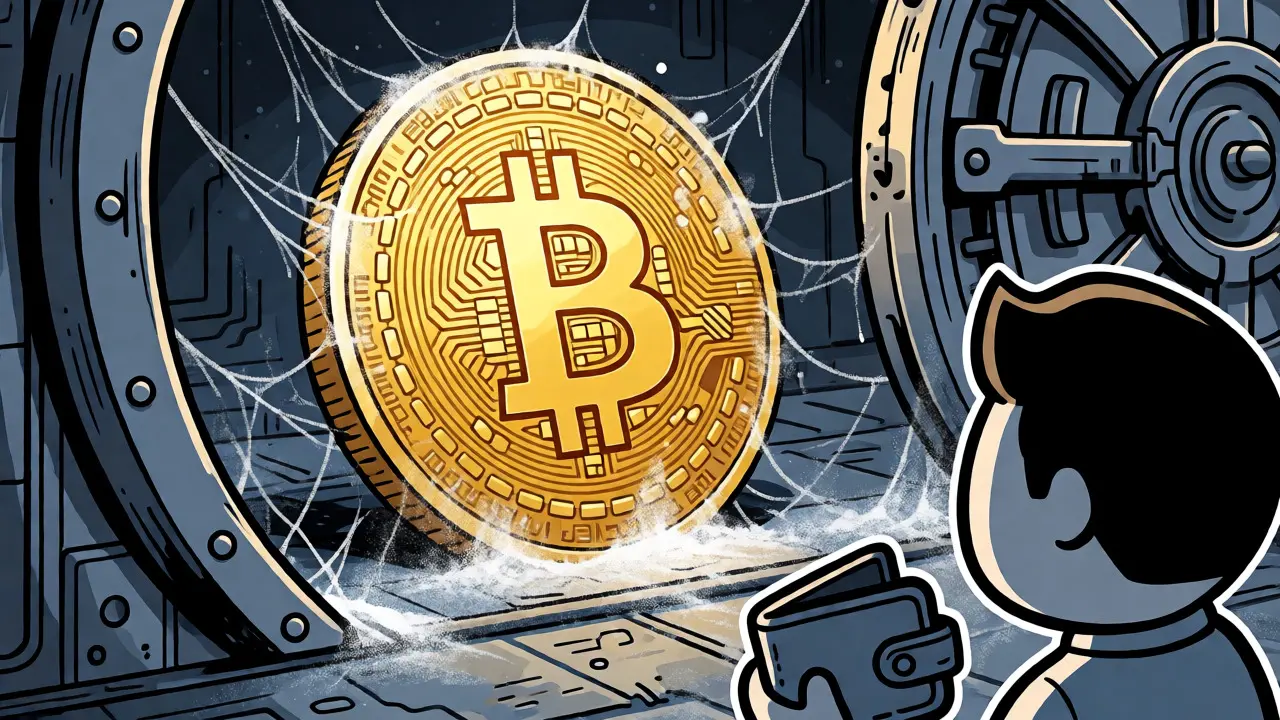
Bitcoin has long been the digital gold of the crypto world. It sits in wallets, doing nothing but waiting for its price to go up. But what if you could make that idle Bitcoin work for you? That is the core promise of Lombard. This protocol isn't just another meme coin or a simple exchange token; it is infrastructure designed to turn Bitcoin from a passive store of value into an active financial asset.
If you have heard rumors about BARD and are wondering what it actually does, you are in the right place. We will break down how Lombard works, why the LBTC token matters, and whether this new player in the DeFi space is worth your attention. No jargon-heavy fluff-just clear answers about how this system unlocks value for Bitcoin holders.
The Core Problem: Idle Bitcoin
Here is a stark reality: over $1 trillion worth of Bitcoin exists, yet most of it generates zero yield. In traditional finance, if you own stocks or bonds, they often pay dividends or interest. In crypto, holding native BTC means your assets sit still. You can lend them out on centralized exchanges, sure, but that comes with counterparty risk-you trust a company not to lose your coins.
Lombard solves this by introducing LBTC, a liquid staked version of Bitcoin. Think of LBTC as a receipt that proves you deposited Bitcoin into the Lombard system. Unlike older wrapped Bitcoin solutions like WBTC, which just sit there, LBTC actively earns rewards. How? By leveraging the Babylon Bitcoin Staking Protocol. When you stake BTC through Lombard, it secures other networks, and those networks pay rewards. Those rewards are converted back into more BTC, increasing your holdings without you having to sell.
| Feature | Native BTC | WBTC (Wrapped) | LBTC (Lombard) |
|---|---|---|---|
| Yield Generation | No | No | Yes (via Staking) |
| Backing | Native Chain | Custodial Trust | 1:1 Native BTC + Babylon Security |
| DeFi Compatibility | Low (Limited L2s) | High (EVM Chains) | High (Cross-Chain via CCIP) |
| Governance Role | None | None | BARD Token Governance |
How the Architecture Works
You might be asking, "Is this safe?" That is the million-dollar question in DeFi. Lombard doesn't rely on a single smart contract or a small team of validators. Instead, it uses a consortium approach. The security model depends on Babylon, a protocol that allows Bitcoin to secure other proof-of-stake chains without locking up BTC on a sidechain.
The process looks like this:
- Deposit: You send native Bitcoin to the Lombard vault.
- Mint: The protocol mints LBTC, giving you a liquid token representing your stake.
- Stake: Your underlying BTC participates in Babylon staking, earning rewards from partner chains.
- Compound: Rewards are sold for BTC and added to the pool, increasing the value of each LBTC relative to BTC.
To move this LBTC across different blockchains, Lombard uses Chainlink's Cross-Chain Interoperability Protocol (CCIP). This ensures that whether you are using Ethereum, Arbitrum, or Solana, your LBTC behaves consistently. This cross-chain capability is crucial because Bitcoin itself doesn't support complex smart contracts. LBTC acts as the bridge, letting Bitcoin participate in lending markets, liquidity pools, and derivatives platforms.
The Role of the BARD Token
Now, let's talk about BARD. If LBTC is the product, BARD is the fuel. It is the native governance and security token of the ecosystem, built on the Ethereum blockchain. Why do you need it?
First, BARD secures the cross-chain bridge. To keep the minting and burning of LBTC honest, BARD holders stake their tokens. This creates a layer of economic security separate from the Bitcoin consensus. If someone tries to cheat the system, their staked BARD gets slashed. Second, BARD governs the protocol. Holders vote on key parameters, such as which new blockchains to integrate or how to adjust fee structures.
As of late 2025, BARD had a maximum supply capped at 1 billion tokens. It serves as an economic coordination mechanism. The team describes it as having a "generational horizon," meaning it is designed to remain relevant as Bitcoin infrastructure evolves over decades, not just months. For investors, holding BARD provides priority access to certain features and preferred terms within the ecosystem, effectively making you a stakeholder in the future of Bitcoin DeFi.
Vault Strategies and DeFi Marketplace
Lombard isn't just about staking; it offers automated investment strategies called Vaults. Imagine you want to earn yield on your Bitcoin but don't know which DeFi protocol is safest. Lombard's Vault Strategies handle the heavy lifting. They automatically deploy your LBTC across various protocols for lending, borrowing, or providing liquidity.
These vaults are managed by algorithms that rebalance positions and compound rewards. You don't need to manually hop between chains or claim rewards daily. The DeFi Marketplace dashboard lets you filter these opportunities by risk level, chain, or expected return. It’s like having a professional fund manager for your Bitcoin, but one that operates transparently on-chain.
For institutional users, this is particularly attractive. Major entities like Galaxy Digital, Kiln, P2P.org, and Figment act as Finality Providers on Babylon. Their involvement signals that serious capital trusts this infrastructure. If you are a retail user, you benefit from the same security standards used by these institutions.
Risks and Considerations
No technology is perfect, and Lombard has trade-offs. The biggest hurdle for some users is the unstaking period. While LBTC is liquid and can be traded instantly, unstaking BARD from the bridge security layer takes up to 21 days. This lock-up ensures network stability but limits immediate liquidity for those specific roles.
Additionally, complexity is a factor. Understanding how Babylon staking interacts with EVM chains requires more knowledge than simply buying WBTC. There is also smart contract risk. Although audited and backed by a consortium of 14 trusted institutions, code can always have bugs. Finally, market volatility affects BARD's price. Recent data shows significant price swings, reflecting the broader crypto market's mood rather than just protocol fundamentals.
Why Lombard Matters Now
We are seeing a shift where Bitcoin is no longer just a speculative asset. Institutions want yield. Retail users want utility. Lombard addresses both by creating a standardized way to use Bitcoin in decentralized finance. By focusing exclusively on Bitcoin, it avoids the dilution of trying to be everything to everyone. It doubles down on unlocking the largest crypto asset's potential.
The vision is ambitious: every Bitcoin holder becomes a user, every institution a client, and every developer a builder. With partnerships spanning multiple blockchains and integration with tools like Symbiotic for restaking, Lombard is positioning itself as the foundational layer for Bitcoin's financialization.
What is the difference between LBTC and WBTC?
While both represent Bitcoin on other chains, WBTC is custodial and does not generate yield. LBTC is non-custodial, secured by Babylon staking, and accrues value through staking rewards, making it a yield-bearing asset.
How do I earn rewards with BARD?
You can stake BARD tokens to secure the LBTC cross-chain bridge. This involves locking your tokens for a period (up to 21 days for unstaking) to earn governance rights and security rewards.
Is Lombard safe for large investments?
Lombard uses a multi-layered security model involving Babylon Bitcoin Staking and a consortium of 14 institutional partners. However, as with any DeFi protocol, smart contract risks exist, so diversification is recommended.
Which blockchains support LBTC?
LBTC is integrated across 12 leading blockchains, including Ethereum, Arbitrum, Optimism, and others, utilizing Chainlink CCIP for seamless cross-chain transfers.
Who backs the Lombard project?
The project is supported by major institutional players such as Galaxy Digital, Kiln, P2P.org, and Figment, who serve as Finality Providers on the Babylon network.