What Is Medusa (MEDUSA) Crypto? A Deep Dive Into the Token, Risks, and Reality
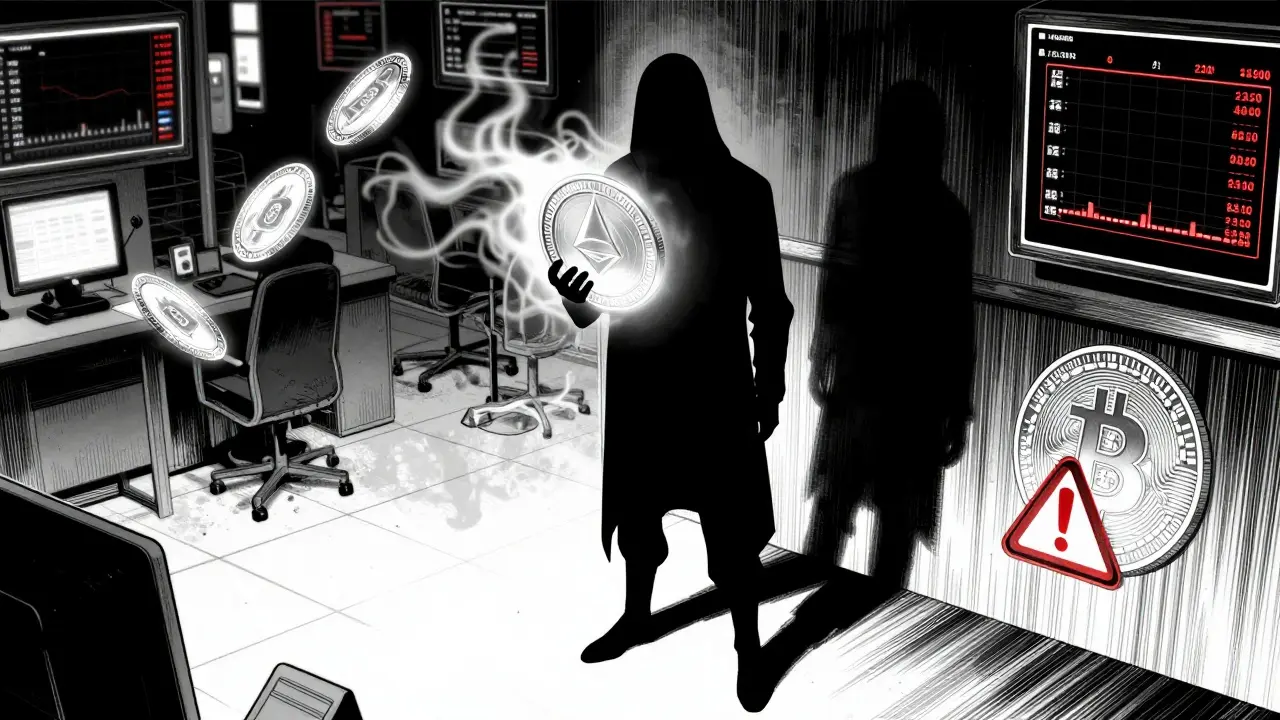
Have you ever stumbled upon a cryptocurrency with a catchy name but absolutely no information behind it? That is exactly what happens when you search for Medusa (medusa.cx), also known by the ticker MEDUSA. It sits in that strange, shadowy corner of the crypto market where tokens exist on exchange lists but vanish from serious discussion. As of mid-2026, this digital asset is a textbook example of a "micro-cap" mystery: listed on major platforms like Binance and Coinbase, yet trading with near-zero volume and offering zero transparency regarding its team or technology.
If you are holding MEDUSA or considering buying it because you saw a low price tag, you need to understand what you are actually dealing with. This isn't Bitcoin, Ethereum, or even a popular meme coin with a massive community. This is an illiquid, undocumented token that poses significant risks to anyone looking for genuine investment value. Let's break down exactly what we know-and more importantly, what we don't-about Medusa (medusa.cx).
The Core Problem: What Actually Is Medusa (MEDUSA)?
When you look up Medusa (medusa.cx) on data aggregators like CoinMarketCap or Investing.com, the description is painfully generic. You will see phrases like "a digital cryptocurrency enabling peer-to-peer transactions." That sentence could apply to thousands of coins. It tells you nothing about why this specific token exists, who built it, or what problem it solves.
Here is the hard truth: as of early 2026, there is no publicly available whitepaper, no identified founding team, and no clear utility case for MEDUSA. Unlike established projects that publish roadmaps and governance models, Medusa operates in silence. The lack of documentation is not just a minor oversight; it is a major red flag. In the crypto world, anonymity combined with a lack of technical substance usually points to one of two things: an abandoned project or a speculative shell designed solely for short-term trading pumps.
Key Takeaways
- Extremely Low Liquidity: Trading volumes are often reported as $0.00, meaning you might buy the token but struggle to sell it later without crashing the price.
- No Clear Utility: There is no whitepaper, team, or use case beyond being a tradable asset on exchanges.
- Name Confusion Risk: Do not confuse this coin with MedusaJS (e-commerce software), Medusa AI (LLM framework), or Sea Gods paddle boards.
- Micro-Cap Status: With a market cap historically under CA$60,000, this is a high-risk speculative asset, not a stable investment.
Avoiding the Trap: Name Confusion and Identity
Before you spend another minute researching MEDUSA, you must ensure you aren't looking at the wrong thing. The name "Medusa" is incredibly common in tech and consumer goods. If you search broadly, you will find several unrelated entities that have nothing to do with this cryptocurrency.
For instance, there is MedusaJS, a popular open-source headless commerce platform built with Node.js. Developers use it to build online stores. Then there is the Medusa inference acceleration framework, a tool used in artificial intelligence to speed up large language models. Even in the physical world, Sea Gods sells a highly rated inflatable stand-up paddle board called the "Medusa CX." None of these projects issue a crypto token. None of them are related to the MEDUSA coin you see on Binance or Bitget.
This confusion is dangerous. If you read positive reviews about the stability of the Sea Gods paddle board or the efficiency of the AI framework, those accolades do not transfer to the crypto token. The MEDUSA token stands alone, isolated from any reputable brand equity associated with those other names.

Market Data: The Story Behind the Zeroes
Numbers don't lie, but they can be misleading if you don't know how to read them. Let's look at the actual data points available for Medusa (medusa.cx) between 2025 and 2026.
In January 2025, Coinbase listed MEDUSA with a price of approximately CA$0.0002753. The market capitalization was reported at roughly CA$55,055. But here is the critical detail: the 24-hour trading volume was CA$0.00. What does that mean? It means that while the token had a theoretical value, nobody was actually buying or selling it during that period. The market was effectively frozen.
Fast forward to May 2026, and CoinMarketCap shows the price and volume as US$0.00. This doesn't necessarily mean the token is worthless in a literal sense, but it does indicate that the data feeds from major exchanges have either stopped updating or there is simply no liquidity to report. When a token has zero volume, you cannot rely on its listed price. If you tried to sell a large amount of MEDUSA right now, the price would likely drop to near zero instantly because there are no buyers waiting in the order book.
| Metric | Data Point (Jan 2025) | Data Point (May 2026) | Implication |
|---|---|---|---|
| Price | CA$0.0002753 | US$0.00 (No Data) | Extreme volatility or delisting from active markets |
| Market Cap | ~CA$55,055 | N/A | Micro-cap status; negligible total value |
| 24h Volume | CA$0.00 | US$0.00 | Illiquid; difficult to enter or exit positions |
| Circulating Supply | ~200 Million (Estimated) | Unknown | High supply with low demand = low individual token value |
The implied circulating supply of around 200 million tokens (derived from the Jan 2025 market cap and price) suggests that even if the project gained some traction, the sheer number of coins would dilute their individual value significantly. Without a mechanism to burn tokens or lock them up, inflationary pressure remains high.
Where Can You Buy It? (And Should You?)
You might wonder, "If it's so obscure, how do people get it?" The answer lies in the centralized exchanges that still list it. Platforms like Binance and Bitget have dedicated pages explaining how to acquire MEDUSA. On Binance, you can technically buy it using a credit card, swap it via Web3 wallets, or trade it on decentralized exchanges linked to the platform. Bitget allows users to convert airdrops and rewards into MEDUSA through their internal swap tools.
However, availability does not equal endorsement. Just because Binance lists a token doesn't mean they vouch for its quality. These platforms host thousands of assets, many of which are speculative experiments. The presence of a "How to Buy" guide is standard operational procedure for exchanges, not a signal of investment merit. In fact, the lack of featured marketing, research reports, or analyst commentary for MEDUSA on these same platforms highlights its low priority status.
Furthermore, because the token lacks a clearly disclosed smart contract address or blockchain network in mainstream summaries, verifying its security is nearly impossible for the average user. Is it an ERC-20 token on Ethereum? A BEP-20 token on BNB Chain? Without this information, you cannot check for audits, ownership controls, or potential vulnerabilities like hidden minting functions.
The Verdict: High Risk, Low Reward
So, what should you do with this information? If you are looking for a long-term investment, Medusa (medusa.cx) fails almost every criterion. There is no team to hold accountable, no product to use, and no community to support growth. The historical data shows a trajectory of stagnation, with trading activity drying up over time.
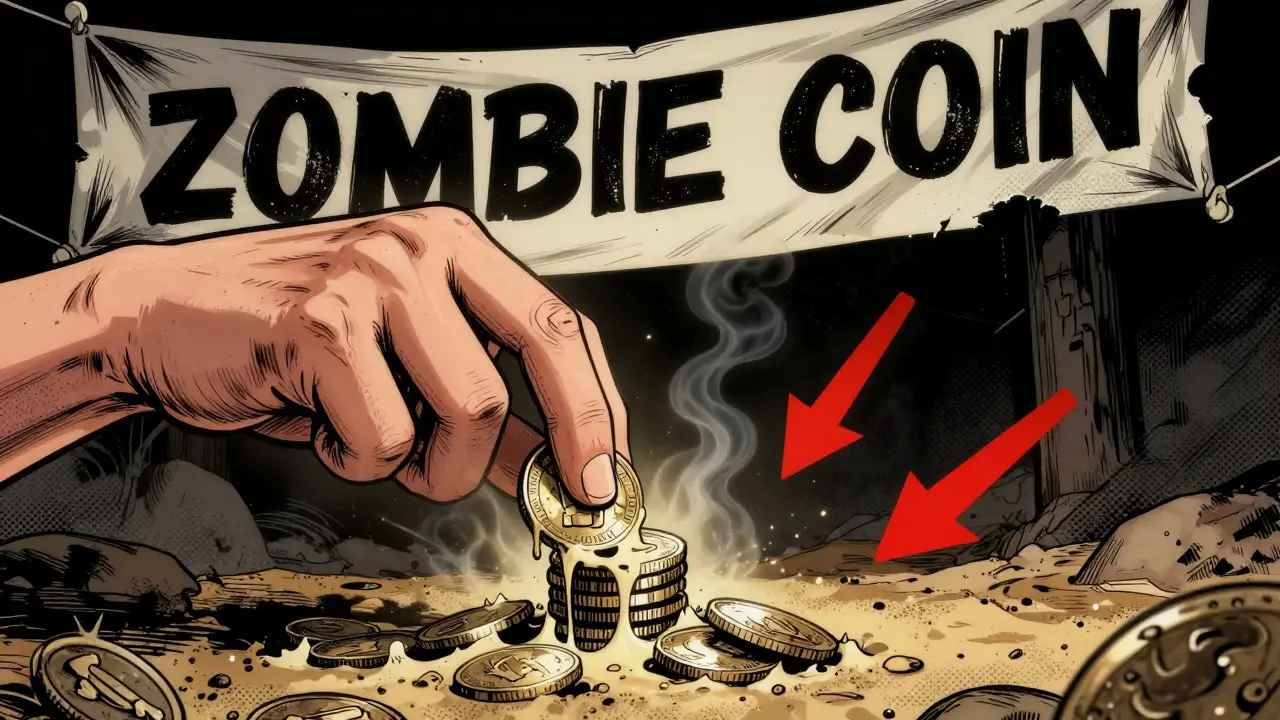
If you are a seasoned trader looking for extreme speculation, you might view the low entry price as an opportunity. But remember the liquidity trap. Buying MEDUSA is easy; selling it is the challenge. With volumes frequently hitting zero, you risk getting stuck with tokens that have no market value. This is the definition of a "zombie coin"-listed but dead.
Always prioritize transparency. Look for projects that publish regular updates, have verified teams, and show consistent trading volume. Medusa (medusa.cx) offers none of these safeguards. Treat it with extreme caution, and never invest money you cannot afford to lose entirely.
Is Medusa (MEDUSA) a scam?
While there is no definitive proof of malicious intent labeling it a "scam," Medusa (medusa.cx) exhibits many characteristics of high-risk, potentially abandoned projects. The lack of a public team, missing whitepaper, and near-zero trading volume make it indistinguishable from scams that disappear after raising initial interest. Proceed with extreme caution.
Which blockchain is MEDUSA built on?
As of mid-2026, major data aggregators like CoinMarketCap and Coinbase do not explicitly state the underlying blockchain (e.g., Ethereum, BNB Chain) or provide a smart contract address for MEDUSA. This lack of technical transparency makes it difficult to verify the token's security or origin.
Can I mine Medusa (MEDUSA) coins?
Investing.com describes MEDUSA generically as using "mining," but this is likely boilerplate text. Most modern micro-cap tokens are pre-mined or distributed via exchanges rather than mined by users. There is no evidence of a functional mining protocol for MEDUSA, and attempting to mine it would likely yield no results.
Why is the price showing $0.00?
A price of $0.00 on platforms like CoinMarketCap usually indicates that there has been no trading activity for an extended period, causing the data feed to default to zero. It reflects extreme illiquidity rather than the token having absolute zero value, though practically, it is very difficult to sell at any meaningful price.
Is Medusa (medusa.cx) related to MedusaJS or the AI framework?
No. MedusaJS is an e-commerce software platform, and the Medusa AI framework is a tool for accelerating large language models. Neither of these projects issues the MEDUSA cryptocurrency token. They are completely unrelated entities sharing only a similar name.
dan kaffeman
June 25, 2026 AT 08:06You people are absolutely delusional if you think this is anything other than a complete waste of time. It’s pathetic that Americans are falling for these obvious scams while the rest of the world figures out how to make actual money. This token is garbage and anyone holding it is an idiot.
Meg Gran
June 25, 2026 AT 15:53oh wow, look at dan being all haterific again lol. like seriously tho, who cares about medusa? its just another ghost town on the blockchain. i mean, sure, maybe someone will wake up one day and decide to pump it, but until then its just digital dust floating in the void. typical crypto nonsense where we pretend zero volume means potential instead of just dead.
Alexander DeVries
June 27, 2026 AT 09:27Let us consider the broader implications of such market stagnation. While Mr. Kaffeman displays a lack of decorum, his point regarding liquidity remains technically valid. One must approach these micro-cap assets with rigorous scrutiny and perhaps a bit more optimism for those willing to do the due diligence, though I admit the data here is quite sparse.
Mark Corpuz
June 28, 2026 AT 20:34The distinction between MedusaJS and this token is crucial, as many developers might confuse the two. It is unfortunate that the name has been co-opted by a project with no apparent utility or team transparency. Clarity in naming conventions would prevent much of this confusion among retail investors.
Steven Jacobowitz
June 29, 2026 AT 18:24I am trying to understand the underlying mechanics here. Is there any hidden smart contract functionality that we are missing? The jargon used in these exchanges often obscures the reality of what is happening. We need to dig deeper into the codebase to see if there are any minting functions or admin privileges that could be exploited by insiders.
Yogendra Dwivedi
June 30, 2026 AT 12:52It is important to remain calm and analyze the facts without emotion. The lack of information is indeed concerning, but panic selling is not the answer either. Perhaps the project is simply in stealth mode, although that is rare for tokens listed on major exchanges. We should wait for official announcements before making any drastic moves.
Sylvia Mossman
July 1, 2026 AT 07:41Actually, I think everyone here is missing the point. Maybe the zero volume is a feature, not a bug. Imagine if this was a testnet for some new privacy protocol that nobody knows about yet. You guys are so quick to call it dead when it might just be quiet. Stop following the herd and think for yourselves.
Alexis Abster
July 3, 2026 AT 06:31Oh my goodness, can you feel the despair radiating from these charts?! It is truly heartbreaking to see such potential go to waste. I really believe that somewhere out there, a team is working hard on something amazing, and they just haven't told us yet! We have to keep the faith, right? Even if the price is literally nothing!
Brad Ranks
July 5, 2026 AT 02:58This whole situation is a absolute circus. First you get confused with the paddle board, then you find out the coin doesn't even exist on paper. It's like a joke gone wrong. I laughed so hard I cried when I saw the market cap. What a disaster.
Lee Paige
July 6, 2026 AT 01:57Do not trust the exchanges. They are part of the deep state apparatus designed to drain your wealth through these fake tokens. MEDUSA is likely a honeypot created by globalist elites to track dissenters. The silence is intentional. They want you to buy in so they can rug pull you into oblivion. Stay vigilant.
Caitlin Donahue
July 6, 2026 AT 16:23i mean its prolly fine n stuff but yeah dont buy it lol