What is Teleport System Token (TST)? A Guide to Bitcoin DeFi
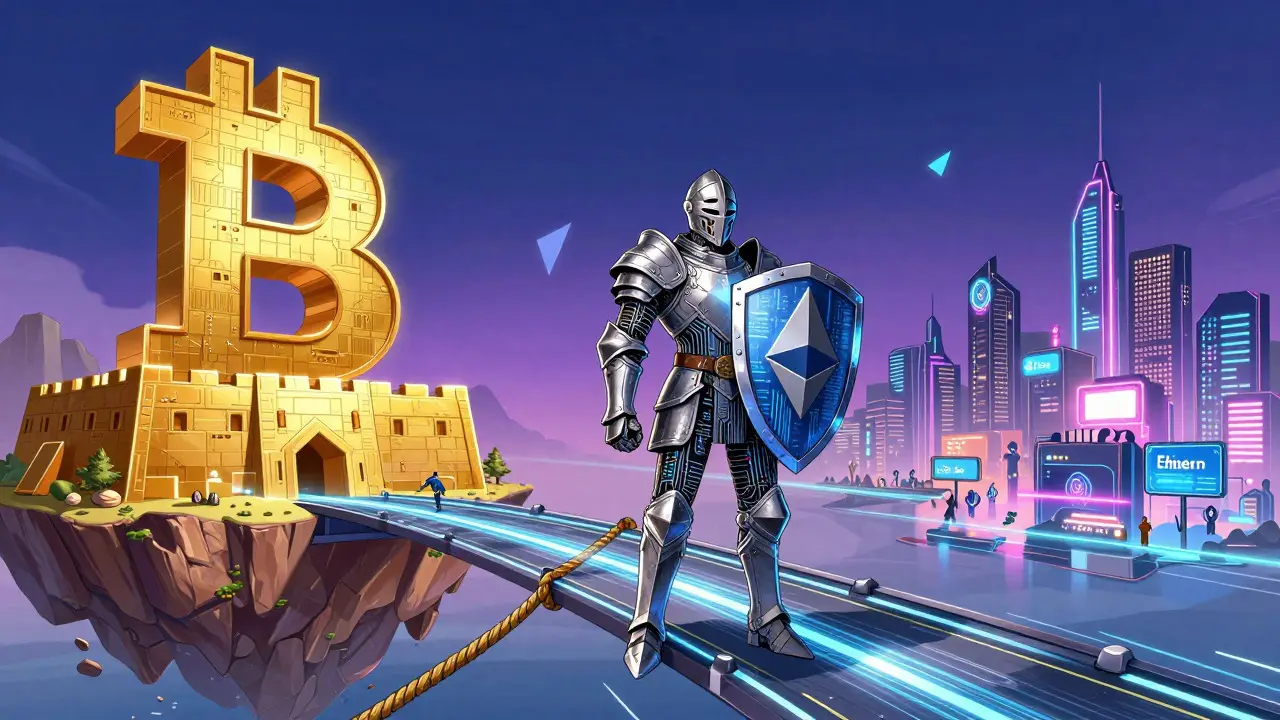
Bitcoin has always been the king of crypto, but it’s notoriously stubborn when it comes to playing nice with other blockchains. You can’t easily use your Bitcoin in Ethereum-based decentralized finance (DeFi) apps without trusting a middleman who could vanish overnight or get hacked. That’s the gap Teleport System Token (TST) tries to fill. It isn’t just another meme coin; it’s the fuel for a trustless bridge that connects Bitcoin to Ethereum and other EVM chains. If you’ve ever wondered how to bring Bitcoin’s security into the fast-moving world of NFTs and yield farming without handing over your keys to a centralized exchange, this article breaks down exactly what TST is, how it works, and whether it’s worth your attention.
The Core Problem: Why We Need a Trustless Bitcoin Bridge
Let’s be real: moving Bitcoin to Ethereum usually feels like crossing a river on a rickety rope bridge. Most existing solutions are "custodial." This means you send your BTC to a company’s wallet, they mint an equivalent amount on Ethereum, and you pray they don’t go bankrupt or lose their private keys. If they do, your money is gone. TeleportDAO solves this by using light-client verification technology. Instead of trusting a human or a corporation, the network trusts code. It verifies Bitcoin block headers directly on the target chain, ensuring that what you see on Ethereum actually exists on Bitcoin.
This approach eliminates the single point of failure. When you use a traditional bridge, you’re taking on counterparty risk. With TeleportDAO, the risk shifts to smart contract bugs, which are auditable and transparent. The system relies on a decentralized network of Relayer nodes. These aren’t employees; they are independent actors incentivized by TST rewards to keep the data accurate. If a Relayer tries to cheat the system, their collateral gets slashed, and users are compensated. It’s a game-theoretic safety net that keeps everyone honest.
How Teleport System Token Powers the Ecosystem
TST is an ERC-20 utility token, meaning it lives on Ethereum-compatible networks. But don’t let the low price tag fool you; its role is critical. Think of TST as the electricity that runs the TeleportDAO machine. Without it, the lights go out. The token serves four main purposes within the ecosystem:
- Governance: Holders vote on protocol upgrades and treasury allocations.
- Relayer Rewards: Nodes that verify Bitcoin data earn TST for their work.
- Transaction Fees: Users pay small fees in TST to process bridges and swaps.
- Premium Access: Certain features on the marketplace require holding or staking TST.
The economics here are designed to align incentives. Because Relayers stake collateral, they have skin in the game. They won’t validate fake transactions because losing their stake hurts more than gaining a few extra tokens. This creates a self-sustaining loop where security improves as the network grows.
Key Applications: TeleSwap and TeleOrdinal
The theory sounds great, but what can you actually do with it? TeleportDAO isn’t just abstract tech; it powers two concrete applications that solve real user problems.
TeleSwap: Bridging Bitcoin Assets
TeleSwap is the decentralized protocol for moving Bitcoin and Bitcoin-based tokens (like BRC-20s) across chains. Imagine you hold some Ordinals or BRC-20 tokens on Bitcoin. Normally, trading these requires staying within the Bitcoin ecosystem, which lacks the liquidity and speed of Ethereum. TeleSwap lets you wrap these assets and trade them for ERC-20 tokens. It’s fast, affordable, and crucially, non-custodial. You keep control of your private keys throughout the process.
TeleOrdinal: A Marketplace for Bitcoin NFTs
If you’re into digital art, this might be the killer feature. TeleOrdinal is a cross-chain marketplace specifically for Bitcoin NFTs (Ordinals). The big draw here is that you can buy and sell Ordinals using stablecoins from any EVM blockchain. You don’t need to convert your USDC back to BTC first. This removes friction and opens up Bitcoin NFTs to a much larger pool of buyers who prefer using Ethereum-native currencies.
Tokenomics: Supply, Vesting, and Market Position
Understanding the supply schedule is vital for any investor. As of early 2024 data, the maximum total supply of TST is capped at 1 billion tokens. However, not all of these are circulating yet. Only about 300 million were in circulation, creating a scenario where future unlocks could impact price volatility.
| Metric | Value / Details |
|---|---|
| Token Type | ERC-20 Utility Token |
| Max Supply | 1,000,000,000 TST |
| Circulating Supply | ~300,000,000 TST |
| Vesting Schedule | Ecosystem funds unlock over 3 years; Team/Investors have a 6-month cliff followed by 1-year vesting. |
| Primary Use Cases | Governance, Relayer Rewards, Fees, Premium Access |
The vesting structure is fairly standard for crypto projects. Ecosystem funds trickle out over three years to ensure long-term development. Team and investor tokens face a six-month lock-up period before they start unlocking. This prevents immediate dumping after launch. Community sale tokens partially unlock at the Token Generation Event (TGE), with the rest vesting over six months. This gradual release helps stabilize the market but means new supply hits the order book regularly.

Challenges and Risks You Should Know
No project is perfect, and TST faces significant hurdles. First, it operates in a crowded niche. While it claims to be one of the few trustless bridges for Bitcoin to EVM, competitors like Wormhole and newer solutions are aggressive. TST’s market capitalization is tiny-hovering around $340,000 in recent reports-which ranks it deep in the thousands among cryptocurrencies. Low liquidity makes it volatile; a small buy or sell order can swing the price dramatically.
Another concern is adoption. The technology is sound, but does anyone use it? Early feedback suggests smooth bridging for small amounts, but transaction speeds can lag during Bitcoin network congestion. Since the light-client method processes Bitcoin block headers, heavy traffic on Bitcoin slows down the bridge. Additionally, the extremely low token price (fractions of a cent) often scares off retail investors who confuse unit price with value. Remember, a cheap coin isn’t necessarily a bargain if the market cap is already maxed out relative to its utility.
Is TST Worth Your Attention?
If you believe in the growth of Bitcoin DeFi, TeleportDAO offers a compelling narrative. It addresses the fundamental interoperability issue between the most secure blockchain (Bitcoin) and the most versatile smart contract platform (Ethereum). For traders and developers comfortable with cross-chain complexity, TST provides governance rights and fee discounts. However, for the casual holder, the risks outweigh the rewards due to low liquidity and uncertain adoption rates. Keep an eye on the integration of Ordinals and BRC-20 standards; if those ecosystems explode, TST could ride that wave. If they stagnate, the token may struggle to find relevance.
What is the primary function of Teleport System Token?
TST acts as the native utility token for the TeleportDAO ecosystem. It is used for governance voting, paying transaction fees, rewarding Relayer nodes that maintain the bridge infrastructure, and accessing premium features on platforms like TeleSwap and TeleOrdinal.
How does TeleportDAO differ from centralized Bitcoin bridges?
Unlike centralized bridges that rely on trusted third parties to hold your Bitcoin, TeleportDAO uses light-client verification. This allows target chains to independently verify Bitcoin block headers against consensus rules, eliminating counterparty risk and enabling a truly trustless experience.
Can I buy Bitcoin NFTs with stablecoins using TST?
Yes, through the TeleOrdinal marketplace. This platform allows users to purchase Bitcoin NFTs (Ordinals) using stablecoins from various EVM blockchains, removing the need to convert assets back to Bitcoin manually.
What is the maximum supply of TST?
The maximum total supply of Teleport System Token is capped at 1 billion tokens. However, only a portion of these tokens are currently in circulation, with the remainder subject to a structured vesting schedule over several years.
Is TST a good investment for beginners?
Probably not. TST is a micro-cap asset with high volatility and low liquidity. It requires an understanding of cross-chain mechanics and carries significant risk. Beginners should prioritize established assets before considering niche interoperability tokens like TST.
Valentine Okpala
August 29, 2026 AT 09:23oh look another bridge that promises to be trustless but will probably rug us all in six months 😂🙄 i love the enthusiasm though, truly inspiring how we keep trying to fix something bitcoin explicitly refuses to be fixed 🥲✨
Sean Dalton
August 30, 2026 AT 15:03absolute garbage analysis. you think some random ERC-20 token is going to solve Bitcoin's interoperability issues? please. the Irish know better than to trust American tech hype. this is just another way for VC money to exit while retail bags hold the dust. pathetic.
Bill Patterson
August 31, 2026 AT 08:16meh
low cap means low liquidity means easy manipulation. not worth the risk unless you enjoy watching charts do nothing for weeks. skip it.
Rachel Etheridge
September 1, 2026 AT 13:36omg wait so if i buy ordinals with stablecoins does that mean i dont have to sell my eth first?? thats actually huge!! 🤯 i always get confused by the cross chain stuff and this seems so much easier?? like finally someone thought about regular people??
i feel like everyone ignores how hard it is to move assets between chains right now so this could be a game changer even if the token itself is meh?? idk maybe im being too optimistic but the user experience part sounds legit 👀💖
Matt Reckdenwald
September 1, 2026 AT 15:00I appreciate the breakdown of the risks here. It’s refreshing to see a guide that doesn’t just shout 'to the moon' but actually acknowledges the friction points like network congestion and smart contract vulnerabilities. The idea of aligning incentives through staking is elegant, even if the current market cap makes it feel a bit precarious. We need more nuanced discussions like this rather than blind faith or blind hate. Keep exploring those Ordinal integrations; they might be the real sleeper hit here.
Emmanuel Ogbomo
September 3, 2026 AT 13:35The philosophical underpinning of moving value without trusting humans is fascinating. It shifts the paradigm from institutional trust to cryptographic truth. However, one must consider the social layer. If the relayers are incentivized correctly, the system works. If the community loses faith, the code doesn't matter. TST seems to be betting on both technical robustness and community cohesion. A delicate balance indeed.
Melanie Armijo
September 4, 2026 AT 18:33We often mistake utility for value. Just because a token powers a machine doesn't mean the machine has customers. TeleportDAO has a nice engine, sure. But do people want to drive it? That is the existential question. If Ordinals remain a niche hobby, TST remains a niche toy. Interoperability is a solution looking for a problem until mass adoption arrives. Patience is the only currency that matters here.
Laine Van Sickle
September 4, 2026 AT 21:10ugh so complicated. why cant we just use normal banks?? lol jk but seriously this whole defi thing stresses me out. i read the part about the vesting schedule and got a headache. i just want to buy my little art pictures without worrying about cliffs and unlocks. feels like its designed to confuse us poor people so the rich guys can make money off our confusion. sad really. 💔😩
Ashwin Bhandurge
September 5, 2026 AT 20:43Let’s break this down! 🚀 First, understand the tech: Light-client verification is superior to custodial bridges. Second, look at the utility: Governance + Fees + Rewards = Demand. Third, assess the risk: Micro-cap volatility is high, but the upside potential is massive if Bitcoin DeFi explodes. Don’t let fear paralyze you. Do your research, manage your position size, and believe in the infrastructure! You’ve got this! 💪🔥
Teresa Watson
September 5, 2026 AT 23:56trustless my ass. you still trust the code. you still trust the devs who wrote the code. you still trust the auditors who said the code was fine. nothing is trustless. its just different trusts. stop pretending this is magic. its just software with bugs waiting to happen. wormhole already did this better. next.
Nadia Christian
September 6, 2026 AT 12:40This is exactly what America needs!!! Strong, independent technology that doesn't rely on foreign entities!! 🇺🇸 We should be leading this charge!! Why are we letting other countries define DeFi standards?? TST represents freedom from centralized intermediaries!! Buy American crypto!! Support innovation!! This is the future!! Period. Full stop. End of discussion. !!!
jeffry jones
September 7, 2026 AT 11:06Good take. Liquidity mining rewards for Relayers create a sticky ecosystem. If TVL grows, fee revenue supports TST price floor. Watch the BRC-20 volume metrics closely. That's the leading indicator. Simple as that.
Aaliyah Simpson
September 8, 2026 AT 19:46they're gonna dump on us. watch the team unlock date. it's always the same story. new project, big promises, then insiders cash out while we hold the bag. light client tech is cool but who cares if nobody uses it? smells like a pump and dump scheme to me. stay woke fam. 👁️👄👁️
Paul Needham
September 9, 2026 AT 01:25Oh great, another article explaining things I already knew but didn't care about. You spent 10 paragraphs talking about 'skin in the game' when the real issue is that no one wants to bridge $50 worth of BTC because gas fees eat the profit. Typical over-engineered nonsense. Fix UX before you fix philosophy.
Jillian Pye
September 10, 2026 AT 17:50I find the concept of 'trustlessness' deeply comforting yet paradoxical. To trust nothing is to trust everything implicitly. It is a heavy burden for the individual user to bear full responsibility for their keys and their choices. Perhaps that is the true cost of freedom. Not monetary, but psychological. 🌿
Jarnail Singh
September 11, 2026 AT 22:16As an Indian, I have watched the global financial landscape shift dramatically, and I must say that projects like TeleportDAO represent the quintessential evolution of decentralized finance which we in the subcontinent have been eagerly awaiting with bated breath because our banking systems are notoriously slow and bureaucratic compared to these innovative blockchain solutions that allow for seamless cross-border transactions without the pesky intervention of middlemen who charge exorbitant fees for their services... 🙏😊
Ashwini Chaskar
September 13, 2026 AT 03:54it is morally wrong to gamble with money you cannot afford to lose especially when the underlying asset is this volatile and the team is unknown and the audits are questionable and honestly if you are buying this you are probably ignoring your family obligations to chase a dream that may never come true. just saying. 🤷♀️
Sam Ariafar
September 14, 2026 AT 02:42It is irresponsible to promote speculative assets to beginners. The narrative is compelling, but the data is thin. One should prioritize capital preservation over yield chasing in such micro-cap environments. Ethical investing requires due diligence, not hope.
Rajni Mathur
September 15, 2026 AT 03:18Dear Author,
While the exposition regarding the technical architecture of TeleportDAO is commendable, one must critically evaluate the sustainability of the economic model. The reliance on TST for governance implies a plutocratic structure where wealth dictates influence, potentially alienating smaller stakeholders. Furthermore, the comparison with Wormhole lacks sufficient empirical depth; specific latency benchmarks and failure rate statistics would significantly enhance the analytical rigor of this piece. As a seasoned observer of the digital asset sphere, I posit that without substantial proof-of-reserve transparency, the 'trustless' claim remains merely aspirational rather than factual. Kindly consider incorporating third-party audit reports for a more balanced perspective.
Sincerely,
A Concerned Analyst 🧐📊