What is Test (TST) Crypto Coin? The Accidental Meme Token Explained
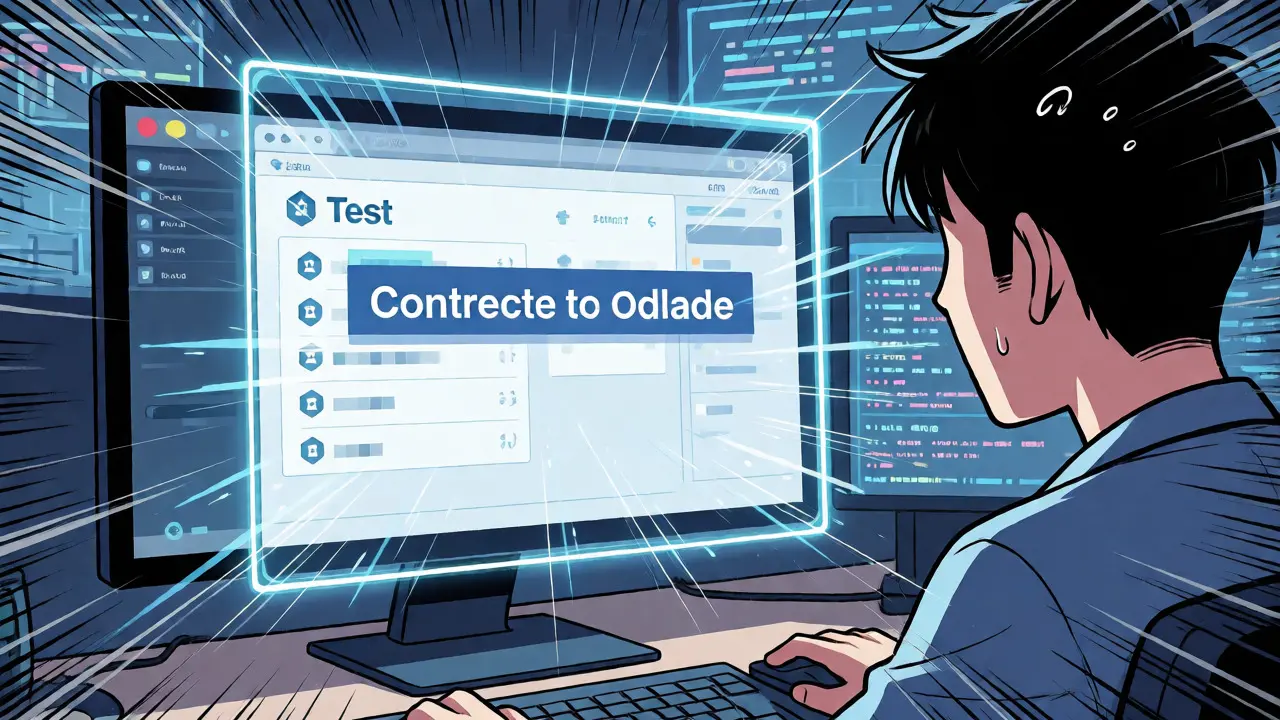
Imagine creating a fake cryptocurrency just to show your audience how easy it is to launch one on a new platform. You record the tutorial, forget to blur the contract address in one frame, and accidentally launch a real market. That’s exactly what happened with Test (TST). It wasn’t designed to be an investment vehicle; it was a disposable demo asset that turned into a $50 million speculation frenzy overnight.
If you’ve seen TST trending on social media or popping up on exchange tickers, you might wonder: Is this the next big thing from Binance? Does it have utility? Or is it just noise? Here’s the blunt truth: TST is a high-risk meme token born from a mistake, not a roadmap. Understanding its origin is the only way to decide if it belongs in your portfolio or your cautionary tales.
The Accidental Birth of a Meme Coin
Test (TST) didn’t start with a whitepaper or a team of developers pitching a solution to blockchain scalability. It started as a prop. In early February 2025, a member of the BNB Chain team recorded a video tutorial demonstrating how to create a meme coin using Four.meme, a launchpad similar to Pump.fun but built for the BNB ecosystem.
During the recording, the creator deployed a token named "Test" with the ticker TST. The intention was simple: show viewers the process, then delete the private key and move on. However, a single frame in the video leaked the token’s name and its smart contract address. Before the team could scrub the footage, traders spotted it. They bought in, assuming that because it came from a BNB Chain employee, it had some hidden official backing.
Changpeng Zhao, the former CEO of Binance, quickly stepped in to clarify the situation. He stated explicitly that TST was “NOT an official token” of BNB Chain or Binance. He confirmed that neither he nor any other employee held the token and that the creator’s address held only about 0.13% of the supply. Despite these denials, the narrative stuck. Traders loved the idea of an “accidental insider” token, and the price skyrocketed.
Technology and Tokenomics: What Are You Actually Buying?
When you buy TST, you aren’t buying access to a new payment network or a decentralized application. You are buying a standard BEP-20 token on the BNB Smart Chain. This means it operates on the same infrastructure as BNB, PancakeSwap, and thousands of other tokens. There is no proprietary blockchain, no unique consensus mechanism, and no custom code running behind the scenes.
Let’s look at the hard data. The contract address is `0x86Bb94DdD16Efc8bc58e6b056e8df71D9e666429`. Always verify this string before trading, as copycat tokens often use similar names. As of October 2026, trackers report approximately 937-940 million circulating tokens out of a maximum supply of 1 billion. The remaining supply is largely burned or locked, though exact details vary by source due to the chaotic nature of its launch.
| Feature | Test (TST) | Typical Utility Token |
|---|---|---|
| Origin | Tutorial demonstration error | Planned project launch |
| Utility | Speculative trading only | Governance, payments, staking |
| Official Backing | None (Community-driven) | Team & Investor backed |
| Roadmap | No verified roadmap | Detailed development plan |
| Network | BNB Smart Chain (BEP-20) | Varies (Ethereum, Solana, etc.) |
Some unofficial websites claim TST has staking features or DeFi integrations. Be skeptical. These claims come from community-created pages, not from Binance or the original creators. Without a signed announcement or on-chain evidence of a functional protocol, treat these features as aspirational marketing rather than reality.
The Market History: From Zero to Hero and Back
The life cycle of TST is a masterclass in market psychology. On February 6, 2025, after the leak, the token’s market cap hit roughly $35 million within hours. Trading volume on Four.meme exceeded $43 million. People were buying purely on the hype of the “accidental discovery.”
Then came the catalyst everyone waits for: a major exchange listing. On February 9, 2025, Binance announced spot trading for TST/USDT and TST/USDC pairs. They also offered perpetual futures contracts with up to 75x leverage. This was the peak. The price surged nearly 700% shortly after listing, reaching highs around $0.56. Early buyers who got in during the tutorial leak saw gains exceeding 1,800%.
But meme coins rarely sustain their peaks. By April 2025, the price had corrected significantly, dropping to around $0.06. As of late October 2026, TST trades near $0.015, with a market capitalization hovering around $14 million. This decline reflects the fading novelty. Once the story stops being funny or exciting, liquidity dries up, and the price follows.
Why TST Isn’t Like Dogecoin or Shiba Inu
You might compare TST to established meme coins like Dogecoin or Shiba Inu. While both are speculative, they have years of operating history, massive communities, and broader ecosystem integration. Dogecoin is used for tipping and payments; Shiba Inu has its own DEX (ShibaSwap) and layer-2 solutions.
TST lacks this depth. It doesn’t have a long-term community strategy. Its existence depends entirely on whether traders find it entertaining enough to keep trading. It is closer to a lottery ticket than a currency. If you’re looking for a store of value or a medium of exchange, TST fails on both counts. It is a vehicle for short-term volatility plays.
Risks You Need to Know Before Buying
Buying TST isn’t investing; it’s gambling with extra steps. Here are the specific risks involved:
- Impersonation Scams: Because the name is generic (“Test”), scammers can easily create fake tokens with the same ticker. Always check the contract address.
- Leverage Liquidation: If you trade TST futures on Binance, remember that 75x leverage means a 1.3% drop in price wipes out your position. Volatility here is extreme.
- No Fundamental Value: There is no revenue, no product, and no team working on updates. If the hype dies, there is nothing to hold the price up.
- Exchange Delisting: Binance listed TST due to volume. If volume drops below their threshold, they can delist it, causing a sudden crash in liquidity.
How to Buy and Verify TST Safely
If you still want to take the risk, do it correctly. Don’t just search “TST” on an exchange and click the first result. Follow these steps:
- Get a Compatible Wallet: Use MetaMask, Trust Wallet, or Binance Web3 Wallet. Ensure it supports BNB Smart Chain.
- Fund Your Wallet: You need BNB for gas fees. Even if you buy on an exchange, having BNB ready helps if you want to swap on a DEX later.
- Verify the Contract: Go to BscScan and paste `0x86Bb94DdD16Efc8bc58e6b056e8df71D9e666429`. Check the holders and transaction history. Make sure it matches the token you intend to buy.
- Choose Your Venue: For ease, use Binance’s spot market. For lower fees or earlier access, use PancakeSwap, but beware of slippage.
- Set Stop-Losses: Given the volatility, don’t leave your position unprotected. A stop-loss order can save you from a 50% overnight drop.
The Verdict: Should You Care About TST?
Test (TST) is a fascinating historical artifact of the crypto market. It proves that in the world of memes, attention is the only fundamental that matters. But as an investment? It’s weak. It has no technology, no utility, and no official backing. It survived its initial crash, which shows some resilience, but its future depends entirely on social media trends.
If you enjoy the thrill of high-volatility trading and understand that you could lose 90% of your money in a week, TST offers plenty of action. If you’re looking for a serious addition to your crypto portfolio, look elsewhere. TST is a joke that people decided to take seriously-and jokes eventually get old.
Is Test (TST) an official Binance coin?
No. Changpeng Zhao, former Binance CEO, explicitly stated that TST was created as a test token for a video tutorial and is not an official project of Binance or BNB Chain. It is a community-traded meme token.
What is the contract address for Test (TST)?
The correct contract address on BNB Smart Chain is `0x86Bb94DdD16Efc8bc58e6b056e8df71D9e666429`. Always verify this address on a block explorer before trading to avoid scams.
Does Test (TST) have any utility?
Currently, TST has no verified production utility. It functions primarily as a speculative trading asset. Claims about staking or DeFi features found on unofficial websites are not supported by official documentation or audits.
Why did Test (TST) become popular?
It became popular due to an accidental disclosure of its contract address during a BNB Chain tutorial video. The association with a major blockchain team, combined with rapid exchange listings and social media hype, drove speculative buying.
Can I stake Test (TST)?
You can technically lock TST in various DeFi protocols or earn products on exchanges like Binance Simple Earn. However, this is financial yield farming, not native protocol staking. There is no dedicated staking system built into the TST smart contract itself.